Categories
COMM 101

It’s All About the Purchasing Power

China is accused of artificially deflating its currency (Image: Asianews)


In a blog post by Wendy Liu, Wendy criticizes the accusations made by the US government that China is manipulating its currency, undervaluing it so that more companies would have an incentive to move their production to China.

She argues that China is not purposely keeping the value of the yuan (the Chinese currency) low because China’s currency has historically been low and that it only seems like companies investing in China are getting more value because 1 USD gets the company around 6 yuan (hey, 6 is more than 1, right?).

Her argument is reasonable and I would definitely agree with it if 1 USD converted to yuan can buy the same amount of things in China as 1 USD in the US – sadly, that is not the case.

When determining whether a currency is undervalued, one must consider the currency’s real value, rather than its external value – and we determine a currency’s real value via its purchasing power.

Case in point: a 16GB SD card costs around $25 in Canada. Using a 1 to 6 conversion, one would naturally expect that same memory card to cost 150 (6*25) yuan, but in reality, it only costs 60 yuan in China ($10 Canadian).

From the above example, it can clearly be seen that purchasing power relative to external value of the yuan is much greater than most other countries, given China a comparative advantage. In fact, according to the IMF, at purchasing power parity, 1 USD will only be able to buy 4 yuan.

Categories
COMM 101

US Government Aims to “Fix” Copyright by Breaking the Internet

A recent blog post by Between the Lines, a blog that discusses the effects that technology and government technology policy have on business, offers its comments on SOPA, a bill recently proposed in the US House of Representatives

SOPA, or the Stop Online Piracy Act, along with a similar bill called PROTECT-IP (introduced in the US Senate), aims to further strengthen Copyright laws in the US (which are already, by far, the toughest in world) by:

1. Giving the US government a right to censor webpages that are believed to aid in piracy,

2. Making unauthorized online streaming a criminal act, and

3. Removing the safe harbour provisions in the Digital Millennium Copyright Act.

Between the Lines believes that SOPA will have huge ramifications on the future of the internet:

Because the safe harbour provisions are removed from the DMCA, online companies like Google, Youtube, and Facebook will now be criminally liable even if just one user posts infringing material (intentional or not) and they will continue to be liable even if they remove the material (which was not the case with safe harbour). Since it is virtually impossible for these companies to ensure that none of the millions of users post infringing material, they may be forced to shut down in the future.

While I disapprove of copyright infringement, I feel that the bill goes a bit too far in order to placate Hollywood lobbyists. This bill is also extremely shorted-sighted as the economic gains from increased Hollywood profits will be greatly offset by the economic losses incurred by crippling internet companies (whose growth rates greatly exceed all other sectors).

Categories
COMM 101

With Virgin, Not Even the Sky is a Limit

Virgin Galactic SpaceShipTwo (Wired)


When it comes to entrepreneurial companies, one must give a nod to one of the most successful and risk-taking of them all: Virgin Group, founded by the daredevil British business magnate Richard Branson.

Branson had his first experience with entrepreneurship when he was 16 years old, selling records from the crypt of his church at considerably lower prices than competitors. It became an instant success and eventually forced the entire record industry to embrace large-scale discounting of recorded music.


Virgin founder Richard Branson (Forbes)


Even though he was successful, Richard Branson was not done there – he then started a recording label called Virgin Records, signing once niche bands like The Sex Pistols and Faust.

Not satisfied with even two successful ventures, Branson and Virgin Group decided to get into the airline industry with Virgin Atlantic and the mobile industry with Virgin Mobile and countless other industries with: Virgin Drinks, Virgin Holidays, Virgin Radio… the list goes on.

Recently, Virgin has even started a company called Virgin Galactic, offering sub-orbital space flights to extremely wealthy passengers.

All in all, Virgin is a company that fits the definition of entrepreneur really well: it takes a lot of risk, venturing into markets that no other company has ventured into before and it gets rewarded for this risk-taking by the speed at which it generates wealth.

Categories
COMM 101

Coca Cola Saving Polar Bears With White Cans

Coca Cola’s new white can design (Reuters)


After reading Sarah Zhou’s blog post on Coca Cola’s new marketing campaign, I found myself strongly agreeing with what she said.

She believes that Coca Cola’s new campaign to save polar bears – by changing the colour of its cans to white in order to raise awareness for the threatened polar bear species and by donating $2 million over five years to the World Wild Fund – is a really effective one as it would improve Coca Cola’s corporate image by showing to the world that it is a socially and environmentally responsible one.

She is, however, concerned whether if Coca Cola really does care for the environment or whether this campaign is just another way for Coca Cola to make more money. Consider the Coca Cola is donating a measly $2 million over 5 years ($400,000 a year – and even less than that with time value of money), the latter is the more probable case. But no matter the motives of Coca Cola, this really is a win – win – win situation. The consumers win because they feel happier about their purchase of Coca Cola products, Coca Cola wins because of improved brand image and sales, and the polar bears win because more money goes toward their protection.

Categories
COMM 101

Metro Vancouver’s Garbage Incineration Plan Under Fire

Trash Incineration
A worker loading garbage into an incinerator


A recent article from the Vancouver Sun reveals that the Metro Vancouver board is planning introduce garbage incinerators to the region, claiming that they will be good for the environment and the economy. This sounds like a ludicrous proposal at first glance and on more careful analysis, it actually is one.

Metro Vancouver‘s reasoning is that since they will be burning garbage, there will be considerably less garbage going landfills each year. This and the fact that garbage incinerators can be used to generate electricity is allowing Metro Vancouver to frame this as a project of sustainability.

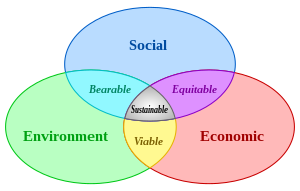
The unfortunate reality is that this project meets none of the three pillars of sustainability: economical, social, and environmental.

The three pillars of Sustainability (Wikimedia)


The main problem is that burning garbage doesn’t really get rid of it, as every tonne of garbage burnt just means that it has been converted into one tonne of greenhouse gases released into the atmosphere.

A more disturbing problem is that besides greenhouse gases, highly toxic gases are also created from the burning of garbage, presenting a serious health threat to communities near the incinerator.

The third problem is that this project isn’t even economically sustainable as a KPMG auditor hired by the Vancouver Board of Trade found that Metro Vancouver’s cost projections were too low and that their revenue projections were too high.

This shows that even though sustainability is a very popular buzzword nowadays, achieving it is much harder than what one would think.

For more reasons against the proposed project: zerowastebc.org

Categories
COMM 101

Humble Bundle, Not So Humble Profits

The Humble Frozen Synapse Bundle lets people name their price for three indie games and donations to charity (Image: GenGame)


With just over 2 days left in the sale, the Humble Frozen Synapse Bundle has generated over $980 000 for game developers and charities alike.

So what’s behind this success story?

The “Humble Bundle” differentiates itself from other game bundles in that it is pay-what-you-want, meaning people can purchase it for a little as 1 cent, but of course most people pay over that with the average purchase being around $4.70. With the purchase of a bundle, people not only get 3 games developed by independent developers, but they can also allocate a certain percentage of their purchase towards non-profit organizations/charities like Child’s Play and the EFF.

The Humble Bundle is not only a great way for independent game developers to make money (by getting money from people who would not have heard about the game or would have pirated it), but it’s also a great way to improve their brand image (since the Humble Bundle is a charitable cause) and get publicity, which is oh-so-important for these small and relative unknown independent developers.

Categories
COMM 101

It’s a Bird, it’s a Plane, it’s Super… weed?

Mosanto’s “Roundup Ready” soybeans provide easier weed control. (CBC)

In the past decade, the genetically-modified food revolution has benefited farmers all around the world, introducing herbicide resistant crops that make weed control a much easier and cost-efficient job than before. Unfortunately for these farmers, the power of natural selection threatens to reverse this improvement with herbicide resistant weeds beginning to appear on farms.

Monsanto sells to farmers “Roundup Ready” soybeans that have been genetically modified to protect against the herbicide it sells, Roundup, which contains the chemical glyphosate.

In recent years, a strain of glyphosate-resistant ragweed has started to appear on Ontario soybean farms, decimating over 90% of the yields in the farms that it has been found on.

To minimize the chance for herbicide-resistance, weed scientists recommend that farmers use crop rotation and higher seeding rates.

This just goes to show that often, not unlike antibiotics, too much of a good thing can be a bad thing. While technological advances lead to great things like Monsanto’s Roundup Ready soybeans, one must be careful when using them or one day, nature will come back and not only negate the gains, but also cause damage to a business.

Categories
COMM 101

India’s Next Cheap Innovation: a $37 Tablet

India partners with Canadian Datawind to produce the Aakash tablet (CBC)


Many of you have probably heard of India’s sub-$3000 car, the Tata Nano, which, in order to cut costs, removed airbags and air conditioning while introducing the Youtube video-generating feature of spontaneous combustion.

The bright minds of India have now partnered with the Montreal-based Datawind to produce Aakash, a low-cost tablet to be sold in India (that most likely won’t explode).

The development of this tablet began as an ambitious goal by the Indian government to produce a $10 dollar tablet in order to make technology more accessible to poor students and improve literacy goals. While the $10 goal was not met, the production costs for the Aakash tablet is still a relatively low $47. The Indian government plans to subsidize these tablets and make them available to students at only $37, while a retail version will later be available, marked up to $60.

Given the price, the Aakash is naturally not a very powerful tablet, featuring the Android operating system, a  resistive touch-screen, and only 256MB of RAM.

So how much of a treat would this $37 tablet pose to Apple’s $500 iPad? Probably not much. These two products target two different market segments: the Aakash will target students and other consumers who do not need that much power from a tablet for simple tasks like browsing the web, people who need that extra power and prefer elegance in the products like use will likely gravitate towards the iPad, without giving the other, cheaper tablets a single thought.

Categories
COMM 101

Apple Learns that It’s All in the Name

New iPhones for sale (Globe and Mail)


Today, Apple unveiled its latest iPhone amidst a group of journalists at its “Let’s talk iPhone” event. Unfortunately for Apple, the product was not greeted with excitement, but instead disappointment. So what happened here? In the weeks leading to the event, a massive amount of hype was generated by the press and online technology blogs about the impending release of an iPhone 5, however it was not an iPhone 5 that people got, but instead merely an iPhone 4S.

So what are the improvements in the lastest model?

The iPhone 4S introduces a new dual-core CPU, increasing performance 7-fold. It also upgraded the built in camera to 8MP, now capable of taking 1080p videos. A new feature called Siri has also been introduced which allows a user to use voice to interact with the phone in many more ways than before.

While the new model may not come with many new features, the iPhone 4S actually brings a greater quantity of improvements than the jump from the first to the 2nd gen iPhone 3G.

Why are people criticizing this iteration of the iPhone when they praised  the iPhone 3G in the past which added nothing but 3G? The answer? It’s all about consumer perception. It doesn’t matter how much Apple adds in its new product, as long as the look or the name doesn’t change, consumers perceive it to be the same thing. This is why names are very important in the business world.

Categories
COMM 101

Coltan: Blood Diamonds of the Digital Era

The iPhone game Phone Story (Source: Guardian)


Just recently, Apple has pulled an iPhone game called Phone Story from its App Store, as reported by The Guardian. The main reason, according to Apple, is that the game contains “excessive objectionable content” – but what is this content that Apple finds so objectionable? Phone Story, a game developed by Molleindustria, uses satire to criticize Apple, along with other smartphone makers, on the entire smartphone manufacturing process which involves, among other things, cheap Chinese labour and the mining of coltan.

Children mining coltan (Source: Phone Story)


The question of how our smartphones came to doesn’t appear often in our minds. One essential component of almost all of today’s electronic devices is the mineral coltan, which is used to create capacitors.

The main problem with this mineral is in how it is obtained. The majority of coltan is mined in Congo by child labourers, working in harsh conditions for as little as $1 a day. The mining of coltan also has environmental impacts as it causes the pollution of lakes and rivers and has been linked to a decrease in gorilla populations.

Businesses are now stuck with an ethical dilemma: continue using cheap coltan mined using unethical methods or switch to other more ethical and more expensive sources of coltan, greatly driving up the price of electronics.

Spam prevention powered by Akismet