Categories
COMM 101

Metro Vancouver’s Garbage Incineration Plan Under Fire

Trash Incineration
A worker loading garbage into an incinerator


A recent article from the Vancouver Sun reveals that the Metro Vancouver board is planning introduce garbage incinerators to the region, claiming that they will be good for the environment and the economy. This sounds like a ludicrous proposal at first glance and on more careful analysis, it actually is one.

Metro Vancouver‘s reasoning is that since they will be burning garbage, there will be considerably less garbage going landfills each year. This and the fact that garbage incinerators can be used to generate electricity is allowing Metro Vancouver to frame this as a project of sustainability.

The unfortunate reality is that this project meets none of the three pillars of sustainability: economical, social, and environmental.
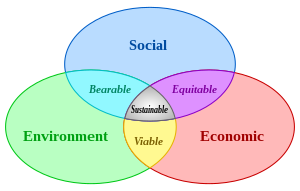
The three pillars of Sustainability (Wikimedia)


The main problem is that burning garbage doesn’t really get rid of it, as every tonne of garbage burnt just means that it has been converted into one tonne of greenhouse gases released into the atmosphere.

A more disturbing problem is that besides greenhouse gases, highly toxic gases are also created from the burning of garbage, presenting a serious health threat to communities near the incinerator.

The third problem is that this project isn’t even economically sustainable as a KPMG auditor hired by the Vancouver Board of Trade found that Metro Vancouver’s cost projections were too low and that their revenue projections were too high.

This shows that even though sustainability is a very popular buzzword nowadays, achieving it is much harder than what one would think.

For more reasons against the proposed project: zerowastebc.org

Categories
COMM 101

Humble Bundle, Not So Humble Profits

The Humble Frozen Synapse Bundle lets people name their price for three indie games and donations to charity (Image: GenGame)


With just over 2 days left in the sale, the Humble Frozen Synapse Bundle has generated over $980 000 for game developers and charities alike.

So what’s behind this success story?

The “Humble Bundle” differentiates itself from other game bundles in that it is pay-what-you-want, meaning people can purchase it for a little as 1 cent, but of course most people pay over that with the average purchase being around $4.70. With the purchase of a bundle, people not only get 3 games developed by independent developers, but they can also allocate a certain percentage of their purchase towards non-profit organizations/charities like Child’s Play and the EFF.

The Humble Bundle is not only a great way for independent game developers to make money (by getting money from people who would not have heard about the game or would have pirated it), but it’s also a great way to improve their brand image (since the Humble Bundle is a charitable cause) and get publicity, which is oh-so-important for these small and relative unknown independent developers.

Categories
COMM 101

It’s a Bird, it’s a Plane, it’s Super… weed?

Mosanto’s “Roundup Ready” soybeans provide easier weed control. (CBC)

In the past decade, the genetically-modified food revolution has benefited farmers all around the world, introducing herbicide resistant crops that make weed control a much easier and cost-efficient job than before. Unfortunately for these farmers, the power of natural selection threatens to reverse this improvement with herbicide resistant weeds beginning to appear on farms.

Monsanto sells to farmers “Roundup Ready” soybeans that have been genetically modified to protect against the herbicide it sells, Roundup, which contains the chemical glyphosate.

In recent years, a strain of glyphosate-resistant ragweed has started to appear on Ontario soybean farms, decimating over 90% of the yields in the farms that it has been found on.

To minimize the chance for herbicide-resistance, weed scientists recommend that farmers use crop rotation and higher seeding rates.

This just goes to show that often, not unlike antibiotics, too much of a good thing can be a bad thing. While technological advances lead to great things like Monsanto’s Roundup Ready soybeans, one must be careful when using them or one day, nature will come back and not only negate the gains, but also cause damage to a business.

Categories
COMM 101

India’s Next Cheap Innovation: a $37 Tablet

India partners with Canadian Datawind to produce the Aakash tablet (CBC)


Many of you have probably heard of India’s sub-$3000 car, the Tata Nano, which, in order to cut costs, removed airbags and air conditioning while introducing the Youtube video-generating feature of spontaneous combustion.

The bright minds of India have now partnered with the Montreal-based Datawind to produce Aakash, a low-cost tablet to be sold in India (that most likely won’t explode).

The development of this tablet began as an ambitious goal by the Indian government to produce a $10 dollar tablet in order to make technology more accessible to poor students and improve literacy goals. While the $10 goal was not met, the production costs for the Aakash tablet is still a relatively low $47. The Indian government plans to subsidize these tablets and make them available to students at only $37, while a retail version will later be available, marked up to $60.

Given the price, the Aakash is naturally not a very powerful tablet, featuring the Android operating system, a  resistive touch-screen, and only 256MB of RAM.

So how much of a treat would this $37 tablet pose to Apple’s $500 iPad? Probably not much. These two products target two different market segments: the Aakash will target students and other consumers who do not need that much power from a tablet for simple tasks like browsing the web, people who need that extra power and prefer elegance in the products like use will likely gravitate towards the iPad, without giving the other, cheaper tablets a single thought.

Categories
COMM 101

Apple Learns that It’s All in the Name

New iPhones for sale (Globe and Mail)


Today, Apple unveiled its latest iPhone amidst a group of journalists at its “Let’s talk iPhone” event. Unfortunately for Apple, the product was not greeted with excitement, but instead disappointment. So what happened here? In the weeks leading to the event, a massive amount of hype was generated by the press and online technology blogs about the impending release of an iPhone 5, however it was not an iPhone 5 that people got, but instead merely an iPhone 4S.

So what are the improvements in the lastest model?

The iPhone 4S introduces a new dual-core CPU, increasing performance 7-fold. It also upgraded the built in camera to 8MP, now capable of taking 1080p videos. A new feature called Siri has also been introduced which allows a user to use voice to interact with the phone in many more ways than before.

While the new model may not come with many new features, the iPhone 4S actually brings a greater quantity of improvements than the jump from the first to the 2nd gen iPhone 3G.

Why are people criticizing this iteration of the iPhone when they praised  the iPhone 3G in the past which added nothing but 3G? The answer? It’s all about consumer perception. It doesn’t matter how much Apple adds in its new product, as long as the look or the name doesn’t change, consumers perceive it to be the same thing. This is why names are very important in the business world.

Spam prevention powered by Akismet