Categories
Uncategorized

Millennials in the Workplace

Incorporating individuals from diverse cultures, different genders and various ethnicities within a corporation is valuable to any leader. While corporations appear to be utilizing this perspective to enhance their production and commitment to social responsibility, age, or more specifically, generation is an aspect of diversity that I feel is neglected. This negligence is especially pronounced in regards to the new generation entering the workforce, the millennials.

In general, millennials matured during relatively wealthy times and were the first generation to take technology for granted as an expectation over a novel convenience. Although they tend to be questioning, electronically networked and entrepreneurially driven, business executives are having a difficult time incorporating this generation into the workplace. Perhaps this is because employers are concerned with catering towards the myths of millennials rather than fostering them in an environment where everyone feels valued. According to the article derived from Forbes.com, it is clear millennials are much different than other generations, as they present with a sense of entitlement, have a hard time focusing and are eager to make an impact. Although I find these opinions valid, I agree with the author of article when he states that “executives should encourage transparency and openness, so everyone feels comfortable voicing opinions and learns how to take feedback.” This may be interpreted as a backhanded compliment however, as between the lines, he is suggesting that millennials are opinionated and with time, can utilize criticism to benefit the self and subsequently, the business.

Instead of focusing on the negative aspects of this generation, business executives should take advantage of the positive aspects. Millennials are known to set high expectations and are known to be entrepreneurs. These can be extremely desirable traits in a corporation where hard work and competition often lead to success and vitality. In incorporating millennials, companies will have to ensure that they embrace these qualities without jeopardizing collegial and teamwork environments.

Millennials require more assistance developing soft skills such as listening, conflict resolution and communication. Executives appear to be aware of these needs should therefore shift their focus from designing jobs to fit millennials needs to ongoing training to ensure a strong foundation of skills.


Word Count: 364


Works Cited:

Haugh, L. (2017, January 30). Millennials Don’t Need Special Treatment At Work. Retrieved March 28, 2017, from http://fortune.com/2017/01/30/how-to-manage-millennials-at-work/?iid=sr-link1

Langton, N., Robbins, S., Judge, T., & Robbins, S. (2013). Organizational behaviour (7th ed.). Toronto: Pearson Canada.

Categories
Uncategorized

What Drives Students to Universities?

What drives students to universities?

Do students go to universities purely because of their passion towards higher-level education, or is it because their passion towards an easier route to a satisfied and potentially wealthy future?

In Exploring Ethan Tam’s blog post “What is a student’s motivation?” I started questioning the reasoning behind the pursuit of many students to attend UBC, even from the opposite side of the world, and what motivates them to be so dedicated to school work and be involved in clubs.

Ethan discussed that the primary motivation for students for joining clubs is their will to “feel sense of belongings,” as opposed to receiving recognition, as peers typically do not care enough about others’ participation to make it status symbol on campus. Although I agree with his argument, I want to expand on the reasoning behind participation further through applying Maslow’s Hierarchy of Needs theory and how it applies to students’ will to fulfill these needs.

It is suggested that the titles of club positions will assist student resumes as an experience which will eventually reward them as making them more compatible in a competitive job market. Furthermore, getting better grades will get students into better programs, schools, and eventually careers, thus studying hard will reward students in the future as well.

The reward for joining clubs and being active on campus may not be monetary and likely will not present itself to students immediately, but the majority understand, or have been informed that their hard work will eventually pay off in the future through a variety of ways. For instance, it will bring them secure and well-paid jobs which are satisfying lower-order needs and even expand their opportunity to reach up to higher-order needs, such as social, esteem, and self-actualization.  Therefore, I believe that many students’ desire to fulfill such needs in their future motivates them to be more involved in school.


Wordcount: 316

Works Cited:

Langton, N., Robbins, S., Judge, T., & Robbins, S. (2013). Organizational Behaviour (7th ed.). Toronto: Pearson Canada.

Categories
Uncategorized

Sleeping at Work, Where is the Border Between Work and Home?

Sleeping at work, where is the border between work and home?

In William Huang’s blog post ‘Sleep at Work?’ he discusses employees purposefully sleeping at work in Japan and its distinctive work environment when compared to Canada. In fact, the trend has a specific term in Japanese, ‘inemuri’, which literally means ‘to be asleep while at work.’

Yes, it seems bizarre as William mentioned, since Canada tends to have a stricter border between work and rest. However, in many Asian countries including Japan, this boundary barely exists for many salarymen.  I believe this could be in part due to frequent unpaid working overtime at night and random emergency calls to cover other employees; this behavior is common and often justified in Asian countries. Since the technological developments allow people to be connected 24/7 with each other, it is very hard to avoid such situations where some employees who always want to get a chance to show off their work ethic in pursuit of a promotion. In other words, they do not want to leave a negative impression on thheir boss by rejecting such calls.

I believe sleeping at work is not only unhealthy for employees, it is also unhealthy for the company since their workers’ productivity cannot be maximized. I have seen news articles about how many companies in South Korea are getting sleeping rooms in the company building for the workers who need rest. This may seem like the company cares about their workers’ rest, however, in fact, it can also mean that the company assign extensive workload so the employees cannot get good enough rest at their home. I believe employee satisfaction and productivity would be maximized in a workplace that encourages a balanced lifestyle, in terms of work and rest.


Wordcount:293

Categories
Uncategorized

Sexual Harassment at Workplace

It is surprisingly easy to meet people who have experienced some kind of form of sexual harassment in their workplace. According to the statistics in 2015 from a survey conducted by the Huffington Post, 1 out of 3 women have been sexually harassed at work, and specifically, over forty percent of women who had non-managerial fast-food jobs reported that had been sexually harassed.

The article notes that this usually occurs through the misuse of authority by higher-positioned workers who are “abusing their power position.” According to chapter 8, managers, who are in high positions in charge of “reward and coerce” such as salary increase, promotion and holidays, hold significant power in the working relationship. This pressures employees into being obedient to their managers, even if the situation is unethical. For the fast food industry, this conflict usually happens in between workers and shift-managers.

Sexual harassment has been an issue for decades that has seen decent exposure, but statistics demonstrate that despite awareness, levels have remained relatively constant over time.

One reason supporting this lack of change is attributed to the phenomenon where people tend to avoid to talk about such experiences. For instance, only 40 percent of those who are sexually harassed report such incidences, leaving the majority of victims unreported.

To eliminate sexual harassment at work, I believe that education and awareness at the workplace is fundamental. Employees need to understand that sexual harassment is wrong and have to be encouraged to report it in a timely manner. Without telling people, the situation will not solve itself, nor will sexual harassment on a larger scale decrease. Further, companies should have well-established policies documented for such situations, which should prevent abuse of managers’ authority and protect the workers from mental health issues that subsequently follow sexual harassment.


References

Cohn, E. (2016, October 10). Next time you order fast food, consider what women face behind the counter. Retrieved from Business Insider: http://www.businessinsider.com/fast-food-workers-face-rampant-sexual-harassment-2016-10

Langton, N., Robbins, S. P., & Judge, T. A. (2016). Organizational Behaviour Concepts, Controversies, Applications. Toronto: Pearson. p274

Vagianos, A. (2015, February 19). 1 In 3 Women Has Been Sexually Harassed At Work, According To Survey. Retrieved from The Huffington Post: http://www.huffingtonpost.com/2015/02/19/1-in-3-women-sexually-harassed-work-cosmopolitan_n_6713814.html

Categories
Uncategorized

Servant Leader?

“Servant Leader”.

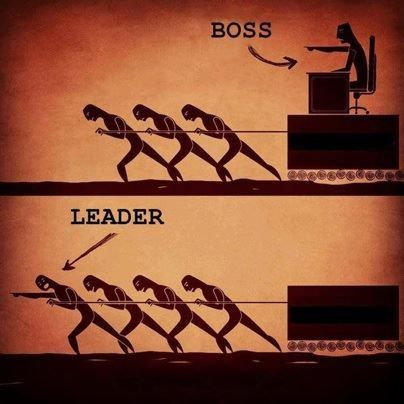
When I first heard the term, “Servant Leader,”  I found it immediately interesting because it seemed like an oxymoron. How can a leader who is supposed to lead followers be a servant?

According to the Comm 292 textbook, servant leadership is “a leadership style marked by going beyond the leader’s own self-interest and instead focusing on opportunities to help followers grow and develop.”

Servant leaders appreciate the individual characteristic of a group to maximize each member’s ability by helping and taking care of them. Not only do servant leaders tend to their followers for the result of their collective works, but they are also mindful of their lives outside the workplace and are cognizant of opportunities that reflect their talents. This concept of leadership is found to be unique in our society, as positions of authority are typically characterized by narcissistic and demanding leaders who often exude an overbearing demeanor. This traditional leadership style may still generate success, but there is a high possibility that the leader is not maximizing the opportunities for both employees and the company.

I personally admire the idea of servant leadership, as I believe that I am more of a listener than talker. If the concept of service leads to success, the leader will be highly respected and tightly knit to his or her followers who feel appreciated and exude a sense of self-worth. This pleasant environment within the company will potentiate successful results and mitigate issues with human resources, a lack of trust, and health. In turn, followers’ genuine passion and motivation towards their work may develop a whole new level of outcome for a company. However, I believe this would be strongly dependent on the leader and the followers’ personality and previous experiences. For instance, a servant leader with voluntary limited authority may not be able to lead her/his followers when it is necessary.  Therefore, I believe that the balance in between servant leader and authority is a significant factor to think about as a leader.

In the 21st century, there appears to be room for various types of leaders, but in 2017’s climate of change and uncertainty, especially related to the United States’ election of President Donald Trump, the idea of leadership is being contested on a daily basis. Perhaps what has worked for Trump in the business world in the last few decades may not spill over in the ultimate leadership role, leading me to think, was he more of a global servant leader who demonstrates care for all people, or would he have started off on a different foot?


Langton, N., Robbins, S. P., & Judge, T. A. (2016). Organizational Behaviour Concepts, Controversies, Applications. Toronto: Pearson. p403

Image:

On The Beat: Servant Leadership [Digital image]. (2016, December 7). Retrieved February 5, 2017, from http://lawofficer.com/leadership/on-the-beat-servant-leadership/

Categories
Uncategorized

Labour Leads to Love, The “Ikea Effect”

Do you know that cliché scene in a romantic comedy where the interested male invites over a female he is infatuated to watch him prepare a meal for two? Ever recognized that dinner doesn’t last very long, and before you know it, they’re exploring something more affectionate?

“Ikea Effect” is a psychological phenomenon that “describes the notion that there really is love in people’s own labour [because] when [people] put effort into building their own things, they attach greater value to it” (Norton, 2011). In those romantic scenes, the labour of love that pours into the meal for the character is what makes the dinner appealing, and often results in a return on the male’s investment.

The term “Ikea Effect” originated from the feeling people experience as they bond to Ikea furniture because of the effort and time they put into the product (Rega, 2016). The labour they invested evoked a sense of attachment and pride in oneself and the product they pieced together, which makes the product more precious than something that arrived completely finished.

I believe that the concept of “Ikea Effect” can be broadly integrated into many workplace environments to arouse intrinsic motivators by achieving their higher-order needs such as “social belonging, self-esteem, and self-actualization” (Langton, 2016). For instance, Dan Ariely, Professor of Psychology and Behavioral Economics at Duke University noted that “we could get people to feel that something is theirs in a unique way,” by getting them to sign something or put their name afterwards which will create a connection with work.

The “Ikea Effect” can also translate to manufacturers themselves. For example, technology businesses tend to exhibit bonds to their original innovations, making it difficult for them to adapt to new technologies that fall outside their realm of comfort. Instead of utilizing new materials and plans, they tend to make minor adjustments and changes that mitigate drastic change to their original product. For example, Blackberry refused to abandon their once loved keyboard despite the reveal and subsequent success of touchscreen smartphones. Blackberry went from a leading telecommunications company to the proud owner of 0.8% of the smartphone industry. Why? The labour of love was hard to abandon.

I believe that the “Ikea Effect” is an interesting phenomenon that could add valuable meaning to goods or products, but we need to be aware of finding a balance between the love of labour and the love of a good resulting product. If companies assume that buyers are more attracted to the internal rewards of exerting effort more than the result of it, it may jeopardize practical decision making in the business world.


References

Langton, N., Robbins, S. P., & Judge, T. A. (2016). Organizational Behaviour Concepts, Controversies, Applications. Toronto: Pearson. p174

Norton, M. I. (2011). The “IKEA Effect”: When Labor Leads to Love. Cambridge: Harvard Business School.

Rega, S. (2016, December 1). A psychologist explains how the ‘IKEA effect’ can motivate people to work harder. Retrieved from Business Insider: http://www.businessinsider.com/dan-ariely-motivation-ikea-effect-ideas-2016-11

Image:

Ikea Logo [Digital image]. (2016, February 25). Retrieved February 5, 2017, from https://www.iconeye.com/opinion/rethink/item/12394-ikea-logo

Spam prevention powered by Akismet