Categories
Uncategorized

Technology is changing Marketing faster than you know

Richard Trinder, Head of Industry, Tech & Telco at Google Inc Canada, wrote an interesting article on CMA about the Evolution of Marketing for the Multi-Screen World. Most of us are aware that the advent of Internet decreased the effectiveness of marketing in newspapers. Most of us are also aware of how the creation of Facebook, Twitter, and Youtube completely changed the way companies market. However, what most of us are unaware of is how the existence of different technological platforms is changing marketing.

Sure, most of us can see how the introduction of smartphones alone has changed how firms market. Companies must now create smartphone applications to even stay technologically advanced in a world where smartphone usage is rapidly increasing.

Yet is the relationship between how people use their smartphone, computer, and other electronic devices that is most intriguing. Richard Trinder revealed that research from Google has shown that 90% of people move between devices to accomplish a goal. The same percentage also use multiple screens sequentially. Smartphones, of all the devices, are by far the most common starting point for this kind of sequential activity. Just a few days ago, I remember reading an interesting article on my smartphone’s news application, and right after searching my PC for more details on that topic.

So how does this change how firms market? This research shows the importance for firms to not only function on one device, it must also make the experiences seamless between devices. Search becomes a critical connector  as people who switch screens to complete an activity often use search to pick up where they left off. We may see firms spending more on securing key words on Google and integrating their different platforms.
Categories
Uncategorized

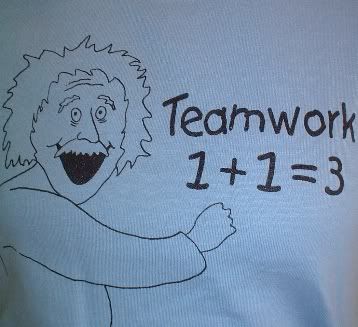
Oh yay, Group projects!

This is exactly what I don’t think of when I think about group projects, especially ones that are arbitrarily assigned. Having had many bad experiences with group projects, I got really lucky with my marketing group. We got work done, and more importantly, we had tons of fun. Everyone took the initiative to improve our work and contributed significantly throughout the process. Through my experience, I know that it’s 1+1=3 could be possible.

I learned a lot intellectually. By delving deeper into Blackberry’s current environment, competitive advantages, etc., I gained new insights into the Company and the smartphone industry. It was through intensive research and brainstorming that I truly got a grasp of how competitive and changing the smartphone industry is. Ironically, Blackberry, the first mover in the industry, now struggles to dissociate itself as being a “follower” of Apple and Samsung. I came out of the project knowing much more about Blackberry and an industry that is changing people’s lives.

The group project helped me solidify my learning from classroom materials through practical applications. From filling a SWOT Table to formulating a viable positioning statement, I gained a firmer understanding of marketing concepts and learned the steps to thoroughly analyzing a company’s marketing strategy.

Lastly, working in a group also made me grow as a person. Beyond the fact that it strengthened my communication and organizational skills, I grew more aware of my weaknesses. One interesting weakness I discovered while doing voice-overs was that I said certain words with an accent. I also sounded like I was about to fall asleep. Now, I am much more aware of how I speak and continually strive to  improve on my pronunciation and tone.

The list goes on and on, but all in all, I am grateful that I had this experience.

Categories
Uncategorized

Blackberry, Good Luck

After reading my classmate Khanh Nguyen’s Blog on Blackberry, I couldn’t help but write a response on the topic of Blackberry. Having been following the company for a while now, I feel quite passionately about discussions relating to Blackberry.

I personally feel that Blackberry has a long way to go. I don’t have any problems with the fact Blackberry changed its name, in fact I agree with Khanh that it is definitely an effective means of repositioning its brand in the minds of its consumers. However, what I do have issues with is Blackberry’s marketing strategies after its rebranding. It seems some of its attempts to build awareness have gone awry.While having Alicia Keys on board as Creative Director is definitely a plus, she reportedly tweeted using her Iphone right after. The post was soon deleted and the blame was immediately placed on hackers. Whichever story is true – that Alicia Keys had actually been careless or hackers had broke into her account – the only thing we know for sure is that this story damaged Blackberry’s image. Even its primary endorsement was suspected of using its competitor’s product.

Blackberry’s other marketing campaigns have also been quite a disappointment. Its much anticipated Super Bowl Ad, showing what Blackberry couldn’t do, garnered mixed reactions and ultimately failed to capture the likes of its target market. I am also not too impressed by its Z10. While it is good to see Blackberry finally attempting to keep up with its competitors Apple and Samsung, the problem is just that – it is starting to look more like a follower than the innovator it was years ago. Blackberry must do more for consumers to buy their product. I completely agree with Khanh, I can’t see myself ever switching from my current Samsung S2 to a Blackberry Z10.


Categories
Uncategorized

Reactions to Target’s Launch in Canada

In my previous post, I wrote about Target’s much anticipated advertisement preceding its penetration into Canada.

Just 2 weeks ago, Target finally launched its 3 pilot stores in Guelph, Fergus, and Milton, and with just a 24 hour notice, Target opened 17 more stores today.

So how is Target doing in its first expansion out of America?

Responses have been extremely positive – largely due to its successful marketing tactics. Besides a small hiccup in its remake of Mr. Roger’s “Its a Beautiful Day in the Neighborhood” (Target definitely should have stuck with Mr. Roger’s original version), Canadians were extremely satisfied with the company’s approach. Target’s Canadian Ad definitely tugged on the audiences heartstrings with their adorable mascot – “Bullseye” the dog.

YouTube Preview Image

The long lines and the huge hype surrounding the opening of its pilot stores speak for Target’s superb marketing. Its very first customers in Canada received much coverage with articles even questioning whether the reported “first” customers were actually the first customers.

Nothing is more representative of Target’s successful marketing strategy than this – business was so good that it faced the problem of high demand. As John Morioka, senior vice-president of merchandising, said, “We haven’t been able to recover [in those three stores] because we are always surprised by the demand…we were definitely slammed.” Nevertheless, while high demand is great, it also points to Target’s need to work on a viable distribution strategy.  Many customers complained of empty shelves and, in one case, spoiled food.

At this stage, Target’s biggest task has changed from getting Canadians to accept them as “neighbors” to ensuring high demand is met with supply. I hope Target executives seriously tweak and improve the company’s distribution strategy before launching the remaining of the planned 124 stores this year.

Categories
Uncategorized

Will Target hit the Bull’s-eye in Canada?

This Sunday during the Oscars, Target will release its first Canadian TV ad campaign.

Target has been planning to expand into Canada for quite a while, which will mark its first step out of its home turf and a bold move towards becoming a global retail brand.

Will Canadians accept Target? It seems likely. America has strong economic and cultural ties with its North American neighbor and many Canadians already have experience shopping at Target. Nevertheless, its marketing strategy will be a bulk determinant of its success.

Historically, Target has positioned itself based on personality and its famous “Bull’s-eye” symbol to differentiate itself from its low-price competitors Wal-Mart Stores Inc. and Kmart Corp.

A sneak peak of Target’s Oscars Ad suggests the company will pursue its usual positioning. Nevertheless, this ad will be different. Rather than showcasing its products, the ad plays on the audience’s emotions by following the journey of Bullseye, its mascot dog, across Canada.

Target’s ad incorporates a “neighborhood” theme, emphasizing its implicit want for Canadians’ acceptance as their neighbors. In line with class discussions, the Ad effectively exploits social influences by using Mister Roger’s “Neighborhood Song” and incorporating Canadian landmarks like Stanley Park. Mister Rogers, before making it big on Mister Roger’s Neighborhood, had starred in CBC in Canada. Furthermore, the lyrics of his song  describes Target’s wishes perfectly – “I’ve always wanted to live in a neighborhood with you.”

From Target’s marketing efforts so far, I believe Target will succeed.

Categories
Uncategorized

The Marketing Super Bowl

Today marks the beginning of one of the most anticipated games of the year – the Super Bowl. Many eyes will be on the screen, and “yes, there’s a marketing super bowl going on at the same time as the game,” wrote Kate Sommers-Dale.

The Super Bowl marks a major event for marketing professionals as they attempt to capitalize on this massive marketing opportunity. So far, marketers’ efforts have paid off. Past Super bowl pre-game showings and events have delivered some of the highest television ratings, with its popularity exceeding entertainment shows like “Two and a Half Men.” Marketers have been so successful that they have attracted watchers beyond the typical Super Bowl fans. According to Bloomberg, while males watch the Super Bowl for football action, many females watch it for the ads.

Some of the best marketing ads I’ve seen so far have been attached to the games. Here’s one of many pre-posted Super Bowl 2013 ads:

https://www.youtube.com/watch?v=o2prAccclXs

Budweiser’s ad has effectively attracted much attention before the games. Its success can be attributed to its incorporation of the 3 attitudinal aspects – cognitive, affective, and behavioral. Its ad informs the viewers of its famous Clydesdales horses while evoking strong emotions and action from the viewer. Through the sweet reunion of the owner and the horse and the matching music with lyrics “even children get older”, viewers develop an emotional attachment for the Cydesdales. From there, Budweiser smoothly leads viewers, who feel for the situation, to act. Just as the horse’s emotions moved it to gallop to its owner, the viewer is moved to get involved by naming their newest foal.

Categories
Uncategorized

How Marketing led to the Delhi gang rape case

Irresponsible marketing contributed to the Delhi gang rape case. LK Gupta’s article titled Marketing and Social Responsibility comments on this phenomenon.

As marketeers cater to the wants and desires of their consumers, many marketing campaigns have capitalized on men’s desire for females. Here’s one ad I remember watching as a child:

YouTube Preview Image

Blue Girl Beer Ad – An example of a common ad that shows how men can win over women by consuming its product

Whether it is a brand trying to promote its beer, mint-flavored gum, or luxurious hotel rooms, all these companies have the common theme of capitalizing on men’s desire for women. While these may seem like smart marketing strategies, the effects can be detrimental in encouraging the objectification of women and an unhealthy obsession with “getting women.”

In India, similar ads, which show “a cricketing hero talking about how to use a phone to ‘pataao’ girls,” are common. The ultimate victim is the whole of society, males who are unable to control their sexual desires and females who are taken advantage of.

While it is ridiculous to place all the blame on marketeers, marketeers should be cautious of the values and behaviors their ads encourage. Marketeers must ask themselves, are their ads socially responsible?

I believe there is an easy fix to this problem. Personally, not only do I find ads like Blue Girl Beer’s unattractive, I also find firms that publicize such ads depicting the typical union of hot females and males completely unoriginal. Firms can solve this ethical dilemma, and simultaneously boost sales, by coming up with more creative ads that focus on socially beneficial messages.

They can learn a lot from some of Nike’s successful ads.

YouTube Preview Image

Nike – A creative ad that smartly markets its products while promoting the message of “Write the Future”


Categories
Uncategorized

All the Wrong Incentives

Alison Buchanan’s blog “The Economics of Health Care” was extremely thought provoking.  She brings up the interesting fact that since doctors are only needed when something goes wrong, diseases and other health concerns have turned into a means of profit.  Therefore, the happy day when everyone is healthy will leave many unemployed doctors.

Seeing things in this new light, I agree that a new reward system needs to be developed for healthcare.  Or else, based on the current reward system, doctors will be motivated to keep patients returning for unnecessary checkups and prescribing unneeded medications.  The idea of “healers” is a good approach.  This way, doctors will be rewarded for maintaining healthy clients.  However, implementation will be difficult.

Her blog reminded me of our prereading article On the Folly of Rewarding A, While Hoping for B and a book I read titled Freaknomics.

Freakonomics addresses various phenomenons of misplaced incentives – why more parents pick up their children late after school when a fine is implemented, why rewarding teacher’s for high class scores results results in cheating rather than better teaching, why sumo wrestlers cheat, and more related topics.

Clearly, providing the right incentives and reward system isn’t an easy task.

Categories
Uncategorized

Thanksgiving? Not so much for retailer employees

Thanksgiving may not be so jolly for many retailer employees.  Though employees may be thankful for many things, their early hours during Thanksgiving most likely doesn’t top that list.

Walmart has angered employees after its announced that it will open 10 pm on Thursday in preparation for Black Friday.  This earlier opening strips away valuable family time for many employees.  Considering most of them work longer hours and earn lower wages than other workers, it is no surprise that workers are voicing their discontent.

Yet Walmart isn’t the only one placing consumers over employees, Target, Best Buy, and Toys “R” Us are taking similar measures and are facing much protest.  Target’s employees have garnered over 200,000 signatures for their petition on the web.

Target Petition
Target defends black friday hours amid protests, explaining that its earlier hours are all about staying competitive.  Yet ironically hundreds of Target customers have voiced their empathy for employees, urging Target to save Thanksgiving.  I strongly agree with Allen Ma’s blog “Treat Your Employees Like Customers” and as mentioned in my previous post, its time for Target and Walmart to follow the steps of Zappos.


Categories
Uncategorized

Going Green Not Enough to Save Walmart

Walmart CEO Lee Scott’s “going green” campaign launched in 2005 has kept its dedication to sustainability.  The retail store has come closer to its goals to use renewable energy, create zero waste, and sell sustainable products.

Walmart’s environmental awareness is changing China.  The “Walmart effect” has motivated its supply chains and competitors to strive to match its green standards.  For example, one of Walmart’s bath towel suppliers, Loftex, is dedicated to achieving a 20% savings in energy use by 2012.

However despite being praised as “one of the most environmentally active and vocal companies,” Walmart continues to suffer criticism for its low hourly wages, touchy relationship with labor unions, and gender discrimination in hiring and promotions.  Ethan Yau’s blog “Chinese City Shuts Down 13 Walmarts” provides one of many examples where Walmart’s profit driven actions have harmed consumers and affected revenues.

Contrary to my previous blog on Ryanair‘s profits despite its controversial measures, Walmart’s gains are feeling the pinch from its lack of concern for employee and consumer rights. Being an environmental leader and having a cost advantage can boost reputation, however it can only do so much when Walmart fails to protect its employees.

Spam prevention powered by Akismet