Categories
Uncategorized

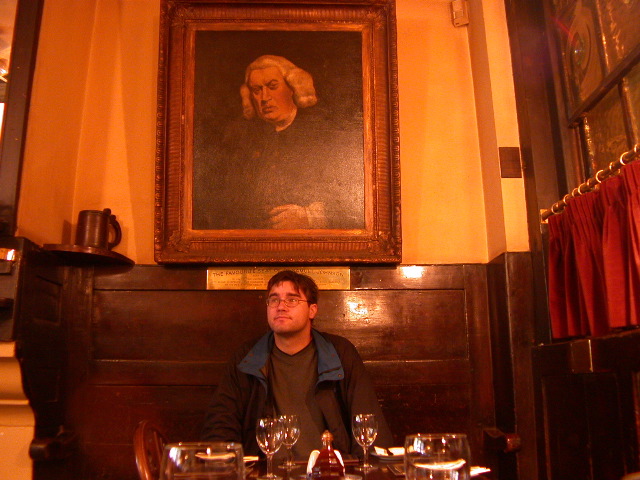
Johnson’s Dictionary

32

photo: Jeff Miller

The book that influenced all others

Henry Hitchings, author of the 2005 book Dr Johnson’s Dictionary: The Extraordinary Story of the Book that Defined the World, describes how Johnson’s working method was innovative.

“He started not by coming up with a list of words like previous compilers had, but by reading 2,000 books. When he saw words that were interesting, he marked notes on them in the margin. So usage became his primary criterion and he had at least one quotation for each word.”

Samuel Johnson also brought elegance to his definitions. Whereas [earlier lexicographer Nathan] Bailey described a wheel as “a round device too well known to need description”, and a spider as “an insect well known”, Johnson defined a wheel as “a circular body that turns round upon an axis”, and a spider as “the animal that spins webs for flies”.

Johnson defined a trance as “a temporary absence of the soul”, and a rant as “high sounding language unsupported by dignity of thought”.

– Brian

Categories
Uncategorized

In praise of technological determinism…

Well, maybe this post won’t quite work as the devastating defense of the dread spectre of technological determinism that I hope to write one day. But having heard the line “technology isn’t important” in discussions amongst educational technologists so many times I certainly find myself nodding in agreement with Martin Weller here… As has been said before, read the whole thing, but in the interim a few choice morsels:

…technology often doesn’t succeed because we ignore all the stuff around it – the administrative context it operates within, the time people have to use it, how it makes people feel about their jobs, etc. I know all this stuff, but what ‘the technology isn’t important’ people often really mean is ‘I want to ignore technology’. And that is surely the wrong way to go.

…from my perspective the technology isn’t important argument is used as a justification to disregard anything technologically driven and hopefully carry on as we’ve always done. In this context suggesting that technology isn’t important is irresponsible. I’m sure plenty of journalists argued that technology wasn’t important, it’s quality reporting that counts. That didn’t stop technology completely transforming their industry. And I’m sure post-Gutenberg we heard arguments that ‘printing isn’t important, it’s what’s in the Bible that counts’. And when Brunel was busy laying railway lines I’m sure horse-drawn carriage owners insisted that ‘the railway isn’t significant, it’s staying in nice inns that we should focus on’.

It’s true enough that we can get too excited by the bells and whistles of the latest techie doo-dads, but I think Martin’s post suggests we can do better when promoting the human dimension of our practice.

— Brian

Spam prevention powered by Akismet