Categories
Uncategorized

Reflections: 9 Years on from Science One

In my first year at UBC, I joined the Science One program. It’s a truly interdisciplinary program based on integrating biology, physics, chemistry, and math concepts. It is also unofficially known for its huge work load and intellectually demanding environment. In my year (and probably every year), Science One was filled with students who were exceptional at what I would now call “hard core” science. My fellow learners were great at abstract thinking. They had the drive and discipline that characteriszes scientists who enjoy years and years of lab research. I, on the other hand, was in many ways opposite of that, even today. I like science and learning applied to concrete problems with immediate impact which helps people. I only get fired up about “hacking” a problem when I’m really interested in it. I like to run around outside in nature, in cities, seeing the world.

That being said, I loved my time in SciOne, even though it truly embodied what our director told us on the first day: “Learning Through Suffering” (in Greek — Pathei Mathos or πάθει μάθος — no less).

Recently, a good friend from SciOne was asked to talk to the new graduating class about life after SciOne. My friend asked if I had any thoughts. So here they are:


If I had a chance, I (might) tell myself after graduating from SciOne that…

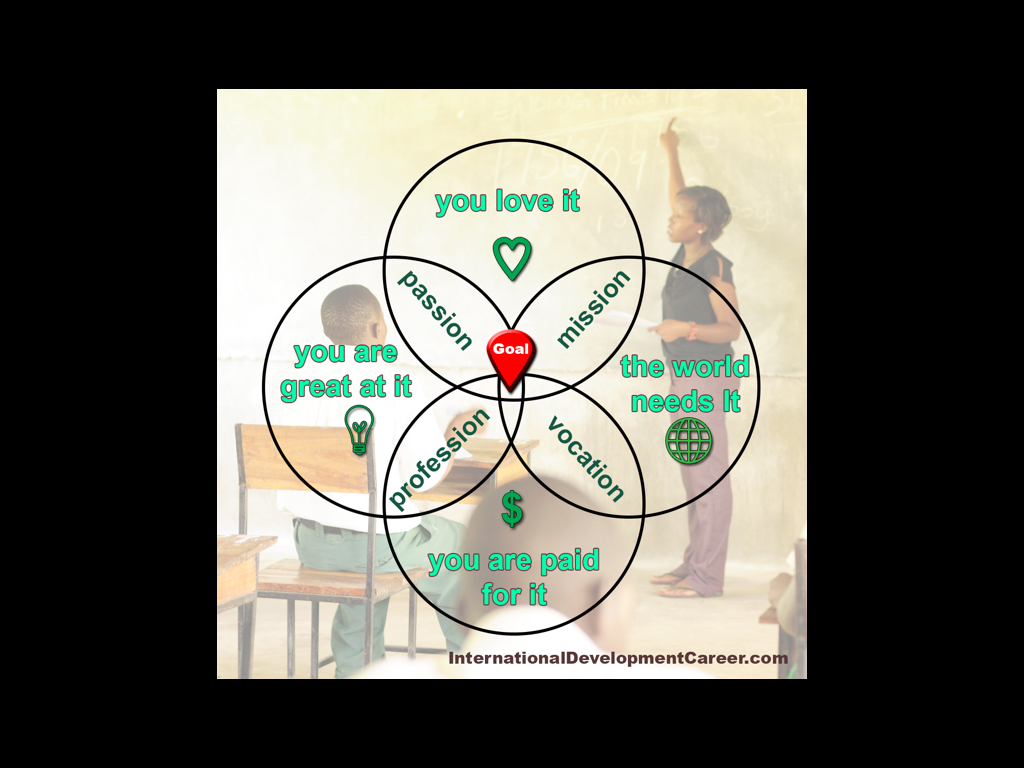
  • there are an infinite number of ways to “work in science,” so try putting on explore mode. After SciOne, I studied agriculture and economic science with the aim of working in developing countries. After 6 jobs in 5 years, I can’t say I work fully in agriculture or economics or SciOne style science, but all of my academic training has come in very handy at different points. I never thought my career would have been possible when I graduated from SciOne, but it just revealed itself one step at a time, with my academic training helping me through. Let your interests and instincts lead you to a path that combines what you love, what the world needs, what you’re good at, and what will pay you.
course intro slides.005


  • what I learned from SciOne was a mindset, above all. A bit embarrassingly, while I remember many concepts, I barely remember any actual physics equations, chemistry reactions, or mathematically derived movements of bacteria. (Biology, on the other hand, helped me grow as an environmentalist.) I was also definitely a mediocre SciOne student at best, as my friends and professors can attest :). At first, after all those sleepless nights “sacrificed” for SciOne, it seemed like I didn’t get much out of it in concrete science skills. But I was wrong. The interdisciplinary way you learn to learn, the way you approach hard problems bit by bit, the way you work in teams, and the way you teach yourself whatever new skills necessary to solve a problem, are actually my biggest takeaways from SciOne. Those mindsets came in very handy from when I was running a large social science randomized control trial in rural Tanzania to working out if my job with a farmer economic empowerment project actually harmed the environment overall.
  • I encourage you to reflect on what you learned and experienced this year. Write it down. It helps when you’re looking back. I also bet you learnt way more than you think.

At the start, I said I might tell my younger self because, honestly, I’m happy with all the “detours”, “extra” miles, “mistakes”, rests and stops I’ve had since then. If sharing what I learnt meant I would have avoided the learning, it defeats the point. The detours make life interesting! So listen or not at your own choice :)

Lastly, I’m actually going to be teaching a short online course on how to start a career in international development/humanitarian aid work. Science Oners! If you’re interested in finding out more, send me an email at tiffany@internationaldevelopmentcareer.com and let me know you’re from SciOne. Or visit internationaldevelopmentcareer.com.

GRSers, you’re very welcome too!


Categories
Uncategorized

1.5 years on

I can’t believe I haven’t posted in so long.

Needless to say, again, a lot and a lot has happened.

I’m still trying to sort out and learn from what I went through, and hopefully apply it to the future as personal and professional growth.

As for now, I am working on three main projects:

  1. starting an organic farm and semi-off grid homestead
  2. working on teaching an online course on how to start a career in international development work.
  3. take an online course on website development and programming (finished!)
  4. Drawing, making websites, creating.

As I told my long-time friend the other day, I’m feeling surprisingly content about my lack of urgent goals, deadlines, and pressures I’ve been so accustomed to in the last five years. I think this break was very needed. I guess I’ll see if I want to jump feet first back in when a month or two more has passed.

Categories
Uncategorized

I’m involved in a new project these days, aside from my formal work. It’s making life more interesting because there’s a very concrete problem to be solved that needs to combine market research, demand confirmation, and technology.

I intuitively have a good feeling about this project. And I think it came at just the right timing, which means it must be fate. Dar always seems to find the right things to pull me back just when I’m about to leave.

Categories
Uncategorized

The Middle Class

As in most other places, I interact mostly with the middle class on a daily basis, in work and personal life. While the definition of middle class may be changing, there is still a distinct culture that defines those who are not born with a golden key, who obtain a good education, and who take it for granted that the future will be better than the past.

What I have realised eventually is that while it is the middle class and the elites who drive the economy and make decisions on behalf of everyone, they do not necessarily understand the lives of those who they rule over. Just because someone is Chinese, it doesn’t mean that they understand how all Chinese people live. Nor do they fully understand what is “Chinese culture,” especially the day-to-day life of the poor. It’s exactly the same in Tanzania.

I have come in contact with many projects and people who assume that if they have consulted the opinions of “Tanzanians” they have done the work of adjusting activities to fit local conditions. Or if they had held a few workshops around the country, they would have had checked the “participation” box. The truth is, those who are being consulted don’t necessarily know how the other half of the population lives. There are just as many false assumptions and stereotypes about “the poor” in urban, middle class Tanzania as any where else in the world.

Dare I venture to say that someone born with priviledge in Tanzania (or any where else) would know less about how a poor subsistence farmer lives than a good anthropologist who has spent a year living in a village? Some friends I have met have never even set foot in a village, let alone stay for any extended period of time. This applies to many “expat” managers as well.

So food for thought next time when I hear: “this is what (insert certain segment of the population) needs.”

Categories
Uncategorized

New home

I have moved homes!

My old blog (http://blogs.landfood.ubc.ca/tiffanyt/) has been forced to shut down, so I migrated to the new UBC blogs site.

I have a new resolve to blog more regularly. Specifically, at least 3 times a week.

(Yes, I know, I have said this many times before!)

Categories
Uncategorized

And of course I never kept my promise.

This thing called discipline is such an elusive little rascal.

Categories
Uncategorized

Improvised sticky date pudding

I haven’t written a recipe post for a while, but this one was too good to pass up. While my experiments in the kitchen don’t always turn out, I’m pretty happy this time.

I don’t like measuring usually and now that I don’t have a measuring cup, I basically guess everything. So please don’t ask for exact measurements.

I was tempted to try to make a sticky date pudding since I had just bought a huge pack of dates – the last few times I bought that many, I had never been able to finish all of it. A quick internet search showed recipes with tons of sugar and butter and heavy cream…so I decided to improvise with the custard cream I had left in the fridge. The instant custard cream I made two days ago was made with the custard cream power (basically corn starch and some flavourings?) and milk, no sugar.

The pudding came out so good I was seriously considering hiding it.

Somewhat Accurate Recipe

Dates, pitted – about 1 cup/200 g/two hand fulls

Custard cream – 1 cup (maybe a bit more?)

Flour – about ¾ cup

Eggs (smallish) – 2

Baking powder – 2 teaspoons

Water – about 1 cup

Make custard cream: buy the instant custard cream powder (I had never bought this back home, but they’re everywhere in Tanzania). Approximately 750 mL of milk with 3 heaped tablespoons. Don’t follow the instructions on the packaging because it only makes a very thin custard cream. Heat most of the milk up until it just starts boiling, take off the stove. Take some cold milk in a cup and mix well with the custard cream powder. Pour gradually into the heated milk and stir vigorously. It should set pretty fast. Leave it to cool down a bit.

Make the pudding: soak dates in water and 1 teaspoon of baking powder. Put on gentle fire to heat up and stir. Take off fire once boiling and water murky from dates. Puree with food blender/processor/one of the hand held mixing things. Add custard cream, eggs, and baking powder. Mix well. Fold in flour until incorporated. Pop into oven at approximately 175C and 25 min. Viola! Tasty amazingness without sugar nor butter.
I liked it so much I even took a photo.

Categories
Uncategorized

I think I’ve decided what to do with my work confusion situation. Thanks to very good advice from a friend and dad recently.

  • Money really doesn’t matter that much. I can live off what I learn and I will always have a back-up (ha, shamefully, my parents). There is a time in life where you do need to earn enough money, now isn’t the time.
  • There’s no other time in life where I can experiment with different sectors and fields that I’m interested and curious about. If I’m really going to go back to agriculture/food systems in the end, now’s the time to have fun and explore.
  • It’s better to learn from good managers (or at least generally good managers) than to jump into the deep end of management and hope that I won’t drown. It’s not like that hasn’t happened before. I survived, but a bit traumatized.
  • If I’m learning a ton and only “manageably unhappy,” stick with the job for at least six months to see if it’s worth staying longer.
  • Staying in one city/country for 3 years isn’t going to pigeonhole me to a region for the rest of my life.

So that’s all the drama for now.

Categories
Uncategorized

Being in a constant state of stress and panic for work has become so natural to me I don’t even react anymore. Is that paradoxical? Probably.

Yes, Friday evening. And my boss just told us we have only been working on 1/4 of the full workload for last two weeks. And I’m actually a bit excited. I think I must have a tendency to torture myself.

Well, I’m excited because I suddenly got a much bigger picture idea about how our unit is supposed to work. And learnt a lot in 30 minutes about managing an organization.

So much more to learn. Always.

Categories
Uncategorized

Imagine if we were all bankers…

Sometimes I wonder if it really isn’t such a good strategy to attract so many young, ambitious, talented, able-to-see-in-multiple-perspectives, progressive people into development work.

Development is a big industry. It’s an important industry, in my opinion. It is still an industry, with mechanical inputs, and not so predictable outputs. Yet, the problems we try to fight are so vast and complicated, that I’m not sure being an industry would actually make much of a difference.

This thought came about when I was discussing with a friend (I seem to do that a lot these days; love it) about how I always seem to meet the most amazing people in Dar. The most ambitious and good-hearted people I know, are from when I travel or work abroad, usually in developing countries (aside: how I hate that word). I meet people like that back home(s) too, but then I usually meet those people abroad again at one point or another. It’s a big part of the reason why I really enjoy living in Dar and visiting Kampala. Getting to know people who aren’t afraid to go into intense discussions (1). People who spend their off-work hours thinking about work-related issues. People who read ‘heavy’ world-issues type books for leisure. Because I’m this kind of person, I feel at home when surrounded by such types. Yes, we do get cynical. We do get frustrated and give up sometimes. But many of us still stay and keep crashing our heads against the wall, in hopes that we’ll at least leave a crack.

At the same time, maybe it would be a bigger impact if all these amazing people could just ‘infiltrate’ all different kinds of industries, instead of concentrating in one. Preaching to the choir. Singing the same old songs to the same old people who already know all of the words by heart. Imagine if only 5% of the stereotypical banker population were people who are now in development. Would it make a difference? Or more importantly, would it make a bigger difference?

I don’t know. Although I know for sure if you told me to enter a normal banking career path right now, I might just cut off all contact and hide in a cave on a mountain. I’m not that brave. A coward.

  1. Yes, afraid. I think most people don’t think too critically because they are afraid of judgment and of the world falling apart (it’s called deconstruction ;). Personal opinion though.

Spam prevention powered by Akismet