Categories
Uncategorized

Gotta get down on Friday…

By now, almost every university student has heard of the song “Friday” by Rebecca Black.

YouTube Preview Image

At the same time, almost everyone is in consensus that this is by far one of the most terrible songs written, and sung in the 21st century. Rebecca has an amazing talent for producing nasally congested tones and awkward facial expressions.

It is for this very reason that the song has virally exploded on the internet, reaching 88 million views to date. Her song last week was also the most downloaded song, beating previous artists like Justin Bieber. However, the attention and awareness for Rebecca Black is for the completely wrong reasons. Her image is near impossible to reposition, and it is unlikely anyone will ever take her seriously in the future.

Yet, despite this negative public reaction, I must admit – it is still very effective. Her song’s message, despite it’s lyrics and content being heavily criticized, nonetheless is still transmitted successfully to the audience. In the midst of millions of different songs trying to catch the attention of the public, this song’s simple message – that today is Friday, yesterday was Thursday, tomorrow is Saturday and it’s time to get down and party, manages to seep through the clutter.

This leads to an interesting idea that I thought of. Advertisements often garner attention by positioning itself in either side of the spectrum, by being really really good, or being really really bad. In either case, it can be an effective way to break through clutter of countless advertisements.

The only question now is, how can one use ads positioned in the really really bad spectrum and manipulate the message so that it still maintains its brand equity? Once that answer is solved, perhaps we may see a shift in the advertising world as whole…

Categories
Uncategorized

Nike’s Return on Reputation (R.O.R)

My blog post is related to an external blog titled, “Why the Nike Tiger Woods Ad is So Good”  (http://mattsingley.com/blog/2010/04/why-the-nike-tiger-woods-ad-is-so-good/)

No other company transforms sport legends into brands better than Nike. From Michael Jordan, Tiger Woods, to Lebron James, the company has invested millions of dollars to endorse these superstars and thereby making them brand ambassadors for Nike’s athletic apparel.

This history of endorsements, however, hasn’t always been a smooth ride for Nike. Yet, for each PR disaster that they encounter, it seems they always come up with the best response (for their brand). Perhaps one reason why Nike is the world’s largest footwear and apparel manufacturer is because they know how to effectively manage their spokespeople to generate the maximum “return on reputation”.

One example that reflects this is found in an incident surrounding Tiger Wood’s marital infidelity. In 2010, he admitted to extramarital affairs and received heavy public backlash. Companies like Gillette and Accenture cut their sponsorships with Tiger indefinitely.

Nike, however, stuck behind Tiger and in fact created a commercial ad that features Earl Wood’s voice (his father who passed away in 2006) speaking to Tiger about his actions. The commercial doesn’t talk about Nike’s shoes, it doesn’t use the slogan “Just do it”, and it doesn’t incite the viewer to purchase Nike products.

YouTube Preview Image

But that’s hardly the point of the ad. The point of the ad, as the blog mentions, is to build the brand power of Nike through Tiger – by reinstilling confidence and approval of Tiger’s real reason of being a spokesperson: because he is a world-class golfer.

The ad was extremely successful, and it came just in time before Tiger returned to competitive golf. Now, Tiger is currently honing in on getting another green jacket in the 2011 Master Tournament. And if he wins, Nike’s return on reputation from choosing to stick with Tiger will most definitely pay off.

Categories
Uncategorized

Roll up the Rim? I totally forgot but it’s ok!

My blog post refers to Sydney Archer’s blog post (https://blogs.ubc.ca/sydneyarcher/2011/02/21/tim-hortons-roll-up-the-rim-is-back/) about Tim Horton’s annual Roll up the Rim promotion.

I personally am a huge fan of Tim Hortons. Although I don’t always purchase coffee from there, I am a loyal customer to both their sandwiches and soup . Sydney’s blog brought up an excellent point when analyzing Tim Horton’s promotion. He mentioned that chance of winning in every cup raises the perceived value of the coffee especially to cash conscious consumers.

I experienced this first hand just the other day. After a long day of classes, I needed a cup of coffee to keep me awake. After grabbing a large coffee with timbits and donuts (I was kind of hungry too), I noticed that “Roll up the Rim” label on my coffee. I had totally forgotten about the promotional campaign, and after realizing I yielded a potential chance to win, I felt really happy about my purchase. In fact, I thought of it as a great deal, and it greatly increased my perceived value of what I bought even though it was the same cup of coffee as any other day and the fact that I hadn’t actually won anything yet.

And I didn’t win. Actually, I didn’t even check. I was so happy with my coffee and donuts that as I rushed to my next class, I threw away my coffee without even rolling up the rim. I completely forgot about it because I was already satisfied with my purchase and I didn’t think of anything else that I needed from it.

Looking back on it, yes – I would have wanted to roll up the rim, but I still feel great about that purchase and I think this feeling of increased value is felt among many of Tim Horton’s customers – perhaps even more if they actually roll up the rim!

Categories
Uncategorized

Old Spice Guy is Back

“Hello Ladies. Look at your man. Now back to me. Now back to your man. Now back to me! Clearly, your man isn’t me. If he stopped using lady-scented body wash and switched to Old Spice, he could smell like he’s me.”

YouTube Preview Image

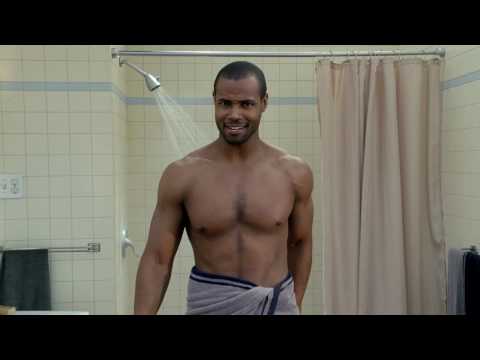
You’ve all seen or heard of the Old Spice commercials that exploded virally last year in 2010. The topless Old Spice guy, using different and eloquent ways to illustrate just how amazing an Old Spice man really is, was featured in a multitude of both commercialized and personalized videos that were viewed on both Youtube and television.

Some of his videos on Youtube were personalized to the point where they were actual responses to individual tweets by celebrities and the general public.

The videos took everyone by surprise and was extremely effective in raising awareness for Old Spice Body Wash. Moreover, the advertisements were far from random – they incorporated the use and description of Old Spice in a clever and humorous way and personally, have impacted me to use Old Spice more often.

That was last year. Now, the Old Spice Guy is back – with a new a theme and a ton of videos. Whereas the previous theme was making your man smell like him, the new videos focuses on taking Old Spice users on a scent vacation in some hilarious ways.

YouTube Preview Image

The last campaign had over 200 million views on Youtube alone. How will people react to this second wave of promotions? Personally, I’m thrilled and and I can’t wait to see what else is coming.

Categories
Uncategorized

iBooks App and the C’s of Pricing

With over 125 million active customers, iPad’s new release of the iBooks App by Steve Jobs have gotten publishers excited to jump on board. 5 of the 6 largest publishers – Hachette Book Group, HarperCollins Publishers, Macmillan, Penguin and Simon & Schuster – have agreed to partner with Apple and provide content for the app.

Their enthusiasm is partly a response to the downward trend in prices for e-books in the past several years. One of the leading causes of this is due to monopolistic structure that Amazon uses with these publishers for the e-books on the Kindle. Amazon pays a flat wholesale price for the e-books and effectively sets new releases and best sellers for $9.99. Publishers were worried that such market dominance would lead to pressure to further decrease digital wholesale prices.

With the iBook App now in the picture, the pricing structure for these e-books will be tethered to the print prices and rather than charging a wholesale price, Apple will take 30% of the sale while publishers will keep the 70%. By having this, publishers will now gain leverage to negotiate future pricing. The prices will also be ranging from $12.99 – $14.99 instead of $9.99.

This example goes to show highlight one of the often overlooked C’s in Pricing – Channel Members. Most individuals looking at this situation and seeing a new competitor enter and thus create oligopolistic competition would be inclined to predict that a potential price war would ensue and that e-book prices would drop even further. Yet, the complete opposite is happening and this is because of the channel member’s influence on Apple’s pricing strategy. Channel members need to communicate their pricing goals ( in this case, have a premium on their e-books) and select channel partners that agree with them (such as Apple) or else conflict with surely arise.

Categories
Uncategorized

Tim’s take on Tim’s blog

I’ve chosen to refer to Tim Tse’s blog (https://blogs.ubc.ca/timtse/2011/02/10/five-five-dollar-five-dollar-footlong-marketing-assignment-4/) with regards to Subway’s recent explosive campaign for their $5 Footlongs. As mentioned by Tim, their $5 foot long promotions have involved commercials and television and Youtube ads  reciting the catchy jingle that repetitively says “$5, $5, $5 footlongs”.

The promotions are obviously very appealing and interesting.  Tim also mentions that such a promotional campaign grabs one’s attention and technically “brainwashes” them with the $5 footlong song. I agree with this and want to add further the potential implications that it may have for Subway’s brand.

In the past, Subway has promoted through it’s traditional forms of advertising as a healthy alternative to fast food competitors such as McDonalds and Burger King.  Their commercials ads, for those of you who still remember, revolved around the nutritional benefits of the sandwiches backed by the infamous Subway Spokesperson, Jared Fogle (the posterboy for how Subway helped him lose an enormous amount of weight).

With this $5 dollar campaign in 2011 following (as Tim found through MSN Money) a previous successful $5 campaign in 2009, it seems Subway is gradually shifting and ultimately, repositioning itself amongst fast food customers. No longer is it simply referring itself as a tasty, health-conscious brand. Rather, it presumes such characteristics are already known and instead focuses on being an economical but satisfying choice as a fast food restaurant. The commercials reflect this change as the slogan “eat fresh” is now only written in the corner of the ad rather than being verbally pronounced (which was the case for past commercials)

It’ll be interesting to see to what extent  Subway continues this campaign given it’s prolonged success!

Categories
Uncategorized

Ebay’s short-term answer to a long-term problem

eBay last thursday announnced its plans to restore its luster over the next 3 years.  The strategy focuses on Paypal, a subsidiary of eBay and a prominent online payment service. As the current superstar of the eBay, more and more companies are adopting Paypal and eBay expects its revenues to reach $6 – $7 billion, in 2013, double of what it made last year.  eBay hopes to lift the amount of transactions done by Paypal and thereby offset the lackluster performance in eBay’s sales revenues. Ultimately, Paypal will generate  around half of eBay’s overall revenues.

Mr. Donahoe, ebay’s Chief Executive, hopes this will turn eBay around. The company has experienced slow growth, at a rate which is even lower than the overall online retailing market. Furthermore, users have been complaining about eBay’s “creaky technology, fee and possiblity of fraud” and have turned to other major online retailers such as Amazon.com.

eBay’s strategy for the future is an interesting one. Their current context situates them in the maturity stage of the product life cycle, and one of their most pressing issues (in my opinion) is their brand positioning among online retail consumers. While brand awareness may be high, the low perceived value of their services may be a strong hindrance in preventing customers from choosing to use eBay. Specifically, eBay lacks a user-friendly interface and constantly changing prices evoke unreliability and uncertainty upon eBay’s brand.

While eBay’s strategy to use Paypal in increasing profits may be encouraging to financial analysts and investors, the issue in which eBay is unable to enfranchise its customers is an even more important problem. Rather than finding other business opportunities to generate profits, it needs to tackle an issue that is at the root of it’s problems and focus on reinstilling confidence in purchasers and protect sellers using their services.

As upstart companies and brick-and-mortar stores move into the online retail industry, the competition is increasing and it will be interesting to see how eBay’s strategy will fare.

Categories
Uncategorized

“We’ll make men out of you yet”

Proctor and Gamble, one of the world’s largest providers of consumer products, has a long history of unusual marketing.

Their most recent campaign focuses on targeting husbands and fathers by offering a website (http://manofthehouse.com/) that gives advice ranging from topics such as “Conquering Sex problems”, to grilling burgers and disciplining children. This raunchy form of advertising is described by Procter & Gamble  Spokeswoman Jeannie Tharrington as a means of trying to “speak to the whole man”, and is a clear example of how  companies try to position themselves once they have chosen their specific target segments.

In this example, P & G  chose their target segment primarily on both demographics, geographics and psychographics. The men targeted from this website are fairly well – off, residing in North America, are family men, and have a desire for self-improvement in various aspects. More importantly, this segment was strategically chosen by P&G because no direct competitors currently target this segment. Unilever, with their Axe commercials, are aimed towards young men while other publications such as Maxim and GQ target singles on the prowl. 

But Men are not the only group in P&G’s mind. In fact, the idea of the website had sprung from an earlier creation – Beinggirl.com – which is a website that provides information and expert advice for young woman with issues such as menstruation, acme, and eating disorders and are too embarassed to go talk to a doctor or their parents. This goes to show P&G’s differentiated segmentation strategy, as they target several market segments with a different offering for each.

To this day, http://manofthehouse.com/ has generated very positive results for P&G. Many intially had questioned whether such an website targeting fathers and husbands would ever generate a large following. The site had launched in June, and by December it has topped over half a million unique views.

See the article in the following link: http://www.nytimes.com/2011/01/13/business/13advice.html?ref=procterandgamble

Categories
Uncategorized

The Web’s Online Surplus: From Consumer to Producer?

According to a Mckinsey Article, (https://www.mckinseyquarterly.com/Marketing/Digital_Marketing/The_Webs_100_billion_euro_surplus_2724), the web currently contains a $100 billion surplus that belongs to consumers and web users.

Based on a research survey with over 4,500 participants, the figure is derived from calculating the “value” that web users place on the benefits that they experience – whether it be from a social networking website or streaming videos and movies – as well as the costs that they would be willing to pay in order to avoid (such as pop-up advertising and perceived privacy risks).

Mckinsey estimates web use to be worth  $150 Billion (extrapolated from participants by analyzing their willingness to pay for different online activities). Currently, $30 billion of this is already being being paid by consumers, when considering music/movie subscriptions or online gaming services. An additional $20 billion of cost is also found from the pollution of internet experience that comes with pop-up advertising, spam, and privacy risks. At the end of the day, this means there is still a $100 billion consumer surplus for web use.

How will producers respond to this? Given that the consumer surplus is expected to grow $190 billion by 2015, it seems producers are looking to take some of this web-based value. There are some potential outcomes in which surplus switches over from consumer to producer:

Increase service costs:

Producers may increase their prices for current web-use such as online gaming sites and subscription -related services. However, research shows that increasing prices will greatly reduce web usage overall – firms which increase cost will need to take this into consideration.

Increase Advertising:

As advertising increases, it is true web companies will gain more revenues. Currently advertising revenue is at $30 billion (giving potential leeway for expansion since the cost to web users is $20 billion). However, what will the consumer’s reactions be if advertising significantly? Will the willing to pay for avoidance increase to the point that web usage drops as well?

Other means of monetization include continuing the free services in order to attract big audiences, promote their online brand and hope for greater market value and thus greater profits for the future.

Whatever the outcome is, users should prepare as the web economy is due for a shift in then next decade.

Categories
Uncategorized

NBA and Marketing

Basketball is one of the biggest passions in my life.

I love everything about the game – the hustle, the clutch shots, the communication on the court, all of it.

What’s more, I also consider myself to be an avid NBA (National Basketball Association) Fan. And I know I’m not alone.

According to this blog nielsenwire (http://blog.nielsen.com/nielsenwire/online_mobile/nba-playoffs-where-amazing-marketing-happens/), NBA’s telecast viewership, especially during playoffs time, has been steadily increasing for the past several years – with the last 2010 NBA Finals Game 7  reaching a audience of over 28.2 million people (making it the most watched NBA game since Game 6 of the 1998 NBA Finals)

In addition, NBA’s official channel on YouTube is garnering a tremendous amount of attention and support. Currently, the channel has more than 515 million upload views with over 260 thousand subscribers. The closest comparable major sports leagues using this online medium is the NHL,  which has around 63 million upload views and 70 thousand subscribers. Neither MLB or NFL have their own YouTube Channel.

One can’t help but ask how the NBA is gaining such momentum. While many factors (exciting matches, franchise rivalries) may contribute to this, Nielsen offers a interesting explanation which relates to a marketing campaign created by NBA several years ago

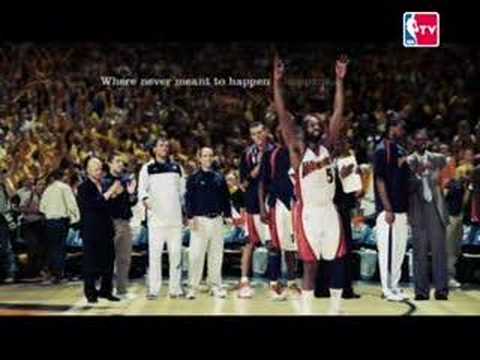
Beginning in 2007, NBA released a series of commercials which revolved around the theme “NBA: Where Amazing Happens”. These short clips featured NBA players in still action shots with dramatic music in the background and helped emphasize to the viewers of the memorable moments in the game which often can be missed due to the pace of the game. (See for yourself with the video below)

YouTube Preview Image

This reminds me of what we learned in class today – a campaign like this helps build an affective commitment from the consumer to the brand. As you watch the commercial, you can’t help but want to be part of the moment or experience when something special happens in the NBA.

The slogan is still used to this day – and it’s working. On April 2009, interest in the NBA was at its highest since July 2007, with over 33% of  total persons aged 12 and older identifying themselves as an avid NBA Fan.

Spam prevention powered by Akismet