During a trip through Oregon this summer with a good friend, I picked up The Oregonian during breakfast, and on the front page was a most interesting story titled “Waste? Or energy to burn”. The article explained how the Gresham municipal treatment plant near Portland was planning to save over half a million dollars annually by becoming energy self-sufficient using the city’s waste.
The plant already harnesses methane gas from sewage and uses solar panels to generate enough electricity, to save about $20,000 a month. But the Gresham treatment plant is investing a further $750,000 in equipment and infrastructure for the ability to generate electricity with the addition of fats, oils and greases from restaurants to its endless supply of sewage, eliminating annual power bills of $570,000.
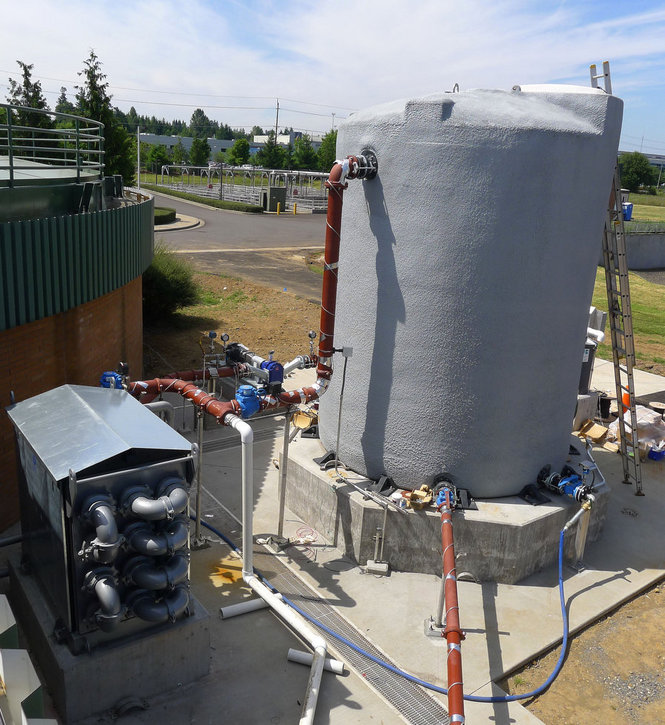
The fats, oils and greases (or FOG) would normally be hauled from restaurants by private companies to be “de-watered” and dumped in the landfill. By using the process of anaerobic digestion, the Gresham treatment plant harnesses the volatile gasses released by the decomposition of the FOG and solid waste. This gas, consisting of dense greenhouse gasses such as methane, nitrogen and hydrogen sulfide, is burned to create electricity. This very cool process not only means that the Gresham wastewater treatment plant will be powered completely by renewable energy, but that it will simultaneously keep approximately 10,000 gallons of fats, oils and grease out of the landfill every day.
Creating energy through anaerobic digestion is not a new idea, and the technology is widely available. Every municipal wastewater treatment facility has the ability to expand beyond merely keeping sewage out of rivers, but to become resource recovery facilities.
More on anaerobic digestion here