Categories
Uncategorized

Experimenting With Anaerobic Digestion


For my last project in microbiology this term, we were to select a microbe, or microbial phenomenon and give a short presentation. Being interested in anaerobic digestion, I chose the process of methanogenesis, the process during anaerobic digestion which produces methane.  Anaerobic digestion is the broad term for turning organic waste into natural gas, including all the stages that material goes through before methane is produced as a byproduct of microbial metabolism, which is the process of methanogenesis.

After realizing that anaerobic digestion is nearly identical to the process of fermentation (with some notably different byproducts…), I decided to use my brewing equipment and the organic waste collected over one week in my Green Bin to see if I could producemethane at home.
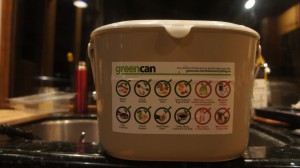
 

Methanogenic archaea (microbes that produce methane as a product of metabolism) require an intermediary step before methane is produced from organic waste, just as brewers yeast requires enzymes to break down starch molecules into simple sugars during the mashing process. For the methanogenic microbes, this intermediary step is the decomposition of larger organic molecules such as proteins, cellulose and carbohydrates into smaller molecules by naturally occurring microbes. These are the same microbes that produce acetic acid (vinegar) from wine in the presence of oxygen. Once the material is sufficiently decomposed, oxygen levels are depleted by microbial activity and carbon dioxide concentration is high, only then will the methanogens begin producing methane. The chemical equation is as follows:

CO2 + 4 H2 → CH4 + 2H2O

The first step in my home anaerobic digestion experiment was to grind the organic material into a uniform pulp and mix it with oxygenated water to kick start the decomposition process.
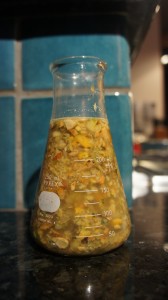
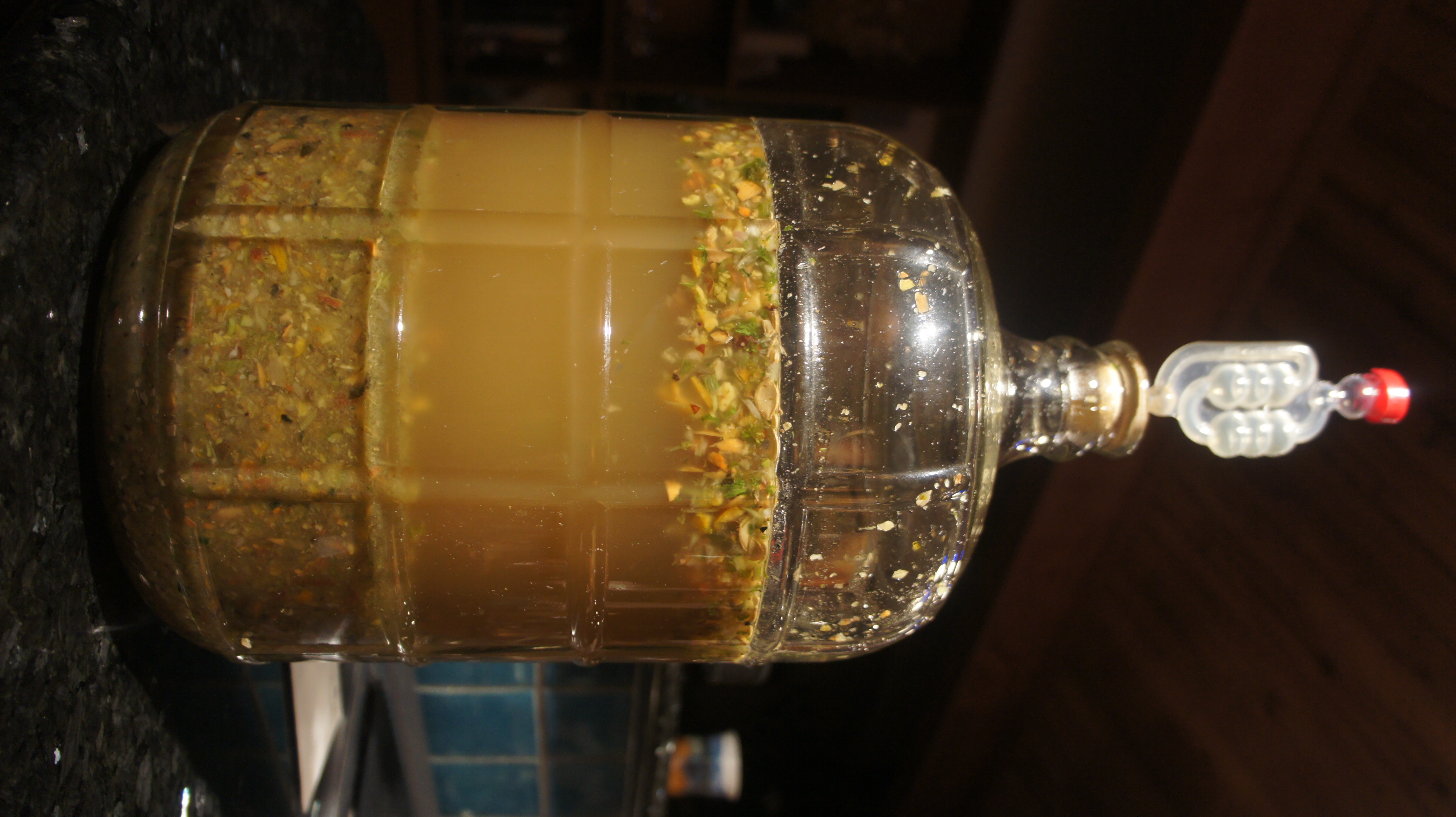
Currently the mixture is working through the primary stages of decomposition, releasing carbon dioxide through the airlock. Hopefully, in a week or so the methanogenic microbes will get to work and methane capture can begin!


Categories
Uncategorized

Summer Farm Composting Project

Recently I put together a research project with the help of the Center for Sustainable Food Systems and the UBC SEEDS program to develop an on-site composting program at the UBC farm. I was surprised to learn that this was not already happening, but I soon realized why. It would be a huge undertaking…

Although composting is of interest to me, what drew me into this project was the ability for a farm-composting operation to contribute to the 2015 Zero-Waste Campus goals of the university. According to the 2010 waste management study, ~40% of all the waste that the UBC campus sends to the landfill is compostable organic waste. Add to that the fact that the UBC farm purchases tonnes of compost each year for their normal operations, and it seemed like a win-win situation.

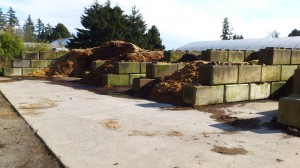
There are multiple methods of composting that will meet the Organic Matter Recycling Regulations in British Columbia, but whichever method we choose must be able to function on the existing 80’x50′ concrete pad at the farm.

The operation must be able to accommodate variable volumes of organic material throughout the year while remaining viable.

First steps will be assessing whether or not an agricultural grade compost can be produced from the feedstock available on campus. Once the correct ratio of organics and bulking agents are obtained, how much and how frequently organic waste is collected from UBC can be determined.

Hopefully, this program can divert a significant amount of UBC’s organic waste from the landfill, contributing to the 2015 Zero Waste targets.

Updates on this project will follow as it progesses!


Categories
Uncategorized

Letters to Young Students

The competitive world of academia often leaves us as students feeling deficient in some way when we compare ourselves to others. Having recently read a collection of works, Letters to a Young Poet, by the German poet and author Rainer Maria Rilke, I felt it appropriate to share the messages I took away from it. The letters in this compilation provide guidance for anyone, in any stage of life, to grow as an individual.

To clarify, art, indescribable as it is I feel refers to any expression of creativity, while an artist can be anyone who is truly an individual, offering something unique in everything they do.

So much today we measure and weigh ourselves against others and from a young age, and are taught to do and think on the basis of approval from others. All the while neglecting to take time and learn what truly makes us happy as an individual. However, a feeling of happiness can be manufactured and obtained from any number of external sources. Perhaps not taking the time to learn what makes us complete is a more apt statement. What is it we must do, what do we need to do to feel complete as an individual, and resist becoming the appropriation of external pressures. Rilke suggests that the way to do this is to look into ourselves and find the thing that we would rather die if we were forbidden to do it. Once we find this, and know fully what makes us whole, can we know who we are as an individual and share that through our art.

Rilke’s commentary about love may be the most influential topic in his letters. When he discusses love, he is not strictly referring to romantic love, but I believe he is talking about anything that takes up an individual’s time and has expectations.  As he explains when a two people fall in love, “each of them looses themselves for the sake of the other”. Before jumping into any relationship (be it a person, career etc…) we must have grown into our individuality in solitude, otherwise we will be left with disappointment and unfulfillment.

Throughout Rilke’s ten letters, there is a reoccurring message; to encourage slow and deep learning through self-experience, unaltered by the thoughts and critiques of others and to not look for acknowledgment from anyone but oneself, “nothing touches a work of art so little as words of criticism”.

If there was one quote to summarize Rilke’s attitude towards art, I feel it would be this; “being an artist means not numbering and counting, but ripening like a tree”. Simply, the ripeness of the fruit does not depend on the age of the tree so much as what the tree has taken through its roots.

Spam prevention powered by Akismet