Categories
Uncategorized

Mascots

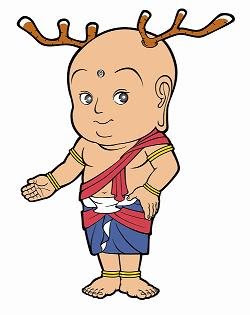
The other day, my brother mentioned this mascot that’s apparently now popular in his workplace… He called him “Sento-kun”. And my brother was the one who introduced him to his co-workers.

So who/what is Sento-kun?

Well Sento-kun is a mascot for the Japanese city of Nara. It was created to for Nara’s 1300th anniversary and is definitely a marketing strategy. Like all mascots, it was created to help promote sales which is in this case is tourism and souvenirs. Nara followed Hokkaido’s city of Kutchan’s lead, and created a mascot of their own. Where Hokkaido’s mascot is rather cute and fitting of japanese preference for cute images, Sento-kun is …. different.

Kutchan’s Jagata-Kun, the skii-ing potato

There has been much controversy over Sento-kun over its image. I personally find him quite ugly. Japanese religious groups are angered over its similarities to Buddha as well. The city of Nara paid 5 million yen when commissioning this mascot! That’s about $60000 CAD! And what do they get for their money? A questionable mascot that was rather unpopular.

Nara’s Sento-kun.. The Buddha looking person with deer antlers.

Strangely enough, it is due of the fact that he’s rather hideous that Sento-kun is now well known across Japan. A rather strange outcome if i do say so myself. Tourists buy Sento-kun souvenirs because he looks odd as well! So in a way, Sento-kun WAS a success. People just do not portray him the way he was intended to be portrayed. Any publicity is good publicity.

Categories
Uncategorized

Branding

It’s interesting how consumers can identify a brand by colour alone. Take Tiffany&Co for instance. You see the colour, and BAM. It’s Tiffany. It reminds me of the exercise we did in class where we had a portion of a logo, and being able to tell most of the brands. Scary how much advertising, logos and the like we see in our short lives.

It’s almost like typing typing with only the first and last letter correct, with the rest of the word mixed up. It’s fascinating, really. I’ve actually seen an advertisement doing this… and i understood what it was saying. Human brains are pretty powerful.

For me, I can tell a Final Fantasy logo by it’s art. If you take out the words, i’ll still be able to tell. The art is distinct enough that consumers can identify it as Final Fantasy. It’s probably one of the main reason why they have kept the same logo style throughout the entire series. They’re basically molding consumers to be able to tell their logo apart from any other. The same can be said for any company. Logos and brand colours are made so that consumers have a shortcut to identifying their brand. I see green and red, i think  of Christmas. I see pink, and i think of breast cancer. It’s a powerful tool that marketers take full advantage of.

The Collection of Final Fantasy Logos

Categories
Uncategorized

Final Fantasy VII

Final Fantasy VII is by far my favourite in the Final Fantasy compilation. Perhaps it was how the game was introduced to me, the gameplay, the story-line….. I’m not sure, but it is definitely my favourite.

Final Fantasy VII was the first main Final Fantasy title for the Playstation. And it was the the game to feature 3D graphics. It was a key playing for the popularization of Japanese Role-Playing games in North America. It was noted as “the game that sold the PlayStation.” That is how great the game was.

The characters were so deep. They were given even more depth when prequels were released. The main villain, Sephiroth, is one that many can identify on sight. The main character, Cloud, is one of the most popular video gaming characters of all time (poll Results on Gamefaqs.. pretty sure Mario and Zelda beat him in popularity though). I love all the characters, and throughout the trilogy, you just connect with them… Well, that is actually quite normal when you play truly amazing RPGs. =)

When FFVII was set for release in North America, Square Enix set a marketing campaign consisting of commercials on major channels, a promotion collaboration with Pepsi, and ads printed on major comic series.
And the results? 330, 000 copies were sold in North American the debut weekend. I find that rather amazing for a game that has not built a solid presence in the segment. Random Fact: Within 3 days of the Japanese release date, 2.3 million copies were sold in Japan! 2 300 000!! Many retailers in North America actually released the game earlier than the set date when they saw how well the game was selling in Japan.

FFVII game-cover for the PlayStation

That’s the power of branding. Final Fantasy built a solid brand and image through their past 6 releases. Avid gamers KNEW that Final Fantasy games were good. They knew they could trust Square-Enix to produce top quality games, so they buy it without first waiting for player reviews to release, hence the 2.3 million sold in 3 days.

Nowadays, the Final Fantasy VII compilation has grown. The entire list is as follows:
Before Crisis: Final Fantasy VII (Prequel of the Prequel LOL)
Crisis Core: Final Fantasy VII (Prequel)
Final Fantasy VII (Main story)
Dirge of Cerberus: Final Fantasy VII (A Sequel of sorts focusing on Vincent Valentine… who is not the main hero of FFVII)

There are animations of Final Fantasy VII too, consisting of 2 OVAs (Original Video Animation) and 1 movie.
The movie, Final Fantasy VII Advent Children, is a purely CG (Computer Graphics). The graphics are amazing. The fight scene was pretty epic. When the movie was first announced, i was pretty stoked. I had to wait through 2-3 delay dates for the movie to release… pretty painful… FFVII Advent Children “re-popularized” the series in North America and Japan. With it’s release, many FFVII lovers are hoping for a re-make of Final Fantasy VII, the game.

A Scene from FFVII: AC

Square-Enix definitely milked Final Fantasy VII. “Oh… its so popular! Lets make more!” That’s pretty much how it was. I’m crossing my fingers for them to continue milking it, and re-make FFVII. I would be one happy camper if they ever do~! <3

YouTube Preview Image

A Cool Fight Scene from FFVI: Crisis Core (Sephiroth vs. Genesis)

Categories
Uncategorized

Final Fantasy I

Square, now known as Square Enix, launched Final Fantasy in 1987. It was supposed to be their last video game before the company went under, but look at it now. Final Fantasy has grown to become one of the most beloved role-playing series today. There are now 13 main titles with numberous side titles and re-releases. It’s been on video gaming platforms such as the PC, Nintendo DS, PSP, all three Playstations and the Xbox 360, and more. There are even CG movies dedicated to Final Fantasy and a ton of merchandise. At the time of its initial launch, Square Enix never thought it would become such a success.

So. How did the first Final Fantasy do it? Why did people buy it?

1) Storyline & Gameplay. Final Fantasy had a deep and engaging storyline. According to critics, it was ,more interesting than a competitor, Dragon Quest, at the time. It was a fantasy, and of course, many became enthralled with this virtual world. They had mages, dragons, magic crystals, evil bosses that summon things! There dungeons to overcome, princesses to save, a time-traveling portal. To sum it up, things were epic for that time.

2) Graphics. If you looked at the graphics now, you mightbe like omg… SO UGLY AND PIXELATED!! Hey, its been 23 years since the release! Of course your standards have risen since then! At the time, these graphics were AMAZING! People must’ve been like “Whoaa!”


Graphics from a re-released version of Final Fantasy I

3) Music. Music in a video game is soooo very very important. It changes the mood of the game and influences your overall experience.  For instance, during battle scenes an intense theme should be played to boost adrenaline. Music was created after the game was produced, for better scene fits. I have to say, Nobuo Uematsu (the composer of most of the series’s soundtrack) is a genius.

Overall, Final Fantasy was highly successful and is one major factor to the popularization of role-playing game genre. The game was a definitely an early adopter for the genre, and drove it towards a growth stage. Look at RPGs (Role-Playing Game) now. There are so many out in the market. A roleplaying game sells an experience. The player steps into the character’s shoes and explores the fantasy world, experiencing something they can never get in reality. There was perceived by consumers, so they bought it. Enough copies of the game were sold to save Square Enix and initiated the production of a sequel.

An amazing game will sell itself, and Final Fantasy definitely proves that.

YouTube Preview Image

The Final Fantasy Full Motion Video (FMV) into for the Playstation

Categories
Uncategorized

I was browsing through some blogs when I came upon Maggie’s post regarding and advertisement campaign by “Cheers”, an asian beer  company.

The first thing that came to my mind while watching this was… OH MY. The commercial over exaggerated the little things that people are generally happy for — the  oh-so-coincidental free parking space, the fact that it’s Friday and the 2nd crab claw for the couple. It was sooo funny.

So, what is Cheers attempting to do with this campaign?

I for one, believe that they’re attempting to capture consumers through humour and by relating to their customers. Many people feel a twinge of joy when it’s friday, or when they find that sought-after parking space. Cheers just over exaggerated this fact for laughs.

In all three commercials, Cheers features middle-aged men, so I am rather certain their target segment consists of middle-aged working men. They created the commercials specifically to relate to their segment. Chances are, Cheers also has multiple beer lines, so they are using a differentiation targeting strategy. And how are they trying to position their product? As per the commercials, Cheers want to be viewed as a fun alcoholic beverage. It wants to be the product you go to when you want to be happy, hence the name “Cheers”.

Categories
Uncategorized

Beginner Piano Books

As per my previous post, you should know that I am currently completing the ARCT Teacher’s program with the Royal Conservatory of Music.

During the first part, I learned about a variety of piano beginner books. There are SO many out there, so it got me wondering how the publishers market their books.

One of the beginner method books that I had to browse through and learn about, is “Celebrate Piano!”, published by Fredrick Harris Music. For this book, the publishers sent out free copies to a large number of teachers in hopes that they’ll come to like it. They know for a fact that if you over the teacher, their new students will more than likely have to buy the book! Students must have their own copy of the piano music, so targeting teacher’s is fairly effective. I know for a fact that my piano teacher prefers Alfred’s Prep series. Any new students she has, has to own a copy. I still have mines from years back.

Other beginner method book series such as Alfred’s Piano Course, Piano Adventures and Piano Basics, all have a wide number of beginner “lines”. For example, Alfred has their “Prep Course” along with their “Premier Piano Course” etc. Most piano beginner method book publishers know that the people who begin lessons vary in age. So, for each age group, they have separate books! In other words, they have separate books for each of their target markets!

Alfred, has done a good job with their beginner method lines. They have also produced a chart showing which books are equivalent in difficulty. For example, two books of one beginner line might equal one book in some other line.

Since there are so many beginner method books out there, the authors/publisher must be good marketers if they want to stay in the business.

How would i pick a beginner method book? Well, there are many factors that teachers look at:

  • Is it visually and aurally appealing?
  • Does it contain familiar and unfamiliar tunes?
  • Does it introduce dynamics/the staff/accidentals?
  • etc etc

Anyways, it should be fairly obvious by now, but Piano is a business as well! Lots of business regarding Pianos and other musical instruments. (RCM is definitely in it for the business)

Oh. That reminds me, my teacher has informed me that RCM has just introduced a level higher than ARCT. HM. For sure that’s just another money maker. Haha

Categories
Uncategorized

RCM

During the summer, I completed the first part of the Piano ARCT Teachers’ examination (with really good marks by the way :D). Recently, the Royal Conservatory of Music, the body responsible for music examinations in Canada, split the ARCT Teachers examination into three parts: Elementary, Intermediate and Advanced. Without a doubt, they split the examination so that they could make more money.

The piano syllabus changed in September 1, 2008, where they introduced the three tiers to the ARCT Teachers’ examination. There was a cross-over period from September 1, 2008 until August 31, 2009. During this time, teachers could use either the old 2002 syllabus or the new syllabus to prepare their students. Of course, during this time, they were pushing towards the new piano syllabus. They sent out newsletters to registered piano teacher’s via email in hopes of teachers putting their students through the new ARCT Teacher’s curriculum. Well, it worked. I’m one of those students who are going through this three-level program.

Using the 2002 syllabus, the ARCT Teachers’ examination consisted of one Practical/Viva Voce exam and one written exam. I’m not sure of the exact costs, but i’m assuming that the total fee is approximately $500 dollars.

Now, when following the new syllabus, the ARCT Teachers’ examination consists of three Viva Voces, one practical, as well as three written examinations. That’s a total of seven examinations. According to the RCM Examinations website, the fees are as follows:

Elementary Piano Pedagogy Written                    $114
Intermediate Piano Pedagogy Written                  $119
Advanced Piano Pedagogy Written                     $154
Elementary Piano Pedagogy Viva Voce              $240
Intermediate Piano Pedagogy Viva Voce            $277
Advanced Piano Pedagogy Viva Voce               $307
Advanced Piano Pedagogy Practical                  $307
Total:                                                                 $1518

That’s a pretty big cost increase for an ARCT Teachers’ certificate.

RCM knows that demand will not decrease significantly for their ARCT Teachers’ certificate, since they are the only examination body in Canada. They pretty much have a monopoly over music proficiency certifications and they know it.

Are students going to stop taking the examination because of the new three-section teacher’s program? No! Many students feel obligated to finish off their musical education with an ARCT certification, whether it is performers or teachers. Also, for the ones that actually want to teach piano as a lifestyle, the teacher’s certificate is almost necessary. Once you receive your certification, you can charge your students anywhere from 35-70 dollars depending on experience and the like. My piano teacher charges 65 dollars an hour. That’s over a dollar an hour, and her schedule is FULL. PACKED! So you can only begin to imagine how much many one can make with a teacher’s degree.

Since I am continuing to get my teacher’s certificate, I’ll be looking to pay a couple hundred more dollars to complete the program. I’m rather unhappy that i have to take 3.5x more examinations than with the previous program. Sadface. 🙁

Categories
Uncategorized

K-Pop

Korean pop music, “K-pop”, has been steadily gaining popularity outside of Korea in the recent years, especially with the Asian community. Popular idol groups such as Big Bang, Dbsk, SNSD, 2NE1, Super Junior, etc, have fans internationally, even though a majority of those international fans have no understanding of the language.

This feat would not be possible if not for the invention of Youtube.

Youtube allows us to view Music Videos and listen to music that would not be shown on our televisions or radios..

YouTube Preview ImageThis is the song that first got me hooked on korean music: Lies by Big Bang

Word of mouth is also one of the main ways K-pop has been growing in popularity. In fact, I got into K-pop when my sister came back from her trip to Korea and began singing and dancing to korean music. After that, I was hooked. I then introduced k-pop to friend of mines and she got into it as well.

Recently, a few Korean albums has been released internationally through iTunes.  Taeyang’s album “Solar”, and 2NE1’s album “To Anyone.” Both have been well received. From what I’ve heard, at the albums’ peaks, Taeyang’s and 2NE1’s reached 1st place in the R&B and Hip hop categories respectively. They also did extremely well in United States and Japan. As you can see, through word of mouth and Youtube, Korean music is doing extremely well in the global market.

Viral marketing in today’s market, is an extremely powerful and efficient advertising tool. Youtube, social media and the like, all fall under viral marketing.

As a side note, I’ve noticed that K-pop helps you make friends. Korean music is one of the topic that i bring up while trying to find common interests. I’ve mentioned this to a friend, and she also agrees with me. Korean music builds relationships. Just an observation.

Spam prevention powered by Akismet