Monthly Archives: October 2017

Microcredit – A Macroscopic Debate

Blog referred to

https://blogs.ubc.ca/jonkim/2017/10/15/mega-microloans/

Within the wide world of economics, there are four main hemispheres – microeconomics, macroeconomics, international economics, and developmental economics. Each of them progressively provide a larger and more long term perspective of decision makers, and the responsibility that falls upon them. The most beloved and cherished offering bestowed upon the universe of developmental and international economics is microcredit – a financial ladder out of the abysmal chasm of poverty. It is considered a lifeline for those who borrow, a winner for those who lend, and an opportunity to independently finance and fuel the train out of circumstances that spiral out of control into hopelessness for many.

It began in Bangladesh, when Muhammmed Yunus offered a loan of $27 to a stool maker who was a prisoner to her necessitousness, that led her to be exploited because she did not not have the 22 cents needed in order to get around the various agents of her business. In 2006, Yunus was honored with the Nobel Peace prize – but as of today, microfinance as a whole has morphed into a disputatious discussion.

Rapid commercialization of this industry has brought its altruistic and economic aspects at opposite ends. With hostile measures of client enlistment and steep interest rates charged on loans, it has become a game of high stakes and megaprofits. Entrepreneurs like Vikram Akula have reaped the returns of generational debt and deficit, by launching a public IPO for SKS Microfinance and raking in crores of rupees. Likewise, Mexico’s Banco Compartamos IPO gathered a sum of over five hundred million after turning to a for profit organization. To this, Yunus Mohammed responds saying – “Microcredit was created to fight the money lender, not to become the money lender.”

This situation of a counterintuitive Robin Hood that rips off the poor and deposits to the rich questions the basis of microcredit as a self sustaining system. Pointing the blame at any stakeholder in this loop is futile – what can be brought to examination here? Is it the profit centralized approach encouraged and adapted by capitalism? Can it be the inability of the poor to preserve and maintain the wages they receive? Or can it be the process of issuing loans without extensive discretion? Lending in itself requires delicate balance. In United States, too much led to the housing bubble bust and too little led to the long drawn recession.

In my opinion, there is no neat answer to qualify microcredit as positive or negative. Coming together with collective ownership of financial, human and physical resources and long term programming of a development plan that is both feasible and fast is the only way to claw out of impoverishment and indigence.

Websites referred to

Toyama, K. (2011, January 28). Lies, Hype, and Profit: The Truth About Microfinance. Retrieved October 29, 2017, from https://www.theatlantic.com/business/archive/2011/01/lies-hype-and-profit-the-truth-about-microfinance/70405/

Flounders, S. (n.d.). Retrieved October 29, 2017, from https://www.workers.org/2010/world/microloans_0304/ 

Blog referred to
https://blogs.ubc.ca/jonkim/2017/10/15/mega-microloans/

Business Interest in Interest Rates – RBI and India

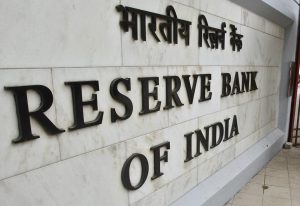
A police officer stands guard in front of the Reserve Bank of India (RBI) head office in Mumbai April 17, 2012. The Reserve Bank of India cut interest rates on Tuesday for the first time in three years by an unexpectedly sharp 50 basis points to give a boost to flagging economic growth but warned that there is limited scope for further rate cuts. REUTERS/Vivek Prakash (INDIA – Tags: BUSINESS)

This article is based on the act of the central bank of India, RBI, notifying the general public of their monetary policy – this is a stabilisation tool directed at actualising full employment with low inflation. This is done by the central bank, which decides upon a target interest rate, and then accordingly adjusts money supply to match this. The monetary policy exerts indirect influence upon the level of aggregate demand in the economy, by its influence upon the rate of interest.

In order to understand the dynamics of the money market, money must be viewed as a product which acts as a medium that facilitates exchange of goods and services. In that sense, the rate of interest can be regarded as the price of money. The interest rate in question is the repurchase rate – the rate at which RBI lends money to commercial banks in the event of any shortfall of funds – which has been reduced by 0.25%. RBI act as a bankers to commercial banks by offering them loans, so by decreasing the repo rate, commercial banks are incentivised to borrow more from them. As interest rates decrease, the opportunity cost of holding money decreases, thereby increasing its demand.

Meanwhile, the supply of money is independently determined by the RBI. This control is exemplified by the reduction in the reverse repurchase rate – a monetary policy instrument which is the rate at which RBI borrows money from commercial banks. If the central bank wants to reduce interest rates, it must increase the supply of money. Since the repurchase rate has reduced, the interest rate commercial banks have to pay to RBI decreases, thereby decreasing their opportunity cost of holding money in deposits, in terms of sacrificed income from accumulated interest. They will sell bonds to the central bank who will purchase them by open market operations. The payments they receive will increase their excess reserves, increasing the loans they can make and thus the amount of new money created.

The purpose of this is fundamentally to alter the level of aggregate demand. According to the article, the Indian economy has kept its inflation target at 5%. In the process of inflation targeting, a central bank estimates and makes public a projected inflation rate and then attempts to steer actual inflation toward that target, using tools such as in this case, interest rate changes. A drop in interest rates translates to a lowered cost of borrowing. Owing to this, both consumers like the general public and producers like firms borrow more and spend more. The interest rate determines how much income people want to save and how much they want to spend. A low interest rate increases consumption spending as it reduces the incentive to save and increases investment spending as it results in cheaper borrowing costs. As mortgage interest payments reduce, disposable income increases, and rising asset prices cause  business and consumer confidence to increase – all of which contributes to strong increases in aggregate demand, given that investment and consumption spending are components of it.

However, the trade-off between growth and inflation is inevitable. Inflation is an expected part of India’s monetary strategy, as they are at par with their predetermined inflation target, and “growing robustly”. If aggregate demand rises faster than the aggregate supply by firms, excess demand will result in upward pressure on price. The fact that “food inflation” has been minimised leaves the economy able to manage the inevitable rise in inflation that comes with the projected growth of 7.6% – the reason behind this is the “normal monsoon” which has maintained supply levels. Thus, augmented aggregate demand by expansionary monetary policy can improve living standards in India by strengthening the accessibility, availability and affordability of public utilities like healthcare and education.

Article referred to –

India: New policy committee cuts interest rates – October 2016. (2017). FocusEconomics | Economic Forecasts from the World’s Leading Economists. Retrieved 16 October 2017, from https://www.focus-economics.com/countries/india/news/monetary-policy/new-policy-committee-cuts-interest-rates

Other websities referred to –

Current RBI Monetary Policy Rates. (2017). Entrancegeek. Retrieved 16 October 2017, from http://entrancegeek.com/current-rbi-monetary-policy-rates-2/

‘Reverse Repo Rate’ – The Economic Times. (2017). The Economic Times. Retrieved 16 October 2017, from https://economictimes.indiatimes.com/definition/reverse-repo-rate

Finance & Development. (2017). Finance & Development | F&D. Retrieved 16 October 2017, from http://www.imf.org/external/pubs/ft/fan

Econmentor.com – Monetary Policy. (2017). Econmentor.com. Retrieved 16 October 2017, from http://www.econmentor.com/hs-advanced/macroeconomics/monetary-policy-and-the-federal-reserve/monetary-policy/text/744.html#Monetary Policy