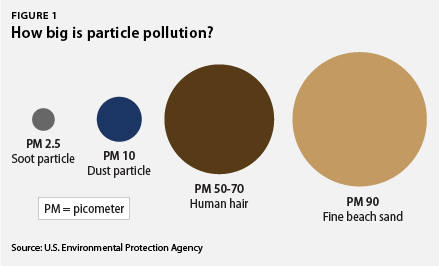
Soot (also known as Black Carbon): “ a type of particle pollution called PM2.5, which is approximately 1/30 of the size of a human hair. It is comprised of a variety of pollutants, including chemicals, acids, metals and dusts, etc. It results from the incomplete combustion of hydrocarbons.”
The Journal of Geophysical Research: Atmospheres recently released a report stating that soot is twice as damaging for the climate as most have previously expected. According to the UNEP study results, soot is the second most damaging greenhouse agent after carbon dioxide. Soot currently has a global warming effect of approximately 1.1 watts per meter square, which is only 0.6 watts per meter square lower than carbon dioxide. Furthermore, black carbon causes more harm to cold and frozen regions; for the amount of light, and heat absorbed is increased when soot falls on snow or ice. This means that the effect of soot is more apparent in the high latitudes areas such as northern Canada, and Alaska, etc. However, experts claim that the biggest impact of black carbon is on health rather than on the climate, as it causes tremendous harms to the human body, such as lung and other diseases. Study results show that controlling black carbon emission could save up to 2.5 millions of lives a year.
While the new study results show that black carbon is the main cause to several environmental and health problems, it is still easier to reduce soot than carbon dioxide. First of all, as an inevitable by product of fossil fuel, carbon dioxide is long lasting, whereas black carbon only stays in the atmosphere for a few weeks. As long as new soot is not emitted, the existing soot will eventually dissipate. Hence, it is cheaper to cut soot than carbon dioxide. Also, global agreement is not needed for abating black carbon, and it mainly benefits the locals, free riders do not exist in this case. The author of the study argues that if people did their best at reducing soot emission, global warming would be slowed down significantly.
Personally, I still see carbon dioxide emission as the leading cause to the acceleration of global warming. Indeed, the study has found useful results regarding the negative effects of soot emission, and it is clear that reducing black carbon emission improves human health, and reduces environmental damages. However, from the environmental perspective, a larger proportion of effort and time should be put into cutting carbon dioxide reduction when the goal is to decelerate global warming.
Reference:
http://www.americanprogress.org/issues/green/news/2012/08/10/12007/soot-pollution-101/