Categories
Uncategorized

“Becoming Rivers” – Preliminary Thoughts

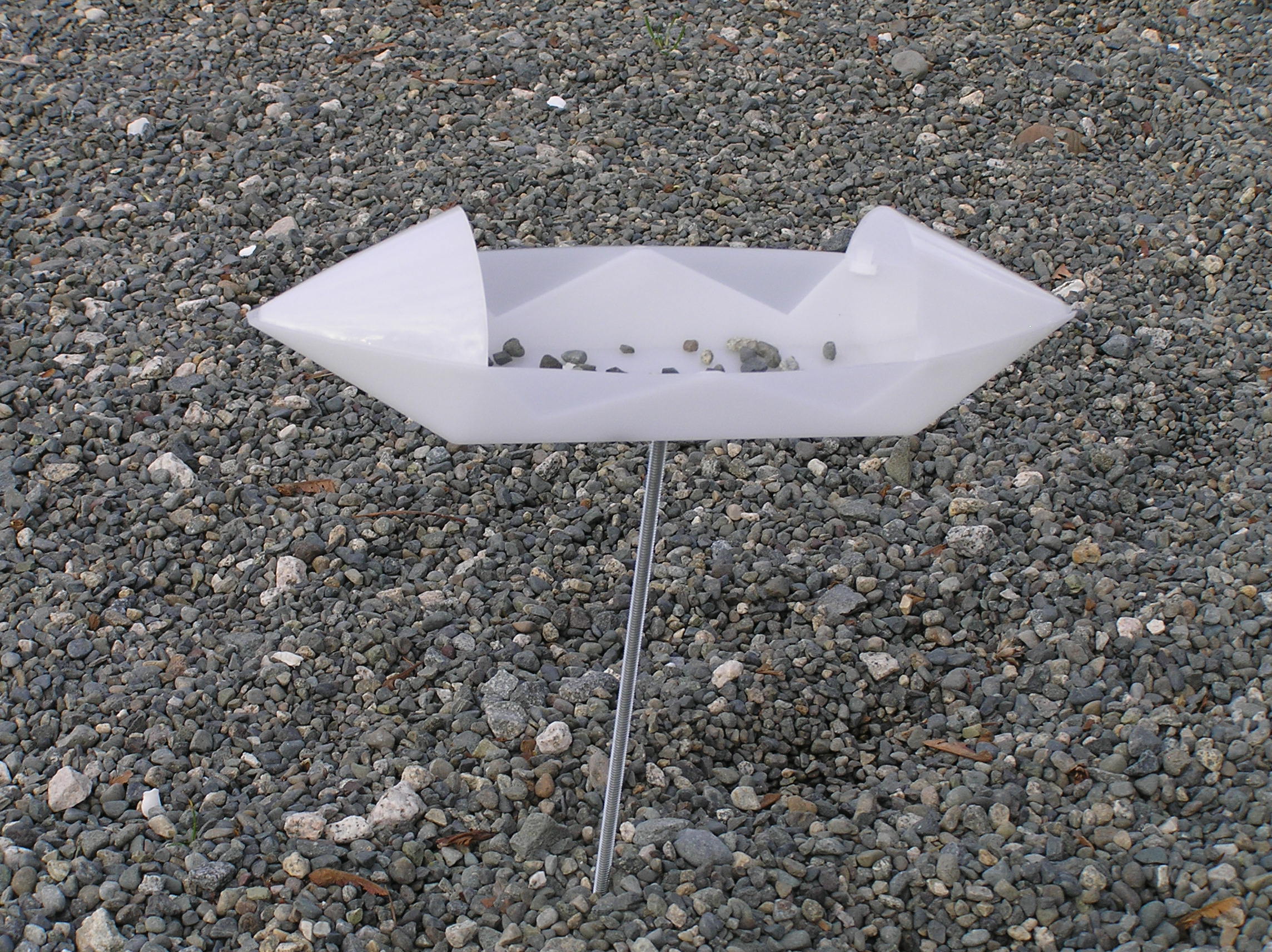
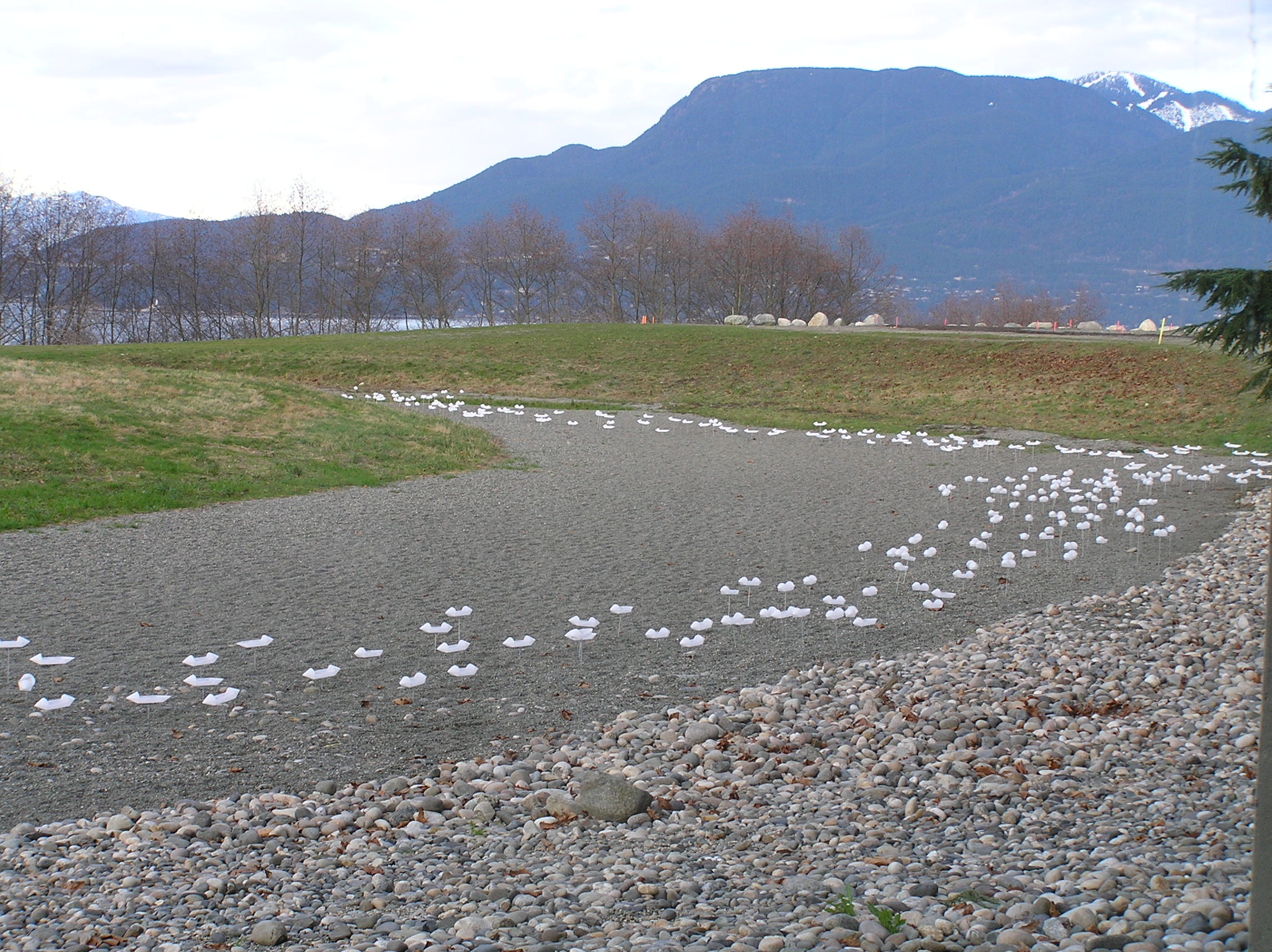
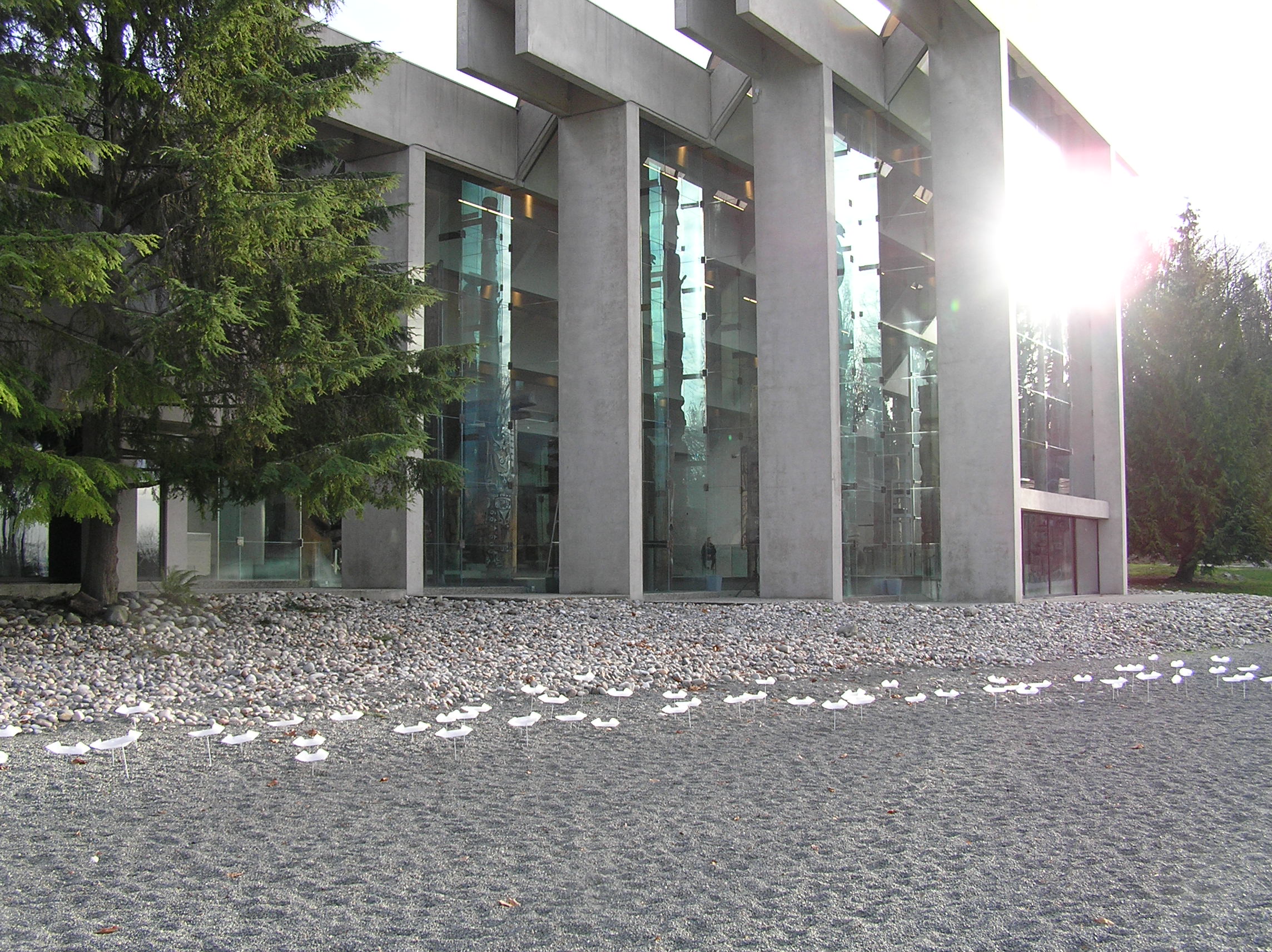
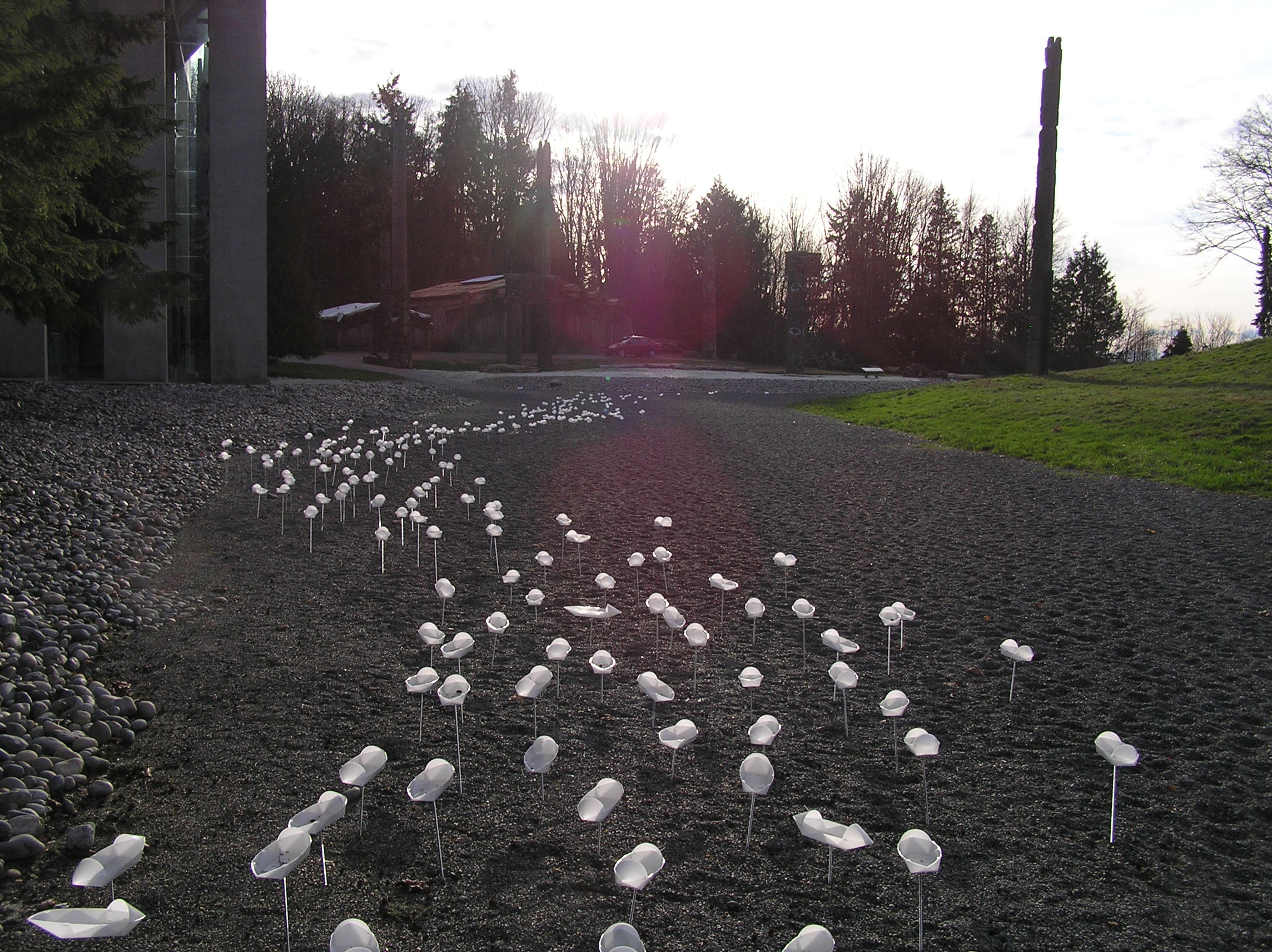
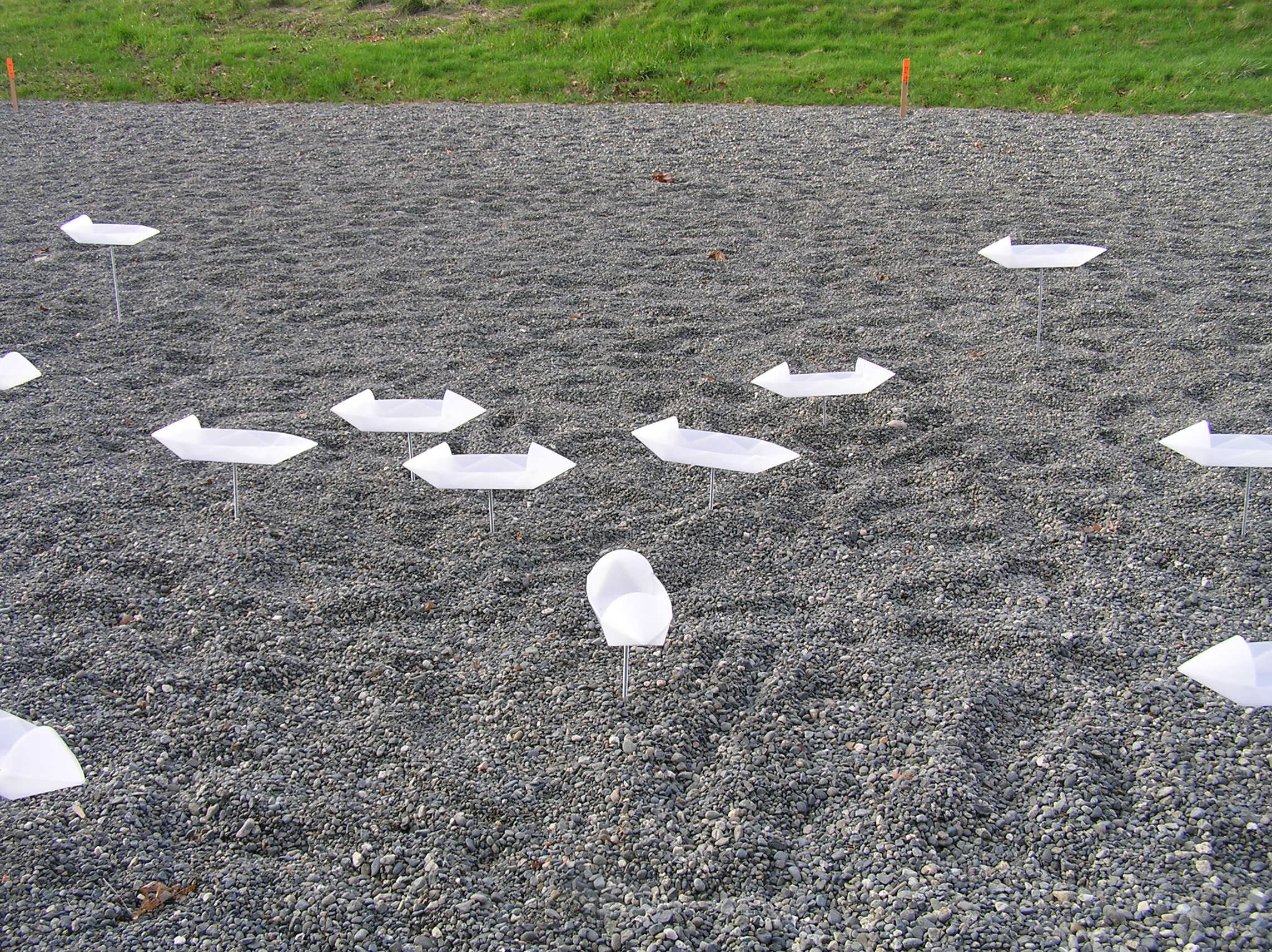
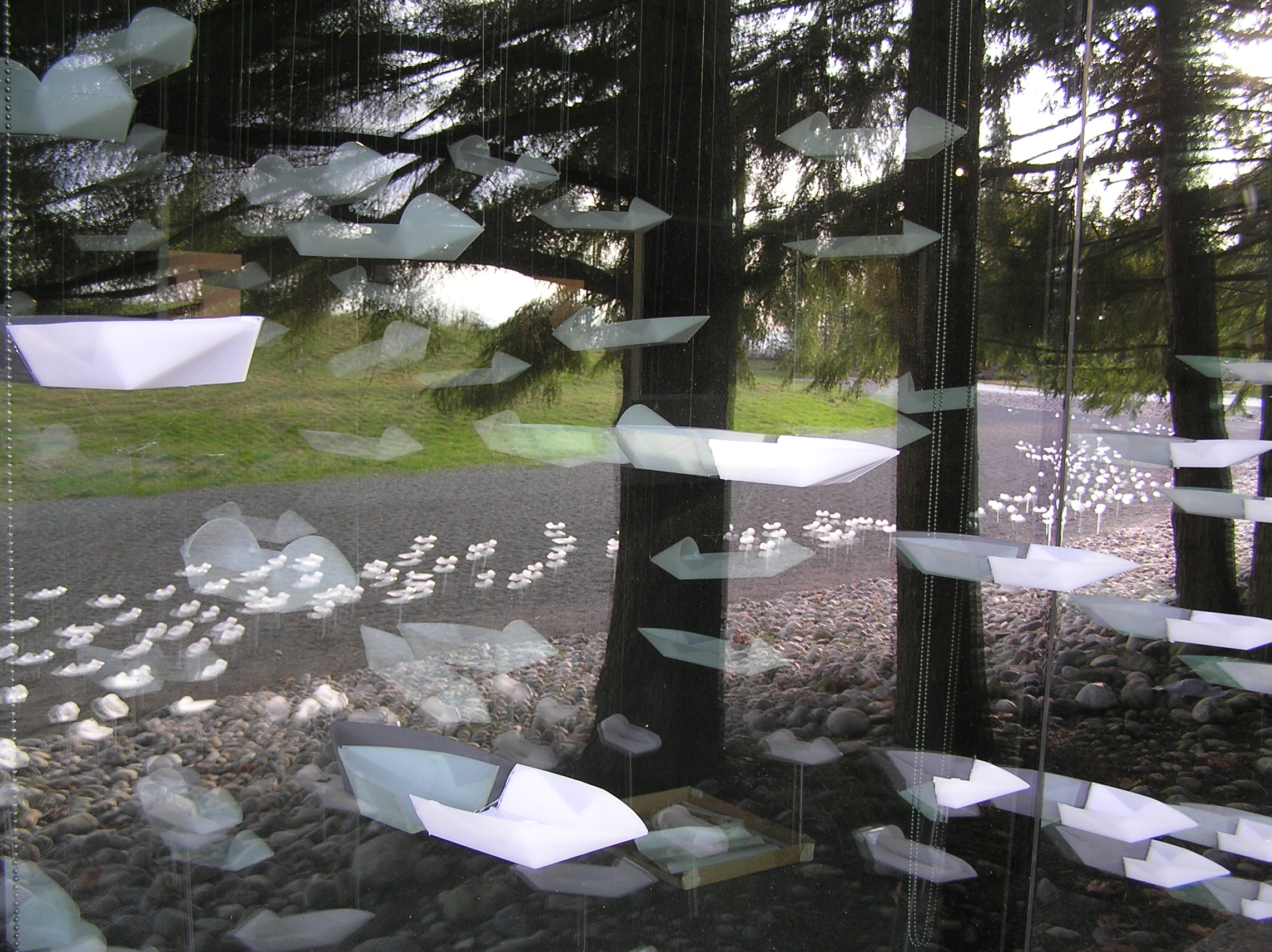
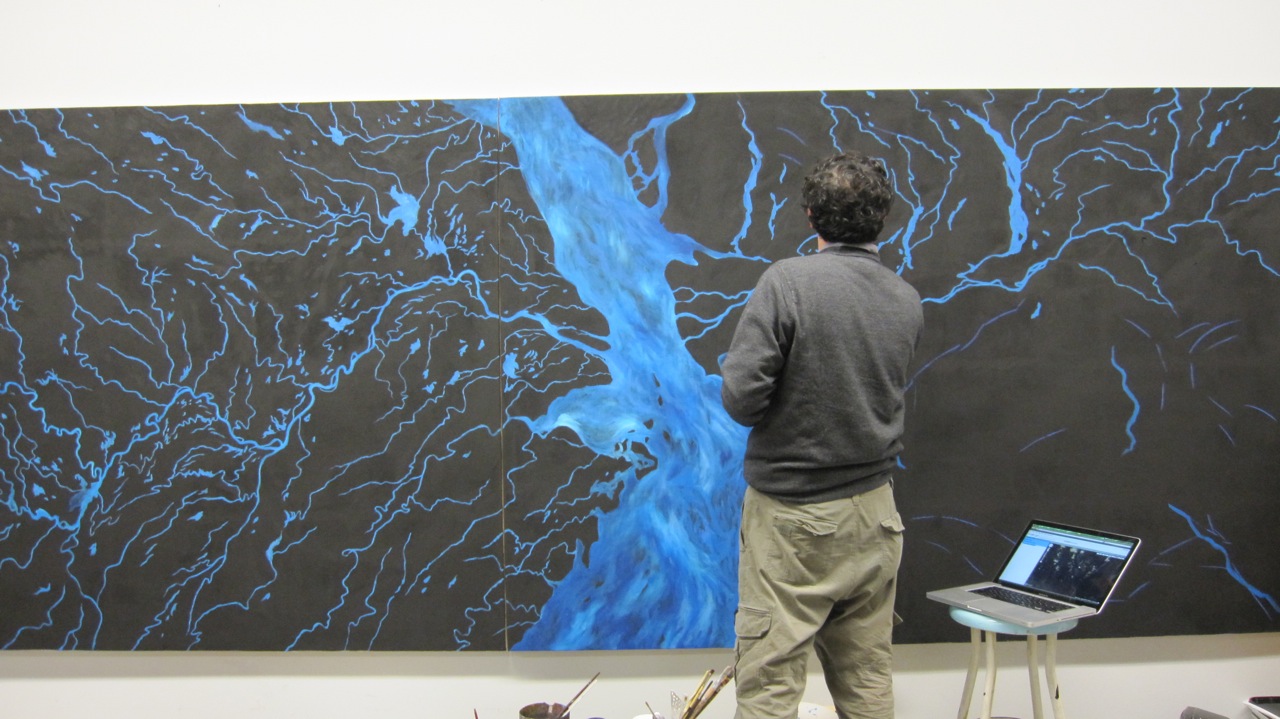
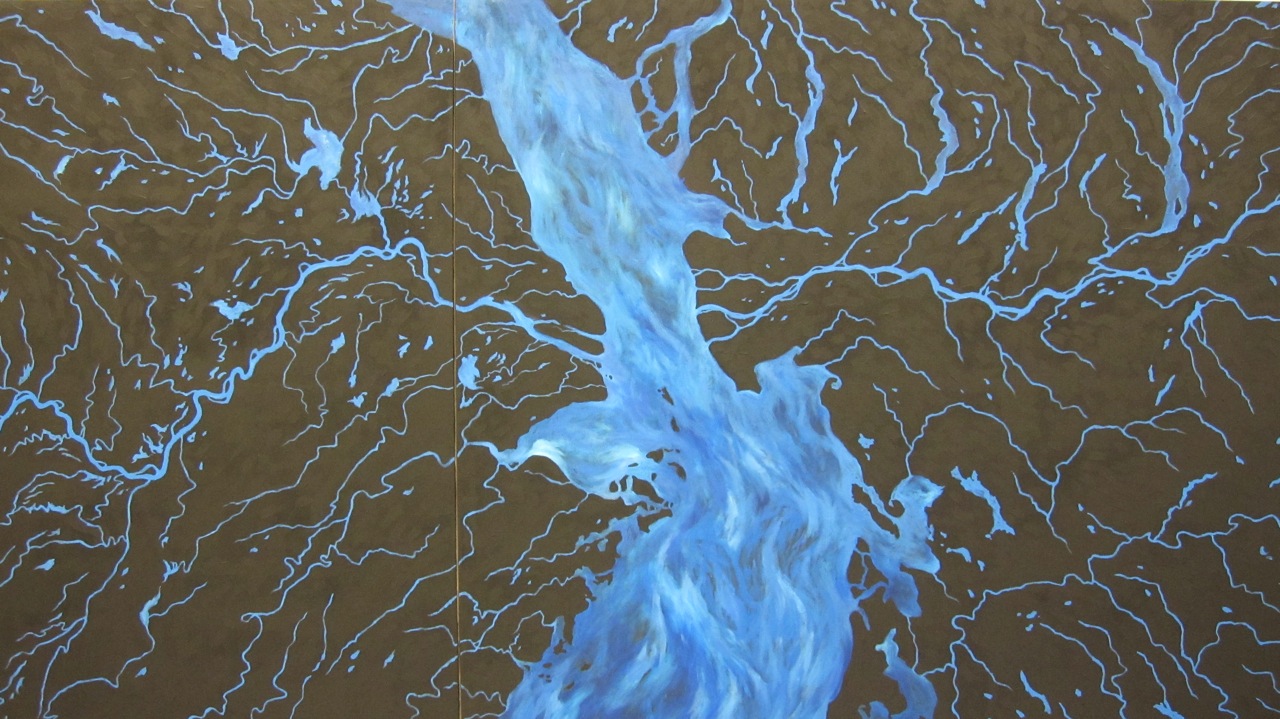
After Herculean efforts by Gu and his team, “Becoming Rivers” as well as the entire Border Zones exhibit is finally up and running. The final step was to install the boats outside and thicken up the indoor portion of the installation. The final product is visually stunning — two streams of boats seem to emerge from the ocean and pass through the walls of the MOA. These two rivers then join into one in front of a wall-sized painting of the Yangtze and Fraser Rivers as seen from satellite images. At the centre of the painting is the Pacific Ocean, but the continents have been pressed together, resulting in a turbulent strip of water that reminds me of a waterfall (see below).

The image of blue waterways – Gu describes the rivers and tributaries as being like veins in a body – is especially striking given the absence of water in the rest of the installation. Is a boat separated from its river like a fish out of the water? One of the questions that our team has been grappling with is the elusive meaning of water, the ways in which it functions simultaneously as an abstract concept (signified perhaps most prominently by the iconic formula H2O) as well as the most material everyday “object.”

At first glance, the boats imply the existence of an underlying waterway, but as one “immerses” oneself in the stream, they turn eerily into a metonymic reminder of the missing water. I found the experience of walking among boats outside the museum – as well as under the hundreds of suspended boats swaying in the gentle air flow of the museum – both jarring and peaceful. The flow of a river is one of the oldest metaphors for the flow of time, but there is something vaguely out-of-time about this installation.

A completely different idea came to me, though, as Gu, Jennifer, and I were walking through the outdoor installation at night. Boats and rivers carry a wide range of cultural meanings, but every few years in Canada, the image of racialized subjects from Asia arriving in boats evokes a kind of panic about unstoppable waves of migrants and renewed calls for tighter regulation of immigration. Indeed, the notion of the Yangtze joining into the Fraser and vice versa – while on one level a utopian vision of cultural interchange – is, on another level, implicated in fears about the Yellow Peril overrunning the settler colonies of British Columbia.

If we approach “Becoming Rivers” in this manner, then the installation turns into a reenactment of those fears (the boats aren’t just arriving our our shores, but they’re also crashing through the walls of our most cherished [educational] institutions!). Is it perhaps any surprise, that the boats look the same and interchangeable? But what is haunting is precisely their emptiness — they carry nothing, yet they signify much. Is “Becoming Rivers” a euphoric vision of cultural translation on a global scale or a critical encounter with a deeply entrenched racial imaginary?

I’ll leave it for other members of the team to comment — or any reader of this blog for that matter: please write in!For now, I’ll post a few more preview shots of “Becoming Rivers.”
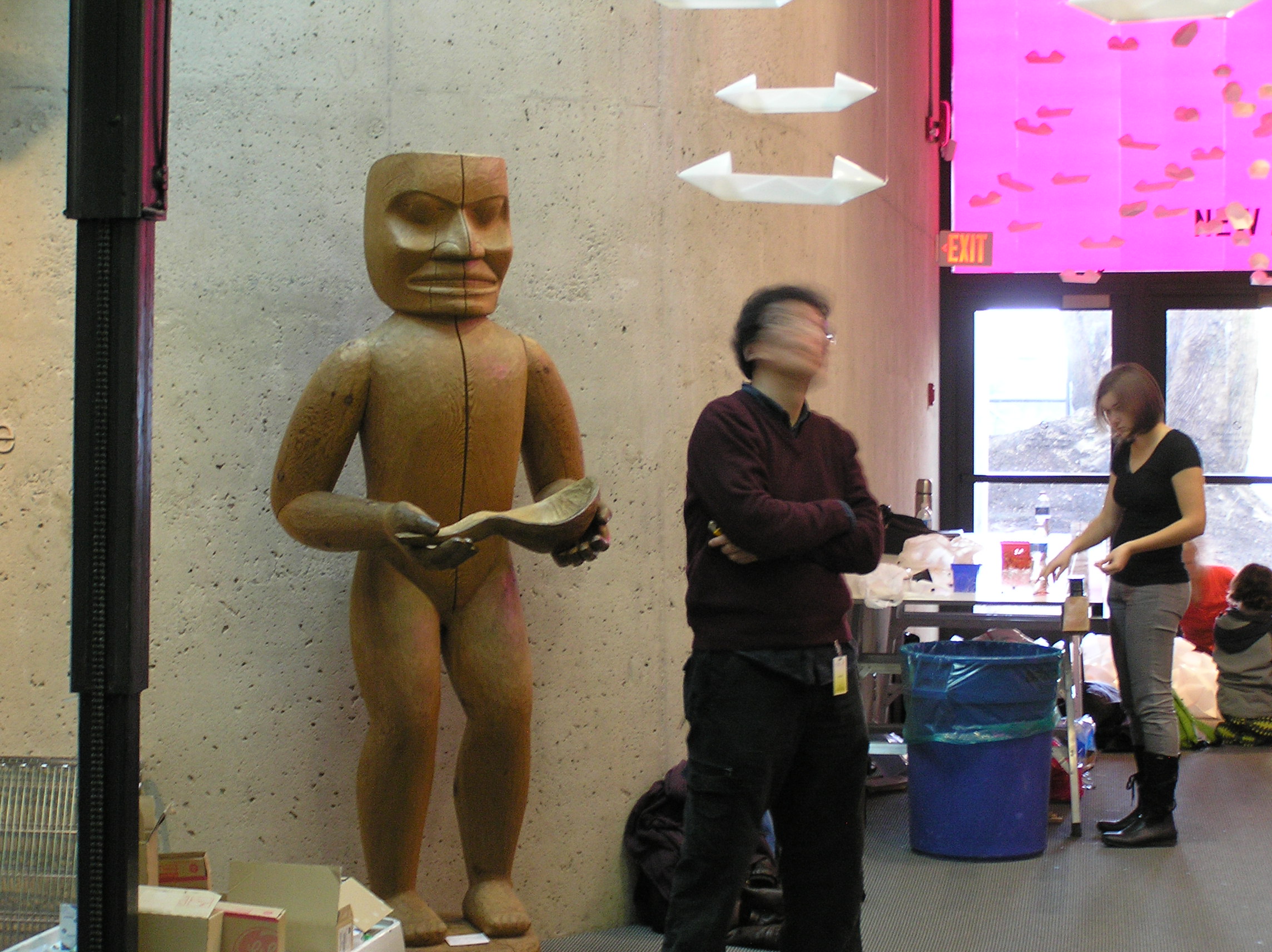
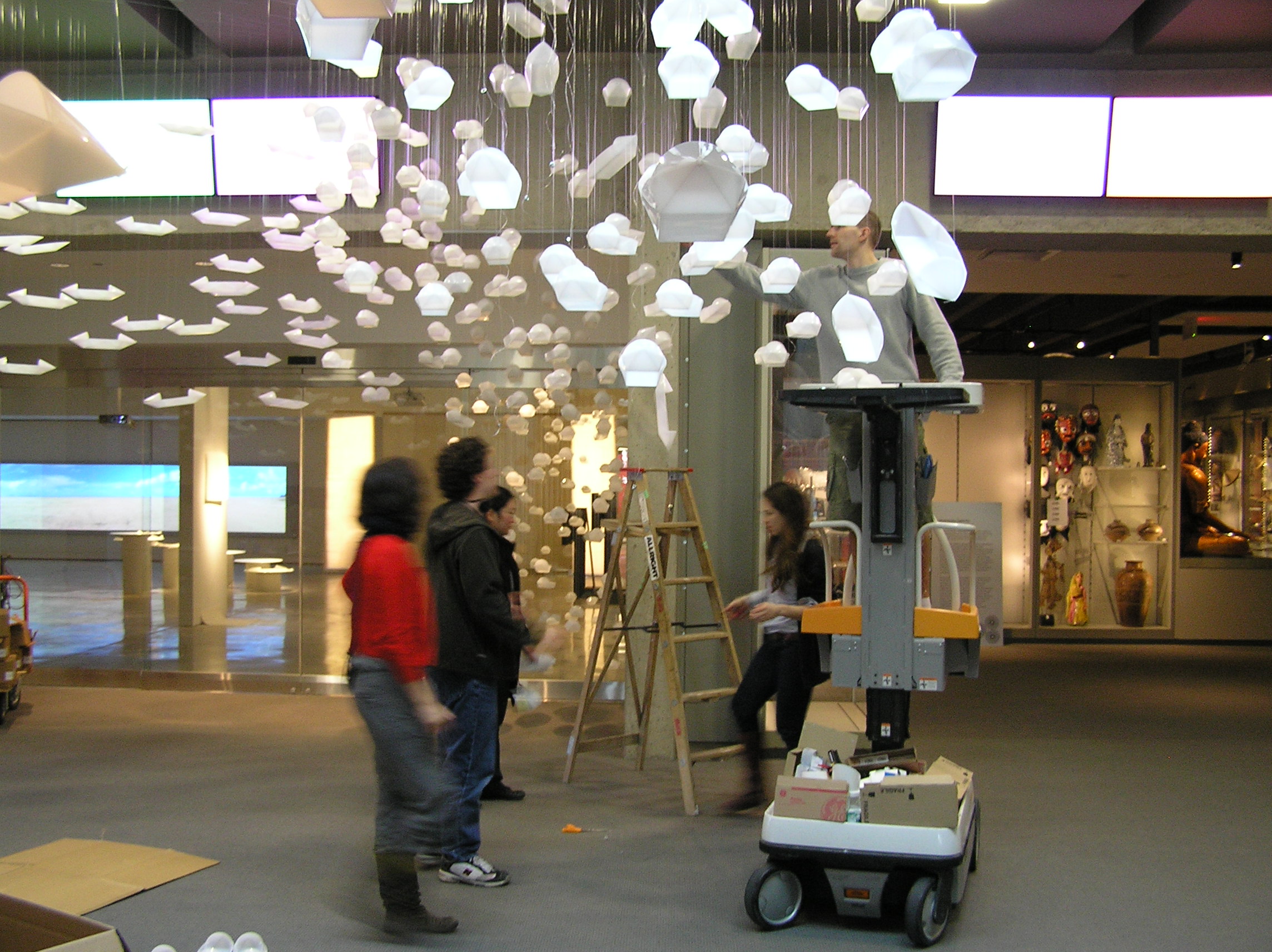
When will the work end?!?
Last minute details
An outdoor boat
An outdoor boat

Gathering Stream
Some want to turn back
Through the looking glass
Painting the final waterscape

Categories
Uncategorized

Border Zones: Art Across Cultures

Border Zones: New Art Across Cultures

Exhibition marking the launch of the ‘new’ Museum of Anthropology
January 23, 2010 – September 12, 2010

Curated by Karen Duffek, MOA Curator of Contemporary Visual Arts. Presented with Vancouver 2010 Cultural Olympiad

Border Zones: New Art Across Cultures is an exhibition of international contemporary art that will inaugurate MOA’s Audain Gallery on January 23, 2010. It brings together the work of twelve artists engaged in a dialogue about cultural boundaries –within and between communities, art practices, audiences, or institutions – and the possibility of translation across them.

Through a surprising diversity of media and approaches, the artists selected for this show use the idea of a border space to raise questions about migration and identity, knowledge protection and access, and the permeability and construction of boundaries cross-culturally. Borders are considered not only as lines or markers that divide cultures, but also as uncertain spaces that are sites of encounter and transformation.

Participating artists include Hayati Mokhtar, Dain-Iskandar Said, John Wynne, Edward Poitras, Thamotharampillai Shanaathanan, Tania Mouraud, Marianne Nicolson, Gu Xiong, Prabakar Visvanath, Rosanna Raymond, Ron Yunkaporta, and Laura Wee Láy Láq.

Border Zones: New Art Across Cultures, which will be on exhibit through September 12, 2010, is part of MOA’s commitment to exploring, developing, and inviting new ways of representing understandings about culture in the 21st century. Join us for a special Exhibition Reception at 7:00 pm on January 26, at which two of the exhibiting artists, Tania Mouraud and Rosanna Raymond, will present performance pieces. Other artists will also be in attendance.

To give you inside access to the ideas behind the exhibit, an interactive online magazine, www.BorderZones.ca, is being created. You can visit the site now, while it’s under construction, but when it officially launches on January 26, 2010, you’ll discover personal and thought-provoking articles on each of the artists by distinguished contributors such as award-winning journalist Jan Wong, educator and activist Gerald Taiaiake Alfred, and filmmaker and artist Loretta Todd, among others.

You’ll be able to email your comments and questions to the site, some of which will be addressed by the contributors. You’ll also find video interviews with the artists, regular updates on artist files, artwork exclusive to the webzine, provocative reviews of the exhibition, and a blog devoted to the idea of borders.

Over the course of the exhibition, BorderZones.ca will become an archive about the idea of borders, particularly how new spaces of thought and meaning are created and contested at the boundaries of knowledge, language, art, culture, and politics.

Border Zones: New Art Across Cultures is presented with Vancouver 2010 Cultural Olympiad. Additional sponsors: The Vancouver Foundation, The Canada Council, Consulat Général de France à Vancouver, Audrey Hawthorn Fund for Publications in Museum Anthropology, and Alican Mould & Plastics.

Categories
Uncategorized

“Becoming Rivers” at UBC Museum of Anthropology

This blog has been inactive since our trip last summer, but over the fall, our team has been working on parts of the Waterscapes project, including a panel presentation at the Canadian Asian Studies Association annual conference held in Vancouver this past October.

Gu Xiong is currently finishing a mixed media installation as part of a group show marking the opening of a refurbished Museum of Anthropology at UBC. The show is entitled “Border Zones: Art Across Cultures”, which opens on January 26, 2010 (opening performances from 7-9PM, free admission). I (Chris) have been dropping into the MOA occasionally in order to observe how an installation is put together in a practical sense.

Gu’s piece is called “Becoming Rivers”, and builds on a piece he did for the Beijing Center for the Arts last year (see the piece “Red River” in http://www.artzinechina.com/display.php?a=689). “Becoming Rivers” consists of some 2000 plastic boats hung from the ceiling of the museum, with more installed outdoors (stuck in the ground using metal rods). The boats are shaped into two rivers, which come together in front of a giant painting of the Yangtze and Fraser Rivers based on satellite photos. Panoramic photographs of both rivers are hung on walls around the two riversof boats. When you walk underneath the shimmering flotilla, the boats seem to be floating in mid-air. Although the installation is not finished yet, the effect is already quite striking.

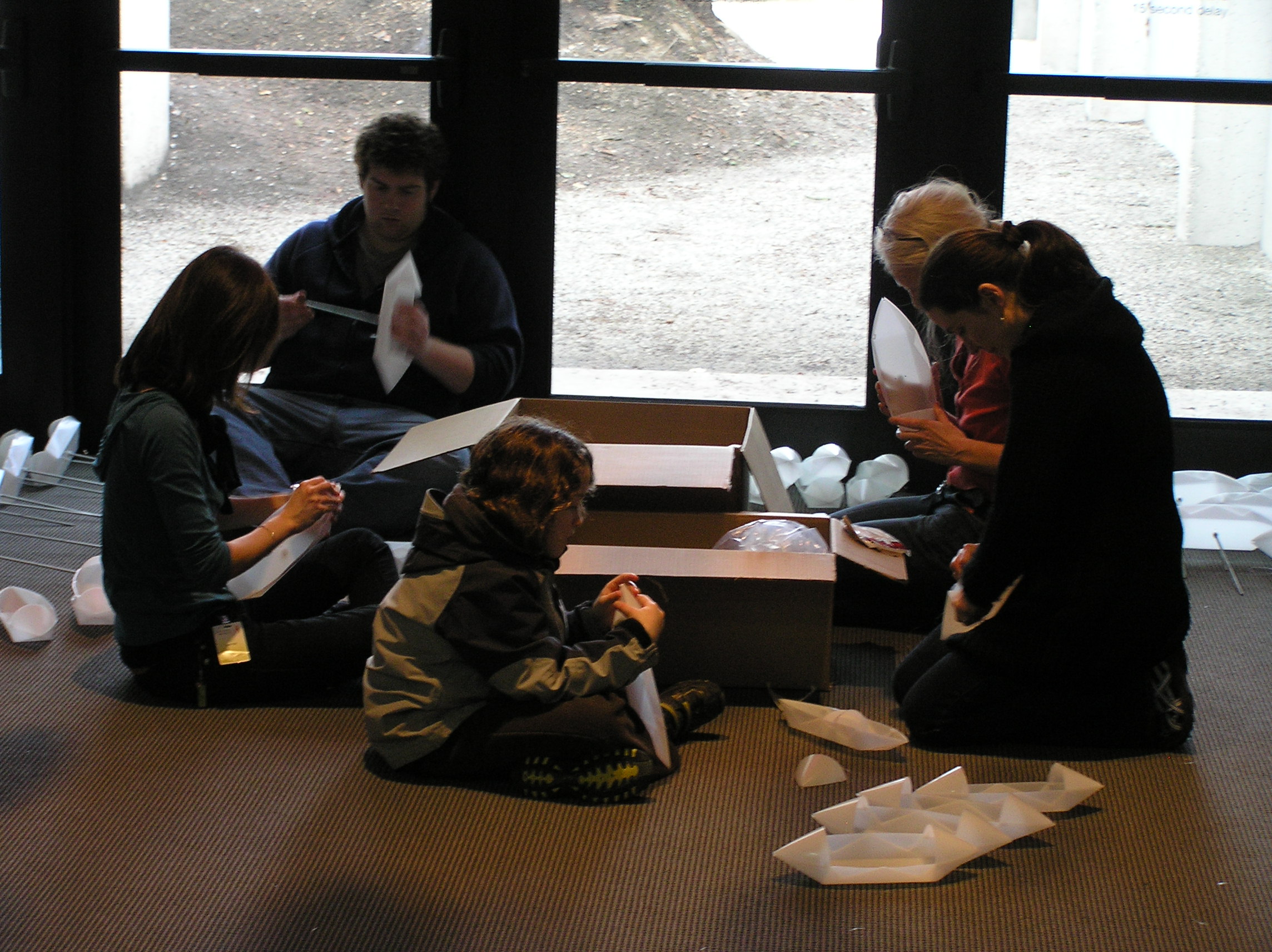
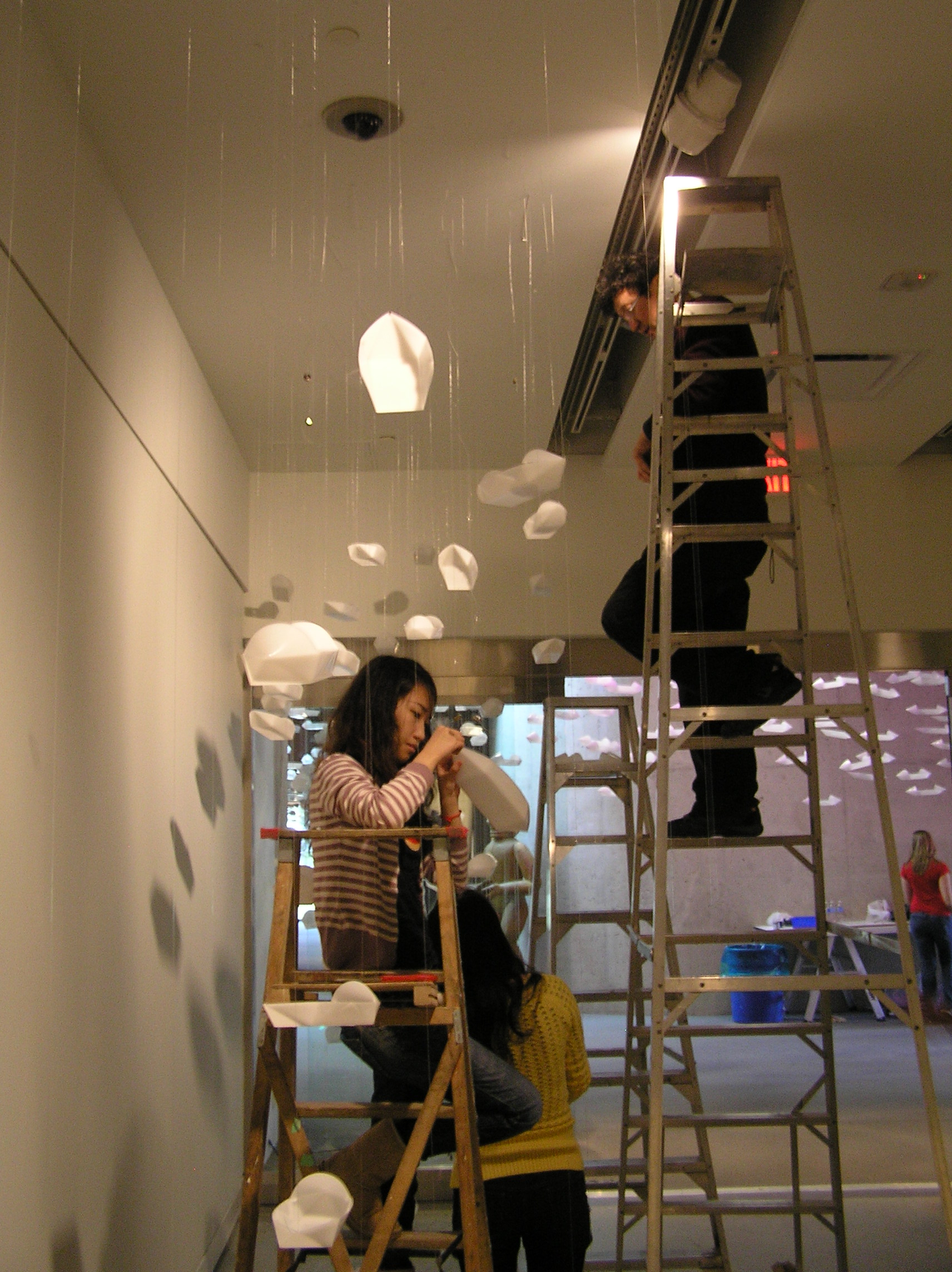
This post, though, is about the process of putting this installation together. The boats took longer to make (at a local factory – ironically, these are NOT “Made in China”) than expected, but Gu and his team of students and assistants have, for past few weeks, been hanging hundreds of pieces of fishing line, weighed down with metals nuts. This week, the boats finally arrived. Each has to be assembled by hand, and then attached to the fishing lines and adjusted for height. One unique feature of the installation is the effect of having boats pass through glass, as if impervious to the imposing physical barrier of the museum building itself. As you can see from the photos below, this is a labor-intensive project. Indeed, I have been fascinated by the labor required to translate concepts into reality, a point that I will come back to in future blog posts.

For now, here’s a sneak preview of “Becoming Rivers” and a reminder to mark your calendars for January 26. For more information about this show, visit

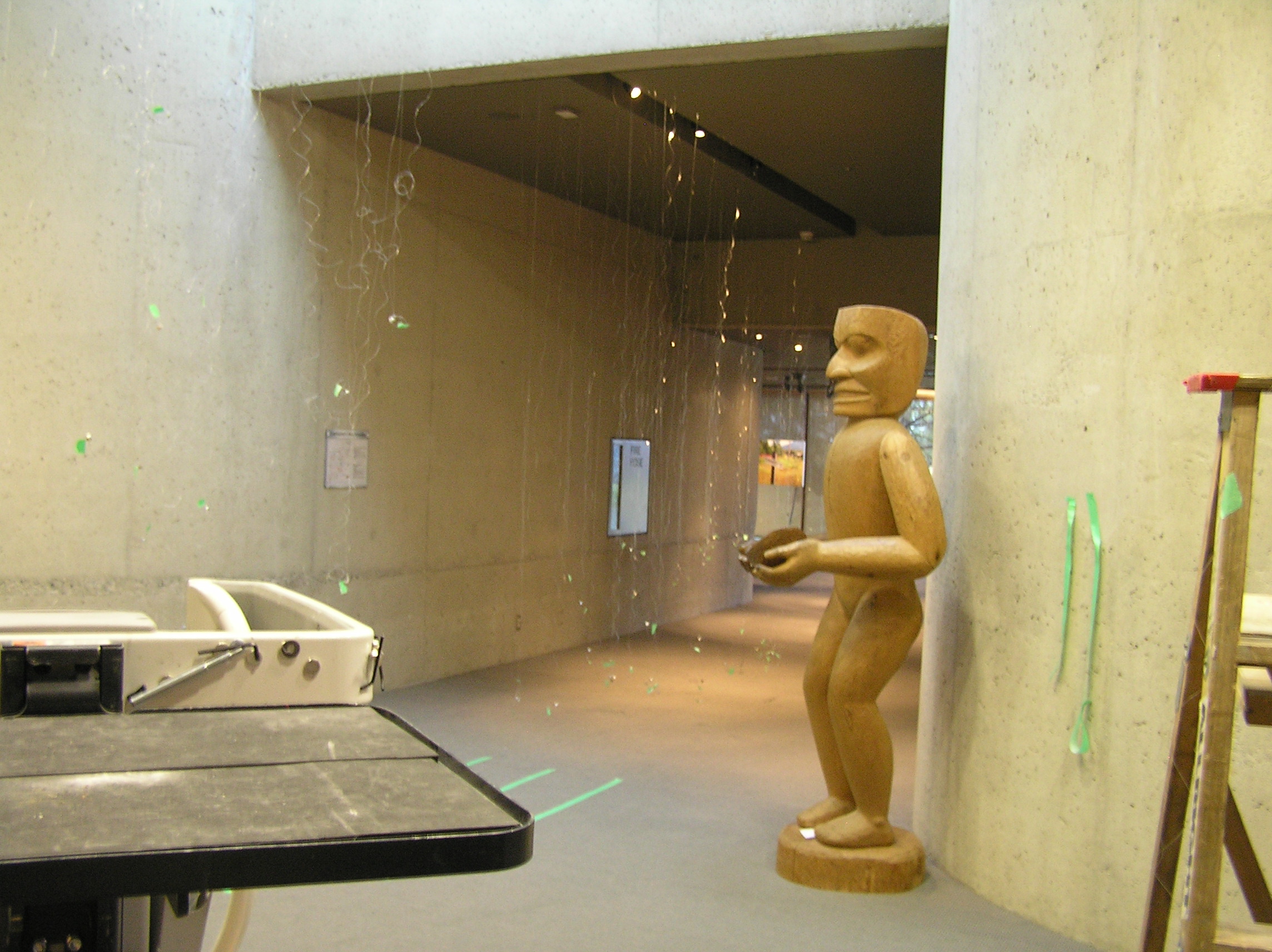
Hanging up fishing lines
Fishing lines from the roof - where are the boats?
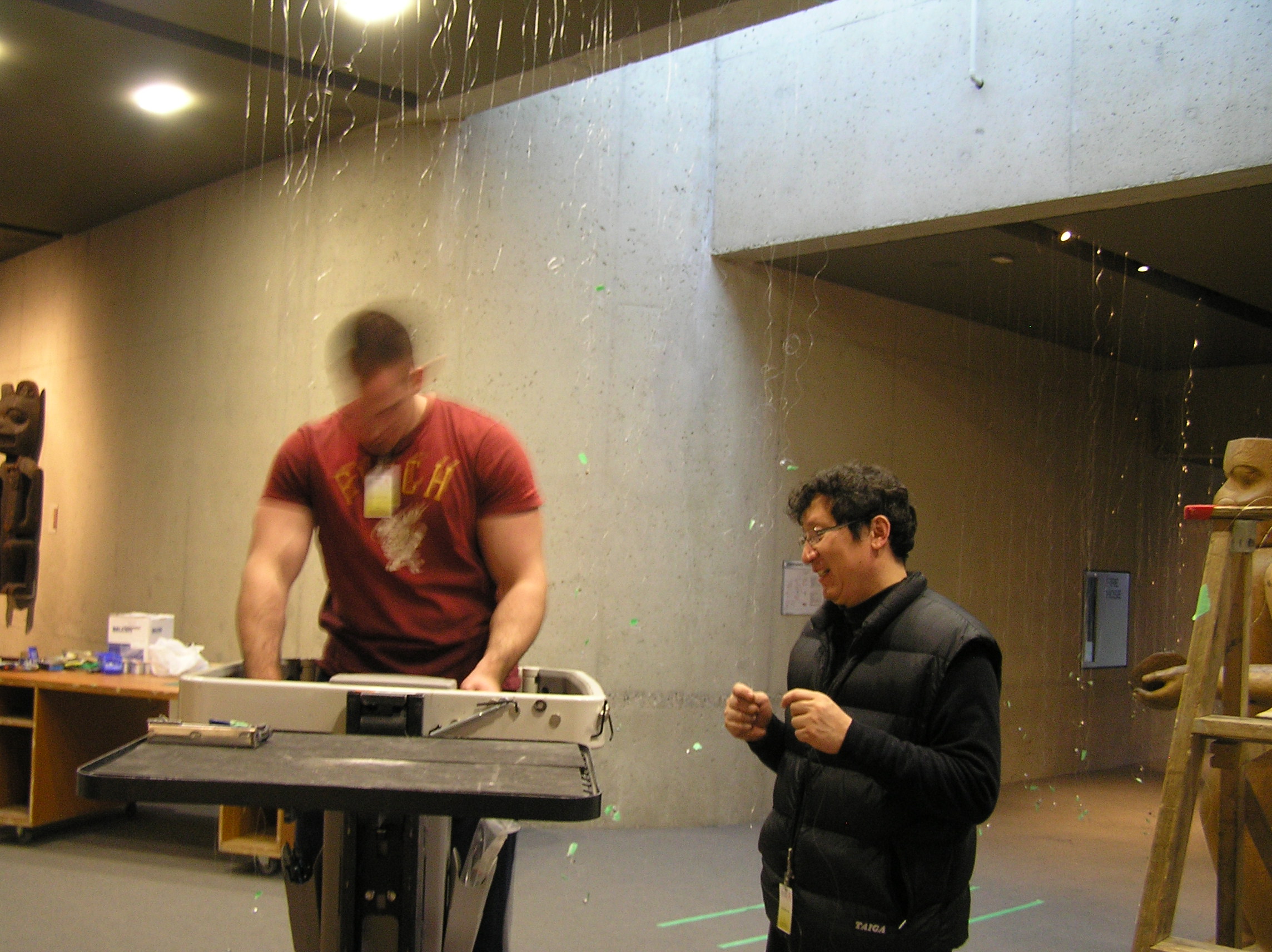
Getting ready to hang more fishing line (Keith, Gu's student assistant, is trying to figure out the hydraulic lif)
Getting ready to hang more fishing line (Keith, Gu's student assistant, is trying to figure out the hydraulic lift)
Assembling the boats (1900 to go....)
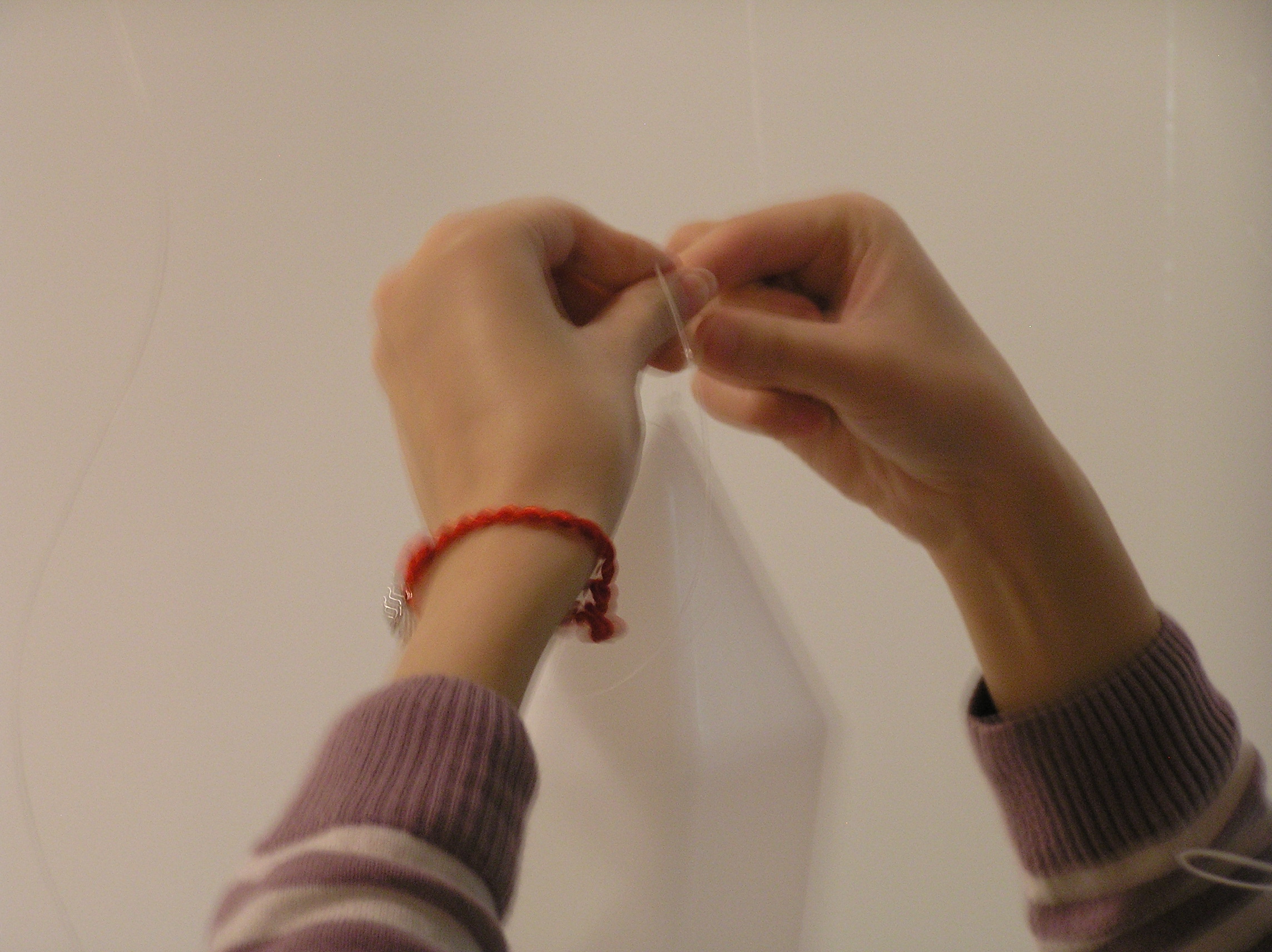
Tying the knot
Tying the knot
Hanging the boats (this is Gu's niece...it's become a family project!)
Hanging the boats (this is Gu’s niece…it’s become a family project!)

Spam prevention powered by Akismet