Categories
Uncategorized

Marketing Blog #4: Creative packaging does not work for all products.

(In response to Josh Andler’s blogpost “Packaging Matters!”)

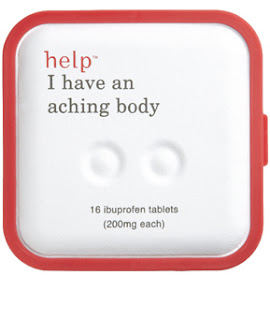
Like Josh, I am also a strong believer that packaging can really help sell a product. However, I also believe that there are products for which marketers should refrain from using packagings that are TOO unfamiliar to consumers. One thing that particularly caught my attention in Josh’s blog was his mention of the “Help…I have the sniffles” packaging for the nasal decongestant tablets.

I agree with Josh that the design of the packaging is indeed very innovative and unique, but unlike Josh, I will probably not purchase this product when I see it in the pharmacy. When I saw the picture of this product, I didn’t even know that they were nasal decongestant tablets. When I purchase over-the-counter drugs, the first thing that I usually look for is the brand of the product. But here, I can’t even tell what brand it is. If this product is placed beside similar products with traditional packaging, there is a very high chance that consumers will not notice or recognize this unique packaging and they will buy from the brands that use traditional packaging instead. This is also partly due to the fact that for products like drugs, consumers often already have a brand that they prefer and this preference is very unlikely to change. Drugs are something that we directly consume into our body, and therefore consumers are usually unwilling to take the risk of trying new products.  This packaging also lacks the professionalism that pharmaceutical packaging should have. It does not tell us anything about the effectiveness of this drug, nor does it communicate to consumers why they should pick this brand over the other brands that are available.  Therefore, I don’t think using creative packaging for products that consumers regard as having high switching costs, such as drugs, is an effective strategy. Even in cases where creative packaging may be worthwhile, marketers should only use it as a complement that adds value.
Categories
Uncategorized

marketing blog #3: vitamin water

After reading some of the blogposts written by my marketing classmates, Elizabeth’s blogpost about Vitamin Water’s sponsorship of Gossip Girl particularly caught my attention. Partly because I am a big fan of the show, but also because I’ve recently consumed a more-than-usual amount of Vitamin Water since they’ve became the only beverage for sale at my Bikram Yoga studio.

YouTube Preview Image


Target market:
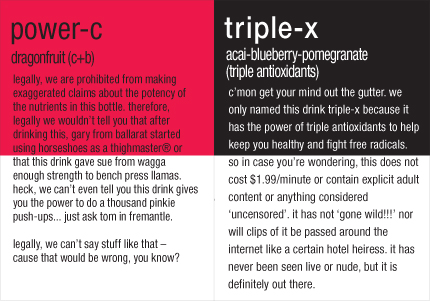
Elizabeth mentioned that the target market of Vitamin Water was hard to identify, but to me, it has always seemed like Vitamin Water was meant for young people.   Since the majority of Gossip Girl’s audience consists of  teens and young adults, Vitamin Water has definitely gained an advantage in targeting these young people who dream of living in the elite world that is portrayed by the TV show. Moreover, each flavour/colour of vitamin water has its own label, and the descriptions on these labels feature slang terms such as “c’mon” and “LOL” – these are obviously meant for a younger audience.

Positioning:
The mission of Vitamin Water  is to provide “hydration for every occasion – morning, noon, night”), but I can’t find myself agreeing to it completely. First of all, when we go to supermarkets or convenience stores, Vitamin Water is always placed beside other soft drinks  in the cooler. This leaves people with the impression that Vitamin Water is just another soft drink consumed in casual occasions. Despite its effort to promote itself as an healthy alternative to soft drinks and that each colour/flavour has its own benefits, many people think of it as merely flavoured or sugared water with no clear distinction betwee the flavours. Also, the fact that Gossip Girl features people drinking Vitamin Water at a posh party from champagne flutes is a bit exaggerated. If Vitamin Water really wants to position itself as a luxury beverage, it must make changes to its marketing mix (ie. switch from plastic to glass containers, and raise its price.) As a result, I think Vitamin Water should narrow down its focus instead of trying to position itself as an all-purpose beverage.


Categories
Uncategorized

marketing blog #2: marketing to kids (referring to Adfreak’s blog)

Did you know that an average child would have memorized between 300 and 400 brand names by the age of 10?

Shocking, right? I didn’t really believe it either but I was convinced after watching a video on Adfreak’s blog. In the video, a 5 year-old girl comments on the brand logos that are shown to her. It is really interesting to see how she interpret’s some of these logos – for example, she describes McDonald’s logo as an “M” made of fries. What is more shocking is that, she has probably never used some of these products before, yet she is still able to recognize the brands. I certainly agree with Adfreak on how early these brand identities can make an impression in people’s minds. Many marketers look at this as an opportunity to market to children, who have a strong influence on their parent’s buying decisions.

But is it ethical to market to kids? Some critics may argue that it is unethical to exploit the young minds of children. In my opinion, it is only unethical to market potentially harmful products to children. For children-friendly products that are healthy or educational, marketing efforts directed to children are essential. After all, these products are intended to create value for children (the final users). Sometimes parents might overlook these products, or they might fail to understand what their kids really need. Therefore, my conclusion is that marketing to children is not necessarily unethical, but marketers have to be careful of what impressions they are leaving in the minds of children, because these impressions enter their minds really early and once they’re there, they are very difficult to change – even after they grow up and become adults!

YouTube Preview Image
Categories
Uncategorized

markeing blog#1: is the One for One campaign of TOMS sustainable and value-based?

For those who have been living under a rock, TOMS originated as a  for-proft shoe company, which for every pair of shoes it sells, donates a pair to a child in need.

I purchased my first pair of TOMS last summer and recently I came across the company again as I was reading my marketing textbook and I got distracted (again) so I went on the TOMS website and discovered that TOMS is also selling sunglasses now, and for every pair that it sells, a person in need will receive the proper eye-care that he/she needs. This reminded me of the concepts of  value-based marketing and sustainable marketing strategy that we discussed about in class. When I first read about TOMS, I did not think that its One for One campaign was entirely value based and sustainable because although the campaign focuses on beyond just customers, it didn’t seem to me that it could evolve overtime and the idea of giving shoes to people in need seemed like a pretty short-term and narrow focus. Afterall, these canvas shoes will not stay trendy forever, and people will soon forget about them and turn to other brands. However, I was wrong. TOMS has evolved overtime by tapping into other products (ie. eyewear) and  the company has shifted its focus from giving shoes in the short term to changing how people think of business in the long term. According to the founder Blake Mycoskie, he is hoping that, through the One for One  campaign, “the company will inspire people to think differently about business and  show entreprenuers that business and charity don’t have to be mutually exclusive.”


Categories
Uncategorized

What I’ve Learned About Myself in COMM 299

Time flies…and I can’t believe my first year at Sauder is already coming to an end!

I had many takeaways from Comm 299 but most importantly – I’ve gained a better understanding of myself after the course..

First of all, through the Strengths Quest assessment, I realized that I have strengths that I never knew about! According to Strengths Quest, I am a learner with high adaptability, which basically means that I love to learn and I live in the moment. A Another interesting strength that I have is that I am very deliberative – I am very careful and I know that the world is an unpredictable place. This shows that I am more of a risk management person than a crisis management person. So what am I gonna do with all these strengths? I can impress my future employers during interviews!

Also, in the interview assignment, I learned that are many areas in which I can improve on. I realized that I tend to speak really fast and I tend to forget about CAR statements when I am nervous. After receiving feedback from my interviewer Laura,  I went home and practiced…and I can already see myself improving from the recent CUS executive position interviews that I had!

Comm 299 was definitely one of the most useful and practical courses that I’ve taken…and I really feel that I am now more familiar with myself and more prepared for the business world!

Categories
Uncategorized

Greatest Lesson Learned from Someone Else

On March 11, a major earthquake struck Japan, and it was followed by a tsunami that destroyed the homes of thousands of people. Not only did this disaster make me realize how vulnerable human beings are when they are faced with a natural disaster, the way that the Japanese people responded also taught me an important lesson.

When the owners of supermarkets and all the vending machines in the country declared that they will supply food and drinks for free, the Japanese people did not chaotically rush into the stores to grab all the food. Instead, they lined up and took only what they needed, so other people would also get what they needed. Nor did they break into houses to steal, unlike the desperate residents in New Orleans after surviving hurricane Katrina.   People who had internet access also went on Twitter and forums to encourage others to help tourists who don’t understand Japanese. There was also a man who sacrificed his life to save a satellite telephone, which in turned saved the lives of hundreds of patients in a hospital.

When I read about the above stories in the newspaper, I began to wonder: What would I do if I encounter a disaster like this? Will I be able to remain calm and patient like the Japanese people? They have taught me that, in times like this, it is still possible to care about others before caring about yourself. Moreover, they made me realize that in situations like this, as well as in everyday life, being calm and rational is the key to success. Instead of complaining, solving the problem always gives you the best result.


Categories
Uncategorized

Business in a Bag: VisionSpring – A social enterprise.

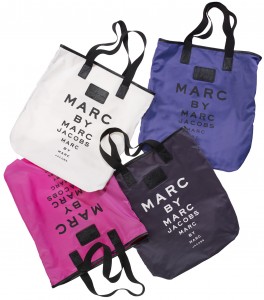
Not very long ago I saw someone using a Marc by Marc Jacobs tote bag that had a really interesting design. The words “Marc by Marc Jacobs” were laid out like an eyesight testing chart. Curiously, I googled about the tote bag and found out that the tote bag is designed and sold by Holt Renfrew as a promotion and fundraiser for VisionSpring. Apparently VisionSpring is a SOCIAL ENTERPRISE.

What does it do?

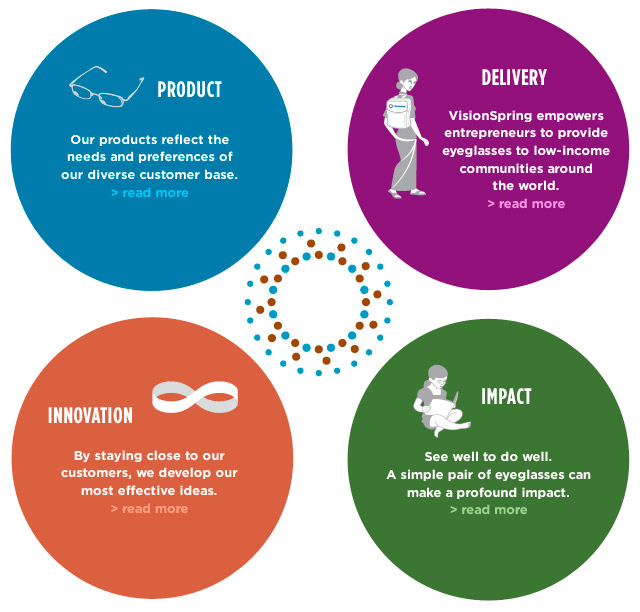
According to its website, VisionSpring “delivers high-quality, affordable eyeglasses to individuals
in the developing world with a network of local entrepreneurs using a scalable model that reaches more people every day.”

How does VisionSpring do this?

Step 1: Distribute a Business in a Bag to local entrepreneurs (known as Vision Entrepreneurs) and provides them with a “three-day training in basic eye care and business management.

Step 2: Vision Entrepreneurs conduct educational and marketing outreach to local communities, where they screen and sell glasses.

What I found out really struck me because when I never realized that glasses are a necessity for people in developing countries. Yet apparently glasses are only available for wealthy people in these countries. Without glasses, people in these countries will not be able to work properly, and children who go to school will not learn as effectively. In fact, according to VisionSpring, “By purchasing a pair of $4 eyeglasses, individuals receive a 35% increase in productivity, earning roughly an additional $381 over a two year period.”

THEREFORE…..PROPS TO VISIONSPRING IN INCREASING THE STANDARD OF LIVING IN THESE COUNTRIES!

Categories
Uncategorized

LULULEMON ATHLETICA – an entrepreneurial business

When I hear the word entrepreneurship, it immediately reminds me of Lululemon.

So what qualities does Lululemon posses which makes it an entrepreneurial business?

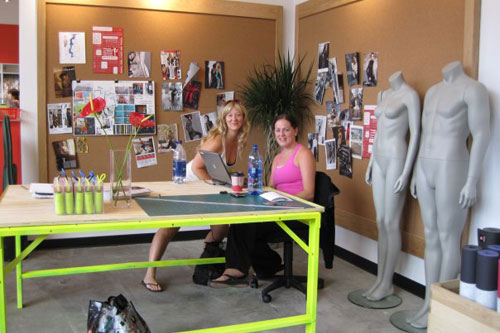
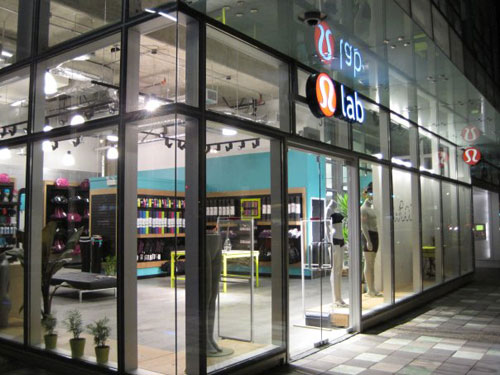
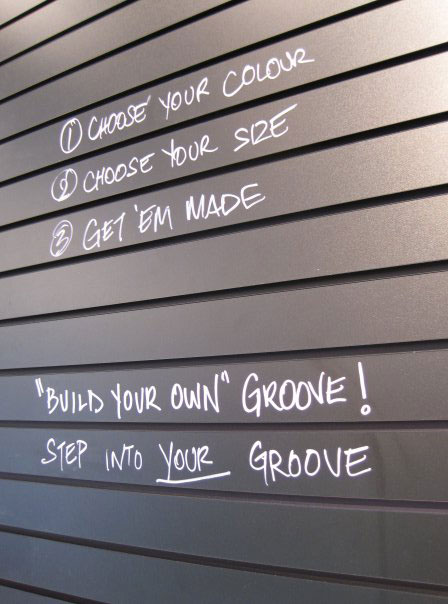
First of all, although stretchy yoga pants is not really considered a new product, the way that Lululemon incorporated yoga into its business is certainly innovative. Aside from selling yoga-wear, the store offers yoga lessons that promote a healthy lifestyle. Also, Lululemon is definitely one of the first businesses in Vancouver to have a design studio and retail store in one. Its Lululab in Vancouver has a sewing team and design team on site, and customers will be able to “build” their own customized stretchy pants. Customers simply have to choose a colour and a size, and the team will make it right on spot!

Categories
Uncategorized

Will Forever 21 be as successful as Zara?

Although we have concluded, at the end of class 16, that Zara’s “fast fashion” model is not easy to follow, it IS possible to follow.

This is proven by the fact that fast fashion retailer, Forever 21, will be expanding its business into Canada. It’s second store in the Greater Vancouver area will be opening in Richmond Centre soon.

Forever 21 vs. Zara

According to The Arizona Republic, Forever 21 is capable of “spotting new styles and moving them from the design room to the sales floor inside of six weeks.” This, although longer than Zara’s 2 weeks, still beats a traditional department store. A traditional department store takes around 6 months to do so.

Similar to Zara, Forever 21 carries a finite supply in their stores. This creates an urge in customers to “but it when they see it,” because they know that if they come back for an item next week, it will probably be gone.

However, the downside is that, Forever 21 is known for always getting sued by well-known brands. Designer Anna Sui and singer Gwen Stefani had sued Forever 21 for copying the Anna Sui and Harajuku Lovers styles. Could this mean that Zara has a team of better designers who could do better than solely “copying”?

(left) Anna Sui's design (right) Forever 21's design
(left) Forever 21's design (right) Harajuku Lover's design

Also, as a shopper who always shops at both stores, I think that Zara’s clothing does have better quality. Perhaps this is due to the fact that Zara has its own manufacturing facilities, thus leading to better quality control?

As a result, in order to be as successfual as Zara, Forever 21 should recruit more creative designers and have products that are not just cheap but also more durable – because quality matters too.

Categories
Uncategorized

Hello Kitty and the Organizational Culture of Sanrio :)

For those who have a lot of classes with me, you guys probably know that I’m a big fan of Hello Kitty.

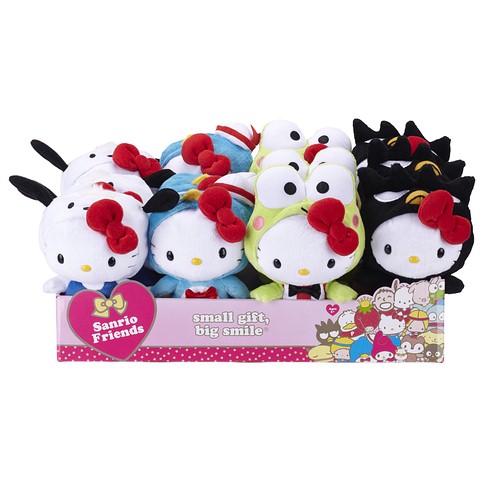
This year marks the 50th anniversary of Sanrio. Established 50 years ago, the value of Sanrio was “spreading smiles and friendship through gift-giving.” This does not only mean spreading smiles to its customers, but also to its employees as well. In fact, the mission of the company is to “provide the means to enrich interpersonal communication” between employees.  Although the company has outsourced some of its design and info tech components, the company’s culture still revolves around one simple principle – “Giving gifts and spreading smiles” is the culture that makes Sanrio successful.

I have been to Japan a couple times and whenever I go to a Sanrio boutique, all the sales associates are always wearing something Hello Kitty, and they are always so cheerful and SMILING. It is obvious that Hello Kitty has also became part of Sanrio’s organizational culture. Not only that, a typical work space at the Sanrio headquarters in Japan is also decorated with tons of “cute and smiley” Sanrio characters – mostly Hello Kitty. With the “charming, simple smile and positive energy that radiate from Hello Kitty” (although she has no mouth!) , Hello Kitty has became the soul of Sanrio. Also, “it is no surprise that non-profit organizations have adopted Hello Kitty as the emblem of their organization’s culture and philosophy. For example, Hello Kitty earned the award UNICEF Special Friend of Children and in Hello Kitty in 2008 was named ambassador of Japanese tourism in Hong Kong and China.” As a result, a company’s culture can affect other’s as well!

Sources:

“The Real Hello Kitty Story”

“Sanrio Company Ltd: Theory in Practice”

Spam prevention powered by Akismet