Categories
Climate Change Corn Palace Futures game

Conclusions and the Corn Palace

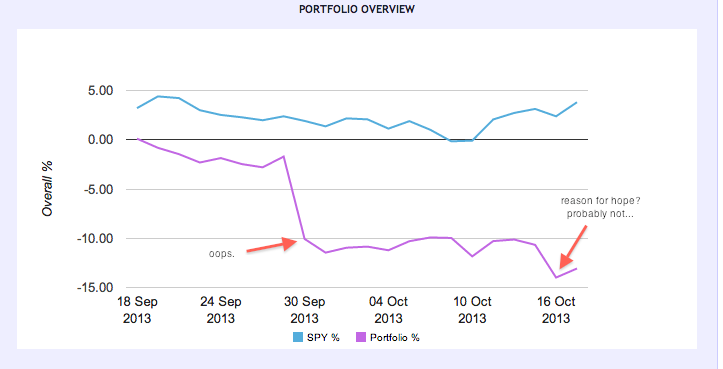
Well we made it through! I’m down 13% and ranked in the bottom five. But who cares, it’s over! right? right?

I didn’t trade this week, and as not trading and doing no market analysis is a sure fire way to get yourself landed in the bottom five, I might as well just lean in to it and write about something entirely different.

One thing I’ve been thinking about is how much I dislike technical analysis in the commodities market. If the idea is to set prices based on information from the world, then technical analysis shouldn’t be successful. How would a head and shoulders form exist if the market were acting appropriately in response to new information? It wouldn’t, unless somehow the world were providing information that would cause it, which I can’t imagine happens often enough for a name. It doesn’t make sense to me and I think it’s frustrating that food prices are being determined by dumb sounding charts like “dead cat bounce”, “cup and handle”, “Ascending wedge” etc etc. (The more I think about it the more these just sound like yoga poses).

So if I don’t like technical analysis, what can I use to assess market movement? I really like the idea of leading indicators. Mike talked briefly about the skirt hem indicator in 585 a few weeks ago- skirt hems go long during recession and shorter in times of economic growth. There are other indicators like this- the appalachian trail gets more through hikers when the economy is bad, and men buy more underwear when it’s good. But the one I want to talk about this week is the Corn Palace Indicator (I just made this up).

For those of you who don’t know about the Corn Palace, it’s the best place in the world. It was built in 1891 in Mitchell, South Dakota as a showcase of the fertile lands of the State. It’s been rebuilt 3 times (turns out building things made out of corn is slightly flammable), and also the Palace has a mascot, obviously named CORNELIUS! Every year they cover the Palace in murals made from ears of corn, which all relate to a common theme (if you’ve ever seen the movie Drop Dead Gorgeous, then some of these themes will sound strikingly familiar- “American Pride” (2011), “Salute to Youth Activities” (2012), “Everyday Heros” (2008).)

Corn Art

While I didn’t grow up on a farm, I did grow up in the midwest. Minnesota is one of the largest producers of corn, and obviously South Dakota is right up there as well. My godparents live in Mitchell so we’d make the drive out there at least three times a year. Also they lived four blocks away from the Corn Palace. I was a huge fan (I am a huge fan).

For anyone who wants to check it out, there’s also a livefeed (THIS IS NOT A JOKE) of the Corn Palace.
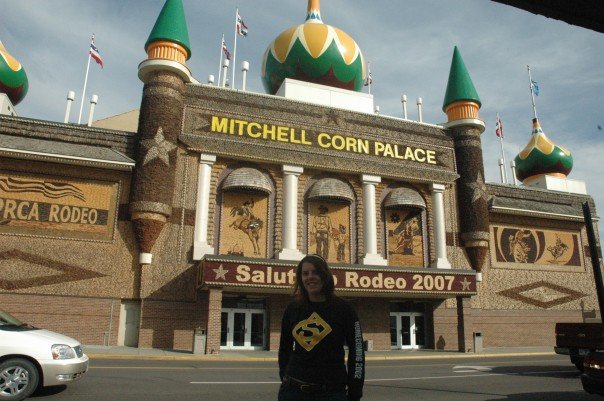
The author, age 17, at the Mitchell Corn Palace

So how does this relate to economics and commodity markets? Well the Corn Palace uses a lot of corn. And in 2007, the drought in the midwest was so bad, the Corn Palace couldn’t replace their murals for the first time since 1892. Just last year, the number of corn varietals ready at harvest for the Palace was nearly halved, again by severe drought. Steven Colbert, covering the story for The Colbert Report said, “We’ve been warned about rising food and fuel prices. But no one prepared us for less vibrant corn murals.”

And it’s true. The local news each year about the Corn Palace murals reflects the overall harvest in the Midwest. A good year means a good Palace. As the impact of climate change continues to grow, I’m worried we’ll be seeing more extreme weather events, and fewer corn murals. The already volatile commodities markets will probably increase in volatility as we lose our predictive capabilities due to climate change. And as I mentioned in my previous post- that will have a more widespread effect on the world than just the Corn Palace designs.

So that’s all folks, I’ve lost a lot of fake money in this fake trading game, but I’ve learned a lot too. Also, I’ll continue to use this blog for analysis throughout the year, so check in from time to time, if you’d like.
Categories
Futures game

WTF is a “dead cat bounce” and further issues

“Bigger dead cat bounce expected today” reads the headline on Agriculture.com today, continuing: “For those of us watching the ‘dead cat bounce‘ for a clue as to when to sell, it has been a crazy world the past couple of weeks. If you are confused by market action, do not feel alone.”

Luckily this is what came up when I googled “Dead Cat.” Thanks internet!

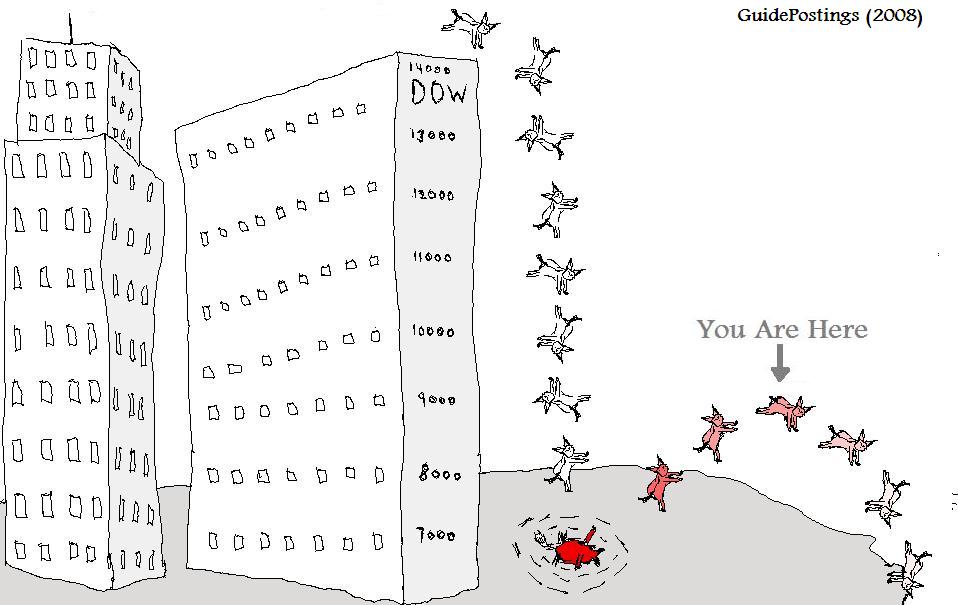
But don’t worry, dead cat bounce is just one of the many strange terms in technical analysis. It refers to a temporary respite in a downward trend, followed by a return to a downward trend. Why dead cat? Why not dead bunny or dead gerbil or even something not dead? I don’t know, but it probably has something to do with finance being controlled by men in their 20’s.

What you get when you google “dead cat bounce”

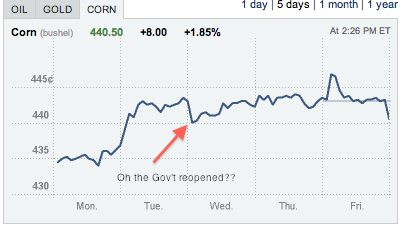
But let’s move on from dead cats, please. This week, the US government came back to life, with President Obama signing the funding bill close to midnight on Tuesday. My plan to hold all my long positions in hopes that the gov’t reopen would shoot prices up up and away failed to materialize when the grain exchange decided they still do not care about the government.

Apparently corn doesn’t care about the government.

So my grand plan to simply ignore my portfolio didn’t really work out, and I’m still negative, although wheat is pulling back out of the red at least.

My portfolio as of Oct 17

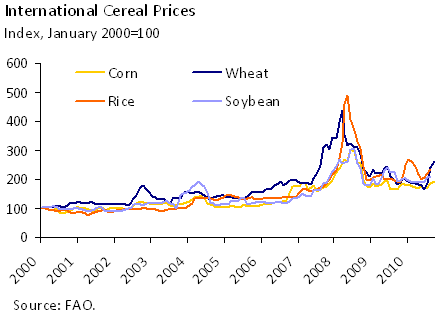
But I’d like to switch gears a bit. We’re currently at the midpoint of our semester, and we’re nearing the end of this trading game. And I’d like to ask: Why are we all struggling so much to make money? How does the market set prices if it’s not due to actual information? A paper in the Journal of Agricultural Economics from 2012 entitled “How to Understand High Food Prices”  contends that speculators in the commodities market drive prices without any inherent justification. In fact, the paper goes as far as to say that speculators actually played a bigger role in the 2008 food crisis than actual food shortages or increased demand from biofuel. So this has gotten me thinking, are speculators making the world better, or worse? And what responsibility do we have, as budding agricultural economists, to criticize a system that makes it harder for people to afford food?

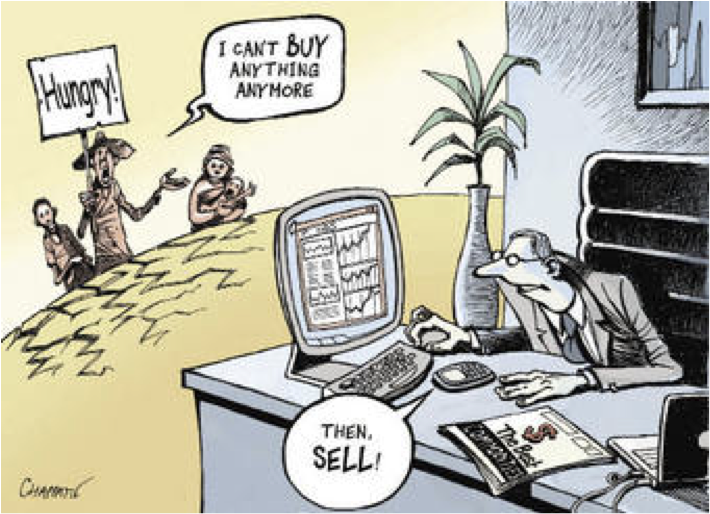
That is the thing that has been missing most obviously in any of our discussions of futures markets- consumers. And not consumers like us where we just go to the market and buy some cereal or bread and it’s fine, but consumers at the margins- those living off $2 a day or less- or even the 30 million Americans who are food insecure. When the price of corn futures spikes up, what does that actually mean? Not just for our portfolios but for the people who are unsure if they can afford food tomorrow?

Is this spike really caused by food shortages, or was it the markets’ herd mentality?

I think we’ve gotten the point of the game- futures prices are volatile and are affected by current events as well as other exogenous factors- but it’s time to start talking about whether or not it’s a good thing, and what the big picture purpose is.

Perhaps a more likely scenario than we’d want to believe.


Categories
Futures game Government Shutdown

A lack of information

After last week’s guest speaker, who told us he rarely leaves his trading desk for more than 5 minutes at a time, I was feeling pretty stuck in my -11% portfolio return. I have the time to check my stocktrak about twice a day, if I remember, and I’ll check the market for the day but probably won’t take the time to really assess, analyze, and then forecast what is coming along. And that’s in a week without the dreaded 501 assignment 2, which sucked the life out of me over tuesday, wednesday, and thursday. By the end of wednesday night, having spent 5 hours trying to figure out the error in my model, I collapsed into a pile of goo and binged on episodes of Scandal.

But all things considered, this was probably the best week to ignore stocktrak- the market barely moved and I maintained my ranking of 20/26 in our game. Nothing huge really happened this week, and because the US Gov’t is still shutdown (day 11), there isn’t much new information for traders to use anyways. 

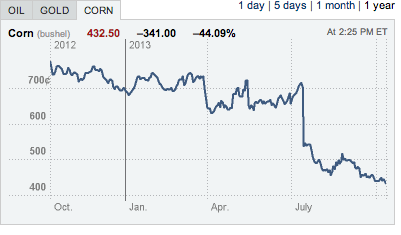
That is, until this morning, when a leaked EPA report swung prices DOWN DOWN DOWN! While the EPA remains shuttered, somehow a report which proposed lowering the biofuel mandate levels made it to the newsroom. Decreased mandates would mean a huge reduction in the demand for corn within the US, and the markets reflected this news by closing corn at the lowest it’s been in three years. GOOD THING I BOUGHT CORN LAST WEEK. I’m out $2000.

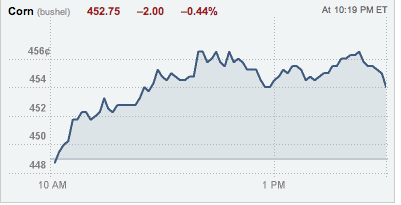
Corn futures over the past year

I think, like others, I’ve learned that trading in commodities is a crap shoot and that there’s very little that strategy can do to ensure profits. But I have learned a lot about the market and how these systems function. I guess my point is that this blog post doesn’t have much about my trades because for now I’m just holding my portfolio and watching as it changes, or doesn’t day to day.

Of course, on monday the next crop report is due, and with no gov’t deal on the horizon, we probably won’t be seeing that. The debt default date is also impending, further adding to the uncertainty and unpredictability of the markets.

I’m off to the mountains for the weekend, hope everyone has a great thanksgiving!

Categories
Futures game Government Shutdown

Shutdown and homesickness

What to say about this week. While my portfolio continues to perform horrendously  (-11%), I’m finding it difficult to get motivated to do anything about it. I’m somewhat confident that this week’s slump will recover at some point, although who knows. I haven’t been keeping up very well with the markets this week, as most of my attention has been turned towards the US government shutdown.

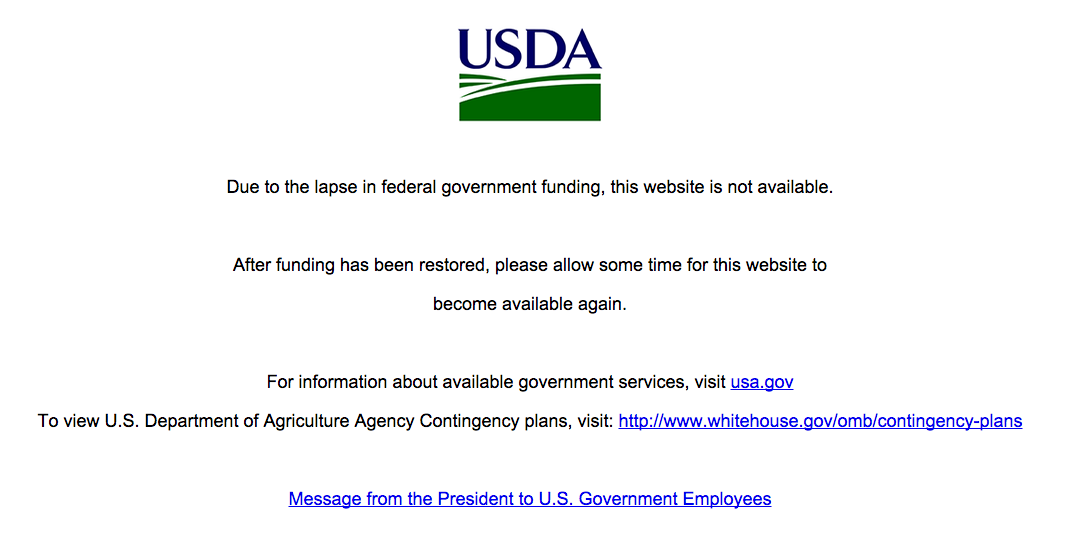
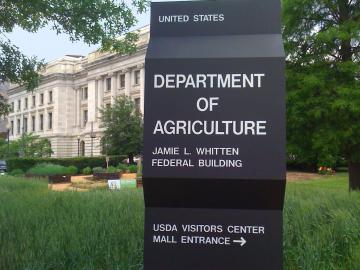
It’s hard to get data on US agriculture when the USDA is shutdown.

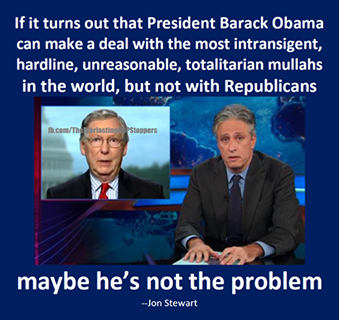
On Monday at midnight, the US federal government shutdown, and continues to be through today at least (Friday) if not further. The “debate” that caused the shutdown regards a standing law, the affordable healthcare act (obamacare), and a faction of the Republican party which is acting like a small child. For more detailed analysis, I highly recommend this week’s Daily Show coverage.


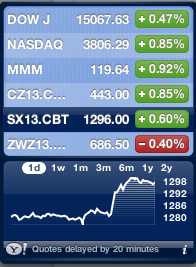
But what’s most interesting, in regards to this futures game, is that the shutdown hasn’t seemed to affect the markets AT ALL! As of right now, the markets are actually going UP! An interview on APM’s Marketplace podcast with a Wall Street employee actually said that it’s become like the story of the Boy Who Cried Wolf- so much so that the markets aren’t even responding.  Of course they might become more wary as we approach October 17- when the US treasury runs out of money and can no longer pay the debt….. hopefully the Government is up and running by then, but again, who knows! I think it’s interesting to look at the US political system in terms of what Prof. Johnson was talking about with forecasting- the US congress is probably the least easy variable to model, and one of the most impactful. The less businesses know about Obamacare for example, the less they are able to plan for their next move, meaning bad planning meaning bad decisions.


So I have decided to simply hold my current positions- I’ve gone long on all the December/Nov contracts, and to hedge that a bit, I’ve gone short on some January/March contracts. It doesn’t seem to be doing much, as my holdings are continuing to decline.

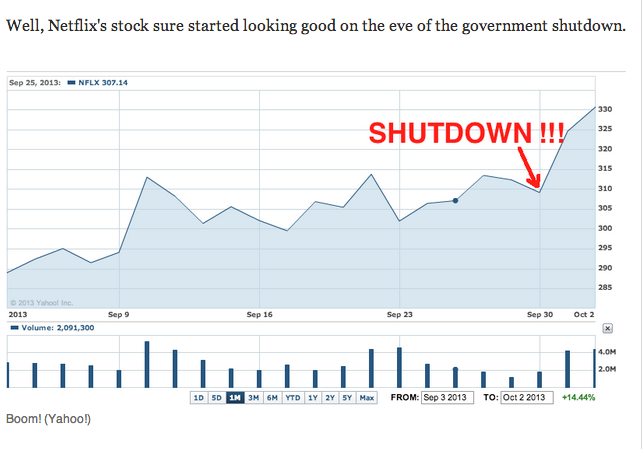
The homesickness part of this post is about how in the light of the shutdown, I’ve been missing living in DC. DC is a hilarious city full of 20-somethings who have too much responsibility. I love how seriously everyone takes themselves there. The monotonous and ubiquitous black trench coats with slacks from The Loft come out in the fall weather. And of course, the complete over obsession with the national news about Washington. Washingtonians hate/love news about Washington. As the shutdown became a reality, bars throughout DC started offering all day happy hour specials to federal employees, apparently Netflix stock went through the roof as people guessed (probably correctly) that furloughed employees would be leaning in to some binge watching of Scandal or Orange in the New Black.


It’s easy to feel far away here in Vancouver- three hours behind my family and friends and the national news. But at least my Netflix subscription works here.

Categories
Confusion Futures game

Week two, what’s going on?

So week one, it turns out, was the easy one. Clear news events (i.e. the crop report and the fed news) made trading decisions and market fluctuations fairly clear (despite the fact that I did not read the signals correctly, and lost money). Week two is shaping up to be much more opaque. Corn was down, soy was up, then corn was up, and wheat shot through the roof! In a scramble, I covered my two shorted positions on wheat and corn, but not before losing thousands of dollars, and then bought corn and wheat in an effort to recoup just in time for the markets to slow, and I ended up losing money again! I have no idea whats happening! Here’s where I stand:

Two long contracts on wheat that are FINALLY getting me a return (.07%!!!!)

Two long contracts on corn that are still losing money, don’t ask me why (-.33%)

Three long contracts on soy that I thought were a good idea, but am being proved wrong by the hour (-.41%)

Overall I’ve now lost $2,473. Ouch.

Honestly, I haven’t been very on top of the market this week. But at the very least, I seem to be in good company.

“…for row crops, movements are proving less easy to predict, with corn, for instance, opening the last session firm, but ending strongly lower without any apparent fundamental justification.” says agrimoney.com of this week’s market movements.

So within the insanity, I’ve decided to settle in with my current trades and just see what happens. Part of this decision is due to frustrations, specifically:

a) The time delay in trading: As I watched corn prices on the rise this morning at 8:30, I quickly jumped to stocktrak and tried to jump on for at least a day trade gain. By 10:45 my trade still hadn’t gone through, for whatever reason, and the prices had declined. By the time the trade went through, I was again, losing money. Not so fun.

Goodbye money! Bon voyage!

b) Similarly, I tried to buy corn while holding a short position on corn simultaneously. This made sense to me- I could buy corn for the day and sell it later to make a quick profit, but hold my short position in the long run if corn were to decline in price later in the week/month/year/era. However stocktrak doesn’t let you hold a short and a long position on the same commodity. Is this true in the markets? I feel like it shouldn’t be. So sadly, I covered my corn to be able to buy it, and as explained above, lost money anyways.

While I don’t know much about what’s happening this week, there are some things coming around the bend:

1) Monday is the last day of the month and is also the day that the USDA releases the next crop report. There should be lots of activity as funds try to balance their books for Oct 1 and also in reaction to the next report. Which way that activity goes is anyone’s guess.

2) Frost in Argentina, wheat shortage in Russia, floods in China, and drought in Brazil. I’ve been reading articles about all these scenarios and what their impacts will have on commodity prices. The consensus is that no one knows. So, helpful.

3) US Government Shutdown looms on October 1st. The markets in the past have reacted strongly to scares of shutdowns, although the last time this happened, the markets pretty much ignored it (boy who cried wolf; Cruz who cried Obamacare). So while my friends in D.C. are planning their vacations for next week (Federal employees are not allowed to work in the case of a government shutdown), I’m watching the corn charts. Somehow I feel like I got the short end of the stick.

After releasing their crop report on Monday, these federal employees might be able to enjoy some mandated vacation! Thanks Congress!

Primary feeling of the week: The Trend is Your Friend is a terrible rule, unless of course, it’s not.

FINAL THOUGHTS: As we enter October, and fall is officially upon us, I encourage everyone to lean in to pumpkin spice lattes, apple scented candles, and watching reruns of Hocus Pocus and Nightmare Before Christmas.  As Jack Skellington asks, “Something’s here I cannot see! What Does it Mean, What Does it Mean!” Very relevant this week!

Jack Skellington
Categories
Futures game The Fed

The Fed, Corn and Soy

Welcome to the first week of trading. So far, I’ve bought soy, shorted corn, and then on a whim bought wheat. Last night when I checked, I had earned $33- however this morning, to my dismay, I saw that my portfolio had lost over $700. Trying to avoid a tiny heart attack (mostly by reminding myself that this is fake money), I went to find answers.

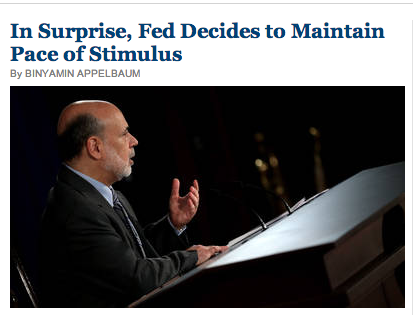
The big event this week was the US Federal Reserve’s press conference at 2pm EST on Wednesday. Nearly everyone thought that the Fed would finally begin the process of tapering interest rates back up, after being held at nearly zero for years in an effort to stimulate economic growth. So when Ben Bernanke announced that they would NOT be raising interest rates, the markets when nuts.

Wednesday’s surprising headline

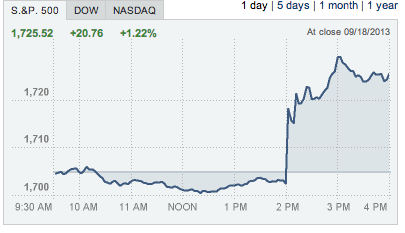
The S&P500 gained nearly 20 points in just minutes after the announcement was made.

The impact of the Fed’s announcement on the S&P500

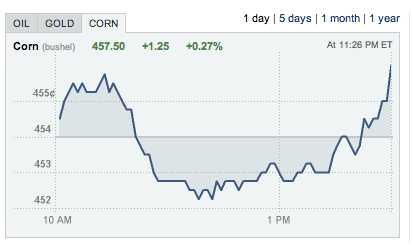
Despite corn’s downward trend following last week’s crop report (a bumper crop pushed prices down), the dramatic upswing of the market took corn futures with it. This is probably where my $700 went.

The impact of the Fed’s Announcement on Corn Futures

So why did the Fed do what it did? I would point to two non-economic issues driving the decision.

1. The American Congress. Congress is supposed to create and manage fiscal policy to ensure that the economy stays stable-ideally, with an upward trend. Fiscal policy is intended to check-and-balance monetary policy, which is of course directed by the Federal Reserve. Because Congress has been unable to fulfill any of their responsibilities since 2008 (probably longer, but definitely since 2008) due to partisan bickering and obstructionist politics, the US has been relying almost entirely on the Federal Reserve to maintain the small amount of economic growth we are seeing. Because of this responsibility, a responsibility that the Fed really isn’t intended to have, Bernanke has been very conservative in making any large changes to monetary policy that could shake the little confidence that the American economy has right now. Without robust fiscal policy to compliment them, the Fed is doing everything it can to maintain stability and trust in the American dollar and economy, namely by keeping interest rates low and by pushing money into the economy- aka quantitative easing.

2. Bye-bye Bernanke. After almost 8 years as the Head of the Fed, Bernanke will be stepping aside this year. Because of the already unstable economic recovery, paired with the additional responsibilities the Fed has had to assume because of the partisan congress, I think the Fed is aware that any change in leadership is going to inevitably shake the morale of the American people, and the world. Up until this week, most people assumed that the next Head of the Fed would be Larry Summers. But Summers pulled his name from the short list, leaving many wondering who would be the next at the helm. The next obvious front runner after Summers is Janet Yellen. Currently the Fed Vice-Chair, Yellen has a strong background in economic and monetary policy. She would also be the first chairwoman of the Fed, a fact which has some neanderthal political commentators concerned- will she be strong enough, authoritative enough to run the Fed etc. So in the face of this leadership transition, it seems appropriate that the Fed would choose to remain at current interest rates and not introduce any new policy changes.

So for these reasons, plus probably many more, I’m out $700. At least for now. We’ll see what happens next week!


Resources I’m finding useful in my research:

Marketplace: A daily podcast by American Public Media which discusses news from Wall Street and the greater economy in a fun and interesting way. Solid analysis that’s easy to listen to. Also post their stories online.

New York Times Business: Hourly charts of stocks, bonds, and commodities which are easy to read and compare. General data on soy and wheat with more detailed info on corn.


Categories
Confusion Futures game

A harsh introduction to futures

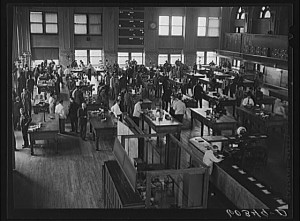
The Minneapolis Grain Exchange in 1939. Photo from Wikipedia.

In high school my best friend’s dad, Jerry, worked at the Minneapolis Grain Exchange. He would sit at his old laptop computer during dinner and watch the markets and at various times try to explain to me what all of the colors, lines, numbers, and graphs meant. I did not understand. He said that it used to make a lot more sense, when going to the grain exchange building actually mattered- now you can trade on the Minneapolis Grain Exchange from anywhere, just by logging on. Back then though, the men in the trading room would actually buy and sell by yelling and sometimes discussing but mostly yelling out their prices. At least according to Jerry. I still never quite understood what he did; he once almost had his grain trade delivered to the house- 25,000 bushels of corn- to a small house in the middle of the city. This, I understood, was not good. Luckily that didn’t happen and the corn got a buyer and Jerry didn’t have to turn his house into a silo.

I start with this story to explain that I am starting from zero in my understanding of commodity markets, futures trading, and grain exchanges. My best frame of reference while beginning this trading game is to tell you about my high school friend’s dad. It’s truly not that impressive. So with that stated, this process should be an interesting and challenging learning experience. I am sure I will be flailing around trying to understand what shorting is, why the blue line is so squiggly, and simultaneously worrying about my corn’s future and my own.


Spam prevention powered by Akismet