Today in Comm 101, Dean Dan spoke to us about the financial crisis of 2008.
He spoke about how he witnessed firsthand the members of the World Economic Forum panicking out of their mind, about the extreme nervousness of IIROC as they came infinitesimally close to an economic Chernobyl, and about the international community ultimately learning to look out for each other rather than just for their own people.
But the thing I reflected upon most from his speech wasn’t what he said about the sheer terror of the situation at hand, nor about its reverberations upon our lives even now, nor the inspirational miracle that the entire world pulled itself out of a disaster of devastating proportions.
It was what he wore.
Before you go off thinking that this is another menial post from me about fashion, rest assured that I am not going to talk about his charcoal herringbone Brooks Brothers suit or his painted brass buttons… but I am going to talk about his lapel. To be clear, it wasn’t the silk-polyester blend lapel itself that caught my eye, but rather, what was on it. In a room of easily over 100 people, Dean Dan was the only one who was wearing a poppy.
He was the only one of us who visually demonstrated the significance of men and women who fought for our country in the World Wars.
He was the only one who remembered.
Dean Dan is a great man. Not only is he a member of the World Economic Forum and of IIROC, he is a leader in entrepreneurship and business strategy. He has contributed to the Financial Time’s Mastering Entrepreneurship and Mastering Innovation series and numerously to the Globe and Mail, served on our city’s Board of Trade, and received the National Order of Merit from the French government in 2007. He was a visiting professor at the Harvard Business School and has worked for NASA (Yes, that NASA). He has been the Dean of the Sauder School of Business for eleven years.
He has salt and pepper hair. He has grey blue eyes. He has a voice that both demands your attention and thanks you for it at the same time. Standing only about 5’7, he is still the most dynamic presence in any room. He has crow’s feet. He has smile lines. He is 69 years old this year.
He’s a pretty impressive guy.
And in a roomful of students you would describe as “bright,” “up-and-coming” and “visionary,” students many have called the leaders of tomorrow, he was the only one wearing a poppy. This man, who so many herald as one of the most important figures in business innovation, a leader by all definitions, remembered what us leaders of the future often forget: to acknowledge the past.
Perhaps Dean Dan is just a product of his generation. Perhaps he is just a typical specimen of a generation that pertained to a higher social pedigree, one that was taught to respect their elders and not to put their elbows on the dinner table. Maybe he just cares more. After all, it was his parents, family, friends and acquaintances who actually went to war. For them, war was real! Too real to ignore. For them, it was impossible to just forget that your country was at war, that people were sent overseas one day and never came back.
For us, it’s all too easy. It’s easy to forget to wear a poppy. It’s easy not even to realize that Remembrance Day is nearing. It’s easy for us not to understand how great a price was paid for us and for every generation of Canadians since our veterans – Canadians they had never even met. It’s all too easy for us to think it’s a “holiday,” that we’re all given a day off school or work “just because.” And it’s way too easy for us to realize that we aren’t at war. It’s easy for us to forget that once, we were.
One of the things for which we are most fortunate to have in our lives is peace. However, our peace is relative. This peace is something most of us were born into, but also something that many of our predecessors died for. This peace gave us the lives we have now, but completely changed the lives of our soldiers and their families. It is a peace that should be free to all people, but one whose price was dearly paid for. I don’t think any of us have to be taught what this peace means to us, to our country, or for the world. I think we just need to remember.
Whether we remember in our cars in the midst of rush hour, in the middle of Calculus, or in a national moment of silence, it’s important that we do. It’s even more important to remind others who may have forgotten. In a world that is always wired in, forever connected either through Facebook, Twitter, texting, calling, other social networks, and even (gasp!) face-to-face interaction, it is easier than ever to communicate. So why don’t we do it? Not only to ask our relatives or friends abroad how they’re doing, or to follow our favourite band’s Twitter feed and tell them how much we enjoyed their latest concert, but to communicate things that are even more meaningful than that. We can even do something that requires no words, no intentional conversation. As long as you are somewhere that other people are, the moment they see you, they will remember.
Poppies are for sale everywhere. You can get them on campus; try Henry Angus. If you really can’t find any, try your old high school. So often littered throughout our streets by November 12, they used to grace the graves of the noblest of men and women, the most Canadian of Canadians. You can buy them by donation. You can pay a penny, a quarter, and as too few of us do when we’re feeling generous, a whole loonie. Or you can give what you think a poppy is worth. I don’t mean the production cost of a red plastic velvet cut-out, a black dot and a bent pin, but how much you value a poppy. If it represents the lives of your forefathers, the independence of your country, or the freedom that you experience every waking minute of your life, please dig deep.
I’ve been having a rough week. Dean Dan’s poppy – whatever it means to him – reminded me that I don’t know what a rough week is. I have an education. I have a home. I have food and clothing. I have a family. I have friends whom I have burdened enough this week. And I have a country.
I also have the choice to dwell on the sad things in life, or to remember that I actually have one. I have just made my choice.
See you on the bright side.
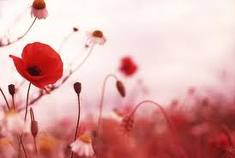
Taken from my Facebook.