The Great Pacific Garbage Patch-a future vacation destination?

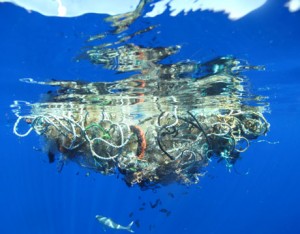
When you picture yourself on vacation, do you think of palm trees, sandy beaches, and clear blue waters? Ramon Knoester, an architect and designer from Holland has proposed an idea that may change future vacation destinations. He has plans to create an island made entirely from plastic waste collected from the oceans. He calls his creation “Recycled Island” and it would have the ability to sustain agriculture and a community. The idea is a creative solution to clean up the great garbage patch in the Northern Pacific Subtropical gyre. Would you vacation on a giant island made from recycled plastic?

Why does the patch need to be cleaned up?

The existence of an oceanic garbage patch that has been increasing tenfold every decade since the 1950s has some consequences that are of immediate concern. For example, plastic pollution has direct damage on marine organisms and seabirds. These animals are dying from ingesting the material, or suffocating from entanglement. Over 100,000 marine mammals and 1 million seabirds die from plastic each year. Eliminating plastic debris is of great importance and transforming the great patch into a self-sustaining island could be a possible solution.

Can this dream become reality?

“Recycled Island” may seem like a far-fetched idea, but there is a chance that it will be created.   After presenting his vision at the Fifth International Marine Debris Conference in Hawaii,  Ramon Knoester was given a grant from the Netherlands Architecture Fund to design a prototype for the 10,000 square kilometer habitat. He admits that it is a daunting task that will take years to complete,  but it is possible and something needs to be done about plastic waste.  This island will not only reduce marine pollution, but it will provide a welcoming and sustainable environment for climate refugees. Who knows, maybe you will be vacationing to “Recycled Island” instead of Hawaii sometime in the future.

References:

  • Berton, Justin. “Continent-size toxic stew of plastic trash fouling swath of Pacific Ocean.” San Francisco Chronicle 110 (2007): 8
  • Dore, J., et al. “Ecosystem changes in the North Pacific subtropical gyre attributed to the 1991-92 El Nino.” Nature 373 (1995): 230-231.

How to choose the best butter or margarine product for you

“Help, too many choices!” – This could quite likely be the thought going through your head while standing in front of the butter and margarine section of the grocery store. It seems through the years that an increasing number of brands and products have appeared on the shelves. So, how do you begin to make a well informed decision of which to buy? It may initially take some time to look at the labels, but you are likely to continue to buy this product as a household staple for years to come. Here are some things to consider when deciding upon which butter or margarine product to choose.


Margarine – The major issue with margarine is the presence of trans fats. Health Canada notes that trans fats raise levels of LDL-cholesterol while lowering levels of HDL-cholesterol in the blood. This is not a good thing as LDL-cholesterol increases the risk of heart disease, while HDL-cholesterol helps to prevent heart disease. Dr. Kristie Leong explains that, in general, the more the liquid the margarine the less trans fat the margarine contains. Be sure to read the Nutrition Facts on the label as well as the ingredients list. Sometimes the label will say that there is 0 grams of trans fats, even though some is present in the product. Keep an eye out for hydrogenated and fractionated oils on the ingredients list to indicate the presence of trans fats.

Butter – The major issue with butter is the high content of saturated fats. According to Health Canada, saturated fats increase levels of both LDL-cholesterol and HDL-cholesterol in the blood; thus, saturated fats have both positive and negative effects. Consumption of saturated fats have previously been thought to increase the risk of coronary heart disease, cardiovascular disease, and stroke. However, a study by Siri-Tarino et al. (2010) suggests that there is no link between saturated fats and heart disease. Nevertheless, to be on the safe side try to consume butters with lower amounts of saturated fats.  On a positive note, butter is less processed than margarine, and, as Dr. Kristie Leong explains, butter is a source of other beneficial nutrients, of which margarine is not.

Overall, try to limit the amount of butter and/or margarine you consume on a daily basis. Eating it in similar quantities as the people in the video shown below is not advised.  I would opt for a butter that is low in saturated fat. If you prefer margarine, then choose one that does not contain trans fat. But, in the end, the product you buy is up to you!

YouTube Preview Image

References:

Siri-Tarino, Patty W, Sun, Qi, Hu, Frank B, and Krauss, Ronald M. (2010). “Meta-analysis of prospective cohort studies evaluating the association of saturated fat with cardiovascular disease.” The American Journal of Clinical Nutrition 91(3): 535-546.

Submitted by: Angela Johnston

The curiosity about Curiosity!

Curiosity is exactly what lead to the creation of Curiosity. That may sound strange if you haven’t been following NASA’s latest venture onto Mars!

Planet Mars
from: http://www.flickr.com/photos/47738026@N05/6859874535/in/set-72157624037672337/


NASA and the Curiosity Rover:

Curiosity Rover
from: http://www.flickr.com/photos/nasahqphoto/6332896370/in/set-72157627974209237/

NASA created the Curiosity Rover, a six-wheeled spacecraft that’s powered by a radioisotope power source and is equipped with mobile ability, computers, cameras, a robotic arm, and more. It was sent to determine if there’s places on Mars where the evolution of microbial organisms may have been possible. It will be looking out for water footprints that may be present on Mars. If these, or any other organic compounds are found, it could lead to conclusions that Mars has supporting factors for life.

Feeding our curiosity about the Curiosity Rover:

All around the world curiosity has risen about the $2.5 billion Rover and it’s activity on the fourth planet from the sun. People worldwide have been following the updates of the Rover since its landing.

An image taken by Curiosity Rover of Mars
from: http://www.flickr.com/photos/30974264@N02/7795559728/

Since it’s landing on Aug. of 2012, Curiosity has been undergoing tests, such as checking the Robotic Arm and cameras. Up to now, the Rover has performed functions such as driving 82 metres on the planet and firing lasers. Notably, it has provided us with many images.

The Curiosity continues:

There’s been lots of discourse regarding whether the money spent on this mission was worth it. The internet, newsroom & media outlets have been buzzing with information, updates, and many debates. Much has scrutinized about the expenditures of the mission, however it’s undeniable that Curiosity’s journey is fascinating, and may lead to ground-breaking findings. NASA has gone under criticism for the budgeting of the project. However, NASA has been a front runner in developing much of the technology we use, and that makes me confident that the mission will ultimately prove useful.

It’s undeniable that an extremely large sum of money went towards funding this project, however scientists agree that if humanity wishes to continue to exist, space exploration could prove to be necessity. Furthermore, NASA’s come under fire for what some critics call careless spending on their missions. In NASA’s defence, through their space exploration and space programs, they’ve been able to enhance the technology that we use. For example, I’d like to point out to the critics the ever-useful creation of Solar Power Panels, which are indebted to the space program. Additionally, money funding Curiosity isn’t money that’s being taken away from any other programs.

Overall, NASA’s missions, including Curiosity, are all working towards advancing our technology and knowledge about things we know, as well as the things we do not yet know. And seeking out knowledge is never something that can be criticised.

The goals of Curiosity have been set and as it does it’s job, it will continually expand our knowledge about the spacecraft as well as Mars. Once it’s discovered soil that can be examined on the onboard chemistry lab, the mission will be accomplished. The world continues to curiously watch as Curiosity uncovers uncharted grounds!

References:

http://www.space.com/16385-curiosity-rover-mars-science-laboratory.html

Blog submitted by: Nadia Kari

Scientific Advances in Treatments for Deafness

Behind the Ear Hearing Aid
http://www.hearing-aids-wizard.com/image-files/behind-the-ear-hearing-aid-decorated.jpg

One important characteristic of being human is our complexly developed senses; our senses are what place us at the top of the food chain. However, one in twenty five people in Canada are unable to experience one of the most fundamental senses for survival: hearing. Scientists have aimed to develop technology to improve the quality of life for those who are hearing impaired. There are already methods that are successful in improving hearing: the hearing aid and the cochlear implant. Furthermore, recent research  suggests that embryonic stem cells could also be of great help when treating the hearing impaired.

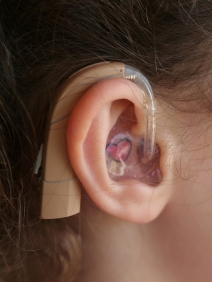
The hearing aid is the most common type of treatment that doctors recommend for hearing loss. It is an electronic device consisting of a battery and some form of a miniature loudspeaker that amplifies sounds that the user is unable to detect. Moreover, the device is customized to the ear shape of the user and fits comfortably inside the ear. An advantage of the hearing aid is that it is cost effective; no matter the financial state of the patient, it is possible to find an affordable device. A second advantage to the hearing aid is that it comes in different styles so finding the right one depends solely on the user’s preference. Its many advantages have widely popularized the use of it for people who are hearing impaired.

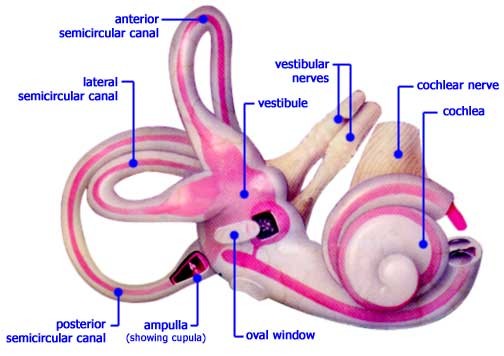
The Inner Ear http://drharris.ucsd.edu/Portals/0/inner%20ear%20detail.jpg

Another method of improving hearing is the surgical implantation of an artificial cochlea, also known as the bionic ear. The cochlea implant functions through skipping the component of the patient’s inner ear where the fully functional hair cells  used to be, and stimulating the cochlear nerves directly using electrical impulses sent by the implant.  This would allow the brain to be able to receive nerve impulses the same way hair cells would send nerve impulses.  The downside of the cochlear implant include risk of infection from the surgical procedure, and the high cost of the implant itself.

The last method that will be discussed was found recently by the University of Sheffield in England and involves an area of science that has been on the rise for the past twenty years: stem cell research.  This new discovery suggests embryonic stem cells can be modified such that it mimics the function of a hair cell, thus, allowing the ear to hear normally. Further research must be done to implement this method but researchers at the University believe this method, when paired with the cochlear implant, possesses the ability to treat people with  hearing impairment.

To demonstrate how life changing advances in science can be, here is a short video of a girl hearing herself for the first time after a cochlear implant.

YouTube Preview Image

The methods described are only a few ways science has advanced to treat those who are hearing impaired. Science still strives to discover new and innovative ways to give the same opportunities to the people who are hearing impaired as people who are not.

Submitted by: Elsie Ng

Hearing Loss is No Clowning Matter


http://julieamarxhausen.files.wordpress.com/
2011/03/finding-nemo.jpg

Everyone’s favourite clownfish is back, but this time, he’s in 3D!  With the beloved movie Finding Nemo returning to theatres this weekend, I thought it would be fun to do a little research on our friend, Nemo.

Everyone who has watched the movie knows that Dory is a forgetful fish, but few people know that Nemo, the clownfish, can potentially be a deaf fish. Recent studies have shown that clownfish are quickly losing their hearing due to ocean acidification caused by fuel emission. In fact, over half the CO2 emission is absorbed by the ocean, thus lowering its pH.  In this experiment, scientists performed a series of tests by increasing the amount of CO2 to what is predicted to be present in years 2050 and 2100, and then recorded the clown fish’s response to various predator-rich coral reef sounds.

Graph of CO2 consumption and pH levels of oceans as a function of time http://centerforoceansolutions.org/climate/wp-content/uploads/2009/12/Acid_pH_graph.jpg

Lead researcher Dr Steve Simpson from the University of Bristol explains: ‘We kept some of the baby clownfish in today’s conditions, bubbling in air, and then had three other treatments where we added extra CO2 based on the predictions from the Intergovernmental Panel on Climate Change for 2050 and 2100. We designed a totally new kind of experimental choice chamber that allowed us to play reef noise through an underwater speaker to fish in the lab, and watch how they responded. Fish reared in today’s conditions swam away from the predator noise, but those reared in the CO2 conditions of 2050 and 2100 showed no response.’

For baby clownfish such as Nemo, their ability to hear is one of their most important assets in ocean survival; with this component slowly being stripped from them, they are becoming increasingly vulnerable to predators. Not only is hearing a sense of protection, clownfish and other coral reef species also rely on their hearing to return home. To make matters worse, ocean acidification does not only affect external matters, it can damage the inside of the fish as well.

http://images.cdn.fotopedia.com/flickr-9201132-hd.jpg

The future of these clownfish’s hearing may be bleak , but scientists have yet to find out if they will adapt to the change in water pH. At the moment, this research is done one way; therefore there is a chance that clownfish can evolve and maintain their hearing.

Blog post submitted by:  Deborah Lo

References:

Daily Mail: “Finding deaf Nemos: Clownfish are growing up with impaired hearing ’caused by fossil fuel emissions.'” –  http://www.dailymail.co.uk/sciencetech/article-1393045/Finding-deaf-Nemos-Clownfish-growing-impaired-hearing-caused-fossil-fuel-emissions.html (accessed September 13, 2012)

University of Bristol: “Ocean acidification makes clownfish hard of hearing.” – http://cordis.europa.eu/fetch?CALLER=EN_NEWS&ACTION=D&RCN=33485  (accessed September 14, 2012)


Could coconut oil be the solution to creating an all natural toothpaste?

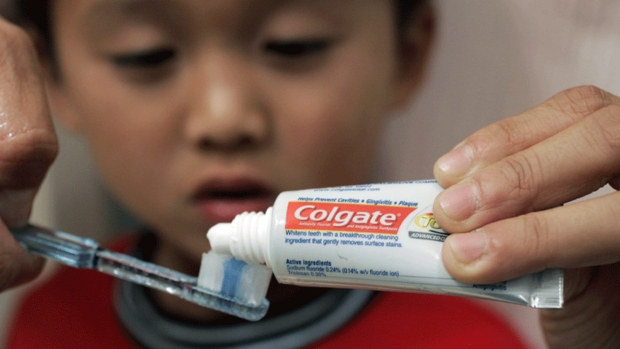
Image source: http://www.cbc.ca/news/technology/story/2012/09/03/sci-coconut-oil-tooth-decay.html

Oral hygiene affects everyone and with the increasing number of children and adults affected by dental caries, more commonly known as tooth decay, has some dentists suggesting we are undergoing an epidemic.  Tooth decay is caused by specific bacteria that erode the hard tissues of the teeth through the production of acid by hydrolysis of food debris.  When left untreated, this infection can spread and possibly lead to serious health complications such as Ludwig’s Angina.

Research done at the Athlone Institute of Technology’s Bioscience Research Institute in Ireland, suggests that coconut oil inhibits the growth of tooth decay causing bacteria and is comparable to the current toothpastes being used.  The research team led by Dr. Damien Brady tested the antibacterial action of coconut oil in both its natural state and when treated with enzymes.  Testing was performed on various strains of Streptococcus bacteria, the most commonly found bacteria in the mouth.  Dr. Brady and his team of researchers found that the enzyme-modified coconut oil substantially inhibited the growth of several strains of Streptococcus.  One of the acid producing, decay causing bacterium, Streptococcus mutans, was found to be strongly inhibited by the modified oil.  An earlier study demonstrating the effects of enzyme-modified milk and its reduction on the binding of Streptococcus mutans to tooth enamel encouraged Dr. Brady’s study on coconut oil.

Dental Caries
http://en.wikipedia.org/wiki/Dental_caries


Dr. Brady’s team presented their work at the Society for General Microbiology’s autumn conference at the University of Warwick on September 3, 2012.  Further work will be done on the molecular level interaction between coconut oil and Streptococcus bacteria.  The team will also be testing the modified-oil’s effect against yeast Candida albicans that can cause thrush.


Why do we care?

With the increase of dental caries being reported today, oral hygiene has become the center of public concern.  Excellent oral hygiene and fresh breath demands that we brush our teeth multiple times a day.  Although the frequency of tooth brushing has become the main focus, attention is lacking as to what ingredients in tooth paste are essential.  Tooth brushing has become a part of our daily routine, but have you ever wondered what your tooth paste is made from?  With ingredients like Sodium Hexametaphosphate, glycerin, hydrated silica and propylene glycol it’s no wonder we don’t question it more.  The public has demanded an increase in organic and health food products yet toothpaste seems to be overlooked.  The research being performed by Dr. Brady and his team could have potential benefits for the oral health care industry.  With the results from their research, there is the potential to reduce the amount of chemical additives in toothpaste and substitute modified coconut oil and other natural ingredients.

This blog post was submitted by: Layla Vera


Nuclear power to fight global warming: the pros and the cons

Since the late 20th century, a growing amount of concerns have arisen regarding of global warming. In the Kyoto Protocol in 1997, many countries agreed on their responsibility to reduce the emission of greenhouse gases in order to fight global warming. As the main source of greenhouse gases comes from the burning of coal to generate electricity, a lot of countries have to come up with alternative methods that do not emit greenhouse gases as the byproduct to generate electricity; the use of nuclear power is one of them.

Nuclear power and its significance

Nuclear power is the use of nuclear fission reaction to generate heat and electricity. Unlike the burning of coal, it does not produce CO2 as the byproduct. According to the International Energy Agency in 2006, 16% of the world electricity is supplied by nuclear power, while other greenhouse-gases-free energy sources, with the exception of hydro power, only all together

World electronic production in 2004
Chart by: InterAcademy Council


contributes to 2% of the world electricity production. The reason of the wide application of nuclear power and hydro power as opposed to other reusable energy sources lies on their low cost. According to Jason Morgan of nuclearfissionary.com, the cost of electricity production by nuclear fission is two times less than wind power and even five times less than solar power.

Downside of nuclear power 

Nuclear explosion of the Fukushima Daiichi Power Plant
Image from: David Twomey 

If nuclear power is both relatively cheap and CO2 emission free, would it be the ultimate solution to global warming? The Fukushima Daiichi nuclear disaster in Japan in 2011 gave an answer to this question. In March 11th,    2011, a 9.0 earthquake in Japan damaged the Fukushima Daiichi Power Plant reactor cooling system which led to a  radiation leak that affected the habitat within the 30km radius. According to studies by John Ten Hoeve and Mark Z. Jacobson of Stanford University, the radiation leak has killed around 15 to 1,300 people and caused around 24 to 2,500 cases of cancer. The effect of the radiation leak to the environment is shown in the video below:

YouTube Preview Image

The impact of this disaster shows the devastating cost of generating electricity through nuclear plants once an accident occurs. In addition, unlike other energy sources, nuclear power generates a lot of radioactive wastes that would take billions of years to decompose to a level that is no longer hazardous to human. These radioactive wastes have to be carefully treated to avoid contamination of the ground and the water, which would cause health issues to humans.

Nuclear power: should we continue or not?

So, should we continue developing nuclear power or not? In my opinion, despite the cheap cost, the risk of nuclear power to humans has generated as much as, if not more than, the risk of greenhouse gases emission causing global warming. What do you think?

Blog post by: Mervin Wong

SCIE 300 Course Blog

Welcome to the SCIE 300 course blog!

Here are few things to make note of before you get started with your posts. First of all, you should read the blogging resources page under the Create menu. This will help you out a lot if you are brand new to using WordPress. On this page you will find video tutorials about writing posts on this blog, adding media to your posts, tagging, and categorizing. You will also find a link to the rubric we’ll use to grade your blog posts.

Next, check out the blogging guidelines. Here you will find the answer to the question: “What are we supposed to blog about?” You can also check out last term’s blog for some additional inspiration.

There are a few important things to keep in mind when blogging. Please do not assume that just because something is online, it is OK for you to use it. For example, unless it is explicitly stated, an image on the internet can not just be copied, saved, and used in your own post without permission to do so. We’ve provided you with a lot more detail about properly using online content, but if you have questions, let us know.

This blog also contains a lot of resources for you. For example, still under the Create menu, there is a list of equipment available for you to borrow and a list of suggested software to use for your projects. We’ve also collected some writing and presentation resources.

Under the Explore menu, you will find some sample podcasts and videos, links that may be of interest or assistance, a list of groups and associations related to communicating science as well as a list of local museums and science centres. The Explore menu also contains a library resources page, which you should definitely have a look at. Finally, there is a bookshelf that lists relevant books that are on reserve for you in Woodward Library or available for borrowing from Eric’s office (BioSci 3532).

Let us know if you have any questions about the blog or would like to see any other resources made available. Or, if you find something that you think would be useful to the rest of the class, tell us, and we can add it to the resources. Better yet — write a post about it!

Happy blogging!

Craig