Categories
Uncategorized

Google’s Largest Acquisition?

In effort to dominate local online advertising and emphasize their move into social networking, Google’s current endeavor consists of acquiring Groupon, an online coupon company.  Groupon offers enormous discounted coupons from restaurants, local stores, and other services.  Groupon was founded in 2008 and has attained significant growth in the past two years.  Analysts have estimated that Groupon has annual revenue of more than $500 million.

Recently, Google offered an aggressive $5.3 billion bid towards Groupon.  If the deal follows through, Groupon will stand as Google’s largest acquisition, easily peaking Google’s $3.1 billion purchase of DoubleClick in 2007.  With the acquisition of Groupon, Google’s net value should benefit in the long run.  Maintaining a strong emphasize on local advertising and striving for a lead position in social networking will be essential for Google to benefit to its full potential.  Although Google has had an optimistic outlook towards this acquisition, investors are worried that the $5.3 billion bid might have been a bit too aggressive.  Groupon currently holds a valuation of approximately $1.4 billion, which is significantly lower than Google’s proposed bid.

Google’s aggressive bid reflects their fear of the potential damage rivals could inflict if they acquired Groupon instead.  Main competitor, Facebook, has become a major threat in recent years due to their potential expansion in social networking with the acquisition of Groupon.  When considering competition among leading companies, gaining a competitive advantage over rivals is a foremost priority.

Local online advertising has been projected to increase by 18% next year, according to an advertising research firm at Borrell Associates.  With big ambition for local services, Google has recently prioritized their effort to gain exposure into local advertisement and social networking.  It will be very interesting to see the impact that Groupon poses on Google’s attentiveness to local advertisement and their long sought exposure into social networking.

Resources:  http://dealbook.nytimes.com/2010/11/30/googles-gambit-for-groupon-raises-concerns/

** Posted before in-class discussion.

Categories
Uncategorized

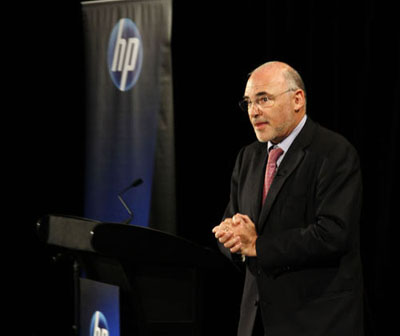
A New CEO Is Taking Over Hewlett-Packard

In September, American multinational IT Corporation, HP announced that Leo Apotheker will attain the position of CEO at the corporation.  This announcement was made shortly after ex- CEO Mark Hurd was fired for alleged sex scandals and miss calculated expense reports.  It will be tremendously interesting to see how these significant changes at HP reflect the intense competition that has emerged among top global IT corporations over the past decade.  In spite of competition, HP strategically merged with Compaq Computer in 2002 for $25 billion and EDS in 2009 for $13.9 billion in effort to reconstruct their corporation and generate a competitive advantage over top rivals IBM and Dell.  Additionally, HP hopes that by integrating these acquisitions into their corporation they will capture the leading market position among IT corporations.  The restructuring program is expected to save HP about $1.8 billion each year, HP said.  The justifications behind these purchases are directly correlated to the best interest of the corporation.  To compensate for the acquisitions of EDS and Compaq computer, HP has laid off approximately 62,000 workers over the past 8 years.  They also made across the board pay cuts and implemented other financial adjustments.  Keeping this in mind, the question arises as to what new CEO, Leo Apotheker will do to compensate for the acquisitions of Compaq computer and EDS.

Resources:

http://topics.nytimes.com/top/news/business/companies/hewlett_packard_corporation/index.html?scp=1&sq=hp%20eds&st=cse

http://www.infoworld.com/t/business/hp-announces-24600-layoffs-in-wake-eds-acquisition-819

Categories
Uncategorized

The entrepreneurship of Mainline West

The purpose of this blog is to articulate Mainline West and depict the characteristics that exemplify this company to be entrepreneurial.  Mainline West is a company that specializes in Municipal bond investing.  As an entrepreneurial company  the mission of Mainline West is to capitalize on investment opportunities in municipal securities.  Mainline West has designed a unique opportunity fund that gives investors a “leverage on current market dislocation for optimized tax-exempt income.” The innovation of this opportunity fund represents the competitive advantage Mainline West offers in the municipal bond market. Additionally, Mainline West created a new market within the industry.  The MainLine team was in the institutional municipal market.  Mainline Wests’s model is to elevate high net worth investors out of the maze of retail investing offering them institutional management, institutional access to investments, for an institutional price.  Due to the economic crisis a new type of municipal bonds were created as part of the American Recovery and Reinvestment Act signed into law by Obama in March 2009.  ARRA created a new taxable Build America Bond.  Mainline West acted as early adopters of these bonds and helped to facilitate investment in this new taxable product. Mainline West has exclusive investors that are selected through a set of qualifications.  Having exclusive investors is quite feasible when considering the risks of investing in municipal bonds present. MainLine West is in the investment management business, so the risk is the ability to navigate the financial markets.  Another aspect of an entrepreneurial company incorporates the amount of wealth and the speed of wealth within the company. From 2009 through today, Mainline West’s trading activity has exceeded $600 million. “This volume assures the prominent position to identify top credit quality bonds at a genuine institutional market clearing level.”  Clearly Mainline West has a significant amount of capital and money invested throughout the municipal bond market.  This being said,  Mainline West is unquestionably a company that is entrepreneurial.  Its current expansion of capital and new investors signify the epitome of entrepreneurship.

Sources : www.mainlinewest.net

Categories
Uncategorized

Investors Suing Major Industries Over Mortgages

In the long ongoing battle for the financial services industry over mortgages, current signals have investors concerned of what is probable to be an extensive and costly battle. Numerous investors such as Charles Schwab and the Federal Home Loan Bank are suing the Major American financial services company Citigroup.  Investors are suing the company “in an effort to force Citigroup to buy back soured mortgages that the investors contended did not conform to proper underwriting standards.”

Similarly, Bank of America is dealing with a lawsuit regarding investors holding $375 billion worth of mortgage securities.  Fortunately for Bank of America a federal court in California, cutting that $375 billion worth of mortgage securities to $54 billion, dismissed a lawsuit.  The dismissal of this lawsuit is a foremost victory for Bank of America.  Yet there are still various legal issues regarding banks to buy back defaulted mortgages.  Bank of America has other investors including the Federal Reserve Bank of New York and Primco that haven’t pursued any lawsuits.  This could lead to another potential lawsuit that would set back Bank of America severely.  These legal issues have arose concerns as to wither efforts to force banks to buy back defaulted mortgages could potentially lead to a more extensive and costly battle for the industry.  Forcing industries to buyback these mortgages “will not be resolved quickly or cheaply,” said CEO, Brain Maynihan of Bank of America. Estimated costs could total tens of billions of dollars for these major industries.  This being present, shares of the big banks are decreasing rapidly. These ongoing issues are clearly a major set back for Citigroup and Bank of America.  After these extensive battles between the investors and the industries are over it will be interesting to see the impact of these lawsuits on the industries.

Resources:

http://dealbook.blogs.nytimes.com/2010/11/05/banks-face-more-demands-to-buy-back-bad-loans/

Categories
Uncategorized

A.I.G reports $2.4 billion loss in 3rd quarter

In the third quarter of the financial year, A.I.G announced its enormous loss of  $2.4 billion dollars.  In this article the loss of $2.4 billion dollars represents the financial statement of A.I.G in the third quarter and how its restructuring project is negatively impacting it’s financial statement.  Although A.I.G has struggled with their restructuring project they claim that their current endeavor to repay its taxpayer-financed balance is on track.

Another aspect of this article relates to A.I.G’s government stakes.  A.I.G hopes to prevail the approval to start selling these government stakes in order to rebuild their financial stability.  After A.I.G’s second consecutive quarterly loss that arose from $4.5 billion worth of charges associated with numerous asset sales there is certainly financial concerns for the company.  Earlier this fall, AIG announced that it would initiate a plan to repay its $130 billion in government rescues that include a large portion of the ownership stakes.  The optimistic attitude of CEO, Robert Benmosche plans to start selling these stakes at the end of the first quarter in 2011.  This cutback of the government’s ownership of the company has been a main priority for A.I.G.  This cutback would signify the company’s ability to maintain an independent business that doesn’t have to rely on taxpayer support.  Looking into the future it will be quite interesting to see where the ownership of A.I.G’s stakes are redistributed and the impact it brings to the company’s financial stability.

Resources: http://dealbook.blogs.nytimes.com/2010/11/05/a-i-g-reports-2-4-billion-loss-in-3rd-quarter/

Spam prevention powered by Akismet