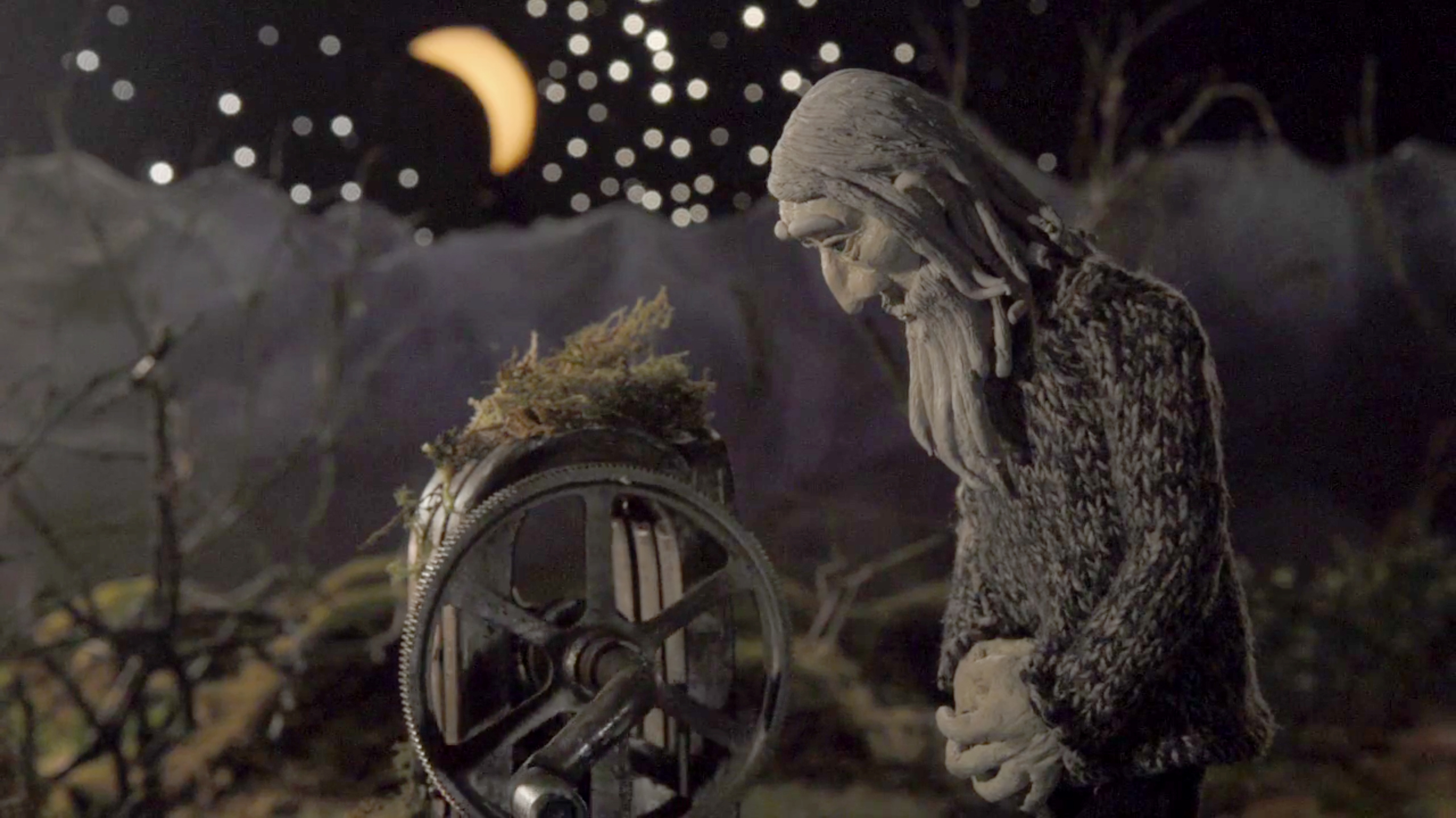
I have a great story to tell you.
So let’s get to it.
There’s this man. And there’s a lot of other men and a lot of other women in this world. But none of them particularly matter to this story so let’s forget them for a little while. Back to this man. Our man.
He was an old man. He is an old man, that is. And he’s a special man. If you have ever looked to the sun and wondered what makes it wake and what makes it sleep, then you have thought of this man. Because, to your surprise, it is not the rotation of earth that makes the days begin and end, and the years pass on by. No. It is the old man.
He stands, or probably sits, on a tower ten miles high in the sky. Where? I can’t say because no one knows for sure but believe me, it’s there. I know, if its ten miles high, wouldn’t we have seen it by now? Surely. And people have seen this man in this tower and by all means, you might see him too but that is entirely besides the point.
In his old tower ten miles high in the old sky, this old man sits before a spinning dial. And as any one would when they sit before a spinning anything, this old man spins the crank. Some say it is controlled by a small handle, no more than six inches long which he can turn with one hand, while others have furiously argued that no, on the contrary, the handle is sixty inches long and must be turned with both hands. But again, that is entirely besides the point.
This old man in his old tower ten miles high in the old sky is a special man because with his spinning dial, he controls the world. When he spins forward, time moves forward. A second ahead, a minute ahead, a hour ahead, a day ahead, a week ahead, a year ahead, a decade ahead, a millennium ahead and so on and so on. As far as we know, this old man is the only man who has ever done this job. Is he immortal? No one knows. Is he human? Well, that’s what makes this story so great.
Typically, when you have something to spin, you can spin it in either direction you please. But this old man was never the smartest man. For almost the entirety of human history, he had spun his spinning dial — either with one hand or two — in only one direction: forward. And the result of this continual progress? Continual goodness. So long as the man was steady, the world was steady and man was steady. But he wasn’t always an old man; like the Earth, he was once very young. So you must have imagined the surprise in the old man when he realized he was an old man. After so many years of ceaseless forward motion in time, his beard had grown almost to the ground ten miles below. If that is any indication, then yes, he is a very old man. So the day he caught sight of this — how, we will never fully know — is forever remembered as the day the earth stood still. His forward spinning stopped. In shock, he stepped backwards and as he did, his hands still locked firmly around the crank, the Earth went backwards and time went backwards. And his beard grew that much shorter. Hmmm, the old man thought, I like that.
In a matter of seconds, human history was erased as this old man tirelessly spun back the dial of time and returned to his glory as a young man. His beard was entirely gone and with it, all of human progress and goodness. But he was and remains not only a man of slight intelligence but incredible vanity. Every ebb and flow in human progress and the rise and fall of civilization and the widening and narrowing of the gyres of time can be attributed to one thing: the man’s ceaseless need to have the perfect beard. Forwards and backwards and backwards and forwards and so on.
Mankind, although never knowing exactly what was happening, grew annoyed as it felt it was doing things it had done hundreds and, in some cases, thousands of times before. The pyramids can built only so many times before a man gets pissed off. So the source of evil? Annoyance at unknown vanity.
How’s that for a conception of time? I’m not so sure if I’m a fan but it’s stuck and now, it’s apart of me. Like they say: “Once you have told a story, you can never take it back. So, be careful of the stories you tell, AND the stories you listen to.” Be it WB Yeats’ “widening gyre” or Carl Sagan’s “cosmic calendar,” we tell ourselves and listen to stories in order to make sense of the things we might not ever fully know. This assignment challenged me to entertain my friends in a very unusual way but prompted an exchange of other theories and stories about our origins, about evil, about time that grew increasingly ridiculous but all the more enjoyable. As Thomas King points out time and time again, “the truth about stories is that’s all we are,” and—as I learned with this activity— there is a lot of fun to be had with that notion.
Works Cited
“Carl Sagan – Cosmos – Cosmic Calendar.” Online video clip. YouTube. YouTube, 22 July. 2009. Web. 1 February 2016.
King, Thomas. The Truth About Stories: A Native Narrative. Minneapolis: U of Minnesota Press. 2005. Print.
Yeats, William Butler. “The Second Coming.” Poetry Foundation. Poetry Foundation, n.d. Web. 1 February 2016.

Beatrice Lew
February 3, 2016 — 10:04 pm
Hi Simon
This was indeed a fine tale! Reading this story, I felt as if there was another perhaps not-so-old but definitely wiser man with at the crank, controlling the ebb and flow of this narrative with ease and aplomb (—though I’m sure your beard is already the perfect length!) I loved your allusion to Yeats’ widening gyre and Carl Sagan’s cosmic calendar, and it made me wonder if you were influenced by any other stories. The old man in your tale seems particularly evocative of the Greek god of time Chronos, who also has very long beard. In Greco-Roman mosaics, he’s depicted as a figure turning the Zodiac Wheel. Sometimes, Chronos is conflated with Cronus, another stock Titan whose incredible conceitedness leads him to consume his own children. I see a parallel allegory for the suppression of the future by the past in your narrative, as the old man winds back the dial. Embedded in your imagery of “rise and fall,” “widening and narrowing,” “forwards and backwards” is also, if I may hazard an interpretation, the idea that history repeats itself. Lastly, I found it interesting that you pinpointed the source of evil not as vanity itself but as “annoyance at unknown vanity.” How did you come to this conclusion?
Thanks,
Bea