If the Author is dead, who opens his fan mail?

I found this week’s reading to be challenging, mainly as I disagree heavily with Barthes’ idea of ‘’The death of the Author’’. I do agree that the meaning of a text depends on the reader as we will probably all take away something different from our reading experience, perhaps due to Bourdieu’s idea of different ‘’tastes’’ which relate to one’s social position.

I disagree however that writing and its creator and unrelated. The author has created the work; therefore the author has formulated the words, the dialogue and the narrative according to his or her own tastes.

The reader is ‘born’ to interpret the writing. Yet this seems a rather unfair relationship as it is not reciprocated as Barthes does not permit the author to interpret the reader. Barthes implies that the reader will judge the text and respond to it, thus themselves becoming a critic, yet in reality the writer also passes judgement on the reader. A piece of writing exists because the author had a specific intent, and likely taken into consideration when writing would be the reader’s response. An artist cannot surely be disconnected from his masterpiece? Spectators may choose view and interpret a work of art separately and out of context of the artist who produced it, yet the artist is still omniscient within the work.

Talking about the death of the author also implies a previous existence; therefore there has been historically an author. The suggestion that writing is now dispossessed implies that it was ‘’possessed’’ in the first place. Yet it seems as if Barthes is implying that there has never been an authorial presence.

On a separate point I found the reading on Bourdieu to be very interesting where he talks about the fact that language is used as a mechanism of power. Also that the way in which we choose to present our social space to the world demonstrates our perceived notion of our place in society is highly intriguing. Bourdieu talks about ‘’the practical ‘attributive judgement’ whereby one puts someone in a class by speaking to him in a certain way (thereby putting oneself in a class at the same time)’’ (242) which demonstrates the ‘’power’’ of language and how it can be used positively or negatively. The idea that we are all ‘’potential object[s] of categorization’’ (245) I think is rather dangerous as one will either consider oneself inferior to or greater than the person or group to which one compares oneself.
Does the author have to Die?

When we totally submerged in a work of litterature, the characters of the book all come to life and perform before us. It seems like we observe all events occur one after another just around us. Writings of the author lead us to the ideally constructed world composed by him. Barthes’ idea about “lose the origin” is too objective to achieve. How do we supposed to do to completely ignoring the existence of the author who brings us to his world ? from my point of view, the reason that some masterpieces passes from generation to generation has something really important to do with the authors’ character. Every author has different experience which would affect his character and therefore their writing styles vary. When we read <<les Confessions>> by Jacques Rousseau, his whole purpose was to lead us to himself, to let us get into the spirit of him, and to know about what kind of person he really was, so how can we remove the author then? Maybe the reader and the author don’t have to be at opposite positions, they are connected in a vary nuance manner. The death of author is not necessary… Admittedly some works like folk tales do lost their origin, do they become easier to analyse?

Death of the author?

It’s curious to see that several of us are feeling a little skeptical about the announcement of the “death of the author” and about the absolute power of interpretation given to the new-born reader. Admittedly I am also among those who were asking themselves: ” does the author has to die?”, it seems that we are somehow upset and feel resistant about this notion that the author figure should be completely erased from our reading experience.
However if you think about it, it is perfectly normal that these theorists would want to claim the importance of the role played by the readers in the equation, and it is true that the readers’ reception of the texts contributes just as much to a literary work, so what is really this reluctance in us to let go of the “author”? Maybe it’s because of the brutal image that Barthes’ announcement suggests: the death? Maybe it’s because of the insecurity brought about by the absolute absence of author/authority? Then I realized my emotional response to this announcement just goes to prove how deeply rooted is the author figure in my mind: during years of literary studies, we always start with an author’s biography before even looking at the text, a literary work is so closely related to its author that we always say “I love Flaubert’s works”, and we even invent adjectives like “Proustien” to talk about the style of the author. So what if some readers (like me) find it extremely difficult to exclude author from the text? I agree with Foucault when he says: “it is not enough, however, to repeat the empty affirmation that the author has disappeared”, what we need is a closer look at how the concept of “author” came to be and how it influences our reading experience.
According to Foucault in “What is an author?”, he states that what we call “author” is a “rational being” constructed as a result of the “author function” of discourses. The individual being/author in whom the critics discern “a ‘deep’ motive, a ‘creative’ power, or a ‘design’, the milieu in which writing originates”, becomes the author we know. (Constructed only by critics? Don’t the readers and their interpretations contribute to this construction of “author” as well?) The author, according to Foucault, “is a certain functional principle by which in our culture, one limits, excludes, and chooses; in short, by which one impedes the free circulation, the free manipulation, the free composition, decomposition, and recomposition of fiction.” The word “function” implies that “author” is used to serve a certain end, and that we have the need to use “author” to constrain fiction, a need that Foucault explains as “we fear the proliferation of meaning”. This statement somewhat explains the reluctance to make the author completely disappear: the author has descended from the state of the Author (as indicated by Barthes), but it’s not completely gone, for many readers it still is one of the means for interpreting the text.

Categories
Barthes

Death of the author?

A rather double death

What triggered my curiosity in the pile of readings of the past week was the revolution of the hermeneutics through phenomenology, and I am not talking here about a science of phenomenas, but rather about phenomenalisation. In that respect words don’t matter for what they express immediately, but rather for the differences they state in their actualisation. Probably Aristotel was the first to say that the Logos offers meanings right because it separates concepts. In my opinion Barthes Death of the author would not have been possible beyond these phenomenological assumptions. I find this gloomy, rhetorical death pretty cool though. This death of the author has its origin in the idea that the text is nothing but a “gramme”, or in other words a trace of what was almost about to be actualized by the author. These traces do not aim to point towards an origin, but rather they talked about the passage itself towards the Origin or the non textual source of the text itself. In other words once a text written, its author becomes automatically its reader, and interpreter. The separation between the author and his text is univocal and automatic precisely because the unique character of the writing act. This author can only once write a text, everything that follows is interpretation. We perceive then a distinction between the author and his thinking. His only merit is that he was the first to think his thinking. The great privilege of the author is only the fact that he was his first interpreter. But in that respect, I wonder, couldn’t we very well also speak about a possible death of the reader? I find myself so many times disappointed in front of a text that once I stroke my emotions and I try to revitalize that grammme, that trace that seemed to grasp the Origin and I am unable to repeat the experience.

A rather double death

What triggered my curiosity in the pile of readings of the past week was the revolution of the hermeneutics through phenomenology, and I am not talking here about a science of phenomenas, but rather about phenomenalisation. In that respect words don’t matter for what they express immediately, but rather for the differences they state in their actualisation. Probably Aristotel was the first to say that the Logos offers meanings right because it separates concepts. In my opinion Barthes Death of the author would not have been possible beyond these phenomenological assumptions. I find this gloomy, rhetorical death pretty cool though. This death of the author has its origin in the idea that the text is nothing but a “gramme”, or in other words a trace of what was almost about to be actualized by the author. These traces do not aim to point towards an origin, but rather they talked about the passage itself towards the Origin or the non textual source of the text itself. In other words once a text written, its author becomes automatically its reader, and interpreter. The separation between the author and his text is univocal and automatic precisely because the unique character of the writing act. This author can only once write a text, everything that follows is interpretation. We perceive then a distinction between the author and his thinking. His only merit is that he was the first to think his thinking. The great privilege of the author is only the fact that he was his first interpreter. But in that respect, I wonder, couldn’t we very well also speak about a possible death of the reader? I find myself so many times disappointed in front of a text that once I stroke my emotions and I try to revitalize that grammme, that trace that seemed to grasp the Origin and I am unable to repeat the experience.

“ interpretive community” in Fish’s essay

In his essay, Fish addresses the reasons behind why the same reader will interpret different texts in different ways, and also why different readers will interpret the same text in a similar way if each reader interprets a text independently. In order to give an explanation on the one hand of the stability of interpretation and on the other of the orderly variety of interpretation, Fish proposes the theory of “ interpretive community”. According to Fish, the interpretive community is “made up of those who share interpretive strategies not for reading (in the conventional sense) but for writing texts, for constituting their properties and assigning their intentions”. (219). Each interpretive community share its own reading methodology and therefore depending to which interpretive community the readers belong, they make certain shared assumptions prior to the process of reading that influence their interpretation of the texts. This is the explanation for the stability of interpretation among different readers in the same interpretive community and why there are disagreements between different communities.

In my opinion, Fish is saying that the readers hold all the power in determining the interpretation, and both authorial intention and formal features are produced by their interpretive assumptions and procedures the readers bring to the text (basing on their personal experiences, cultural background and knowledge, rather than on the formal elements of the texts themselves to determine the way a work is interpreted, and what it means). The reader’s interpretive perceptions and the skills that one uses to interpret works are individually learned, and developed as they are traits that are not inherently with us; and depend on the assumptions shared by the interpretative community that the reader belongs, which explains why some of us interpret things a different way than others.

I understand and agree with Fish that certain nuances in meaning are subjective and projected onto the text by the reader, but are we to completely ignore authorial intention?

Categories
Barthes Foucault

In Defense of the Author – Let Him/Her Live!

Both Barthes’ “The Death of the Author” and Foucault’s “What Is an Author” are very stimulating, insightful texts that do exactly what Dr. Freilick identified as one of the primary  goals of this course – they make us question our assumptions. I strongly believe that this is a foundational exercise of our education and I have always been an avid proponent of the practice of sharply questioning what you believe and what you know.

Having said that, when it comes to soundly convincing me, both of these texts – considered either individually or in conjunction – have a limited effect. I have been exposed to them before in English Lit courses and I made a conscious effort to approach the texts open-mindedly, trying to erase my memories of the fact that they did not sway me in the past either, as it has now been a few years since Intro to Literary Analysis in my English major and consequently more exposure to literature, both of the English and Hispanic worlds. However, I find myself somewhat at odds with some of the arguments that the texts put forth. I agree that the author is a product of society, and I definitely do not believe in seeking the “explanation of a work in the man or woman who produced it” (Barthes 143) – as I believe that that is a very dangerous and pointless trap, as we were discussing in class during out last meeting. This is also certainly a very tempting path to take; I have found myself forcing an interpretation on a text because of socio-historic and biographical information that we have the privilege of knowing about the author – and I have to at times actively stop myself from doing this.

However, I do not believe that we have yet reached – and I wonder if we ever will – the point at which  language can ‘act’ and ‘perform’ in a completely empty vacuum. As Barthes points out, Surrealism did indeed contribute to a desacrilization of the Author through its characteristic ‘jolt’, the practice of automatic writing, and the principle and experience of several individuals writing together, yet can Surrealism ever be fully separated from André Breton, Salvador Dalí and Luis Buñuel (yes, I do choose to see them as ‘authors’)? In my opinion, to do so would be to also bring about a loss – while we must take every caution to not let historical and biographical information overshadow and control our view of a work, I believe that it can enrich it. A piece of literature can certainly stand independent of its socio-political context, but is it not also true that grasping this context might also be beneficial? I believe that this is particularly true in texts that share an intrinsic link to moments in history and political movements – for example, as I am conducting my thesis research on the Spanish Civil War, I cannot imagine getting a holistic picture of the literary texts (and films) that I am analyzing without having first understood the historical context of the times. When it comes to Barthes’ argument that once the Author is removed, “the claim to decipher a text becomes futile” (147), I am also not sure I agree – one can certainly parse a text and engage in an exercise of ‘interpretation’ without working in the dimension of the Author.

One portion of Barthes’ argument that I very much admire, however, is his concluding call for making the reader “the space on which all the quotations that make up a writing are inscribed without any of them being lost” (148) and his proposition that the unity of a text lies “not in its origin but in its destination” (148). I think this highly crucial to the practice of reading, but I am just not convinced that it absolutely has to come at the expense of the death of the Author; is there no space for the co-existence of both the birth of the reader and the death of the Author? Undoubtedly such an argument does not pack the rhetorical punch of setting up a ‘life/death’ dichotomy as Barthes unequivocally does in the closing sentence of “The Death of the Author,” but I believe that this is much closer to where the field stands at this time – in my personal experience at UBC.

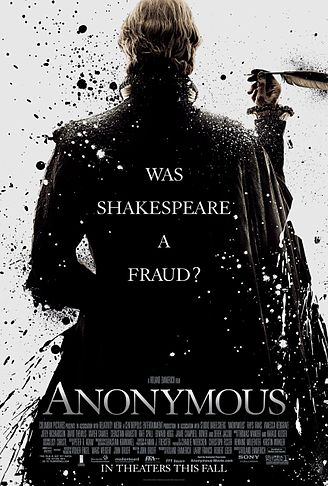
To answer Beckett’s question, I do believe that it does matter who is speaking, and while the work may possess “the right to kill, to be its author’s murderer, as in the cases of Flaubert, Proust, and Kafka” (Foucault 102), I don’t believe that it has. As we have the advantage of time and hindsight (only up to the present date, of course), we can ask ourselves if “as our society change[d], the author function will disappear” (119). Have we “no longer hear[d] the questions that have been rehashed for so long: Who really spoke? Is it really he and not someone else? With what authenticity and originality […]” (119)? I would venture to answer that on the contrary, these are questions that still very much continue to dominate our contemporary literary discourse – just one example would be the relatively recently released film Anonymous (2011) (the film essentially presents the possibility that Shakespeare did not actually write any of the works that are attributed to him). Any B.A. student at UBC who wants to obtain an English Lit major must meet the requirement of taking a 3 credit course focused on either Chaucer, Milton or Shakespeare – bringing to mind the infamous ‘cannon’ debate. However, what is most important thing to keep in mind is not the obligations of an English Lit degree, but whether or not this is a damaging thing to inflict on students, a negatively-impacting the-Author-is-very-much-alive type of view – and to that, my answer is a resounding ‘no’.

In order to achieve a cohesive understanding of our assumptions, we cannot push aside questions of “What are the modes of existence of this discourse? Where has it been used, how can it circulate, and who can appropriate it for himself? What are the places in it where there is room for possible subjects? Who can assume these various subject functions?” (120). these are the fundamental questions to the practice of questioning assumptions and sharply analyzing and also questioning the world around us – and my argument is that the birth of the reader does not have to come at the expense of the death of the author; an in-between space is indeed possible, and I believe that this is what we achieve in the literature classes that make up the Master’s and PhD programs that we are currently enrolled in.

Categories
Barthes

“What is an Author” or “What is a reader”

Categories
Barthes

Is his death necessary?

I remember that when I was in elementary school, the most common question in the tales that were on the textbooks of Literature was: “What does the author wants to say?” Roland Barthes would find this question terrible, castrating. And so do I. I think that the question should be: “What does the text says to you?” In Literature (and in Art in general), nobody has the last word. The interpretation that one could give to a text is as valid as the idea the author has of it. I remember a Peruvian writer who attended to a conference about one of his novels. At the end he said: “I didn’t know that I wanted to say so many things.” So, I agree with Barthes that we shouldn’t give to the author the category of “God”, the one who has the last and real opinion or interpretation of a text.

But I can’t agree with Bathes when he radicalizes his argument and says: “To give a text an Author is to impose a limit on that text, to furnish it with a final signified, to close the writing” (147). Really? In my opinion, the problem of this asseveration is its generalization. Sometimes, knowing the author, his biography, his possible intentions and other details that surround his work, far from “close” the interpretation, gives new clues. I will illustrate my point with an example. The following is a poem of the Peruvian poet César Vallejo (here is the English translation: http://www.poets.org/viewmedia.php/prmMID/15272):

A MI HERMANO MIGUEL
In memoriam

Hermano, hoy estoy en el poyo de la casa.

Donde nos haces una falta sin fondo!

Me acuerdo que jugábamos esta hora, y que mamá

nos acariciaba: “Pero, hijos…”


Ahora yo me escondo,

como antes, todas estas oraciones

vespertinas, y espero que tú no des conmigo.

Por la sala, el zaguán, los corredores.

Después, te ocultas tú, y yo no doy contigo.

Me acuerdo que nos hacíamos llorar,

hermano, en aquel juego.


Miguel, tú te escondiste

una noche de agosto, al alborear;

pero, en vez de ocultarte riendo, estabas triste.

Y tu gemelo corazón de esas tardes

extintas se ha aburrido de no encontrarte. Y ya

cae sombra en el alma.


Oye, hermano, no tardes

en salir. Bueno? Puede inquietarse mamá.

(source: http://www.literatura.us/vallejo/completa.html)

Of course, one could give an interpretation of this poem without knowing anything of the author and his life. But, it is not casual, I think, that in many of the critical editions of the poems of Vallejo and in the university classes about him, is taught that he actually had an older brother named Miguel who died tragically in 1915 and that in some editions appears that “In memoriam”. This fact help us to understand better the poem, to decipher the ambiguity that the poetic voice creates with the game of hide and seek that is presented in the verses. So, knowing this, “impose a limit on that text”? I think not. On the contrary, it gives an important clue and opens the interpretation to many more variants (the notions of death that could be underlined, the not acceptance of it, the sense of absence, the love between brothers, etc.).

In my opinion, Barthes makes an important contribution highlighting that the readers have the power to appropriate the text. Taking his metaphor that the Author is like the father of the text, we could say that, as Son, the text has his own life, creates his own relations with the readers. But, saying that “the birth of the reader must be at the cost of the death of the Author” (148) seems too much to me. The author could provide an important approach, no the definitive, but at least something to take into consideration. In synthesis, we should make a demystification of the author, but not “kill” him.

[César Vallejo and his last wife, Georgette, in Paris, where he was auto-exiled from 1923 until his death in 1938]

Spam prevention powered by Akismet