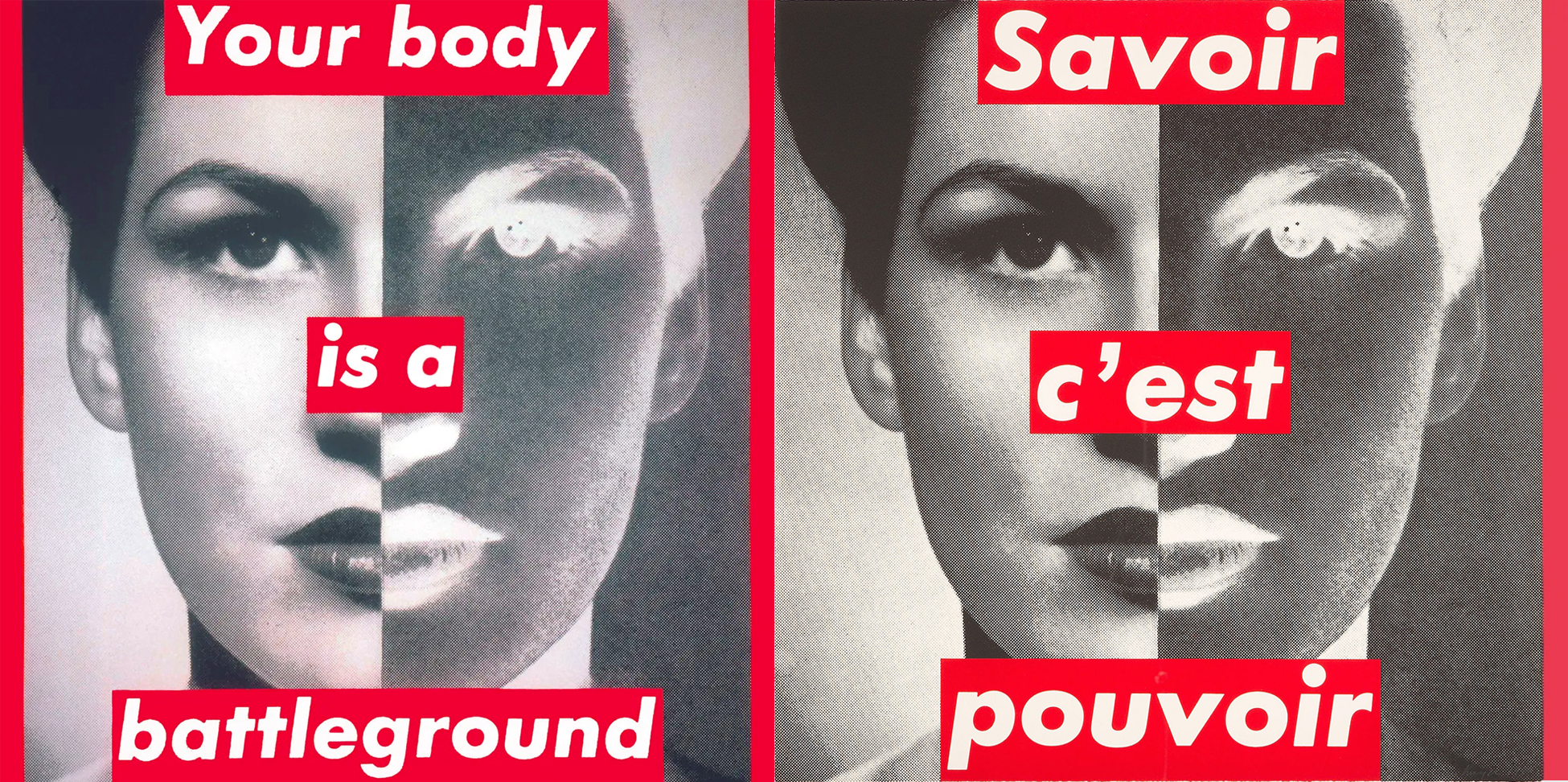
 artist: Barbara Kruger
The Portfolio (30%)
You will compose a portfolio (format to be decided by you (e.g., zine, video, website, journal, anthology, etc. ) which highlights “the work” you did this semester. The portfolio should curate key concepts and insights you take away from the seminar, why and how they spoke to you, and how they might inform the future. These do not need to take solely a written form. You can use audio, video, gifs, photographs, doodles, drawings and so on to make your portfolio.
Note: You can do your portfolio in groups of 2 or 3, please just let me know ahead of time (and, the portfolio itself is expected to be longer and could be in dialogue with each other’s learning).
Components
The portfolio should include:
- An introduction that describes your portfolio and the key conceptual idea(s) connecting its different parts (here you might have a theme, or different ones in conversation. Length: up to 500-600 words
- The ’product’: your portfolio will incorporate relevant readings to anchor the project in the theoretical, conceptual topics as footnotes and should include and expand upon what you learned throughout the class. You should draw on weekly blogs, your presentation, or any other further reflections / connections you made inside or outside the classroom. The expectation is that you curate your portfolio, meaning that what is included or how it is included keeps coherence or establishes a dialogue with the overall concept of your portfolio.
- The not so obvious that can be included: those notes or ideas jotted down when reading or during discussions in class, while thinking, during conversations you had about class topics with family and friends, stories or objects that came into conversation with the course materials and helped you connect to the theme of gender, peace and security and different topics in the class. You may want to make connections across themes, or draw up a manifest or guidelines that you will carry forward, or a feminist toolbox. The purpose is to show evidence of thinking and reflexive reflection throughout the course.
- A closing section which offers concluding reflections and may put forth future directions (200-300 words).
- A bibliography on the works cited.
Evaluation
- Content (Conceptual, Reflexive and Analytical): 60%
- Writing: 20%
- Design/visuals/Audio: 20%
Other considerations in evaluation of the project are:
- Clarity of ideas
- Originality of ideas/vision
- Coherence content/image/vision (for creative projects)
- Balance and integration of readings/ideas from the course