Categories
Uncategorized

adieu :)

I wanted to start by saying, I am not one who is particularly interested in literature/ i usually dont enjoy literature courses, but RMST 202 and the teaching team has changed my mind. I loved how i could freely state however I felt about the books I’ve read, without worrying abt it being correct in the literary sense or worrying about my grade. and the no ai policy also helped me, by truly expressing my feelings!

Moving on to my takeaways from thos course. Even though I started this course a bit late, I learnt so many new things, from spanish civil war history, to french colonies in vietnam, to the italian class distinctions, to south american political scenes. not just these aspects, but the actual cultural and geographical aspects that played out in all these stories also fascinated me

I have enjoyed quite a few books in this course, and some that stood out to me and that i will always remember are:

Money to Burn: the entire portrayal of the heist, the different storylines of the characters, and the climax money burning with the audeince which was absolute PEAK

My brilliant Friend: The toxic dependency and the complex relationship betwee the two girls actually stole my heart ngl, even though this was a long read, i always wanted to know what was the next reason that the main character was jealous of lila. I look forward to reading the rest of the series in summer definitely!

The Lover. I immensely enoyed the class dicussion/ debate of the Lover And how we felt about who was in the drivers seat of the novel. I loved hearing other’s perpective about this

Some of the other books that were mind boggling to me were The time of the doves, the shrouded woman, AND AGOSTINO DEFINITELY TAKES THE CAKE IN THIS CATEGORY. My friend and I had this weekly topic of conversation where I tell her what new mind warping story i read for RMST, and im lowkey sad that that series has come to an end haha.

The learning curve has been great for me, as i get to see tiny perpective of men and women authors in that particular time which i have not been alive for, and the sntire scenario at that time. I would always approach analysing the novel through the lense of that partciular year in history that was mentioned in the novel, that location, the socio-political scenario in that place, and honestly it was refreshing

Thank you so much to the audience of my blogs (my classmates who kept up with my rants), the teaching team- who always kept class fun even when there were a handful of people for the soldiers of salamis discussion, and goodbye, hope to see you soon :))

Inked by zahra signing off 🙂
Categories
Uncategorized

cost of freedom?

I read *Love Me Tender*, and to be honest, it’s not like a regular book. It feels a little messy, but also very real, like you’re in someone’s head instead of reading a story that has a beginning, middle, and end. Reminds me a lot of some of the other books we have read. The writing style was my favorite part. It doesn’t try to sound fancy; it’s very simple, like short notes or thoughts. It just says things without any filters. I think that makes it stronger because it sounds real and like the narrator isn’t trying to impress anyone. There were also things I didn’t like, though. The main character can seem very cold and distant. It’s hard to understand her choices, especially when it comes to her son. I understand that she wants to be free, but it seems like she hurts people and doesn’t care. That made me feel uneasy while I read. The book also jumps around a lot between moments and ideas, and it doesn’t always make sense of what’s going on. At times, I felt lost and had to read parts again to get it. and her relationships with other people start to feel like the same thing over and over again, which made some parts a little boring. The book also feels empty and full at the same time. It seems like she takes everything out of her life, but then she fills it with writing, relationships, and constant movement. It’s like she wants to get away, but she can’t stop doing more and more. That contradiction was both interesting and confusing. In the end, I don’t think this book is easy to like, but it is interesting. It talks about freedom, identity, and being true to yourself, but it also shows how that can have effects. It doesn’t give clear answers, which I think is why it sticks with you after you read it. The book tracks these opposing trajectories: the old life that is falling apart and the new one that is coming into view.

One deeper thing about this book is how it plays with the idea of freedom and responsibility. The narrator wants to be completely free, with no job, no family obligations, and no ties. overall, just like the other books so far, this book also throws us a lot of questions.

one question i have is:
is the narrator actually becoming her true self, or is she just destroying her life and calling it freedom?


Categories
frienship jealousy social class

friendship behind the scenes

The novel for this weeek, ‘My Brilliant Friend’ left me wanting to know so much more about the stories of the two close friends, especially due to the surprising ending of the shoes and marcello.

Starting off, I found the relationship between Lenu and Lila a little…unsettling. The entire dynamic of their relationship was how Lenu, during multiple instances in the book, was stuck in this neverending loop of comparing herself to Lila -> getting jealous of what Lila possessed and she did not -> to growing sour about it -> to finally coming to the conclusion that she would eventually go back to loving Lila and considering her the closest person to her. I was under the impression that if Lenu grew up, and entered her teens, she would not feel such strong jealousy towards her friend, but it actually intensified. I feel cycle gets too much, and i was waiting for a point where Lenu finally confesses these feelings to someone atleast, even if she is not confronting Lila! It felt like Lenu had no individuality atleast in the first half of the book, but her time in the summer during the getaway was a refreshing break from Lila’s overarching shadow, even though she was always pining over Lila even during their summer apart.

I liked the part where the wedding dress was referred to look like the body of a dead women, pretty much summed up how the relationship between Steffano and Lila was almost dead at that point and purely based on business. There were also quite a few loose ends, like don Achille’s murder, which I wanted a concrete conclusion for, but never received any, making to for us to intrepret what could have happened. Another thing I did not like about the book was that there was not a single character that I was rooting for by the end, I have mixed feelings for all of them, and strong hate for some.

There was a huge class difference throughout the book, for eg. pg 192 “…resentful at the idea that Gigliola and Ada were having fun in the 1100 with the handsome Solaras while we were on foot, in the company of Rino who resoled shoes and Pasquale who was a construction worker”, but mostly made prevalent after Lila and Steffano get together and Lila completely acts as if she was a ‘rich spoiled brat’.  (I hated that arc of Lila because she completely lost her one redeeming quality of standing up for herself and having her own intellectual opinions).

While I didn’t fully connect with any character, the novel still left a strong impression through its honest portrayal of human relationships. And even though the book was long, the plot and the evolution of their relationship (as in how different events and coming of age was reflected in their life, even though Lenu was stuck in an endless loop) was what kept me hooked.

My question for everyone is that, who do you think is actually the brillian friend mentioned in the title of the book- Lila or Lenu?

ps. the one thing i absolute loved was how the sea was described for the very first time

My Brilliant Friend S4 E10 | Pressroom


Categories
betrayal hero loyalty war

the past (un)triggered-fact or fiction?

I wanted to start off by saying this book pleasantly surprised me in quite a few ways, especially by the emotional ending. I was seeing a lot of parallels drawn with repect to Money to burn so i might be referencing that a lot (it could also be recency bias since this was the book we had to reas last week as well). I felt this book gave me quite a lot of good insights on what happened in the Spanish Civil War (admittedly I knew almost nothing about it before reading this book), and being somewhat interested in global history, it prompted me to delve deeper into this topic as well.

The significance of the title of the book was also pretty well done. The title was so because author felt that the Spanish Civil War (faught only a generation back) was becoming as distant as the story of the soldiers who faught the persian fleet (more than 2000 years ago).

This story carefully treads on the fine line between true events and the bit of twists and turn of misinformation along the way (kind of reminds me how Money to burn was written, and how the author faced the two lawsuits). It has this whole portion where it redefines what it means to be a ‘hero’, which I loved, and how we see Miralles as a person with a lot of courage, as opposed to Money to Burn where we could be just feeling sympathetic towards the gunmen. The entire Miralles arc was very genuine and deep, and the comparison of the unknown hero and secret contributions made by people like them reminded me of all the spy documentries and movies I have watched where the efforts of the undercover agents cannot be recognised ofcourse, but they are the ones who ensure our safety and protection of the entire country.

This book leads me to question whether the heros that are portrayed outwardly should even be considered heros, cause there always could be this unnamed person who ensures that the ‘hero’ achieves glory, so it was quite a refreshing perspective.

Something i did not enjoy in the book is the blurred line between fact and fiction. Even though Miralles, Bolano, Masaz were all real life people, the book seems to make the timeline fictional.  The author has the entire notion of how it would be betrayal to make up the interview with Miralles, but at the end of the day this is a piece of fiction, so shouldn’t the author drop the double standards?

My question is: why do you think the soldier who spared Mazas life did so?


Categories
Uncategorized

Money money money, must be funny, in the rich man’s world

I would like to start off by saying that when I found out in the epilogue that this was based on a true story, my mind was truly blown away. I also like the fact that even though this book sees women as merely placeholders and more like objects of desire, the story was told to the author from Blanca, Mereles’ girlfriend.

The storyline was kind of unexpected for me because we have not encountered such a thriller of a story yet in the course, so I was pleasantly surprised. I enjoyed the backstory of all of the gunmen, I felt it humanized them in a good way, because on the other hand, their consumption of drugs and other substances dehumanised them, I felt.

The connection between the ‘twins’ also was something really enjoyable to read. Even though this book played on masculinity, criminal lifestyle etc, it was fun to see their relationship play out as if they had this telepathic link. On page 52, it mentions how there may be two of them but they function like a single entity, I felt their ever strong bond was one of my favourite parts of the book for me, especally all the way upto the Kid’s death and how Gaucho was holding him up in his arms, like they were the only family for each other. Gaucho appears to suffer from a psychotic mental illness characterized by hallucinations where he would see characters like his mother, and other unnamed women. I wish that there was a deeper story about Gaucho’s mental illness, I felt it was told in a very surface level way, but was an important part of the story, because it gave this sort of a redemption arc to his role, which made me want to root for him and Kid at the very end of the story.

Another aspect about the book I enjoyed is how there is a lot of grey area for a lot of the characters, its not just black or white. For the police Silva especially, I felt there was a lot that he wanted to keep out of the news articles about the corruption and connections of the underworld with the police, which he just easily swerved away from. Even the other ‘bad’ characters had their own neat little backstory, which made me question that do i really want to see them suffer in prison or do i want to see a redemption arc for them.

The part I felt most perplexed about, was the entire poltical connection to the story, because I am not very familiar with the political scenario in Argentina at that time. (pg 49) Like Silva said at that time; ‘common criminality no longer exists, everything is guided by political pursuits’.

This story also touched upon what happens to a person’s brain when you are isolated and enduring the prison life, and how Gaucho was taking advantage of because of his mental state ‘non agressive crazies’ as they called it in the book.

What initially appears to be a thrilling story about a bank robbery gradually reveals deeper themes about masculinity, loyalty, marginalization, and corruption within society, and raises questions abour morality, the social system and norms.

My question for you is, what are your thoughts on the climax: the money burning, and how did it tie into the entire narrative of that act being “evil to the core”.

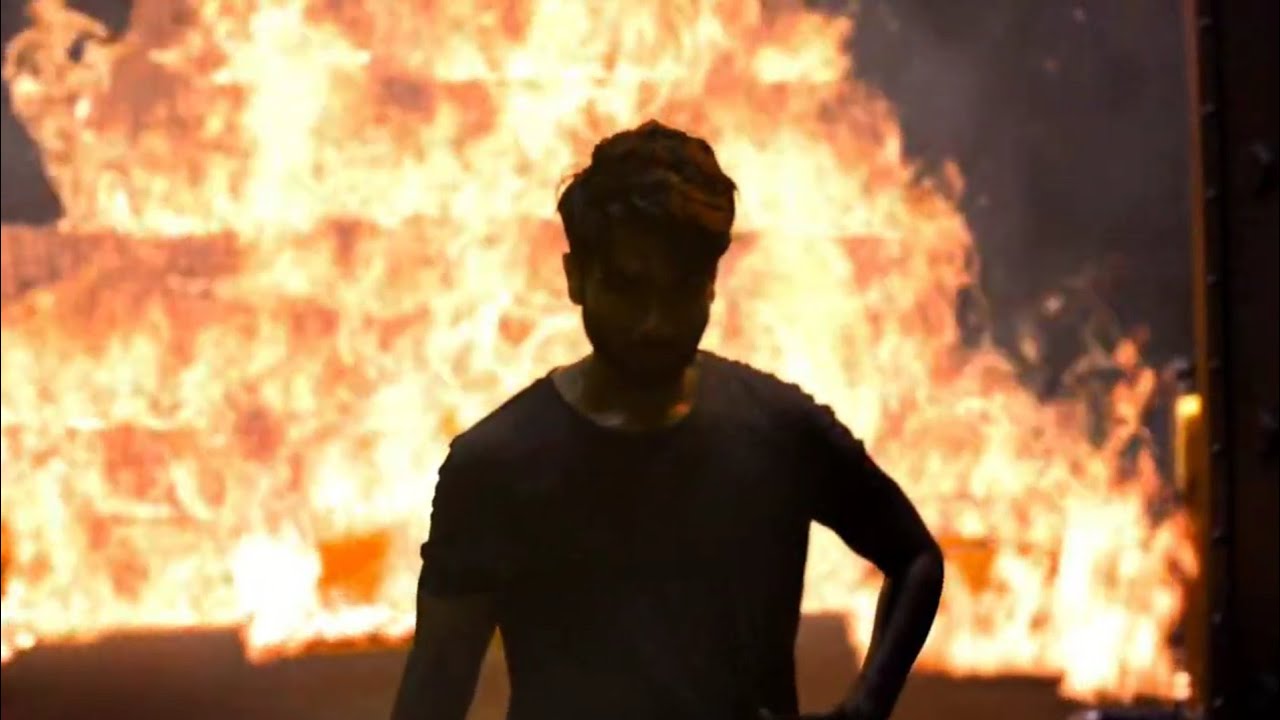
Farzi Money Burning scene ???? #farzi - YouTube

ps. the picture is from a series called “Farzi” (translated to ‘fakes’), where the protagonist walks off after burning a HUGE stash of fake currency notes. (Just somethig that reminded me of this story)

Categories
age gap contrast in narrative social class

Getting played or playing?

This book by Duras was like a haphazard letter written to someone about moments of their life, except they forgot to go in chronological order. It was so good in some parts but rage baited me to the core in the other parts (almost 80% of the parts that included the narrator’s mother). I wanted to start off by adressing the family dynamics before we go to the actual relationship (or situationship?) between the narrator and her lover.

Just like any family, i like how real (and a tad bit too extreme) the book is about the ongoing issues of this particular family. The love for her younger brother, her wanting to kill the elder brother, and the constant abuse that her mother used to shower on her.  “in that common family history of ruin and death which was our whatever happenes, in love or in hate and which i still cant understand however hard I try” (pg. 25). This line sums up the entire book for me I feel. Not just with regards to the narrator’s family but also with respect to her lover’s dad’s disapproval of their relationship. One thing I did notice though was that her other family members were ‘dead to her’ the moment she left them, but for the younger brother, she herself felt dead the moment he actually passed away. And the paragraph in pg. 106 “my younger brother had nothing to cry in the wilderness…” was a very heartfelt moment in the book for me.

Coming to the main topic, The lover: Was he played or was she played?? I honestly liked how the author inverted the male gaze stereotype in this book. It felt so empowering for her to be with someone apart from her family, someone who is as equally broken as her, even though they are not the most healthy relationship. Both of them were using one and other, but during the end of the book I felt a bit sad for the Lover because of the scene where they bought tickets for the boat through his money, but he was helpless, just watching her from a distance as she sails away into her new life. (and ultimately, the narrator definitely had the upper hand in this situationship because i just felt he was more vulnerable to her than the other way around, which is completely the opposite of how we generally used to see it play out back in the day).

The line on pg. 47 that goes: “they are alone in the crowd, alone and in the crowd, never alone even by themselves, always alone in the crowd” was a line that struck me deep. This shows how their different race, background, social status drew them close but also distant from each other (in the sense that they spoke everything about their lives and families, but did not speak about themselves). I also hated the brother’s superiority complex when it came to the Lover because that poor man did not do anything to harm them what so ever!

Concluding, I liked how the story ended with the phone call, i did not expect it to end like that, it gives a glimmer of hope, that Love truly does exist even after all this time, despite the hardships of both sides of the story.

Watching When Life Gives You Tangerines made me add Jeju to my bucket list  ????✨ : r/Jeju


Categories
Uncategorized

the time of the doves

One of those novels that stays with you long after you finish reading it is “The Time of the Doves” by Mercè Rodoreda. The aspect that struck me the most about this novel is its personal nature, despite the fact that it is set during the Spanish Civil War, an event of huge proportions. The novel does not focus on the soldiers or the politics of the war but on Natalia, a regular woman trying to live through extraordinary times. The fact that the war is experienced through Natalia’s eyes makes the destruction seem more personal and, in a way, more painful.

The change that Natalia undergoes in the novel is the aspect that struck me the most. At the beginning of the novel, Natalia is a naive and impressionable woman, especially when it comes to Quimet. He marries her, gives her the nickname “Colometa,” and gradually starts to control many aspects of her life. The fact that he calls her very rarely by her actual name struck me as significant because it seems to symbolize the loss of her identity in the marriage. She becomes what he wants her to be. However, as the novel unfolds, we witness her suffering from hunger, fear, and loneliness.

When Quimet dies in the war, her suffering reaches such an extent that she thinks of killing her children and herself so that they won’t starve to death. This was a very shocking part to read. I had to stop and think seriously about it. At first, it seemed impossible, but then I realized how trapped she must have been.

One of my favorite parts of the novel is when her second husband, Antonio, addresses her as “Natalia.” It’s a small thing, but it seems important. For the first time in a long time, she is seen as herself, rather than as someone else’s property. This is a moment of hope for healing and moving forward, even after everything that has happened to her. This moment also illustrates the importance of language in the construction of identity. Throughout the novel, names are significant. Quimet’s nickname is one that reduces her to something small and insignificant, while Antonio’s use of “Natalia” brings back her identity. This implies that sometimes healing is not about doing something big, but something small.

One of the things that I would like to explore is the question of whether Natalia is able to reclaim her identity at the end of the novel, or if she is simply surviving.


Categories
agostino freud psychoanalysis sociual class toxic masculinity

I was waiting for it to stop getting weird….I’m still waiting

I kind of saw this coming if I am being completely honest, since the professor did give us a head-up in class that the main character would have “mommy issues”. I did NOT estimate for once how intense, and filled with these wide range of thoughts this novel would get.

My impression of purely the first PAGE of this story was that “oh there is this young boy who wants to prove to his mother that he is grown up and responsible” but then as i get further entwined with the different ideas and plots that this story was trying to convey, it seems to come off as Agostino being this sheltered, shy, delicate, teenaged boy who has yet to explore the realities of the real world, balancing these two relationships/notions he has in his mind, one of the attraction towards his mother, and the other of the group of notorious boys who are reaching the age of puberty.

The first point i would like to bring out is the elephant in the room, Agostino’s intense bond with his mother. As she becomes involved with another man, Agostino feels abandoned and betrayed. Soon later this feeling changes into a feeling of attraction as he sees his mother as a “Woman” which is mentioned a lot in this book. This also translated to the next idea that him going to that group of biys was purely “out of revenge”, which i feel are such strong hate emotions to have for someone who has taken care of you your entire life. Then when the boys have THE TALK with agostino, his feelings towards his mother changes.  (this part made me reallyyyy uncomfortable, and i kept trying tp ignore that fact when i was reading the book)The thought did not make him jealous, instead it sent a shudder through him… he was filled with curiosity and smug approval instead.(pg 19) When I read this part I actually realised how posessive (of sorts) he is regarding his mother. He feels it justfied that she is going with the “young man” but all for the wrong reasons…? like this is not where I expected a teenage boy’s mind to go!

The part of the book that seemed the most “normal” to me( normal from the definition of bombals in class lecture, haha) was when he lied about being poor posed as boatman…i felt that incident gave him a little bit of autonomy in his life because he chose that identity and also finally someone did not treat him the way the other men were treating him in the book, and actualloy appreciated agostino for making ends meet (even though all of it was false, i felt glad he atleast had this one win in life when everything else was falling apart around him)

One question I would like for it to be adressed in class is that “how would agostino’s mother have reacted if she knew what was goiing on in her sons mind”, i feel if i get closure on this topic, I would not have had such one sided reactions to this story.  but again all of these are just my thoughts! I would welcome anyone for further discussions or thoughts about this 🙂

Teenager Boy Lonely Contemplation Countryside Scenery on River Boat during  Countryside Summer Holidays Stock Image - Image of lonely, adult: 110968541

ps. i feel this picture represents agostino waiting for his mother to come back after she leaves with the young man 🙂

Categories
Uncategorized

The Sandbar Between Life and Death

My initial impression of “The Shrouded Woman” by Bombal was somewhat not very optimistic since it starts off itself by a woman on her deathbed. But as I gradually got to reading this short story, I realised that some parts actually kept me quite hooked and gripped but other parts really made me question the authors intent!

One of the key parts I really enjoyed about this story was the way new characters were intricuced. We had Anna Marias first impression of the people as they were mourning (or rather some just giving an awfully dry reaction to her death) for her. But with each new character she goes on to nararte the key aspects and key events of the relationship the person shared with her through her life.

Another aspect I really liked was how the seasons were portrayed (hence the picture attached at the end) as so fundamental to the mood of the story at that particular time of her life. Like for starters, a lot of her childhood and teens were shown as sunny and happy spring days as she discovered her first love, her first heartbreak which showed how much she enjoyed her childhood (even if things did not go as per plan with regards to her first love). During tumultaneous and uncertain times of her life, it was shown as the “storms” season or just plain old winter.

There were a lot of parts in the story that just made me go like why are all the characters so obsessed and intertwined with few people. The Marie Griselda arc and the insecurities on Silvia’s end made me feel so bad for these two women. I also felt that just focusing on Marie Griselda’s beauty was so unfair, because we barely have any instances of talking about what kind of a person she actually is. Silvia’s part where she killed herself because of her insecurities really broke me and made me think about what this means in the modern day’s context as well with stuff like social media and influencing etc.

One part of the story that really made me furious was the part about her husband and her best friend’s affair, and the way he treated her. I really thought Sofia and her had a real bond…I was so glad when she finally lashed out to him and called him out for his affairs and the line at the end when she says “She no longer hates him and no longer loves him” because she is FINALLY free of her husband in death, made me feel so happy for her.

Looking back at this story, it really reminded me of the poem “Crossing the Bar” by Alfred Lord Tennyson, which I had read in high school. A striking difference I find between these two is that

One offers comfort.
The other offers truth, especially about women whose lives were constrained, unlived, or unheard.

A question I would have liked to further discuss is that looking back at the story, what would have been the narrators most fond memory of her life and with which character has her  relationship  grown the most (in an optimistic way) throughout the course of the story.


15,713 Four Seasons Stock Photos - Free & Royalty-Free Stock Photos from  Dreamstime

Categories
Uncategorized

Proust

Proust seems to have used a new approach to narrating by using external action instead of internal conciousness. Instead of starting off with a generic sequential approach to narrating, the reading goes into passages of semi wakefulness, and disorients me with scattered pieces of his memory. which shows that the narrator is not stable or continuous but more like speaking about instances like certain habits and behvaiours that he goes through. The description of falling asleep and waking up in darkness shows how he likes talking about certain fragments of his memory. If he does not have his familiar surroundings around him he feels lost.  I feel Proust wants to stress upon the fact that the living experience is based on more of duration and repetition rather than just a clock. Memory is not something of the past, more like a present process created in the present state. The narrator clings to his childhood memories as he narrates about it passionately. The part about his mother goodnight kiss is a huge emotional moment for him and carries a lot of weight. When I was reading it for the first time, it seemed very trivial and not that deep but I later understoof that it showcases how the narrators desire intensifies when the goodnight kiss is delayed. This childhood anxiety foreshadows later romantic obsessions in the novel, suggesting that adult patterns of love and jealousy are extensions of early emotional structures rather than mature developments. I thought the story was progressing slowly at first but soon realised that it was what the author intended to do because he wanted to bring our attention towards the accumulation and repetition of his ideals and values rather than speed through the story. Proust asks the reader to slow down and read carefully, showing that meaning builds up over time rather than through action. Understanding comes later, just as it often does in real life. By avoiding a traditional plot at the start, Swann’s Way shows how novels can focus on inner experience instead of events. The story also spends time describing the narrator’s home and surroundings, showing how familiar places can feel comforting and safe. Proust shows how habits, routines, and family life shape a child’s world. These everyday details help explain why small changes can feel upsetting or emotional later on. He also shows how the narrator becomes very sensitive to sounds, light, and silence at night, making ordinary things feel much bigger and more important.

Spam prevention powered by Akismet