Categories
Uncategorized

Influencing Consumer Behaviour: A Positive or Negative Outcome for Consumers

While browsing through Shopper’s Drugmart, I found myself searching the internet for reviews on a specific product.

Review sites aren’t limited to only products, but there are also review sites for restaurants (Urbanspoon) and movies (Rotten Tomatoes). Statistics show that 97% of consumers use these review sites to decide on what to purchase. These reviews will influence their decision on purchasing the item, however, there seems to be debate on the reliability of these review sites. Just about anyone can write a review on any product, and most of the time, I’ll find myself thinking that some of the posts are not reliable because they’re not true or they have bias opinions. Consumers rely on positive word of mouth from people who have used the product or service, but can they rely on the opinions of people who have different preferences? Not only that, there is no reliable source to measure the authenticity of a review. Companies have been caught writing fake reviews on Yelp, and there is no easy way to filter the reviews and tell if the review is a fake or not.

In the end, I believe that the decision boils down to your own judgement, and trying the product for yourself to know if you like it.

Image: http://www.localsearchgroup.com/wp-content/uploads/2012/09/Review-Sites.jpg

 

Categories
Uncategorized

Rogers Marketing Strategy: Killing Two Birds with One Stone

Canadian mobile users have disputes on which mobile company has the best and cheapest cell phone plans, and they always end up with three: Rogers, Telus, and Bell. With Rogers’ new service, “Rogers Alerts”, hopefully those disputes will subside. Their new service that is yet to be launched will help spread news about their new promotions while connecting their advertisers to their customers. With phones being the device that people always carry around, this marketing strategy is effective for Rogers to directly interact with customers.

Because there is a low barrier and many substitutes in the Canadian mobile phone market with leading companies like Telus and Bell, customer’s choice is crucial for Rogers. Bell, Telus, and Rogers all have the same value propositions, but what differentiates them are their plans and services. To interact with customers directly, to know the opinions of their target market, and to put customer’s opinions into consideration is a step forward for Rogers, a step ahead of the other top mobile phone companies. Roger’s innovative marketing strategy gives them an advantage to potentially secures customer’s choice that is critical to beat Bell and Telus. Perhaps with more advancement like these, more customers will choose Rogers over Bell and Telus.

Image: http://welcomepackcanada.com/wp-content/uploads/2013/09/Rogers-box-logo.jpg

Categories
Uncategorized

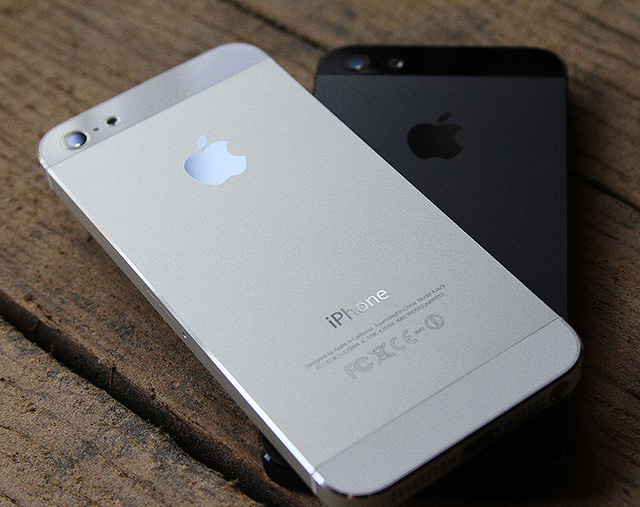
iPhone 5: Dilemma in Choosing which Phone to Buy

Last year, Apple announced their new product, the iPhone 5. For this product, Apple released two versions of the phone to market two target groups: iPhone 5C which has a plastic, coloured case for those who are cost-conscious, and the iPhone 5S which has a higher quality metal case, and is for those who want a more luxurious version of the iPhone 5C, but for twice the cost.

With Android phones making more than 70 percent of the over-seas market, Apple uses a combination of cost leadership strategy (producing quality iPhones for a low cost) and differentiation strategy (both iPhones have cutting edge techonology)  to close the gap between them and their competitors (Samsung, Motorola, etc.), and to increase the amount of costumers. Using this strategy, Apple has a competitive advantage against Android phones, and is selling more iPhones than the initial forecast while Android phones, such as the Samsung Galaxy 4, isn’t getting the same amount of demand. This strategy was a huge leap for Apple who had to balance between growth through a gain in interest in iPhone 5C, and profitability through the higher quality iPhone 5S. Fortunately Apple’s end result is favorable. A question that I left with after reading the article is: Will this marketing strategy be in the next product that Apple produces? Or is this strategy going to be temporary?

Image: http://cdn.arstechnica.net/wp-content/uploads/2012/09/iphone5-intro.jpg

Spam prevention powered by Akismet