Categories
Editorial

Apple’s Product Mix


Apple has historically kept a relatively small assortment of products, but over the last ten years it has slowly expanded its reach into new product categories.

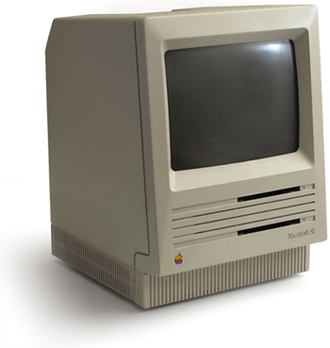
From its inception in 1976 all the way up until the turn of the century, Apple was a personal computer company exclusively. It not only limited its product assortment in breadth, but also depth. For many years, the Lisa, and then the Macintosh were essentially the only tangible products they sold: all-in-one personal computer solutions with the computer built into the monitor.
In 2001, Apple made the first major change to its product mix by introducing the iPod. By extending its brand to the portable music player category, Apple was taking a huge risk, but the new category would allow Apple to reach a completely segment of consumers. Furthermore, Apple recognized the opportunity to transform these new customers into Mac customers by roping them into the iTunes ecosystem. iPod users would need music on their devices, and they would need a computer with which to purchase that music, so iTunes and iMacs were perfect support products.

As most people are well aware, the iPod eventually went on to be a huge hit for Apple (although the introductory stage was notably rocky). Furthermore, in the same year, Apple had opened its first Apple Retail Store with the aims of improving its distribution strategy. As the company grew off of a string of huge successes both with new iPods and re-designed Macbooks and iMacs, its product lines began to expand. The iPod Mini was introduced alongside the classic iPod, followed by the iPod Nano and Shuffle. In addition, the brand was extended even further with products such as the Apple TV, or more recently, the iPad.

However, even as Apple has expanded its product assortment over the years, it has proven the merits of a closely integrated product mix, with a specific focus and a limited scope. For the second largest company in the United States its product mix and product lines are still astonishingly small, which proves that diversification isn’t always necessary for success.
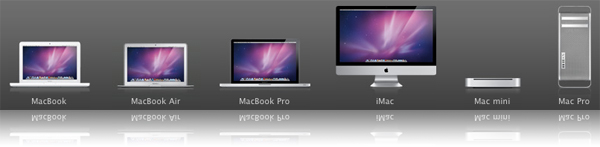
Most recently, Apple has added newly redesigned Macbook Airs to its notebook product line. These small and light laptops attempt to compete with with Windows based notebooks, offering superior quality and performance. The prices have even become more competitive at $999, however, they are still priced far above Windows-based alternatives that can be purchased for under $400. You can read more about the new Macbook Air on Chang Jie Hu’s marketing blog here.
Categories
Editorial

Marketing Smartphones the Right Way

Customers buy products in order to gain benefits.

This isn’t a very new concept, but I think it is something that marketers miss a lot of the time when they are deciding how to promote their new products. We are now in the value-based era of marketing, and what better way is there to communicate your product’s value than actually demonstrating it?

Many technology companies use marketing that is highly conceptual, and try to associate their products with feelings or popular culture, but sometimes this isn’t the most effective way to drive initial sales and buzz. This is not to say that this method doesn’t work — quite the contrary. Attitudes are an important focus of marketing. However, for technology products such as smartphones, sometimes the best way to promote your product is to show it doing what it does best! If viewers are able to see all of the amazing things it does, and how those features can create additional value in their lives, they might be more likely to want to try it out, and consider purchasing it.

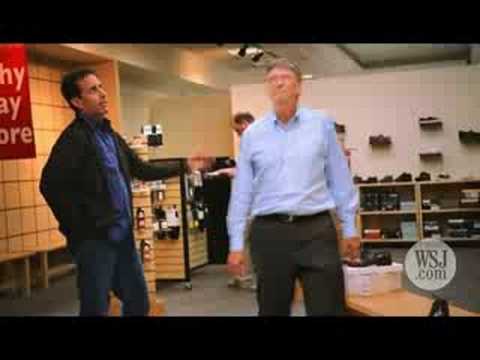
Microsoft didn’t understand this, and paid Jerry Seinfeld $10 million to appear in this largely unsuccessful ad. The ad is amusing, but it never gives the viewer any idea of why Windows is a good product (aside from that maybe they should associate it with cheap shoes), and actually never even lets the viwer know that they are watching an ad for Windows until the logo flashes briefly at the end:
YouTube Preview Image

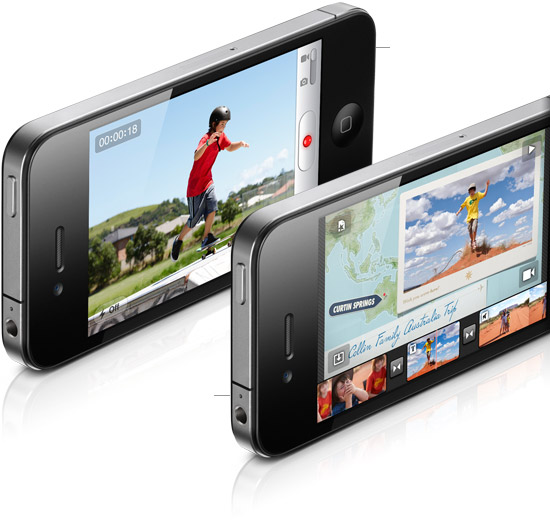
Unlike many other markets, such as those for foods and clothing, the vast majority of consumers might not immediately understand the benefits of certain technologies. They know they need to eat, and they know they need clothing, but they might not know why they need to spend $200 on a new iPhone 4 when their old phone can already make calls perfectly well. Therefore, the best way to get customers interested is to just show them what they can do with it, and how it could add value in their everyday lives.

Once the customer is hooked, and becomes open to the idea of making a purchase, this is when the company can begin to build affection, and Apple does an excellent job of this in its ads:

YouTube Preview Image

Consumers might not know that the new high resolution screen provides 326 pixels per inch (high enough that individual pixels cannot be seen by a human eye) or that the miniaturization of the processor and logic board allowed Apple to fit a 20% larger battery into an even slimmer device, but after watching these ads they know that the phone looks amazing, and allows them to share amazingly detailed pictures of their loved ones. In each commercial, Apple picks a few key features that can create the most value for their customers, and then they just show how intuitively and easily they work. In a field of complicated and (potentially) confusing products, this is instantly appealing, and is an excellent example of how to market smartphones to the masses.

Categories
Editorial

Water: In Marketing, In Technology, and All Around Us

Today is Blog Action Day 2010, and the focus this year is on Water. Water is something that touches virtually every aspect of our lives; it takes up 70% (approximately) of our bodies, and yet, for those of us who live in North America, it would be lucky to take up a fraction of our day-to-day thoughts.

Marketing to a Generation of Connected Consumers


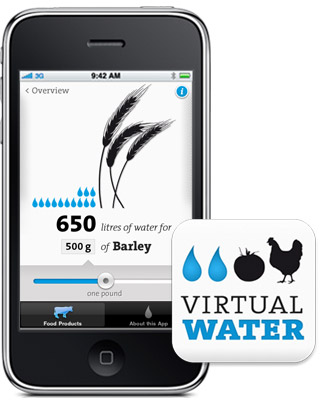
According to Blog Action Day, “Unsafe water and lack of basic sanitation cause 80% of diseases and kill more people every year than all forms of violence, including war,” and yet many of us barely think twice when we take a sip of water. So how do we raise awareness and make sure that clean water doesn’t become a scarce resource? Virtual Water has attempted to target tech-savy generation Y’s with its new iPhone app that breaks down how much water goes into making the products we use every day. It is available for $0.99 on Apple’s App Store, and is a highly polished, visual way of measuring one’s footprint on the world’s clean water supply. It would be nice if the app could be available for free (whether through sponsorship or some other means), as it would reach a larger audience, but at $0.99 it is still very affordable for such a high quality app.

Since the completion of the Seymour-Capilano Filtration Plant, we now have some of the best drinking water in the entire world. However, many consumers still buy bottled water due to the ingrained perception that bottled water is “good” and tap water is “bad.” Not only is this water no better than tap water, but its production requires 17 million barrels of oil per year. Furthermore, 86% of the plastic bottles that hold it are still not recycled (you can read more at Change.org).

The Seymour-Capilano Filtration Plant “uses the world’s largest ultraviolet disinfection facility” and has put sustainability at the forefront of its construction. Since its opening in May 2010, Vancouverites have one more reason to say no to bottled water, and do their part in protecting the world’s shrinking supply of clean water.

Categories
Reviews

Movie Review: The Social Network

This afternoon I went to see The Social Network at Silver City, and I came away thoroughly impressed. A mere documentary about a successful website this is not; The Social Network is an engrossing character piece, with Jesse Eisenberg doing a phenomenal job at portraying Mark Zuckerberg, the creator of Facebook. I would give my wholehearted recommendation of this movie to just about any type of moviegoer, as it has nearly universal appeal. However, if there was a primary target market it would be university aged students who use Facebook (although this would definitely not be the only targeted group). I will refrain from spoiling any of the plot so that everyone can experience it for themselves, but everything from the direction to the performances is top notch. This is definitely a must see movie, and my favourite of the year.

Jesse Eisenberg is phenomenal as the narcissistic genius, Mark Zuckerberg.

The prices at Silver City were notably expensive at $12.50 (including tax) but I felt that it was a good value for the superior picture and sound. I wouldn’t want to pay so much for every movie that I go to throughout the year, but after enjoying this movie for its whole 2 hour running time I had absolutely no buyer’s remorse.

If you have any spare time at all between midterms, I highly recommend seeing The Social Network. And if you are still on the fence, the teaser trailer is available below; just keep in mind that it hardly does the movie justice.

YouTube Preview Image

Click here to watch the full length trailer.

Categories
Promotion Reviews

Promotion on the App Store


Promotion is a common method employed by retailers to control the situational factors influencing their customers. In stores, companies can entice customers with free gifts, or “buy one get one free” promotions, but in an online store such as Apple’s App Store, there are unique factors that need to be considered when devising a successful promotion.

An interesting trend that has taken over App Store promotion is the “free for one day only” concept. iTunes is very crowded with good apps, and has a limited amount of space with which to promote them. As a result, most customers only see the apps that are featured in the Top 200 list (which is comprised based on sales numbers). In order to get their apps onto these lists, developers have begun changing the price of their apps to free for one day in order to inflate their sales numbers, and then quickly change the price back to normal by the end of the day.

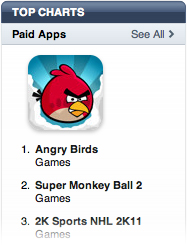
One might think that the sales would drop off again after the app was no longer free, but by generating so much buzz in a single day, the apps are usually able to make it into the Top 200 Paid Apps list (which is separate from the Top 200 Free Apps list) quite easily. Once they have secured a spot in the top 200, the increased visibility generally continues to inflate their sales, and if the app is good they might even make it up into the top 25.

This promotional method may not always be enough, however, as so many developers have begun to exploit it. To ensure the promotion’s success, it is also important to get featured on blogs and websites around the internet. FreeAppADay.com was started up with this exact idea in mind, and has been extremely successful since its inception in 2009. I began following the site on the very first day that it offered a free app, and within weeks it was already putting nearly every app it featured into the best sellers list on iTunes.

This is by no means the only promotional method on the App Store, but it is arguably the most prevalent today. Similar to other online stores, ubiquity is important to App Store promotion, and it is imperative to secure features and reviews on as many blogs and websites as possible. For iPhone games, Touch Arcade and IGN.com have some of the largest readerships, and provide an excellent source of promotion.

I was prompted to write this post by the influx of amazing iPhone games that have seen price drops this week, and I will feature some of the best downloads below. Some of the more premium apps (which cost anywhere from $2.99 to $9.99 regularly) have $0.99 sales instead of going all the way to free, and most of the apps I will list below are currently on sale for $0.99.

Osmos

On Sale for $0.99 (usually $2.99)

I have posted about Osmos previously, and this is because it is one of the absolute best games on the App Store. IGN.com (the largest games reviews site on the internet) ranked it the #1 game on the entire app store in its Top 25 iPhone Games feature, and I couldn’t agree more. In Osmos, you play as a tiny orb floating in space, surrounded by smaller and larger orbs. To win, you must propel yourself into smaller orbs by ejecting mass, and avoid larger orbs that will consume you. The game sets the mood with vibrant visuals and excellent ambient music.

My Rating: 5/5

Peggle

On Sale for $0.99 (usually $2.99)

Peggle is similar to the classic game of Plinko, and has players shooting balls at coloured pegs with the aim of removing all the orange pegs. The game oozes style with its colourful visuals, catchy soundtrack, and memorable characters (each with their own special power-ups and stages). Its high level of polish will come as no surprise to those familiar with its developer, PopCap Games, which has released hits such as Bejeweled, Plants vs. Zombies, and Bookworm. When the final peg is cleared at the end of a level, the game switches to a zoomed-in, slow-motion shot of the ball colliding with the peg, that triggers a shower of fireworks and blasts the triumphant tune of “Ode to Joy” through your headphones. It is truly one of the most satisfying and enjoyable experiences that you can have on the app store.

My Rating: 5/5

Other Notable App Sales:

Spam prevention powered by Akismet