I love this promotional video for the 2011 Ice Hockey World Championship in Slovakia. I thought since Canada is the country where hockey was born you will enjoy it as well.

I love this promotional video for the 2011 Ice Hockey World Championship in Slovakia. I thought since Canada is the country where hockey was born you will enjoy it as well.
I’m going to comment on Veljko’s blog about bad marketing.
What Vejlko really means by bad marketing is negative publicity. He takes a specific example of the movie called “A Serbian Film” which has lately received a lot of bad publicity regarding its horrific and brutal content. I think that the saying Tamar used in class today that any kind of publicity is considered better than no publicity by some businesses is especially true for the movie business. It is tough to stand out in this business by just trying to produce a regular mainstream movie, and therefore the producers sometime decide to go with something unconventional.
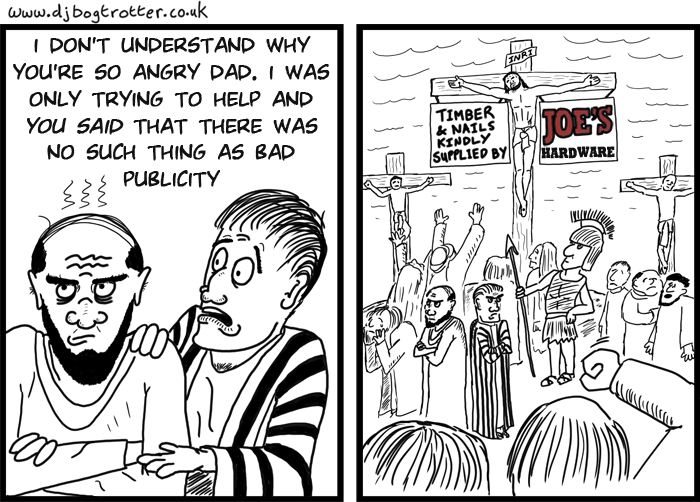
You know how some people often complain that there is nothing positive on TV? This is because most media think that it is easier to catch people’s interest this way than by concentrating on the good things. I think that the movie producer was aware of this fact when he decided to make the “Serbian Film” and eventually received the publicity that he expected. It is weird, but people are fascinated by the extremes and therefore they want to go see the worst, the most violent and the most brutal movie of all times. From this perspective I would argue that bad publicity is a good idea as it is capable of effectively catching attention of the public.
There are many funny commercials on youtube so I decided to share one with you.
 d
d
Probably the first thing that comes to mind after seeing this video is whether it is ethical or not. I doubt that it was not banned by the regulatory agency which reviews commercials before allowing them to be publicly aired. However I do think that when companies produce unethical commercials, they expect them to get banned. I think that they hope to stir some discussion and encourage people to search for them on the internet. To me this is a good marketing strategy because these commercials tend to be very funny which makes them memorable and as long the ethical issues are minor, then it does not really matter if they are not allowed to be aired on national television.
I also find interesting the fact that this advertisement does not really say anything about the product. I think that it suggests that the fast food market in North America is mature and companies within it are using advertising just to remind their consumers about themselves.
I am going to try to make this issue somehow relevant to marketing just because I feel a strong urge to comment on these picture I saw in the Vancouver Sun.
So what struck me was that they lit the Olympic cauldron for the Remembrance Day ceremony in Vancouver. To me this is absolutely unacceptable behaviour as it is very disrespectful to all the victims of war including the veterans as well as to all the athletes and Olympic values in general. I do not think that any of the veterans think that the ceremony pictures should be under the ‘sports’ tab, nor do I think that the Olympic anti-war values have anything in common with this ceremony. To me the cauldron can only be lit during the Olympic Games following a strong tradition of the torch relay.
I could go on and on about this, but you get the idea so lets put some marketing perspective here. I am not sure whether the city consulted the Olympic committee and asked for their permission to light the cauldron, however based on some basic marketing principles the committee should have never allowed for this to happen. Olympic symbols are among the most widely recognized symbols world wide. They are part of the Olympic brand equity which is very valuable. Having an Olympic logo on a product adds value to it and therefore whoever is selling it can charge a premium. This happens because Olympic Games are a very popular event. Some of the reasons why they are so popular are undoubtedly the strong Olympic values and old traditions associated with them. Probably the most important tradition of them all is lighting the flame. It happens only at the start of the Games and therefore makes it very special.
Even though to Canadians the Remembrance Day ceremony is special, to most of the world it does not mean anything, and therefore having the Olympic cauldron lit during some random ceremonies devalues the Olympic symbols and traditions as well as the overall brand equity of Olympics. Therefore I conclude that not is it just extremely unethical to try to combine values of the Remembrance Day with the values of Olympic Games, there is also no marketing benefit either.
I like this post by Eric because it is quite different than most other posts I have gotten a chance to read so far. It is informative and critical and at the same time asks many marketing related questions. It reminds me of an assignment where the professor challenges us to think critically about a marketing strategy and then asks us to answer questions.
Eric starts his post with a news info about Translink’s plan to adopt a smart card for Vancouver’s public transit. He posts a link to a contest page where people are able to suggest ideas for the official name of this smart card. I think it is interesting to think about a name of such product because as marketing students we should be able to think who the target consumers are going to be and what kind of name would be appealing to them. Honestly I was surprised at myself that finding a name that would capture the spirit of Vancouver and still would sound appealing is not an easy thing to do.

I agree with Eric’s critique of the poor marketing campaign this new fare system that Translink plans to introduce. In fact if it was not for Eric’s blog, I would not even know about it. This I think might be considered a missed opportunity by Translink. If they were to base a marketing campaign on this, I am pretty sure that many people would be interested in watching, listening, or reading the ads because it would not just include regular reminder that we should bus to reduce carbon footprint, but also an information about how our use of their services will change in the future. They might also play on the fact that this card is cool or that cities such as London, where the transit system is truly legendary, also use the same way of paying for their fare.
Today I am going to comment on Veljko’s blog post about a video promoting energy savings. Veljko said that this video substantially changed his perception of our responsibility toward sustainability.

The clip is about a couple of cool Le Parkour kids that are each trying to do their part in helping change our habits from wasteful consumption of energy to more sustainable practices such as consuming less water or using energy-friendly light bulbs. Just as the Pink Floyd song in the background suggests one brick is not much, but if they are put together they create a wall. Each kid is therefore representing a brick which might seem like a small contribution, but once the brick build a wall they become very important. I really like the way the video is filmed, however I do not feel as strongly as Veljko about the message which it is trying to say. What makes me feel this way is how the video is trying to make the sustainability practices look cool. Even though this might be appealing to some people, I am definitely not part of them. If I was to be motivated to contribute my brick to help the environment it would be because I wanted to help the future generations enjoy their lives with the least impact of our current lifestyles. Actually we learned about this phenomenon in organizational behaviour class. It is experimentally proven that if intrinsic motivators are replaced by external motivators, the person who engaged in this behaviour will tend to be discouraged to continue to do that. I can just wanted to point this out and suggest that marketing people should be cautious about this phenomenon.
I was reading some marketing blogs recommended by Scott and came across one older post that I found really interesting. This very short post brings to attention two contrasting marketing efforts addressing tourism in Canada.
The Canadian Tourism Commission (CTC) promotes the country with its slogan “Inspiring the World to explore Canada.” PETA (People for the Ethical Treatment of Animals) on the other hand challenges this campaign by showing a seal hunt video ending with a slogan “Explore Elsewhere/Explorez Ailleurs.” The author of the blog leaves the reader with this line: “Wonder what CTC thinks of the borrowed tag line?”
I find this blog well written because it points out something interesting and manages to do so by only using a few sentences. I like how the author leaves it open to the reader to make an opinion and guides him to think about the problem from a marketing point of view.
My take on this is that PETA is not very ethical in the way it portrays Canada. The seal hunt is a very old Inuit tradition which is part of Canadian history. There is nothing intrinsically wrong with this and the only reason why people find it so disturbing is because seals are cute animals and the red blood contrasts well with the white snow. PETA is taking advantage of the affective attitudes people form when watching this video and then tries to use it to say that this is a good reason why people should not visit Canada. I find this connection irrelevant.
Last week when I was walking back from class, I have noticed a Canadian Blood Services truck. What I found interesting was the slogan written on the truck: ‘It’s in you to give.’ For some reason I think that it is just brilliant. I love when something is simple and yet so powerful. I wonder if it sounds just as good in French because when I was trying to translate it to a different language that I speak; I was not able to word it in a way to make it sound so good.
I was curious enough to check the blood donor program of some other countries and found that many of them do not even use any slogan at all. On the other hand many attract people through financial incentives. I checked the Canadian Blood Services website and was surprised to find that they are in fact committed not to pay their donors now nor in the future. Trying to understand how is it possible that Canada can do this differently than many other countries I came up with two possible answers. First, maybe it is just the Canadian culture, or second it is a successful marketing strategy. The obvious strengths of their marketing is making people aware of the positive contribution to the community if they donate; successful positioning through use of slogans; and accessibility of their services such as having a portable clinic.

Happy thanksgiving everybody.
Talking about situational factors that influence consumer behaviour, here are some funny commercials advertising frozen turkey. Obviously these commercials are most effective during family holidays such as the thanksgiving. The social factor responsible for the increased sales of turkey during this time of the year is the North American culture where people eat a lot of this bird during family gatherings and have no time to cook themselves.
I like these commercials just because they are humorous and simple. I hope you enjoy them too.
What caught my attention today was another article on Globe and Mail. It talks about the competition of Kobo and Kindle electronic book readers. Kindle is American based and is only sold through Amazon. Kobo is Canadian based and started as a project of the Canadian book company Indigo. Now it is an independent company with both domestic and international corporate partners including American borders and Walmart Canada.

One thing I have noticed is that with regards to technology, companies find it hard to gain sustainable competitive advantage. There are lots of companies capable of creating substitutes to any kind of technology. For example whenever Apple releases a new gadget, it takes only a couple of weeks before
multiple other companies release a similar product. Of course Apple is quite different because it has
established itself as a ‘cool’ brand and many people prefer their products just because of that.
 Yet, when looking at products where no such strong brand is present, the consumer spends more time comparing the devices. These brands find it harder to come up with something that would provide them with a sustainable competitive advantage because all the technology is easy to copy. For example the Globe and Mail article just talks about how Kobo added a wireless feature to its device to catch up with Kindle which has also recently added this feature.