Categories
Uncategorized

What Makes a Great Ad?

I love watching ads. For the past few decades, the word “advertising” have been associated with negative connotations of images of smooth talking snake-oil salesmen, manipulating corporate schemes, and self-esteem damaging beauty/fashion ads. How many times have you watched commercials with a model with flawless skin promoting acne cream or a laundry detergent that cleans 3 times better than the leading competitor (how do they measure that anyways?) and groaned at its blatantly exaggerated claims?

But every once in a while, when I see a great ad that I identify with, that I relate to, and feels authentic – it really sticks with me, and form lasting positive connotations for the brand it is advertising. The truth is, we don’t want to merely see perfection in ads – it only pulls us in on an artificial level, rather than creating brand loyalty. Furthermore, companies that run ads that strive for images of perfection in advertising their products may risk being perceived as not trustworthy or believable. Ads that create scenes/images that embrace what’s real, authentic, believable and relatable have the most long-term impact on consumers.

Martin Lindstrom (2009 recipient of TIME Magazine’s “World’s 100 Most Influential People) writes in his article Why Brands Should Strive for Imperfection about a study that a European cosmetic company conducted, where they wanted to cut a 90-second ad to 30-seconds, and tested consumers on which segments were the most emotionally engaging (using a neuro-science tool). Surprisingly, it was the scene of two women crying and comforting each other that was the most powerful (and the scene executives originally wanted to cut out). They ended up running that 30-second segment. Afterwards, “when asked to pick a product in a simulated retail store, they ended up ‘buying’ 35 percent more of the brand”.

I’d like to share one of my favourite ads of all time – a touching Pantene ad that ran in Thailand that is completely different from the usual Pantene-style ad (beautiful model, unrealistically perfect shiny long hair, product-focused, voice-over, etc). This ad, unlike the usual Pantene ads, is simple, authentic, evokes emotions, with a storyline that we can all relate to. It has no pretentions of glorifying its product by showing off its benefits, but merely introduces an integrated core concept – that with Pantene – you, too, can shine.
Categories
Uncategorized

Tetley’s new ads – not my cup of tea

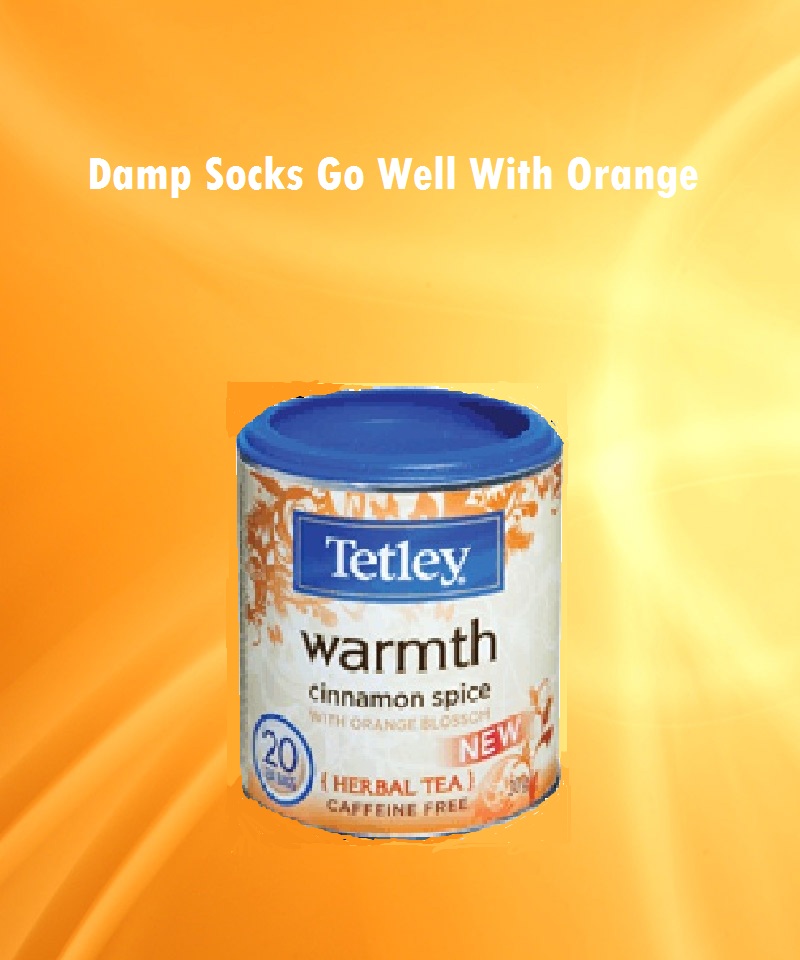
If you wait for the Skytrain every morning, chances are that you have noticed the odd ads for Tetley Colour Therapy Herbal Tea at the Skytrain stations. The only way I can describe my reaction to them is … confused, and taken back at why they would advertise Herbal Tea in such a way that elicits imagery of unappetizing items (such as damp socks).

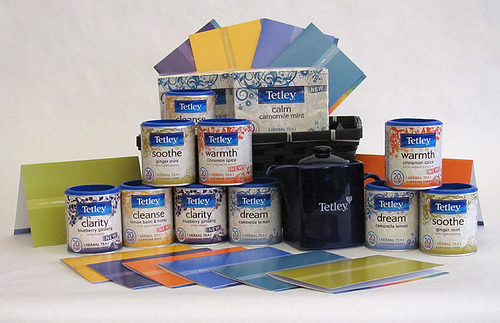
Allow me to explain – these ads feature the product, a can of Tetley Colour Therapy Herbal Tea, in the colour in the same family as the colour of the can, and each features slogans such as:

– “Damp Socks go well with Orange” for the orange coloured can named “Warmth”
– “Inarticulate speaker announcements go well with purple” for the purple coloured can of tea named “Clarity”
– “Uncovered Sneezes go well with Yellow” for the yellow coloured can named “Cleanse”.

I couldn’t find these ads online, so I did my best (using my limited Paint skills) to recreate one of the ads.

Referring to our current studies on Integrated Marketing Communications – this ad fits in the “awareness” aspect of the AIDA Model – we notice the ad, its bright colours and its odd slogans. But the ad does not generate interest in or desire for the product, and does not motivate us to buy the product. Rather, it evokes feelings of confusion and criticism for its choice of words. Tetley encoded its message to try to elicit interest in its new line of teas and show consumers that Tetley Colour Therapy Herbal Teas has a colour to fit everyone, every mood – but consumers did not decode it the way that the company intended them to, for these reasons:

1) The moods/situations presented in these slogans (i.e. damp socks, inarticulate speaker messages) have a negative overtone – with situations that you’d encounter if you’re having a bad day. Messages with a negative overtone will not easily elicit motivation to buy the product. Instead, they could have focused on how there’s a colour for every personality by using positive, inspirational imagery/wording.

2) The situations in these ads are not easily relatable/understandable – the concepts presented are not clearly related: i.e. the Purple ad is trying to say, “drink this tea called Clarity when you are annoyed by inarticulate speaker messages”. The message is neither compelling nor completely logical.

3) The imagery presented is off-putting – the practice of putting the word “damp socks” and “uncovered sneezes” in an ad for Herbal Tea is questionable.

I looked further into their website http://www.tetleycolourtherapy.com/ – their message to introduce this new line of herbal teas is:

For every mood,
Every emotion,
Every State of Mind,
There’s a colour
That’s right for you.

The website then redirects us to an interactive interface where we have to option to find our colour through a Colour Therapy survey; look at other people’s colours and their comments on why that colour fits them, or visit their Facebook page.

Tetley is doing a good job in intergrated marketing communications on their website – personalizing the experience by choosing a tea based on the customer’s mood, preferences, and personality. From Yellow-Cleanse (lemon & honey) to Pale Green – Soothe (ginger & mint), customers are already raving about its range and taste in online reviews.

However, if the Skytrain ads (read by thousands of people everyday) continue to be displayed, perhaps it will risk losing some of its prospective customers.

Categories
Uncategorized

Sauder – Branding YOU

Marketing is pervasive – it has always been present in some form or the other in our lives. When you look at the top executives, engineers, lawyers, architects – they’ve all used personal marketing (and of course persistence and intellectual brainpower) effectively to get themselves where they are today.

Proctor and Gamble receives over 100,000 applications a year – only 725 are hired on average. Goldman Sachs receives approximately 53000 applications a year; with 900 people hired on average (Data from Princeton Review’s “Best Entry-Level Jobs”. What does it take to become among the 0.725% or the 1.7% (respectively) that receive offers from two of the most prestigious corporations in the world? The same reason you choose to purchase products from a certain brand among the myriad of brands vying for your attention at the supermarket – branding.

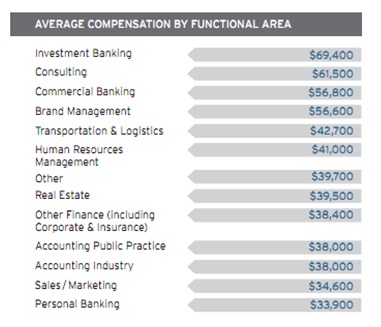
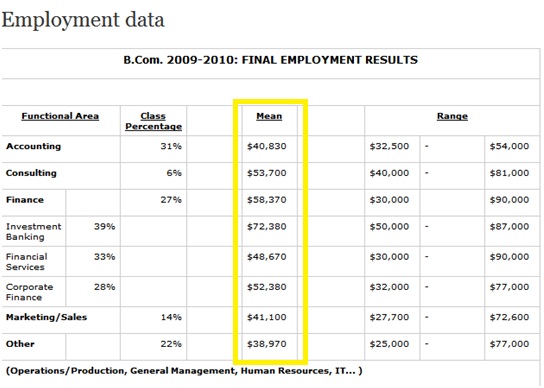
Ever since I transferred to Sauder, I’ve been amazed by the services that Sauder provides to make its students as competitive as possible in the job market. First is COMM 299, in which you come out with a polished, effective resume and cover letter that highlights strengths and results and interview skills. Sauder also does a great job providing workshops (I’ve attended Careers in Night, Careers in China, etc) relevant to current student interests, co-op info sessions, industry mentorship programs, scholars programs, case competitions, conferences and job and involvement opportunities. Compared to my previous faculty, Sauder is doing a lot more to not only prepare students for the workplace, but also push them to succeed. The result – the average Sauder grad makes a starting salary of over $40,000 a year – above the current average income in Canada!

Of course how effective our personal branding is also depends on the individual, and their motivation, interests, and passion. But I know that no matter what option I choose, or where I end up, I will have Sauder to thank for helping my reach my dream career. It packages us students individually to present our best to the world, and also markets Sauder as a brand to the business community in Vancouver, nationally, and internationally. Even though Eastern Canada (with all the marketing and finance headquarters) have an advantage in location and business activity, Sauder’s performance in job placement is on par (and perhaps even better) than these schools.

Sauder Bcom Employment Statistics by Functional Area (From Annual Report 2010)
For more information: 2010 Annual Bcomm Report

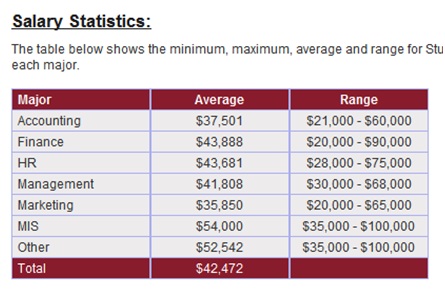
McGill Desautels BCom Statistics - it fares slightly better on average

John Molson School of Business (Concordia University) - the salary averages are on par (or slightly lower) than Sauder

For its success in branding its business students, Sauder gets an A+ from me. Now if only other faculties can catch on, to make UBC a leader in job placement, student branding, and university prestige. (Then maybe the jokes about Arts students being homeless after they graduate will eventually stop …)

Categories
Uncategorized

Goodbye Sephora, Hello Wal-mart!

Our in-class discussions about pricing and a product’s perceived quality from customers had me interested about the story of a certain high-end cosmetic brand originally sold in Sephora that was discontinued but returned last year to be sold in – of all places – Walmart. Products that used to retail in the $20 – $50 range is now being sold for less than $10 at a discount retailer The brand I’m thinking of is Hard Candy cosmetics – it launched a 261-item line exclusive to Wal-Mart last fall to 3000 stores, with expected sales of $50 million in the first year, retailing between $5 to $10 and targeting women between 18 and 35.

This is a company that’s shifting its target market to a wider market of women between 18 and 35 who are looking for affordable, quality cosmetic items. Compared to its lagging sales when it was sold in Sephora at significantly higher prices (and competing against reputable brands such as Lancome, Estee Lauder, Urban Decay) – moving away from the high-end cosmetics market was a smart choice. When we examine the brand and its products – it is colorful, young, and invites experimentation with its bright colors. But low prices does not indicate low quality – it finds itself in an interesting position where the brand’s products are associated with high-end quality but is offered at drugstore-cosmetic prices, accessible by the everyday consumer.

This move is also reflective of Walmart’s efforts to appeal to higher income shoppers, especially taking advantage of increasingly frugal consumer spending habits during economic recessions. Experts have speculated on whether this deal will make Walmart “a more worthy competitor for Target”. Looking at Walmart’s other initiatives to venture into upscale merchandise such as expanding its selection of name brand electronics and introducing a clothing line from the collaboration of Max Azria and Miley Cyrus – it is a possibility. However, Wal-mart’s potential gains from its foray into higher-end products may just be offset by the risk of losing its core low-income customers.

Spam prevention powered by Akismet