Categories
Uncategorized

RIM – BBM = –SCA

The constant debate among smartphones- Blackberry, iPhone, Android and so on- just took a heated turn as one of the main competitors has been rumoured to spread its sustainable competitive advantage. Earlier this month, articles and blogs flooded rumours of Research in Motion’s (RIM’s) plans to expand Blackberry Messenger to competitor phones.
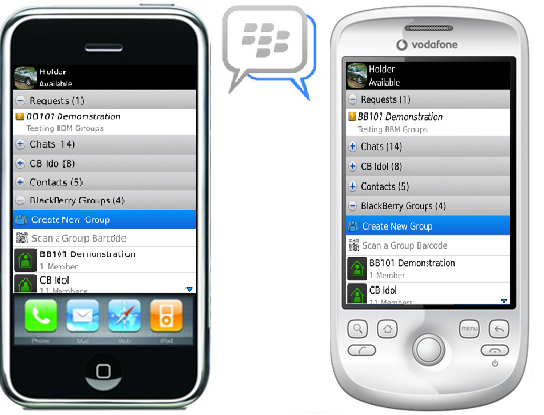
Even as a loyal Blackberry user, I admit that BBM is the main reason I voted against the iPhone. So upon hearing this news, I was perplexed as to why RIM would sell themselves out by passing off their sustainable competitive advantage- why expand the benefits exclusive to your product to competitors? Logistically speaking, RIM must expect an increase in revenue and ultimately profits for their company. While further reading into online articles, I came across an article by Ash Bennington asking “What’s the point?” – if the owner of an alternate smartphone is willing to spend money on an application to receive this benefits, they clearly value a strong communication channel in messaging. Why didn’t they choose Blackberry originally?

Bennington adds that among RIM’s precautions in considering expanding BBM, they likely noted their product’s advantages – if BBM was their only source of competitive gain they wouldn’t sell out their company this way. Security features, multitasking abilities, expandable memory all provide Blackberry with a competitive edge in the smartphone market. Potentially distributing a feature that appears to be their only advantage through observing consumer demand can have an array of effects on RIM- revenue will increase, but the consumer base will change. The amount and demographics that the consumer market changes by will have to be later determined if RIM goes forward with this, when they find out what features consumers actually valued in their products.

Categories
Uncategorized

Feel the Beat

The shoes you wear, the (hopefully smart!) phone you use, the car you drive- these are all things society uses to determine your image and status. Nowadays designers and endorsements have taken over everything- from your keychain to your laptop case. I thought I had seen it all until I was introduced to Beats by Dr. Dre. The hip hop executive introduced his line of super aural headphones in July 2008 but it was this past holiday season in which sales picked up. Over-ear headphones retail from $249.95 to $399.95. The line also includes in ear headphones, speakers and audio systems.

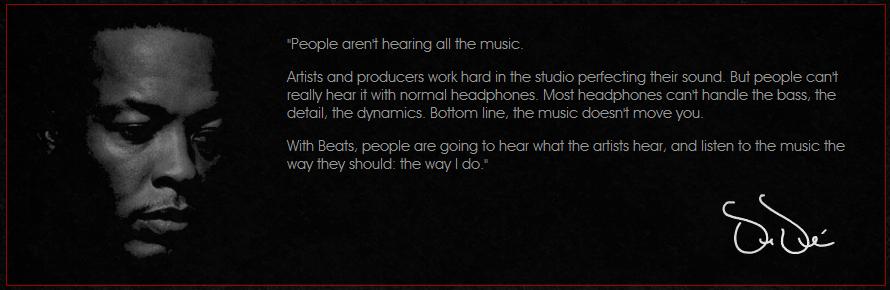
Initially, I questioned those who would purchase such pricey headphones and the image they wish to convey by doing so. But looking at Lucas Cahill’s blog, my initial thoughts on the product expanded to the quality aspect of the headphones. While I still believe in the psychological factors behind purchasing Beats headphones, Lucas mentions the value Dr. Dre places on audio quality, considering he is the CEO of a joint record label. Even visiting the website, Dr. Dre himself states “With Beats, people are going to hear what the artists hear, and listen to the music the way they should: the way I do”.

Despite the quality of Beats by Dr. Dre headphones, the majority of consumers still recognize the product mix because of the correlating image- especially through the “b” logo on each earphone. Product lines and categories have expanded to the Artist Series, featuring Justbeats by Justin Bieber, Diddybeats by P. Diddy and of course, Heartbeats by Lady Gaga. As a marketing student, I find it very intriguing to witness this brand of product in its growth stage and to observe the development of this trend amongst students and music enthusiasts alike.

Categories
Uncategorized

M is for Major Improvement!

With our second midterm tomorrow, I’m sure I won’t be the only student missing The Bachelor to learn about supply chains and branding. But missing out on finding out who Brad chooses to marry isn’t so bad when McGraw-Hill Irwin has taken into consideration how students feel about studying versus leisure activities. As a firm, they noticed that students often didn’t value sitting down with a textbook and notepad, but voluntarily spent hours curled up on the couch with the latest issue of People Magazine or a good novel.

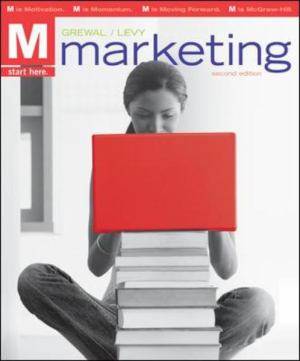
The publishers of Marketing, Second Edition took note of this and impressed students and educators alike when they introduced the latest publication of their textbook targeted towards 2nd and 3rd year business students. Unlike previous textbooks, this new edition appealed to students by replacing the traditional hardcover textbook with a lightweight paperback cover.

With its modern design and colour scheme of red against black and white, the second edition resembles a magazine. To maintain the magazine semblance of the textbook, McGraw-Hill even used glossy magazine paper and included a few pictures per page. Information fills different colourful shapes, and diagrams are carefully placed on the pages to ensure that students note them. The publisher did a remarkable job by revamping their gray, hard textbook which looked like a block of concrete. Pre-reading for a class isn’t as much of a chore when I can sit somewhere comfortable, read up on a subject that I find interesting and still be able to say I studied. It’s a great change from other textbooks and really stands out on the shelf; moreover, the fact that I can just toss it in my bag and pull it out between breaks to skim through it really contributes to my learning experience, and makes the course more enjoyable overall.  Countless students have responded positively to the new edition and have been further encouraged to pursue their studies in marketing, partially thanks to the student friendly textbook. So save your complaints for other exams, find yourself somewhere relaxing to study and for once enjoy reading for a midterm (you don’t have to admit you did!).


Categories
Uncategorized

Scan Me!

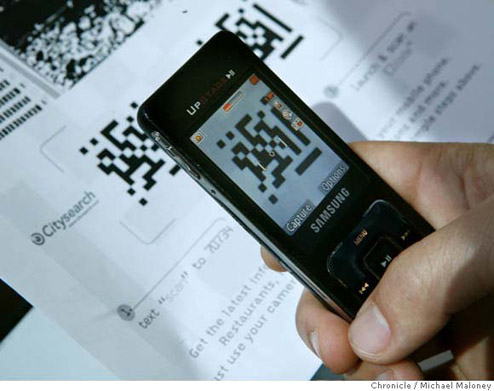
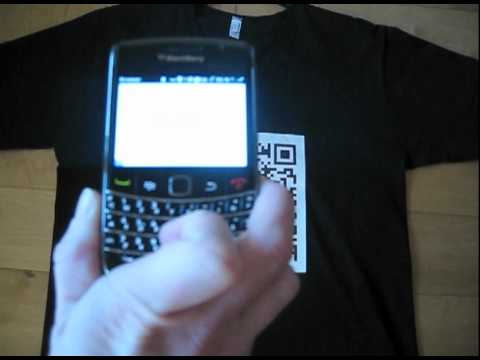
Standing in line at a club downtown, lingering through a local coffee shop, or even sitting in Henry Angus pretending to do homework, you’ll probably have at one point heard two people exchanging numbers. Those times were soon replaced with “What’s your BBM?”- inquiring personal PIN’s for Blackberry Messenger and has now evolved to “Here- just scan me”.  But before you raise an eyebrow at the concept of someone asking to be “scanned”, understand that with an increase in Smartphone sales, marketers are now creating plans not to sell the phone per se, but to use their scanning feature to the advantage of non mobile organizations. UBC Student Orientations has recently put up posters around campus recruiting volunteers for upcoming positions including a barcode for Smartphone users, as have student conferences such as the 2011 Pacific Northwest Economic Conference (PNEC). In both instances, by scanning the barcode, students can be directed to the organizations website. PNEC even went so far as to place another barcode on posters and tables throughout the conference in which guests could scan the events itinerary to their mobile device.  Organizations like Habitat for Humanity are even including barcodes linking users to their website on t-shirts!

As a Smartphone user, I find the concept of using what was once a method to simplify adding someone to your messenger contacts as a marketing tactic to be resourceful and current based on trends and sales in technology. Finding barcodes on products such as toiletries and wine is something that excites consumers- as USA Today notes, “It’s something that adds value without costing customers too much. If it’s a good experience, consumers are going to keep using it.” Why not take advantage of a Smartphone’s abilities, especially with apps like Tagreader, which allows I-Phone and Android users to scan barcodes as well. The same USA Today article also recognized real estate professionals encouraging potential buyers to scan barcodes in order to attain information and photos, as well as country star Tim McGraw for giving fans access to free music videos with just a click of their Smartphones.

YouTube Preview Image

While I find this new trend in marketing to be exciting, myself and students such as Kiana Vaahedi can’t help but wonder how this is affecting consumers who do not have a Smartphone. The high price makes it unattainable for many consumers, leaving marketers with the question- what happens to them? Will their lack of Smartphone discourage them from certain products and services? Personally, I think this newfound trend is starting off as a fun add on for those who do have Smartphones, allowing consumers to access behind the scenes information and photos for their amusement. In fact, the barcode often gives access to the company’s website. Marketers will likely have to become concerned when this tactic evolves from a something clever for the enjoyment of Smartphone users, to a necessity for all consumers as corporations ignore those who haven’t upgraded their phone. This trend is still in its early stages, and it is difficult to shun or downsize a group, so I have a feeling this is a problem that won’t have to be dealt with anytime soon. Until then, enjoy Smartphones!


Categories
Uncategorized

First Couple of the Jewelery Market- Little Blue Box and the White Ribbon

Unlike your typical college student, my procrastination goes far beyond YouTube and Facebook- and could spend hours looking at designer apparel and accessories online. So naturally while avoiding studying for my midterms, I was on the Tiffany and Co. website when I stumbled onto the companies “People and Parties” page, showcasing their product being featured on celebrities at various events. It was then that I remembered Mikayla Chan’s blog and analysis of the company’s STP strategy. Reading over her blog opened my eyes to how Tiffany’s acknowledges that their product is purchased by both men and women – and the demographics of their customers.

A large portion of their market relates to men ages 25 and older with a higher income in hopes of finding the perfect gift for their significant other. But thanks to Tiffany’s strong brand identity, teenage girls also create a large clientele base- while they may not know much about jewellery, they do know what it means to have items affiliated with such a celebrated company. These girls don’t want a mere sterling silver bracelet- they want a Tiffany’s bracelet. The hype society has placed on the “little blue box” has led this segment of the market to ignore the fact that for a similar price, they could purchase the same item in gold or platinum from an alternate jewellery store. Moreover, I must concur with Mikayla’s positioning analysis – stores are within the vicinity of higher income consumers. In fact- it was just a few weeks ago that I passed the store and noticed, as Mikayla stated, its proximity to so many office buildings. Until then, I had only noted the surroundings of the store, including other high end brands such as Louis Vuitton, Hermes and Gucci. Tiffany & Co. has always been in the evoked set of a vast range of consumers thanks to their well known brand and image.

Categories
Uncategorized

Are You On The V-List?

Let’s face it- the real estate market isn’t particularly easy for anybody, whether you’re looking to sell, buy or rent. Not surprisingly, the economic situation over the past few years hasn’t made the jobs of real estate agents any less difficult. But in such a competitive industry, realtors are shifting from merely selling property to instead branding themselves as professionals. These agents have turned themselves into household names, using their surnames to trademark the quality and class of the property they sell. Taking my hometown of the North Shore into consideration, the realtor most prominent in my evoked set is none other than Karim Virani. The founder of Virani Real Estate Advisors is based in West Vancouver and has strived to demonstrate to property owners, financers and buyers his standards on the quality of products he chooses to sell and represent his firm with. By doing so, he’s created a luxury brand of real estate. No longer is purchasing a house solely about the property itself- potential homeowners want more than a nice home in a prestigious neighbourhood, they want a “Virani” house.

It’s remarkable how a single man has turned himself and his family name into a celebrated brand of the real estate market. Virani creates a real estate experience like none other- client stress immediately declines with one step into their office, decorated as a midpoint between a luxury home and a high end office space. Agents drive various Mercedes Benz sedans branded with the Virani Real Estate logo.

Lavish offices and luxury cars aside comes “The V-List”- the company’s seasonal magazine featuring property for sale and lease. Homes are placed on a pedestal and praised for every dollar it is worth. Instead of a tedious SOLD next to unavailable homes, The V-List uses friendly orange print to state that the property is “Gone!” But it’s the famous mantra- “Who’s on the V-List?” that leads even owners of simple homes to seek Virani’s representation in the real estate market.

Moreover, the company’s “Five Testimonials” mission statement emphasizes their use of value based marketing, the first testimonial stating “We Create Value” and the importance they place on loyalty and family by stating “We Do the Right Thing” and “We are Family”. And not to forget the first words that greet visitors of the webpage “Vancouver is Virani is Vancouver”

A once family business has not only branded their founder, but effectively uses value based marketing to capture the real estate market and is slowly branding one of the largest cities in Canada. Now the question is, are you on the V-List?

Categories
Uncategorized

Wonder-Womarketer

This Thursday, MAC will launch their spring 2011 collection. The theme? None other than the classic comic heroine, Wonder Woman. Past collections by the Canadian based company have included 2010’s Disney based Venomous Villain collection, Barbie Loves MAC in 2007, and this past winter’s Cham Pale and Marcel Wonders line. With each collection released, MAC identifies a new persona they hope their loyal customers will take on, and also anticipates capturing more of the consumer market by alluring them with the guise and personality of the featured character. Marketers and consumers of the cosmetics market alike agree that makeup is more than a mere product- for many women (and men!), it is a gateway to society’s perception of beauty, and even perfection. Cosmetics users often dub their daily facial products as “necessities”, when the reality is the contrary. The link between self-esteem and cosmetics is a major rationale for many consumers to restrict their shopping to high end department store brands, rejecting drugstore lines such as Covergirl and Maybelline.

Picture from http://abyvalentos.wordpress.com

Furthermore, marketing directors behind cosmetic brands of all price ranges constantly work to interpret consumer emotions during use of their products, and to comprehend what persona users of the product want to take on when applying their makeup. As a consumer of cosmetic products, I applaud MAC for counteracting the tedious cliché marketing technique that many brands use: targeting the girl next door and celebrating the fact that their mascara can be used every day. No thank you- I’d rather MAC recognize new, fresh personas that I want to grasp as a consumer and customize to my own personality. Approaching the MAC counter or browsing the website, a character featuring an empowering look is what draws consumers to the product, be they loyal customers or first time purchasers. MAC is one of the only cosmetic companies that encourages the use of their products to emphasize facial features, such as voluminous eyelashes or a glowing complexion.

Full collection as seen on http://www.beautyfool.net

Consumers have applauded the brand for helping them recognize their own beauty, and to use makeup not as a tedious daily necessity, but to help them stand out as individuals. While I am already an advocate of MAC products, linking their brand to lines featuring familiar characters, like Barbie or Disney Princesses, or celebrities such as Fergie and Lady Gaga gives me that extra push as a shopper. By the end of this weekend, consumers across North America will have their cosmetics drawers revamped yet again, this time themed with a classic comic book superherione – all thanks to MAC.

Picture from http://www.hotbeautyhealth.com

Categories
Uncategorized

Superbowl- For the Football Fans or the Marketing CEO’s?

This Sunday, the Steelers and the Packers will face off in the 45th annual Super Bowl. Game aside; viewers are anticipating commercial breaks, believe it or not- and no, not just to refill their beers. Like most sporting events, the annual NFL Super Bowl is accompanied with a heap of marketing and advertisements- last year 30 seconds of advertisement during the game had an average price tag of $2.6 million dollars! Not considering the 90 million viewers that tune into the game the first Sunday of every February, what is it that drives companies to extensively self promote during those few hours? Furthermore, how do companies hype up their product and the game weeks in advance?

YouTube Preview Image

Extracted from an editor’s blog, companies like Budweiser have enhanced the benefits they are receiving from their multimillion dollar Super Bowl budget with the use of social media. In Budweiser’s case, they’re challenging consumers to guess the scenarios of their 3 Super Bowl advertisements- with each correct guess, they unlock a new online advertisement. After the release of Motorola’s suggestion of a commercial condemning Apple, marketers alike are awaiting a potential return of the 1984 Apple scandal, in which they featured a commercial condemning IBM. Sponsors such as Burger King and Nissan have also made their way onto the Super Bowl’s official website, whereas others are banking on their benefits coming from being featured around the arena and on the players themselves. Moreover, companies are excited to be featured as a part of the Super Bowl- just search up marketing from the game and look at all the lists made by viewers ranking marketing of previous years, be it the most shocking advertisement or the funniest. All in all, Super Bowl sponsors only continue to impress viewers each year with their marketing strategies: while many may criticize these companies for dropping millions to ensure each of those 90 million viewers end the game with their brand in their retrieval set, upcoming revenues exceed Super Bowl costs to an unarguable extent.

Categories
Uncategorized

January: No Longer a Retailers Nightmare?

As a long time retail employee, I still feel a small shiver up my spine whenever somebody interrupts the holiday rush of customers by mentioning the dreaded January slump. After years of painstakingly slow January shifts, I can’t even bear to think of the post holiday ghost town the mall transforms into each year. Then it occurred to me: who really likes January? Retailers have to adjust to getting barely 15% of holiday traffic through their stores, while others reluctantly return back to work and school in the miserable weather with no real holiday season to look forward to.  But there’s been a recent twist to the infamous January disappointment in the past few years, as shoppers are now finding prime bargains in the middle of this month. Retailers may no longer have to fear a sharp sales decline after the holidays, as companies are learning to market this period of huge discount sales.

From the perspective of both a shopper and a sales associate, it’s been intriguing observing the shift of anticipated sales from the classic “Boxing Week” (December 26th to New Years), to the middle of January. Shoppers have found their Boxing Day experience over the past few years to be mediocre, feeling as though they had to go to the mall when they really knew that the overall sales probably won’t be that great. However, it’s a completely different trip to the mall if you hold off for a couple weeks: merchandise is marked down to its lowest point, with companies eager to get rid of winter merchandise to make room for upcoming product.

With the knowledge of 4 years as a retail employee, I can tell you that January is a time of low confidence for many stores: no longer riding on record breaking holiday traffic and sales, and anxious to beat the predicted sales decline, it’s a time where associates really want to give you their full attention. So now the real question comes down to whether this newfound January momentum is here to stay, or if the efforts of marketing directors across North America are simply providing a short term burst of traffic and relief for their stores. I encourage you all to visit your favourite stores this month and predict for yourselves the life span of January’s new retail identity of red line price tags.

Categories
Uncategorized

Complication of a Simplified Logo

A coffee shop that’s part of your daily routine, a barista who knows your order by heart, and a 16 ounce cup that may as well be permanently glued to your left hand. You know it, and love it too much to pretend you’re oblivious to my referencing of Starbucks. The Seattle based coffee chain established in 1971 has now expanded to over 16,500 stores in more than 50 countries. As if this international expansion wasn’t enough, virtually every one of these stores sees a daily throng of loyal customers ranging from diligent businessmen, to on-the-go soccer moms and even your fellow UBC students, including yours truly. But it wasn’t until two weeks ago when Starbucks patrons were shocked to hear of the upcoming twist in their morning routine as the coffee company announced that they would be changing the logo on their cups. In the upcoming months, the Siren will no longer be bound by the words “Starbucks Coffee”, and will instead stand on her own. Starbucks will also be eliminating any black from their cup’s logo, leaving the Siren green on a white background.

Naturally president and CEO Howard Shultz celebrated the new logo, remarking the unity it has brought between the brands two identities: Starbucks’ culture and traditions as a renowned coffee shop, and their prospective growth as a company. However, while Shultz excitedly shared the company milestone, many customers were unenthusiastic, or found themselves with mixed feelings. Marketing experts also shared a huge range of outlooks on the logo change, often referencing similar headlines made by the Gap this past winter. But it was Rob Frankel’s reasoning that caught my attention: Frankel applauded the corporation for eliminating the writing from the new cup, “because it actually makes strategic sense for the company”. By dropping the coffee reference, Starbucks has essentially revolutionized themselves as a company, showing consumers that their products stretch far beyond a tall cup of Pike Place roast.

YouTube Preview Image

Patrons of the coffee shop came together online to share their opinions, some consumers so strongly opposed that they have threatened to take their business elsewhere. I, however, view this modification a bit differently, both as a loyal customer and a marketing student. Given a choice, I would prefer the logo that has greeted me every morning for the past 5 years. But at the end of the day, it is what’s inside the cup that matters more: as long as my skinny vanilla latte does its job of keeping me awake in class and tastes the same, I am a satisfied customer, and see no reason to stop frequenting my favourite coffee place. And quite frankly, I can say with great confidence that my fellow devoted customers will adjust to the new logo and continue to visit Starbucks on a regular basis. Because while brand loyal customers may see this as an opportunity for themselves to drop their Starbucks lattes and move on to a new consumer trend, the rest of us have come to terms with the fact that the product itself hasn’t really changed. My visits to Starbucks will still entail the same James Morrison songs softly playing, my genius baristas who know my order without me having to say a word, and most importantly, my morning fix made just the way I like it.

Spam prevention powered by Akismet