Categories
Uncategorized

New Model for the Environment

Pay as you drive (PAYD), insurance programs that encourage less and safer driving that are growing in popularity across the country. First, PAYD discourages overconsumption often associated with flat rate pricing. Second, it incentivizes shared use of resources during peak periods in order to avoid excess investments in capacity that would otherwise be under utilized for much of the time.

Saving cash and the environment are top priorities for many consumers today. In response, insurance companies in recent years have rolled out programs offering cheaper premiums for less time behind the wheel.

In recent years, several PAYD models have emerged that are having a positive impact on the environment. For example, smart grid initiatives provide consumers with tiered pricing models that incentivize them to reduce or shift energy use during peak periods. Additionally, PAYD models in cloud computing allow consumers the flexibility to add computing capacity in real-time, while avoiding the need to overinvest in server capacity utilized only during peak periods.

Such a model is enabled through the tracking of personal driving data. Consumers self-report miles driven (and validate periodically through inspection) or do so automatically through an active OnStar system or small telematics device that plugs into a diagnostic port under the dashboard. Insurance companies then effectively create personalized rates based on actual car use.

Potential benefits for the environment from PAYD are significant: The State of California estimated that subscribers may reduce miles driven by 10% or more, saving consumers money while reducing accidents, congestion and air pollution.
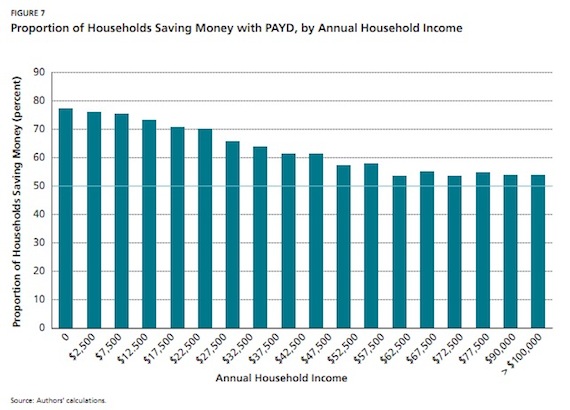
A wide variety of companies are now in a position to consider testing PAYD models with their customers, especially those that are price sensitive, tend to use a product less than the average or demand additional services during peak periods. While consumers may focus on saving money, the real benefits may be saved for the environment.

Some counter argument have been encountered as to how much one drive, has no baring on how safe driven on the road. Given the option to choose the type of car insurance, I believe this PAYD program will vastly be beneficial to the driver as well as the environment.

Categories
Uncategorized

The Right Thing to Do? Ethical Sourcing

Why aren’t all the major food companies develop ethical sourcing policies for their ingredients? What are the biggest factors holding these companies back from doing the right thing for the environment an

d society? Should the company be concern more on what is the right thing to do, or whether it is the right thing to do for business success? Often time companies focused more on the later one which is the fundamental change that companies must embrace.

Using Starbucks Coffee for example, ingredient policies, or standards, are an essential part of the company’s sourcing approach. After many years of experience in working in area of connecting standards with technical assistance and financing, Starbucks were able to see the long-term success in a result of the supplier. That is why they took the advantage and work hand in hand with producers to help improve quality and to ensure environmental and social best practices.

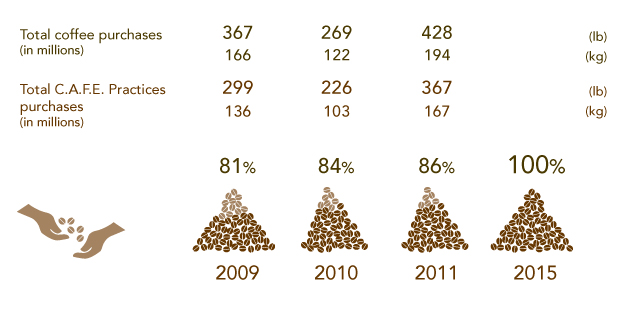
Starbucks developed the policies in collaboration with Conservation International decade ago known as C.A.F.E. Practices, this stringent verification program is a set of more than 200 social, economic and environmental indicators (evaluated by third-party organizations) that help the company to evaluate and reward producers of high-quality, socially responsible and sustainably grown coffee. In doing so, C.A.F.E. Practices helps to build more resilient farming communities that can more readily adapt to change in weather patterns or any coffee related challenges such as pests or disease issues while meeting our continued need for high quality Arabica coffee.

In short, I personally believe that Starbucks made a good decision in investing in responsible sourcing policies that can ensure them a long-term supply of high quality ingredients that help foster a better future for farmers and a more stable climate for the planet.  All of which are critical elements of our success at Starbucks Coffee Company.

Categories
Uncategorized

Impact on the Environment via Mobile Phone App

In today’s world, there are many great benefits of buying locally produced products, Due to their shorter distance travel to the market they tend to have less environmental footprint. However, less and less attention are paid to how far shoppers travel to make their purchases and how much impact they have on the environment.

Interestingly, many consumers view eCommerce as more eco-friendly than shopping on Main Street because they don’t have to travel from their homes to do so. However, according to the environmental impact studies on the topic are mixed, and the actual answer depends on factors such as the number of products purchased at a time, the density of the surrounding area and the distance traveled to a store. Moreover, online is estimated to represent only 7 percent of retail sales in the United States, with the vast majority of goods and services still being sold through traditional retailers.

Given that the overwhelming majority of sales are made offline, the Internet and Internet-enabled mobile devices can have a significant impact how people shop when used to facilitate offline transactions closer to home. To that end, new mobile players with location-based services are emerging that aim to drive hyperlocal shopping.

For local businesses, such apps provide new ways to reach local audiences and drive foot traffic. Consumers benefit from the added convenience of finding what they need nearby. The environment also wins as consumers travel fewer miles to shop.

Product locatorsJiWire recently launched Compass, a mobile advertising platform that enables retailers to target mobile users with relevant ads based on the location. What is interesting is that Compass can geolocate products from more than 200,000 retailers, allowing customers to then text or call retailers to put an item on hold for purchase. Not only does this create a superior consumer experience, but it enables consumers to avoid extra trips to make a purchase.

Emerging mobile apps are motivating more consumers to shop locally. eCommerce was once hailed as a more eco-friendly way to shop because it eliminated the need to drive to a store. Now it should be mobile’s turn to help reduce the distance consumers have to travel to shop.

Spam prevention powered by Akismet