LIBE 477 Developing ICT Skills and Pedagogy – Teamwork, Technology, and Trajectory

As the title of my blog suggests, I recognize that one of my hats as an educator is that of a lifelong learner. The most important reason for personal growth is that I am modelling a growth mindset for my students. Additionally, in order to best serve students and schools, teachers must keep up with the ever-changing digital landscape. As a classroom teacher, this often meant that I was trying new technology on the fly, learning alongside my students. As a future teacher-librarian, I am looking forward to having a bit more time and freedom to try out new technology tools in my teaching. I think I can use this as a path to collaboration with teachers who may not be ready to try technology on their own. Because I have the present luxury of being on education leave to take part in this program, I am taking advantage of this extra time to pursue professional development. I have been volunteering in classrooms and libraries, participating in workshops and webinars, and experimenting with new technology tools to further my own learning. This experience has been a wonderful opportunity to develop my learning network and hone my skills, something that I will be sure to continue when I return to teaching.

It Takes a Village

Trying something new can be scary, but there is safety in numbers. I find that I am more likely to take risks if I have someone else jumping into the deep end with me. Apart from the comforting notion of “at least I won’t fail alone”, sharing the load can make learning something new a little less daunting. Recently, I offered to help a fellow teacher with an ADST unit in robotics. This allowed her to focus on planning the logistics of the unit and assessment, while I supported the students with the technology tools. The result was a much richer learning experience for the students than either of us could have provided on our own.

Collaboration leads to rich learning experiences!

Connecting with other educators and sharing ideas and experience is a powerful force. The robotics collaboration was a result of staying in contact with a former colleague and meeting regularly to discuss our practice. This is my single greatest professional development tool. I have recently joined Twitter and am getting in the habit of using it to keep track of individuals and organizations that can expand my professional network. You can use the link at the top of the sidebar to connect with me on Twitter. If you have any accounts to recommend, please leave them in the comments!

I am lucky to be working in a district that values teachers as professionals and provides us with valuable professional development opportunities. One of my favourite days of the year is our district pro-d day where we come together in one place to learn from each other. Although it has had to shift to an online format in the past two years, the added benefit of this change has been that we have been able to join forces with another district, effectively doubling the number of talented professionals that we can learn from. This year, I was thrilled to find some webinars that can support me in my inquiry project for this class. I have registered for a workshop on green screen filmmaking and one on Twine, a digital storytelling tool. These workshops are run by fellow teachers, which means they can give me the best insight on how to incorporate these tools into my teaching. I am looking forward to next Friday!

Shiny New Tools

Apart from professional development days, it can be hard to find time to learn how to use new technology tools. Throughout my coursework in this program, I have tried to use technology to show my learning as much as possible. Here are some examples where I have successfully incorporated a new digital tool into my learning:

  • Curation
    • Padlet: to curate resources for my inquiry unit in LLED 469
    • Wakelet: to gather online tools to support media literacy for LLED 462
    • Symbaloo: to bookmark web tools to use in the classroom for LLED 462
  • Present/Publish
    • Microsoft Sway: to present my annotated bibliography of illustrated texts in LLED 446
  • Create/Design
    • Canva: to create an infographic for students about curating learning resources for LLED 469
    • Tinkercad: to design a school library learning commons layout for LIBE 461
    • Pixton: to make a comic showing my tech learning journey for LLED 462

All of these tools could be used in the classroom or library. Learning how to use them has been one of the most valuable parts of the program. I want to continue adding to this list as I work towards my future vision project for this course. In my final post for my Reading Review I made a list of apps that could support video production in the classroom. As I learn to use these apps, I will be posting my progress to my blog. This week, I started acquainting myself with Stop Motion Studio. I found a video that had helpful tips which I could also share with my colleagues and students:

After playing around with the app for quite awhile, I think my next step is to invest in a small tripod, as shown in the video. Hopefully I will be able to share some stop motion productions with you soon.

Looking Ahead for Learning

Although this education leave has been full of rich learning, in less than three months, I will be returning to work. Setting up some habits and plans to ensure I stay on top of my professional development now will help me when I return to the busy teaching lifestyle. Some things I can do:

  • continue registering for workshops and webinars through my district’s learning portal
  • subscribe to professional blogs and periodicals
  • set up opportunities to learn from my colleagues
  • sign up for my district’s teacher-librarian mentorship program
  • keep up to date with my yearly professional growth plan

Making a commitment to my own professional development is one of the most important services I can provide for myself, my colleagues, and my students.


References

Parry, K. (2020, September 16). Stop-motion with only a phone app [Video]. YouTube. https://www.youtube.com/watch?v=JOeMZFKGxOA

8 Comments

Filed under LIBE 477

LIBE 477 Fostering a Reading Culture – Students Lead the Way

When we open the door of reading to children, we are giving them the key to knowledge, comfort, inspiration, and insight into the human experience. Leading Learning: Standards of Practice for School Library Learning Commons in Canada states that “the school library learning commons has a leading role in assisting learners to hone and apply an expanded notion of literacy as well as fostering an active reading culture” (Canadian Library Association, 2014). It’s continuum for Engaging Readers shows that this goes beyond encouraging students to read for pleasure. An SLLC of the future guides students to build their own community of readers.

Standards of Practice for School Library Learning Commons in Canada (Canadian Library Association, 2014)

This week, I wanted to explore ways to support student reading communities. I began reflecting on how students often find like-minded readers organically, thinking back to my students last year who were fixated on reading manga. Seeing them bring in their new manga to share with each other each week made me want to find ways to encourage these impromptu book clubs. I started looking in the public library and thrift stores for manga to add to our classroom library. I used quotes from manga for our weekly quote studies. I even began reading manga myself (not a genre I gravitate towards!) Although I tried to include student choice in my reading curriculum with independent novel studies and literature circles where students got to choose their book, nothing could match their passion for manga. I think there is something to be said for establishing that group of reading peers on your own, without the classroom teacher’s involvement.

Organic student book club in the wild!

I feel that the library is the perfect place to welcome these informal student-run book clubs. Providing a place for a group of students to meet once a week and talk about what they’re reading, like this school in Virginia, is a small initiative that could lead to great empowerment.

In order for students to form these reading communities, they need to be given time to read. As a classroom teacher, I am a firm believer of at least 15 minutes of uninterrupted reading time where everyone (myself included) reads a book of their choice every day. I understand that some teachers do not feel like there is enough time to do this or why they might start bending the rules and using the time to get students caught up on work, but I feel this time cannot be compromised. As a teacher-librarian, I would like to encourage classrooms to participate in daily reading by sharing the research that says that this practice improves reading comprehension more than any formal reading program. This blog post from Donalyn Miller, author of The Book Whisperer, collects much of that research in one place.

In addition to independent reading, Miller is also an advocate for giving students the skills or habits they need to become what she calls “wild readers” (avid, lifelong readers). This is what allows them to move beyond participating in reading that is organized by their teachers. These habits include:

  • Dedicating time to read
  • Successfully self-selecting reading material
  • Sharing books and reading with other readers
  • Having reading plans (what to read next)
  • Showing preferences for genres, authors, and topics

(Miller, 2014)

Many of these habits can be supported by giving/hearing book talks. In this video, Miller shares how creating a culture of book talks in the school can involve all students in the reading culture:

Now that I could rename this blog post “Love Letter to Donalyn Miller”, I would like to wrap it up by connecting my inquiry topic – collaborating with classroom teachers by incorporating student video production into my teaching – to the idea of fostering a reading culture. I think these topics could be connected beautifully by having students create book talk videos or book trailers to share with their peers. Older students could record themselves reading a book and sharing it with their younger buddy. Students could get together to create an animation showing parts of their favourite book. The possibilities are endless. I think integrating this multimedia experience could be a great tool to incite a reading cultural boom!


Works Cited

Canadian Library Association. (2014), Leading learning: Standards of practice for school library learning commons in Canada. Canadian Library Association. http://llsop.canadianschoollibraries.ca/wp-content/uploads/2016/09/llsop.pdf

Castellano, L. (2016, August 22). Back to (after)school: Rethinking a school book club. Yalsa Blog. http://yalsa.ala.org/blog/2016/08/22/rethinking-a-school-book-club/

Miller, D. (2014, March 26). Five teaching tips for helping students become “wild readers”. Education Week. https://www.edweek.org/teaching-learning/opinion-five-teaching-tips-for-helping-students-become-wild-readers/2014/03

Miller, D. (2015, February 8). I’ve got research. Yes, I do. I’ve got research. How about you? Donalyn Miller. https://bookwhisperer.com/2015/02/08/ive-got-research-yes-i-do-ive-got-research-how-about-you/

Scholastic. (2017, March 22). Episode 7: Creating a book-talking culture [Video]. YouTube. https://www.youtube.com/watch?v=J6nV-aJe5gY

4 Comments

Filed under LIBE 477

LIBE 467 Evaluation of a Reference Work – World Book Online vs. Discovery Education

Introduction

“A good reference source is one that serves to answer questions, and a bad reference source is one that fails to answer questions” (Riedling & Houston, 2019). It is the job of the teacher-librarian to continuously evaluate the reference sources in the collection. While the evaluation criteria may change depending on the type of resource, there are some categories that should be considered for all:

  • Content scope
  • Accuracy, authority, and bias
  • Arrangement and presentation
  • Relation to similar works
  • Timeliness and permanence
  • Accessibility/diversity
  • Cost

(Riedling & Houston, 2019)

Due to the rapidly changing world in which students now find themselves, digital reference sources are better equipped to keep up-to-date with the exponential growth of information. For elementary-aged students, full-text online databases provide a comprehensive, accessible resource that give them opportunities to develop their digital information literacy skills. Specific factors that need to be kept in mind when evaluating this type of resource include: search function, update frequency, and user interface. A rubric for evaluating full-text online databases is included in the Appendix.

One of the key reference resources in our library’s collection is the online encyclopedia World Book Online. Although it is a well-respected resource designed for multiple ages, many of our users report that they access it very little. Discovery Education is an online database featuring curated content paired with instructional supports for K-12 educators. With a focus on multimodal content, it could provide a needed update to our digital resource library. Conducting a thorough evaluative review of each resource will ensure that our reference section is best equipped to meet our users’ needs.

World Book Online Evaluative Review

World Book Online is a subscription-based online encyclopedia. The suite includes a selection of databases that progress with users’ learning levels. Each tool incorporates additional features to support the target learners’ level of development. Types of content includes scholarly articles, primary and secondary source documents, e-books, images, illustrations, maps, audio files, and videos. All content is authored by expert contributors and reviewed by authenticators to ensure accuracy (World Book Inc., 2022). Citations are included on each page. World Book has been a trusted academic source for over 100 years and information is updated regularly.

When a user logs in, they are taken to a screen that shows all tools included in the suite. Hovering over each tool gives a brief description which enables the user to determine which tool is best-suited for them. The user interface for each tool is tailored to the target audience. For example, apart from World Book Early Learning (Pre-K) all tools set the search function as the most prominent feature. Search filters can be used to narrow down results. Articles are differentiated by Lexile score and have an immersive reader tool that can be used to listen to the content.

(World Book Inc., 2022)

World Book Online is the only encyclopedic resource in our collection. Students can access it outside of school hours and from home, which makes it a cost-effective resource at roughly $1400.00 CAD per year for an elementary school.

Discovery Education Evaluative Review

Discovery Education was designed to curate relevant, engaging teaching content on one integrated platform. The content is created by educators and subject matter experts. Authors are recruited from partner school districts to ensure diverse representation and all content is reviewed in four major categories: curriculum alignment, student engagement, diverse representation, and instructional use (Discovery Education, 2022). User feedback is used to update content regularly. Types of content include videos, articles, podcasts, virtual field trips, and interactive tools. E-books are not included in the basic subscription.

(Discovery Education, 2022)

The platform is designed to be used as an interactive tool between students and teacher. Teachers can load a class and assign activities and quizzes to their students. All users can search for and save content. Search results can be filtered by grade level, media type, language, and additional features such as closed captioning. Literacy supports such as immersive reader and page rulers are embedded in the text content. Texts are differentiated by Lexile score.

While the interface is designed to facilitate an online classroom, the stand-alone content can just as easily be used to supplement any lesson. Individual student accounts allow this resource to be used as a research tool as well. Teachers will appreciate the built-in assessment and versatility that this platform offers. The cost of an annual subscription for an elementary school is roughly $4000.00 CAD.

Conclusion

World Book Online meets or exceeds the standards of an acceptable reference source, despite its lack of use. It does not, however, consider diversity of perspective in its curation of content, whereas Discovery Education makes explicit mention of it. Furthermore, the interactive features of Discovery Education could entice teachers to use the resource more frequently in their classrooms. The difference in cost also needs to be considered, with World Book Online being the significantly cheaper option. Due to the comparable value of the resources reviewed, consultation with the library’s users is recommended for further consideration.


Works Cited

Discovery Education. (2022). Curated content. Discovery Education. https://www.discoveryeducation.ca/curated-content/

Discovery Education. (2022). How does Discovery Education vet and curate content? Discovery Education Help Center. https://help.discoveryeducation.com/hc/en-us/articles/360056650714-How-does-Discovery-Education-vet-and-curate-content-

Riedling, A. M., & Houston, C. (2019). Reference skills for the school librarian: Tools and tips (4th ed.). Libraries Unlimited.

World Book Inc. (2022). Students achieve more with World Book. World Book. https://www.worldbookonline.com/training/assets/downloadables/WBOL_vs_web_info_sheet_8-15.pdf

World Book Inc. (2022). World Book Student. World Book. https://www.worldbookonline.com/student-new/#/home


Appendix

Rubric for Evaluating Full-Text Online Databases

2 Comments

Filed under LIBE 467

LIBE 477 Reading Review C – Video Production: What Next?

At the beginning of this research experience, I was pondering the issue of collaboration between classroom teachers and the library learning commons. Although the value of it continues to increase with the complexities of educating literate critical thinkers, the current demands put on educators and ever-looming budget cuts put this partnership at risk. As a classroom teacher, I understand that time is precious and the thought of trying to fit in co-teaching time in the library can be daunting. As a Future Ready Librarian®, I want to be sure I can integrate my own initiatives that provide cross-curricular learning opportunities to help teachers meet their goals. When examining the Future Ready Framework, I can see how supporting the ADST curriculum accesses many wedges of the wheel. In order to add to my teacher-librarian toolkit and be better prepared to support classroom teachers, I have decided to develop my skills in teaching media arts with a focus on video production.

The framework for Future Ready Librarians® (Image courtesy of Alliance for Excellent Education)

I began my research by looking for academic articles that support the teaching of digital video production as a curricular tool. While there have been many studies conducted in this area, I wanted the articles to be concise and easily accessible so I can use them to create a compelling case for collaboration. I found two articles from respected sources that fit this description. Both articles have practical examples of how students have benefitted from receiving instruction in digital video production. The Henderson et al. article, in particular, is a good demonstration of how this tool can be used across many grade levels and curricular areas.

The second aspect of this inquiry will be the development of my own skills in digital video production. While I have some experience with editing simple videos, in order to feel confident in offering my expertise to colleagues, I need to become more capable at using the video editing tools provided by my district. As in many districts, schools have access to class sets of iPads. There is a list of approved apps that can be downloaded onto the iPads without acquiring permission from the learning technology team (a lengthy process that is best avoided). In examining this list, I picked out some apps that would be useful tools for digital video production. Then I went searching for some introductory guides that could help me begin to understand how to use them. The following apps are on my “to be explored” list (click each icon for EdTech Tool review):


After this week’s readings and discussions about equity, I began to wonder how this might play a role in my topic. I discovered an article from Learning, Media and Technology that examined issues with voice and representation in relation to the influences on youth digital media production. It lead me to realize that part of teaching video production is a responsibility to critically examine the kinds of stories that are being told in the digital domain. To borrow a question from the paper’s author,

“How do we define and refine the tone, pressures, and expectations associated with particular media forms in the process of engaging young people in digital production?” (Dahya, 2017).

This will be important to keep in mind going forward.

Thinking ahead to my final vision artifact, I want to find a way to share my journey with digital video production with colleagues in such a way that it invites collaboration and co-teaching opportunities. This could be a document that shares the benefits of integrating it into the classroom and provides some examples of what that could look like in the school library learning commons setting. I am looking forward to experimenting with the different tools I have found and sharing the results on this blog. Stay tuned!


Bibliography of Sources

Alliance for Excellent Education. (2020). Future Ready Librarians: Empowering leadership for school librarians through innovative professional practice. https://futureready.org/wp-content/uploads/2020/02/FRS_Librarians_Framework_download-2020.pdf

Curriculum Connections STEM. (n.d.). Home [YouTube Channel]. https://www.youtube.com/channel/UCcDLHfOXIRoK6uqesjxZC4w

Dahya, N. (2017). Critical perspectives on youth digital media production: ‘voice’ and representation in educational contexts. Learning, Media and Technology, 42(1), 100-111. https://doi.org/10.1080/17439884.2016.1141785

Henderson, M., Auld, G., Holkner, B., Russell, G., Seah, W. T., Fernando, A., & Romeo, G. (2010). Students creating digital video in the primary classroom: Student autonomy, learning outcomes, and professional learning communities. Australian Educational Computing, 24(2), 12–20.

The Innovation Centre Bradford. (2022). Green screen and iMovie guides. http://www.ticbradford.com/271-video-gallery/1896-green-screen

Jones, A. (2021). Green screen by Do ink. https://docs.google.com/presentation/d/e/2PACX-1vQHJMCC4f3MMsgp9Ho9_VxwXzAEqn1GsTiofieFKGvOays7vHEwCzYg-Kt6MOkJKNfZn0WuGocPKmdy/pub?start=false&loop=false&delayms=3000&slide=id.g10269ec23e7_1_284

Ranker, J. (2007). A new perspective on inquiry: A case study of digital video production. The English Journal97(1), 77–82.

1 Comment

Filed under LIBE 477

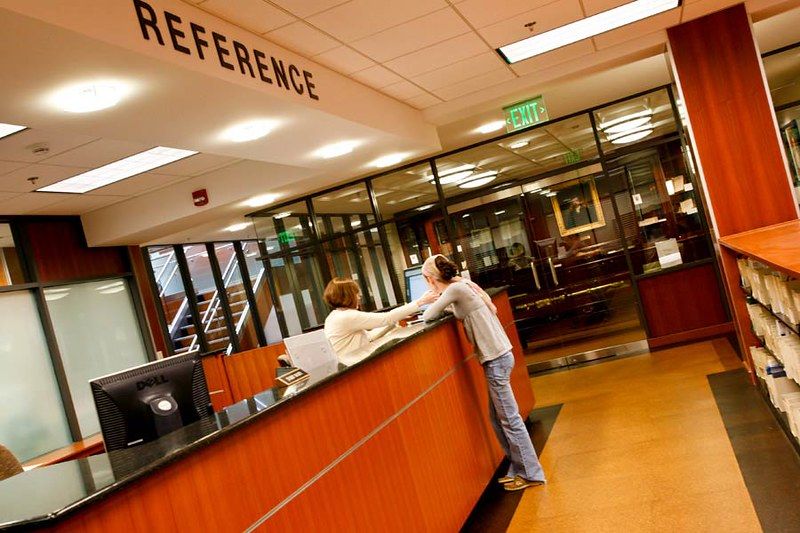
LIBE 467 Theme 1 – The Foundation of Reference Services

CC Image courtesy of The Wolf Law Library on Flickr

reference services: assistance provided by a librarian to meet the information needs of patrons; may include answering questions, instructing of information-finding techniques, conducting searches, directing patrons to resources, and assisting in evaluation of information

This definition adapted from Reitz (2013) may seem simplistic but there is a lot at play in the words “meet the information needs of patrons”. In an ever-changing digital landscape, this is becoming an increasingly complex task. In order to avoid feeling overwhelmed, I have tried to keep in mind the following characterization from Riedling:

The reference process is comprised of five steps:

  1. A need for information
  2. A question
  3. The search for information
  4. An answer or response
  5. An evaluation

Despite the explosion of information that continues to assault us, it is comforting to know that the general reference process remains the same. I have begun to think about how I can provide effective reference services as a teacher-librarian. Knowledge of the library learning commons collection is not limited or even foundational to knowing the books on the shelves.  Extensive knowledge of the online databases subscribed to by the district will help me be better prepared to assist my students in their search. Finding the balance between selecting, acquiring and evaluating resources to meet students’ needs and guiding them to do this on their own will also be an area of concern. I feel like my strength in providing reference services will be modelling patience with the frustrations that often accompany reference services and an ability to stay positive despite these.

Another foundational aspect of reference services today is the debate between print vs. non-print reference sources. While I do think it is important to expose students to both sources in order to foster multiliteracies, I recognize students’ preference for electronic resources. In my experience, most libraries in my district lack sufficient electronic resources while keeping out-of-date print resources on their shelves. Ensuring that my collection only houses updated, engaging print resources and turning the reference section into a gathering spot will encourage the use of print resources. While I acknowledge that my own preference is for electronic and digital resources, I know there is value in a balanced collection. This article about St. Catherine’s School portrays the kind of balance that I envision in my own library.

Finally, the key to a robust reference section is collection evaluation. I look forward to putting into practice the learning material in Lesson 3  in Assignment 1: Evaluation of a Reference Work.


Works Cited

Katley, K. (2016, December 16). For future reference. Kim Catley. http://www.kimcatley.com/portfolio/2017/1/30/for-future-reference

Reitz, J. (2013, January 10). Online dictionary for library and information science. ABC-CLIO. https://products.abc-clio.com/ODLIS/odlis_about.aspx

Riedling A., & Houston, C. (2019). Reference skills for the school librarian: Tools and tips. Libraries Unlimited.


2 Comments

Filed under LIBE 467

LIBE 477 Reading Review B – Deep Dive into Video Production

After brainstorming possible areas of interest connected to collaboration and digital technologies last week, I started exploring possible media arts tools that could help me promote co-teaching in the school library. This week my research led me down two main paths:

  1. research showing digital video production is an effective way to access the curriculum
  2. practical tips and tutorials to help me develop my skills in digital video production as a teacher-librarian

Here is a summary of some of the useful resources I found:

Curriculum Connections STEM. (n.d.). Home [YouTube Channel]. https://www.youtube.com/channel/UCcDLHfOXIRoK6uqesjxZC4w

This YouTube channel was created by Queensland University of Technology following a study that found YouTube is a popular teaching tool and that video production was becoming a common activity in classrooms. It has videos designed to support teachers in facilitating video production in their classroom. The videos are organized into playlists called “Video Toolkits” which each feature a different aspect of video production: Genres, Forms, Digital Devices, Digital Citizenship, Production Processes, and Video Viewing. Their introductory video explains more:

Henderson, M., Auld, G., Holkner, B., Russell, G., Seah, W. T., Fernando, A., & Romeo, G. (2010). Students creating digital video in the primary classroom: Student autonomy, learning outcomes, and professional learning communities. Australian Educational Computing, 24(2), 12–20.

Part of a national project in Australia aiming to demonstrate that integration of ICTs across the curriculum improves educational outcomes, this paper shows that the use of digital video production in a primary school led to pedagogical changes, increased student autonomy, and improved reflection and metacognition. In addition, it discusses the valuable professional development experienced by teachers involved in the project. Not only does this paper provide exemplars of ways to incorporate video production in the classroom, it is also a powerful advocate for this digital tool as an instigator of collaboration.

Jones, A. (2021). Green screen by Do ink. https://docs.google.com/presentation/d/e/2PACX-1vQHJMCC4f3MMsgp9Ho9_VxwXzAEqn1GsTiofieFKGvOays7vHEwCzYg-Kt6MOkJKNfZn0WuGocPKmdy/pub?start=false&loop=false&delayms=3000&slide=id.g10269ec23e7_1_284

This interactive Google Doc is part of The 25 Days of Digital Tools and Ideas from Future Ready Librarians which was featured on Shannon McClintock Miller’s blog The Library Voice. Although all of the tools featured are excellent, I am focusing on the Do ink app because a green screen would create a great makerspace in the school library that would draw learners in. Additionally, the Do ink app is one of the approved apps on my district’s list which make it easily accessible from my school iPads. This Doc features a how-to video as well as ideas for using green screens in multiple subject areas with accompanying examples. Not only is it a handy reference tool for a new user of the app, it inspired me to use this interactive format to introduce new digital tools to classroom teachers.

Ranker, J. (2007). A new perspective on inquiry: A case study of digital video production. The English Journal97(1), 77–82.

This article provides another example of how integrating digital video production can provide a meaningful learning experience for students and teachers. In particular, it makes the connection between multimodal literacies and inquiry-based learning which makes a strong case for the involvement of teacher-librarians and multiple access points to the curriculum. I appreciated how it described the process that the students went through to create their project, including examples of their script based on their research.

1 Comment

Filed under LIBE 477

LIBE 477 Reading Review A – Collaboration Conundrum

School libraries have always been an essential part of the school community, but in recent years there has been a shift in perspectives on their role in education. In 2014, the BC Teacher-Librarians’ Association published the document From School Library to Library Learning Commons (updated in 2017) which outlines how a school community can transform their library into a space that can address the needs of today’s learners. Two important emerging themes in education that drive this change are:

  • “Collaboration is required of all learners; that is, amongst teacher-librarians, teachers, and students.”
  • “Technology has had a dramatic effect.”

As I work through the courses in the Teacher-Librarian Diploma, the need for TLs to embrace the co-teaching model has become more and more pressing in my mind. My concern as I enter this profession is that while the value of collaboration and co-teaching continues to increase, the time available or provided to dedicate to this area is diminishing. I have been trying to work out how I can best establish an environment of collaboration as a TL without adding to the already-full plates of classroom teachers. In order to start generating keywords around this topic, I created a word cloud using WordArt.com and the document What Can Collaboration with a Teacher-Librarian Look Like? from the BCTLA and the Surrey Teachers’ Association:

It is clear from words like “Digital”, “Apps”, “Websites”, and “Tools” that technology is an important focus of collaboration in an LLC. One of the emerging themes in last week’s discussion about digital mentorship was that ADST is an area of concern for many classroom teachers. I have already started the process of establishing a toolkit of digital technologies that I can use to support classroom teachers in this subject area. I have started thinking about what kinds of tools will do this in the most efficient way, or what will access multiple points of the curriculum in order to maximize instructional time. I began thinking about how Media Arts can be integrated into every area of the curriculum. This is not an area that I have spent a lot of time exploring in the classroom but is something that would add significant value to my TL toolkit. When thinking about the kinds of resources available in my district, possible areas of exploration could include:

  • Green screen
  • Video editing
  • Stop motion animation
  • Sound recording
  • Photography

Honing my skills in any of these areas would enhance the contributions to co-teaching I could make as a TL.


Works Cited

BC Teacher Librarians’ Association. (2017). From school library to learning commons: A pro-active model for educational change. (M. Ekdahl, & S. Zubke, Eds.). https://bctla.ca/wp-content/uploads/2018/02/from-school-library-to-library-learning-commons.pdf

BC Teacher Librarian’s Association & Surrey Teacher’s Association. (2019). What can collaboration with a teacher-librarian look like?. https://bctladotca.files.wordpress.com/2019/02/teacher-librarian-infographic-final.pdf

1 Comment

Filed under LIBE 477

Welcome

I have created this blog to document my learning journey as I work towards my Teacher-Librarian Diploma at UBC. Stay tuned for inquiry, collaboration, and lifelong learning!

Leave a Comment

Filed under Uncategorized