Categories
Uncategorized

Are Soft Drinks the Cigarettes of 2012?

In this post, I will be responding to the blog by Lauren Chimko entitled “Are Soft Drinks the Cigarettes of 2012”.

In her posting, she spoke about Coca Cola and Pepsi and how their products potentially are associated with causing cancer. Unless these mega soft drink providers changed their manufacturing process, they would need to change their packagings labels to indicate that their brands cause cancer. For both Coca Cola and Pepsi, the decision was clear, avoid the new labels by accepting the new manufacturing process. Besides, the change in this process would only cost millions, and who knows how much more the new packaging could affect publicity and their brand image? Ultimately, sales would drop drastically and consumers would begin switching to other beverage alternatives, such as bottled water or juice. Ironically however, both Coca Cola and Pepsi own most substitute beverages, so only the direct cola sales would decrease.

I find it interesting how influential packaging can be. Simply because these brands were being warned of having to change their packaging to include a logo signifying cancer, they changed their entire manufacturing process. This shows how much these brands care about their carefully constructed brand image. When someone buys a Coca Cola or a Pepsi, they aren’t necessarily buying the exceptional taste that these brands provide, rather, they’re buying the brands and everything that the brands are linked with and believe in. If consumers were given the opportunity to doubt their beloved brands and ethics, they would begin searching for alternatives, such as the “no-name” brand colas or substitutes. Thus, it is easy to see why Coca Cola and Pepsi were so keen on going ahead with the alternate manufacturing process. If they didn’t, consumers would begin aligning these “friendly” brands with cigarette companies packaging, which would surely have a negative impact on them in the long-run.

http://www.montrealgazette.com/health/Coke+Pepsi+change+production+process+California+after+cancer+warning/6277328/story.html

Categories
Uncategorized

Super Bowl 2012 Commercials: Which Advertisements Won?

For this blog post, I will be referencing Megan Marrs blog entitled “Super Bowl 2012 Commercials: Which Advertisements Won?”

For marketers, one of the biggest decisions they encounter is trying to find the ideal place to show their advertisements. For most, the Super Bowl provides this ideal place. It has an enormous viewing audience of over 93 million viewers, which includes people from almost all possible target segments. However, this magical television slot isn’t cheap to grab, with companies paying an average of $3.5 million for a 30-second commercial. An additional reason, besides just to appeal to the viewers watching the Super Bowl, is to create an after-buzz. This years Super Bowl did just that, as it was the most tweeted sporting event in history with over 10,000 tweets per second.

Now, as for which advertisement won… Megan posts 9 commercials on her blog, each with their own, different segmentation and positioning strategies. The things that appear to work without fail are babies, dogs and nostalgia. On the other hand, she claims that commercials that use big stars and more historically correct ads aren’t working as well. I believe that the main thing advertisers need to work on is creating a new, fresh idea that creates a conversation and ultimately awareness. Although these are obviously hard to come by, I believe the benefits the company will see from investing the extra money is worth the cost. Chevy did a great job of advertising their new Chevy Sonic car by teaming up with the band OK Go. In this commercial, they used an innovative technique in collaborating with an up and coming band, showing how their car can endure rough condition, while at the same time creating an awesome music video.


http://www.wordstream.com/blog/ws/2012/02/06/super-bowl-sunday-commercials

Categories
Uncategorized

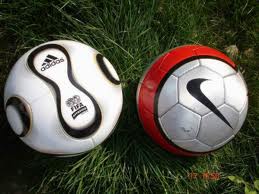
Nike vs. Adidas

In response to Dan’s blog, titled “World Cup 2010: Stripes vs. Swoosh,” I found it interesting how Nike and Adidas used different marketing approaches to attract the same target segment. Adidas chose the route of directly sponsoring the World Cup, paying a large sum of money to become their official sponsor (gaining them the right to jersey and soccer ball products and sales). On the other hand, Nike chose to use the tactic of Ambush marketing, where they advertised their attire during the World Cup (not paying the large sum Adidas did) with recognizable soccer players and teams. Ambush marketing can be extremely dangerous. Sponsors, like Adidas, will resist sponsorship/partnership for future games due to Nikes tactic of ambush marketing. This causes events such as the World Cup difficulties to obtain the needed sponsorship money to run successful games. For example, this Nike video from their “write the future” campaign, ran during the World Cup, has generated over 1.4 million views and has created more buzz and awareness than their rivals Adidas sponsorship approach:

In the soccer world, it becomes extremely challenging and important for brands to differentiate and position themselves properly apart from their competition. I feel that Nikes approach of using identifiable, world renown players helped position their brand as market leaders in the soccer world. The next time a loyal fan goes to buy a new pair of cleats, they’re going to buy a pair of Nikes because they associate them with success and high performance.

Sponsoring key athletes has become the norm in the sports world. Nike sponsors the ‘elite’ athletes in almost all sports, ranging from Tiger Woods (golf), to Roger Federer (tennis). Adidas has also decided to focus their advertising efforts on sports ‘elite’ athletes. They created their “all in” campaign, which showcases Derrick Rose (basketball), Lionel Messi (soccer), singer Katy Perry and more.

https://www.youtube.com/watch?v=0A0jVkFs3C4

Categories
Uncategorized

Doritos, Consumer-Generated Marketing

The 2007 Super Bowl generated approximately 93 million viewers to watch the Indianapolis Colts play the Chicago Bears. Since companies know the Super Bowl generates a large audience, they’re willing to spend and use tremendous amounts of resources on marketing . However, airtime during the Super Bowl isn’t cheap, so companies try to ensure that their advertisement/s are affective.

Consumer-generated marketing is defined as “brand exchanges created by consumers themselves- both invited and uninvited- by which consumers are playing an increasing role in shaping their own branding experiences and those of other consumers”. Frito-Lay’s Doritos brand decided to use this marketing approach in order to generate conversation surrounding Doritos chips.

Doritos called their campaign the “Crash the Super Bowl” contest, which invites 30-second ads from consumers, with the two best ads being played during the Super Bowl. Here is an ad that was chosen by Doritos to play in the 2007 Super Bowl game: https://www.youtube.com/watch?v=kNxgxF-7SfA. This ad cost only $12.79 to produce (the cost of four bags of chips) but was approximately 45% more effective than the regularly, company produced ad. Now, as an incentive, Doritos offers $1 million US to any fan who can produce an ad that claims the top spot on the USA Today Super Bowl Ad Meter.

It is clear that consumer-generated marketing can create brand conversation, while remaining inexpensive and “cool”. However, there a few challenges such as selection (usually thousands of ads, most being inappropriate) and quality that Doritos, and other companies who use this approach have to manage. Yet, I still believe that this form of marketing is an effective and innovative approach which greatly benefits the company who uses it.

For those interested, here are other consumer created Super Bowl ads:
https://www.youtube.com/watch?v=M8QZo4mybGA
https://www.youtube.com/watch?NR=1&feature=endscreen&v=9bRSM4EbLFw
https://www.youtube.com/watch?feature=endscreen&NR=1&v=4rsEnwKrsvc

Categories
Uncategorized

Greatest lesson learned from someone else

Lessons Learned from Coaches-

Every person starts off with a clean slate. Free of knowledge, worries, doubt and role models. When life matures, these ideals and people develop and form, beginning to appear in daily life. For example, I started playing soccer at an extremely young age (four years old). Through this sport, which I began playing competitively at age eight, I have learned many life strategies, along with getting guidance and advice from multiple coaches. I would say the greatest lesson I have learned from my coaches would be my intensity and life morals. If you don’t bring your all every practice and game, you get the bench. It doesn’t matter if you’re the best player on the team, if you skip practice, or don’t bring your 100%, you lost the opportunity to be part of the “team”. Due to these rules, which almost every coach in competitive soccer demands, I now not only bring 100% to everything I do on the field, I bring it into everything I do in my life. Therefore, I have learned that if you don’t bring your all in what you do, you’ll get the bench. Whether that’s doing bad on a school assignment, or not getting a call back for a job, giving everything you have is needed in order to succeed in this dog eat dog world.

Categories
Uncategorized

Market Research on Smartphone Sales

The smartphone has often been thought of as a high end commodity. In recent years, due to the economic recession, smartphone sales have drastically decreased. As a result, as market research has shown, consumers leaned heavily towards cheaper phones. Nokia greatly benefited from the recession, due to their strength in low-cost phones. However, due to the large consumer demand and shortages in supply, Nokia struggled to meet consumers demands. As time moved on and consumer income stabilized, the sale of smartphones began to drastically rise. Contrasting from Nokias “cheap phone” image, Apple’s smartphone sales had significantly risen. There iPhone4, according to market research, shipped 14.1 million units in one quarter. This moved them ahead of their rival RIM (providers of BlackBerry) in quarterly sales. Market research is extremely important tool for companies. It gives them an idea of how much of their product to produce in order to maximize their profits while minimizing costs. Without it, companies may produce too much or too little of a product, which decreases the total utility of a consumer or supplier. It is important for companies to do market research from the past and present, to make the best judgments for the future.

http://www.informationweek.com/news/hardware/handheld/showArticle.jhtml?articleID=228000384&itc=ref-true

Categories
Uncategorized

Coca Cola

Coca Cola, or better known as “Coke” exhibits many entrepreneurial qualities. Although their product doesn’t rate 1st on blind taste tests, it is still reportedly preferred to all other variations of soda. How have they done this? Simple, great marketing, a continuos flow of new products and a well structured company. Their product is highly demanded and equally supplied. Coke advertises almost everywhere (in over 200 countries) and has over 500 brands associated to their name. Additionally, they serve over 1.6 billion serving each day of Coke. Whether its the Olympics, or the World Cup, Coke is there. To me, Coke and Pepsi taste relatively the same, however; If I were to choose to purchase one or the other, my choice would be Coke. Their image and classical red symbol are key factors in my decision of buying a Coke or Pepsi, as I’d rather be seen holding a Coke can on the streets than a Pepsi (brand recognition/power). Overall, Coke is an extremely entrepreneurial company, which is well run and gains high profits. Cokes marketing and advertising skills have positioned them as dominant figure in the soft drink industry for years to come.

http://en.wikipedia.org/wiki/The_Coca-Cola_Company

Categories
Uncategorized

Wal-Mart Bids for Massmart to Expand Into Africa

Wal-Mart announced they have plans to buy the African-based company, Massmart, for approximately $4.2 billion. Wal-Mart has stores in 14 countries but non in Africa. International sales for Wal-Mart make up 1/4 of the companies revenue. Massmart owns 232 stores in South Africa, as well as 24 additional stores in other African countries. Perhaps the major reason why Wal-Mart has shown interest in Massmart is due to a statement by Andy Bond, a Walmart executive. “South Africa presents a compelling growth opportunity for Wal-Mart and offers a platform for growth and expansion in other African countries.” However, the growth and success of Wal-Mart expanding to Africa may be limited primarily to South Africa, as many African countries are financially unstable. David Strasser, an analyst for Janney Montgomery Scott stated, “For every relatively stable country like Botswana, there is a Zimbabwe.” Wal-Mart is an expanding company who continuously looks for new opportunities to gain profits. Sales in the United States have been decreasing quarterly, so Wal-Mart is looking for new ways to take in income. This proposal is risky and audacious but appears to have a positive long-term possible outcome  for Wal-Mart, who are hoping to expand their operations to over 14 countries.

Work Cited: http://www.nytimes.com/2010/09/28/business/global/28walmart.html

Categories
Uncategorized

Hooters Waitress put on Weight Probation

Cassie Smith, a Hooters waitress in Michigan has been put on probation because of her weight. Smith got glowing reports from managers and good reviews from customers at Hooters. One day, she was called into a conference where she was told “We have that your shorts and shirt size could use some improvement,” followed by if she wants to keep her job, she has 30 days to lose some weight. For anyone, this is a degrading and demoralizing comment to hear. Smith stated “If I could’ve gone back and not worked there for two years to take back that feeling, I would do it.” The question is, did Hooters have the right to make the statements they did? When people go to Hooters, they usually don’t go for the wings. Therefore, Smith knew what she was getting into when she applied for the job. In summary, Hooters needs to be more courteous and respectful when they talk to their employees about personal features, as these comments could have long term affects on their lives. Also, they need to be more clear about their job description during their hiring process so employees know exactly what they’re getting into.

Work Cited: http://www.thaindian.com/newsportal/world/hooters-waitress-placed-on-weight-probation_100366642.html

Categories
Uncategorized

Blockbuster Finally Files for Chapter 11

It was a dark day for Blockbuster Video when they filed for Chapter 11. The last few years have been incredibly tough for Blockbuster as they have been competing with online-video rental stores such as Netflix, Video on Demand and computer downloading. It has been reported that Blockbusters debt is approximately $1 billion. They are strategizing deals with senior stockholders to reduce the debt to a much more manageable $100 million. Blockbuster attempted unsuccessfully to introduce rental kiosks as a way of completing with online-rental services.  The kiosk rental market is extremely competitive and has seen Redbox rise to the top, while Blockbusters and many other competitors trail behind. Blockbuster video needs to start focusing more on their online services as this is the way of the future. Owning stores costs rental money, maintenance fees, employee fees as well as many additional fees. An online service reduces theses costs and makes renting videos and games a much easier process for consumers. Due to the brand name Blockbuster has already made for itself, a well-made online service can save Blockbuster money as well as increase total profits made. 

Work Cited: http://news.cnet.com/8301-13506_3-20017366-17.html

Spam prevention powered by Akismet