Categories
Module 2

Increasing Student Achievement with Mac

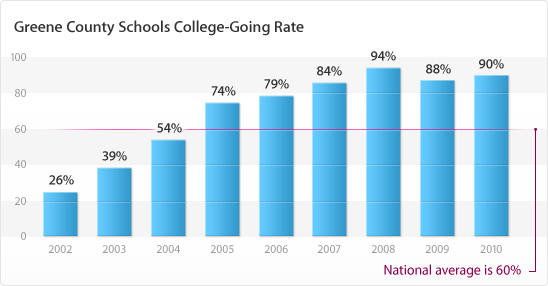
“Since the MacBook program began in 2003, the college-going rate in the Greene County School District has increased from 26 percent to 90 percent.”

Watch the video!

I know it’s a bit of an advertisement.  I wonder how other variables like teaching methods affected  their study.  Of course they’re biased because they’re selling mac products but I believe the college-going rate did go up.  I think part of the reason it worked is because people are “willed” towards technology.   This is technological determinism as described by Carl Mitcham (1994) (Petrina and Feng, 2008).  Too bad they only mentioned using the Mac applications that come with it.  There’s so much more!

Our school district bought one computer for EVERY grade seven student a couple of years back.  They cancelled the program because it was too expensive to maintain the computers which were damaged and lost by the students.  I wonder if they did a cohort study before deciding to buy all of those computers?  The total cost was probably the same as giving just as many teachers a smartboard.   Boo hoo!  Where is my smartboard?

Petrina, S. & Feng, F. (2008). Primer for defining and theorizing technology in education, pt. 1. Vancouver, BC: Tech no-Printing Press

Increasing Student Achievement with Mac. Retrieved from http://www.apple.com/education/stories/greene-county/#video-greene-county

Categories
Module 2

Instructional Design

What is instructional design? I like this definition by the Association for Education Communications and Technology: (Seels and Richey, 1994)

The theory and practice of design, development, utilization, management and evaluation of processes and resources for learning.

Instructional design is a field that began in the 1950s and 1960s when the military needed to train mass amounts of people to use a variety of equipments.  It was based on the behaviourist theory of B.F. Skinner that learning occurred due to positive feedback for correct performance and correction for incorrect performance.  Later, another behaviourist, R. Gagné added to the model by saying that prior knowledge and motivation also contribute to learning.  He created his own model consisting of nine events that illustrate how external events influence internal events which produces learning.

The Addie model is traditionally, the most popular model used in instructional design which stands for Analysis, Design, Development, Implementation, and Evaluation.  However, it is a linear model which means that teaching and learning happens in one direction.

John Bransford, a cognitive pyschologist, helped reshape instructional design in the late 1970s.  He agreed that learning is built on prior knowledge (constructivism).  However, he changed the way instructional designers built their models due to his emphasis on group learning and contextual practise.  These models are more flexible and recipricol than the previous ADDIE model.

What are the problems with instructional design? There are many models to choose from which some see as a pro but I see as a con because it can be confusing to decide which one to use.  Also, the models seem to try to fit a square peg into a round hole.  I mean that they don’t consider individual differences, ways of learning and experiences.  They are too structured and don’t allow for a teacher to stray from the path.  Often some of the best learning in a class happens spontaneously.

What does an instructional designer do?  (Tucker, 2007)

  • Work with Subject Matter Experts to identify what students need to learn
  • Develop objectives and ensure content matches those objectives
  • Revise and rewrite content to shape it for learning needs
  • Structure content and activities for student learning
  • Create media to support learning (e.g., visual aids for face-to-face, various multimedia for e-learning and online)
  • Develop assessments (note that this does not only mean tests)
  • Adapt instructional materials created for one format to another format (usually this is adapting materials from face-to-face to e-learning)

Tucker C. http://christytucker.wordpress.com/

Hill, J. R., Bichelmeyer, B. A., Boling, E., Gibbon, A. A., Grabowski, B. L., Osguthope, R. T., et al. (2004). Perspectives on significant issues facing instructional design and technology In M. Orey, M. A. Fitzgerald & R. M. Branch (Eds.), Educational media and technology yearbook 2004 (Vol. 29, pp. 23-43): Libraries Unlimited.

Seels, B. B. & Richey, R. C. (1994). Instructional technology: The definition and domains of the field. Bloomington, IN: Association for Educational Communications and Technology.

Wikipedia (2010).  Instructional Design. Retrieved from http://en.wikipedia.org/wiki/Instructional_design

Prestera G. (2002). Retrieved from http://www.effectperformance.com/sites/prestera/html/M4/L3%20-%20Change/M4L3P2.htm
Categories
Module 2

Kozma vs. Clark

Kozma (1994) believes that using media in the class increases learning.  Clark (1994) believes media are “mere vehicles that deliver instruction but do not influence student achievement any more than the truck that delivers our groceries causes changes in our nutrition.”

I’m not sure who I agree with.  I think it’s important to use technology even if it doesn’t improve learning because:

1. Students will need to have basic technological skills for when they enter the workforce.
2. Students like using it. Clark cites Salomon (1984) who implies that the students believe their learning will improve through using tech so that’s why they learn. Whether it is due to their beliefs or the technology, they are still learning.
3. Technology varies instruction expanding the list of tools teachers can use to teach.

I agree that instructional practise is more important than the technology itself when teaching content.

Clark, R. E. (1994). Media will never influence learning. Educational Technology Research and Development, 42(2), 21-29.

Kozma, R. B. (1994). Will media influence learning? Reframing the debate. Educational Technology Research and Development, 42(2), 7-19.

Categories
Module 2

e-learning

I am still having a hard time with the definition Mayer gives for e-learning –  “defined as instruction delivered via a computer that is intended to promote learning.”  If “e” means electronic shouldn’t the definition include video, radio, iphones etc. He says that “instruction refers to content and instructional methods.”  So shouldn’t the term be e-instruction or e-teaching?

It seems like he is saying e-learning means instruction which means content and methods.  To me, learning, instruction, and content are three separate things. I am interpreting this wrong?

Mayer, R. A. (2003). Elements of a science of e-learning. Journal of Educational Computing Research, 29(3), 297-313. Library Portal Access.

Spam prevention powered by Akismet