

Regulatory Affairs in the Life Sciences
Earned Microcertificate in Regulatory Affairs in the Life Sciences, May 2025, which includes:
- Regulatory Science and Health Economics (May 2025)
- Introduction to Regulatory Affairs (Dec 2024)
Preamble
Apart from the popular belief of being an obstacle, a robust regulatory system makes innovation trustworthy. This program covered regulatory science, market access, and health economics, from how Investigational New Drugs (INDs) move through approval to how evidence packages get built for reimbursement.
Access, IP, and who gets left out
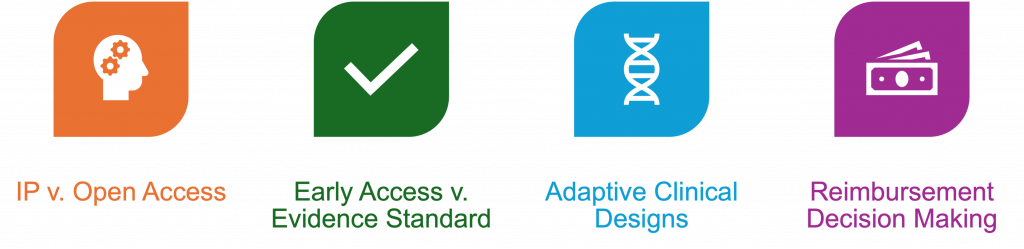
Patents, by way of negative rights, drive access inequality. It was such a fresh air to learn about alternatives like regulatory exclusivity (the right to use a product dossier for market access) as a way to reward development without locking a drug behind price. The Drugs for Neglected Diseases initiative (DNDi) is a good example of coordinated R&D filling a gap the patent system won’t. However, open science approaches to drug discovery, if not applied mindfully, can also reproduce old extractive practices. This is why frameworks like OCAP principles and Nagoya Protocol matter for cross-site and Indigenous data sovereignty in any data-sharing model.
Balancing Early Access with Evidence Standards
A critical perspective on policies like Health Canada’s Notice of Compliance with Conditions (NOC/c) allows many promising radiopharmaceuticals and biologics for early market entry. While this accelerates access, it also risks reduced rigour in evidence reporting by solely relying on single-arm Phase II trials. The ethical trade-off between speed and certainty presents challenges in patient safety and public trust. This highlights the importance of post-market monitoring (phase IV), and other Canadian reforms, such as Agile Licensing and the Advanced Therapeutic Product framework, to highlight the need for risk-based regulation.
Trial design and evidence under uncertainty
Adaptive trials appealed to me for their efficiency and patient-centeredness by reallocating participants to efficacious treatments, and stopping early when a proposed regiment does not. The STAMPEDE (a multi-arm, multi-stage trial in advanced prostate cancer that evaluated several treatment combinations simultaneously); and BATTLE-2 (biomarker-integrated trial for non-small cell lung cancer) trials demonstrate this spirit: they reassigned patients to therapies based on real-time response data. While this raises the cost of running the trial, that cost is offset by improved patient prognosis.
That same tension between innovation and evidence scarcity shows up in health economics. BC’s Personalized OncoGenomics (POG) is a good local example. While genomics-informed treatment is promising, reimbursement decisions still need to account for real uncertainty in outcomes. Adaptive pricing and monitoring helps managing such patient-reported outcomes (PROs) for responsible reimbursement. Agencies like Canada’s Drug Agency – Agence des médicaments du Canada (CDA–AMC) increasingly welcome this type of analysis to support transparent, value-based decisions.
See more
Go further: Professional Development