Categories
Uncategorized

How IKEA’s Sell-Back Program Made Our Graduation Transition Eco-Friendly

The closer I get to graduating, the more logistical (and boring) responsibilities I have to think about. I’ve have been living in the same apartment unit for more than three years with my roommate. So, we share every piece of furniture in the house which are all bought from IKEA. These include couches, dining tables, chairs, rugs, kitchen appliances, and other random things. We’re both moving out shortly, but you know how difficult it can be to sell furniture if you’ve ever used Vancouver’s Facebook Marketplace in the past. There are plenty of scammers and freeloaders, while not many who are willing to do pickups. However, as international students without a car, my roommate and I needed to find quick solutions. Yet, both of us are ecologically responsible enough to seek more sustainable options than just selling our perfectly good furniture and buying new ones. After even giving change to the costly option of moving all our furniture to our new location (thanks to Canadian gas prices), we decided to explore other alternatives—that’s when IKEA’s Sell-Back Program saved the day.

IKEA Canada Pushes Sustainability with Second-Hand Furniture Campaign  [Interview]

IKEA’s Sell-Back Program is a sustainability initiative that allows customers to sell their gently used IKEA furniture back to the store in exchange for store credit. If you are interested in selling your furniture, you just simply have to fill out the application form online by adding some photos and the name of the furniture you want to sell. After IKEA evaluates your application, they make their offer for the amount of store credit. If you decide to accept, you need to bring in the furniture to IKEA for a final inspection. Although at first this feature seemed like a dealbreaker for me, I then saw on the app that IKEA has a collaboration with TaskRabbit that can be used for transportation. If the inspection goes well, you get the store credit. The items you give are then refurbished as needed and resold in IKEA’s “As-Is” section at reduced prices. This program is perfectly aimed at promoting a circular economy in how it extends the lifecycle of IKEA products and supports the company’s environmental goals by reducing waste and the demand for new raw materials. 

Ikea's latest pitch: Bring back your used furniture to resell for store  credit | CBC News

After having done more research, IKEA’s aim to enhance its sustainability footprint and achieve a fully circular and climate-positive business by 2030 through efforts like the Sell-Back Program truly made me admire how it made its commitment to environmental stewardship an integral part of its practices.

References

Evans, P. (2018, November 16). Ikea’s latest pitch: Bring back your used furniture to resell for store credit | CBC News. CBCnews. https://www.cbc.ca/news/business/ikea-used-furniture-1.4907069

IKEA sell-back program – buy back & resell. Buy Back & Resell – IKEA CA. (n.d.). https://www.ikea.com/ca/en/customer-service/services/buy-back/

Categories
Uncategorized

Seismic Safety and Sustainability

As someone who was born and raised in Turkey, a country with several fault lines beneath it, the fear of earthquakes has always been in my community. Although my hometown Istanbul has been spared a major earthquake, the country-wide frequency of earthquakes has influenced my understanding of vulnerability and resilience from an early age, particularly following the February 2023 earthquake, which was one of the most catastrophic disasters to strike Turkey killing over 55,000 lives. Thus, I have a strong respect for preparation and sustainable methods, especially when it comes to the creation and upkeep of our built environment – “Buildings kill, not earthquakes,” goes a Turkish saying. 

Still in ruins: the 2023 Turkish earthquake – then and now | Turkey-Syria earthquake  2023 | The GuardianIntegrating sustainability with safety in building designs is crucial. This practice is not just for constructing buildings that will stand for a long time, but also for making sure that these structures can protect human lives as well as cultural heritage. Turkey is an ancient country with numerous historical sites and remains from several civilizations, ranging from the Hittites to Anatolia or from the Romans to the Byzantine Empire. Therefore, a major natural disaster in Turkey is not only a tragedy that impacts human lives but it is also a catastrophe that destroys irreplaceable remnants of humanity’s past.
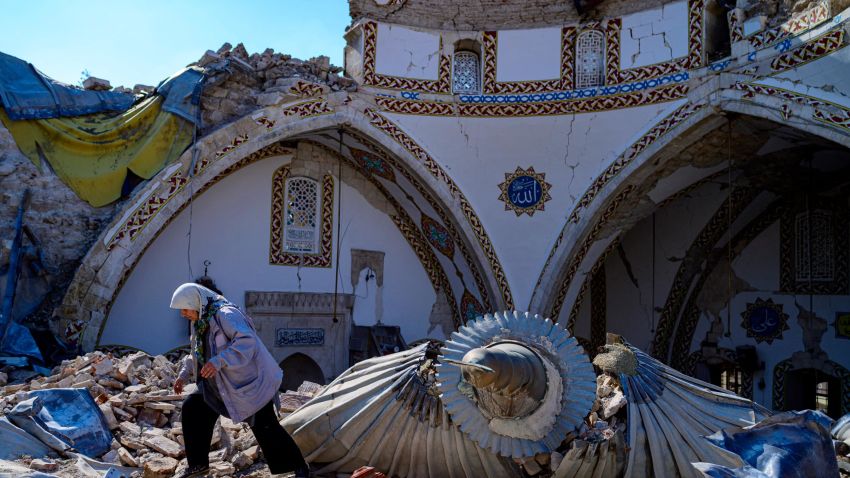
Ancient landmarks in Turkey and Syria destroyed by the earthquakeDuring my Co-op term at UBC Sustainability Hub, I had the chance to interview Tony Yang, a professor of Civil Engineering and a specialist in earthquake engineering who told me about the Museum of Anthropology’s renovation project. This project is a great example of the important relationship between seismic safety and sustainability. Professor Yang explained to me that the museum’s seismic renovation is based on the cutting-edge base isolation technology – a method where the structure of the building is isolated from earthquakes by having all of its foundations removed and being placed on a roller. This minimizes the chance of damage and protects the building’s artifacts by enabling the building to stay stationary as the ground shakes during an earthquake. What an excellent illustration of how sustainability involves not just protecting the environment but also making wise choices that guarantee the life and security of our cultural legacy. 

Museum of Anthropology to close in 2023 for seismic upgrades | CTV NewsI think we may see quite radical changes in the way we perceive our built environment if we integrate such ideas into our communities, particularly in areas that are prone to earthquakes. Amazing projects like these truly emphasize how important it is to design with long-term stability and safety in mind, not only for the present moment, furthering the point that true sustainability means protecting and preserving people and their cultural legacy. 

UBC's Museum of Anthropology's new replica building takes shape (PHOTOS)

References

Turker, A. (2023, May 2). Seismic upgrades at moa: How base isolation technology can preserve cultural heritage. sustain.ubc.ca. https://sustain.ubc.ca/stories/seismic-upgrades-moa-how-base-isolation-technology-can-preserve-cultural-heritage 

MOA Staff. (2023, December 20). Great Hall seismic upgrades + renewal. Museum of Anthropology at UBC. https://moa.ubc.ca/2020/12/great-hall-seismic-upgrades/

Categories
Uncategorized

The Physical Reality of the Digital World

Richard Cavell’s ENGL 332: Approaches to Media History was one of the most eye-opening classes I’ve ever taken at UBC. In the Environmental Media chapter, we began by investigating Indigenous peoples’ connections to land and how this reflects on their media creation and practice, as well as the climate crisis. After the discussions of older forms of media, I found it hard to see how anything from today’s media could be relevant to land and the climate crisis, given everything is now done online. Then, Dr. Cavell described how the internet is physical rather than digital. The internet and its supporting infrastructure account for around 3.7% of global carbon emissions, a number that is very similar to global air traffic.

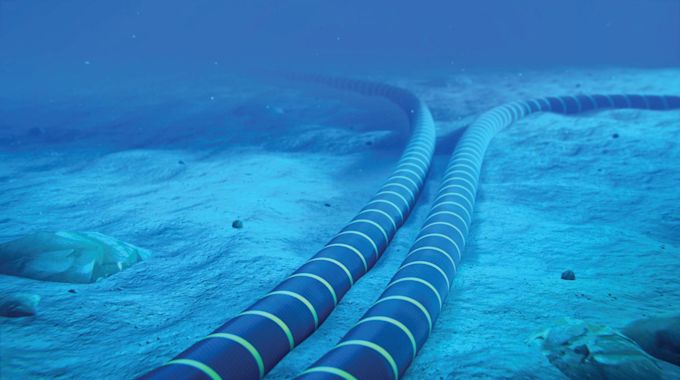
Diving Deep into Submarine Cables: The Undersea Lifelines of Internet Connectivity | Kentik Blog

We typically associate the internet with an invisible virtual environment that is floating around us. However, the internet is made up of cables, that span hundreds of kilometers, buried below the surface of the ocean. These cables transport data to the data centers, which require a constant supply of electricity to operate. This level of electricity inevitably necessitates a supply of air conditioning to keep it from overheating. Hence, these facilities have tremendous energy needs, which frequently come from power networks that rely on fossil fuels and increase global CO2 emissions. Thus, all the documents on our Google Drive from every single year of university, the hundreds of photos and videos we forgot to delete from our gallery, and the email newsletters we were too lazy to unsubscribe from really do get saved somewhere physical and are not simply kept in the invisible “Cloud”. These small things all generate CO2 every day. 

The hidden CO2 emission of your emails on the planet!

“If every adult in the UK sent one less “thank you” email, it could save 16,433 tonnes of carbon a year – the equivalent to taking 3,334 diesel cars off the road” (Griffiths, 2020).

Since the internet is so essential to modern life, it is impossible to think of lowering our dependency on it. However, almost less than 1% of these data centers get their energy from renewable energy sources, as they are heavily reliant on nuclear energy and coal. So, the answer potentially lies in changing the energy sources that power these data centers. It is possible and essential to move away from fossil fuels toward renewable energy sources like solar, wind, and hydropower. Through the establishment of renewable energy infrastructures and the establishment of incentives for data centers to transition to greener technology, we can maintain our digital lives without exacerbating the climate crisis.

References

Cavell, R. (2022). ENGL 332: Approaches to Media History. University of British Columbia. Environmental Media chapter.

FRANCE 24 English. (2017, March 3). The hidden pollution of the internet. YouTube. https://www.youtube.com/watch?v=GX8sOrz_-Fg

Griffiths, S. (2022, February 24). Why your internet habits are not as clean as you think. BBC News. https://www.bbc.com/future/article/20200305-why-your-internet-habits-are-not-as-clean-as-you-think

Lucy. (2022, December 1). Understanding the environmental impact of the internet. Nimbus. https://nimbushosting.co.uk/blog/understanding-the-environmental-impact-of-the-internet

Categories
Uncategorized

Pioneering Circular Cities: Amsterdam’s Sustainability Vision

Why Amsterdam is still the perfect city break destination | The Independent

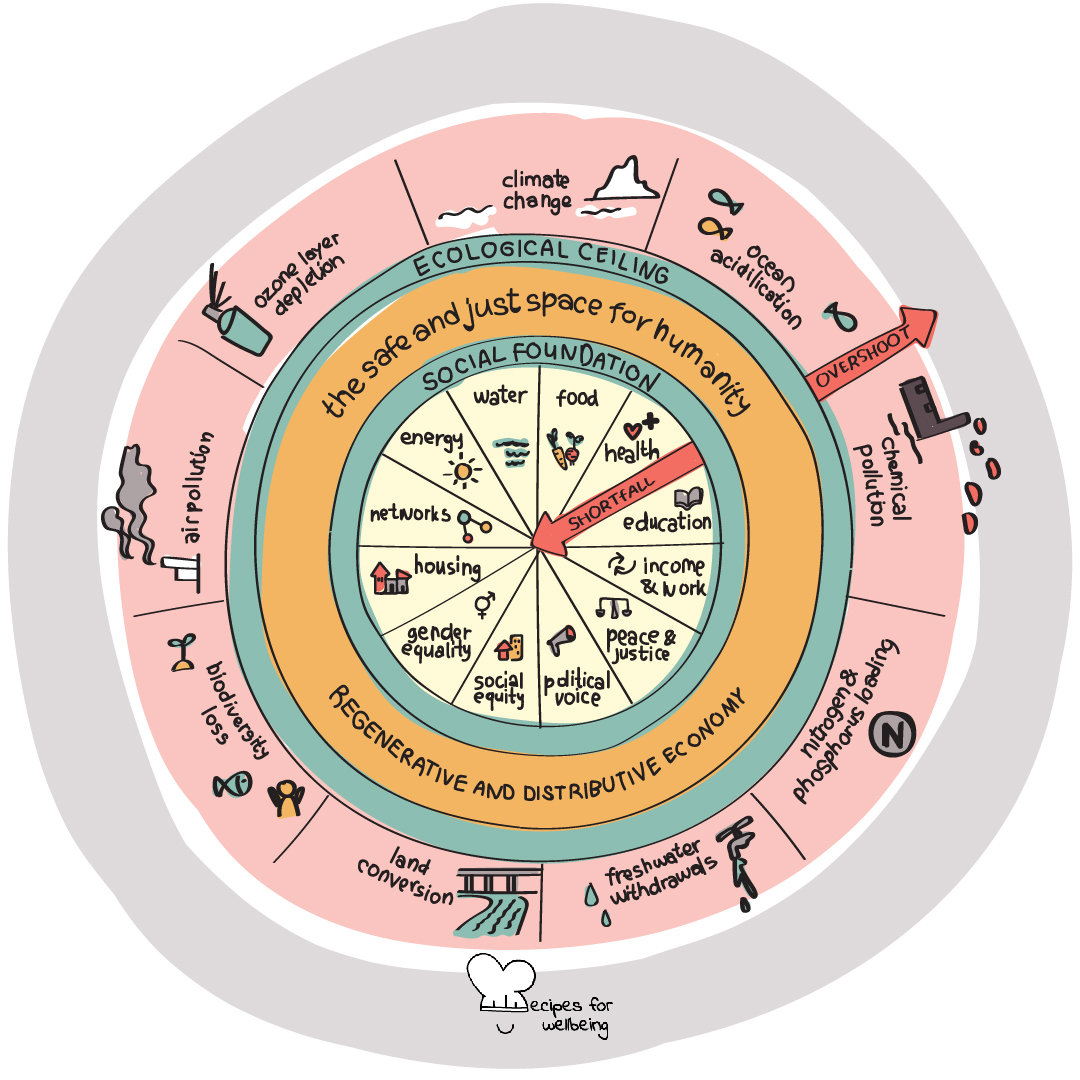
In 2020, Amsterdam announced its ambition to transition to a completely circular economy by 2050. Being the first city in history to make such a declaration, they not only received a lot of attention for the project but also sparked a lot of debate on the extent of the impact that cities may have and their respective responsibilities in society. Following their declaration, the city of Amsterdam launched its five-year plan, the Amsterdam Circular Strategy, which is based on the Doughnut Economics model developed by Kate Raworth. In a nutshell, this economic model is a strategy to promote economic progress while remaining under the ecological ceiling of nine planetary boundaries: Doughnut Economy • Recipes for Wellbeing

This doughnut model involves the focus on three value chains: 

  1. Food and Organic Waste Streams: The city of Amsterdam’s primary goals are to increase the amount of food produced locally, promote the use of sustainably produced food, and enhance the methods used to handle organic waste. 
  2. Consumer Goods: The city wants to minimize its consumption in this value chain, help its citizens use what they have more wisely, and make the most of items that are thrown away. Therefore, the basic circularity of “reduce, reuse, recycle.”
  3. Built Environment: Since such a significant transformation requires partnership, including all stakeholders is another crucial component of this shift. As a result, it is critical that the city set an example for the market to follow and share knowledge. 

The city of Amsterdam’s project is a huge step forward in urban sustainability measures. This ambitious concept integrates ecological boundaries with social requirements, challenging conventional economic models. Most significantly, the city’s project emphasizes how governance propels systemic change and raises the possibility that city-led innovations might act as catalysts for international sustainability initiatives. 

Drawing on Amsterdam’s innovative approach to a circular economy, Vancouver might also employ tactics that are appropriate for its urban and ecological setting. Vancouver has demonstrated its commitment to environmental stewardship through the use of the Greenest City 2020 Action Plan. By implementing a circular economy model similar to Amsterdam’s, they might further solidify this commitment. For example, Vancouver may adopt Amsterdam’s emphasis on sustainable consumption and local food production by concentrating on localizing food systems to lower carbon footprints and boost community-based agriculture.

For more detailed information, check out:

References

Policy: Circular economy – city of Amsterdam. (n.d.). https://www.amsterdam.nl/en/policy/sustainability/circular-economy/

Aiming for 100% circularity: Amsterdam. How to Build a Circular Economy. (2024, January 9). https://www.ellenmacarthurfoundation.org/circular-examples/shaping-a-sharing-economy-amsterdam

Baumert, N., & Commins, J. (2023, July 21). Cities as drivers of sustainable transformation: Lessons from Amsterdam’s transition towards a circular economy. McGill Business Law Platform. https://www.mcgill.ca/business-law/article/cities-drivers-sustainable-transformation-lessons-amsterdams-transition-towards-circular-economy#:~:text=Amsterdam’s%20ambition%20to%20become%20circular%20by%202050&text=In%20broad%20terms%2C%20the%20concept,lifecycle%2C%20from%20design%20to%20disposal.

Categories
Uncategorized

Eating is Activism

James Bowden works the Kernza® field at The Land Institute, Salina, KS. Photo by Amy Kumler.

In sustainability, few names are as synonymous with environmental activism and ethical practices as Patagonia. My interest in the company, re-stemmed from the example we discussed in class about the decreased usage messaging their campaign focused on with the “DON’T BUY THIS JACKET” image, led me to look further into their venture into the food industry: Patagonia Provisions. The company extends its commitment to sustainability by endorsing regenerative agriculture. Patagonia Provisions has taken a leading role in demonstrating that businesses can thrive while positively impacting the planet. 

“Regenerative organic farming goes beyond sustainable. It steadily improves the health of the earth and everything that lives on it, including us.” By addressing many of the sustainability issues of the food industry, regenerative agriculture, with its emphasis on restoring soil health, offers tremendous benefits that go beyond producing more nutritious food. It also represents a significant step in the fight against climate change. You may go to their website to learn more about the science underlying this agriculture system and its impacts on the planet: https://www.patagoniaprovisions.com/pages/regenerative-organic-agriculture

For businesses looking to integrate sustainability into their operations, Patagonia Provisions is a leader to follow. Their masterful approach to sustainability marketing creates their brand identity and drives consumer preference. Their strategic choice of disseminating rich information through narratives on social media, websites, and word-of-mouth helps them stand out in the market and solidifies their reputation as a fully transparent business (Barcelona, 2011). Additionally, they maintain brand loyalty by ensuring that customers’ purchases result in unique and tangible benefits, particularly for cautious green consumers (Barcelona, 2011).


Each product in Patagonia Provisions’ online store not only promotes regenerative agriculture methods but also demonstrates the company’s dedication to environmental responsibility. From dishes prepared with regeneratively farmed ingredients to their Long Root Ale, a beer that is brewed with Kernza (a perennial grain that nourishes the soil it grows in), Patagonia Provisions provides customers with opportunities to contribute to a more sustainable world via their food choices. They also sell organic pasta, that is enhancing soil health, and wild salmon, that is supporting the preservation of natural ecosystems. These products are way more than mere food because “Eating is Activism”. 

References

Barcelona, Ricardo. (2011). New Tools to Capture the Elusive Green Consumer: Reviving a Revolution. IESE Insight. 21-28. 10.15581/002.ART-1891. 

Categories
Uncategorized

Embracing Zero-Waste: Notpla’s Revolutionary Approach to Sustainability

Businesses throughout the world are stepping up to meet the challenge in an era where commitment to sustainability is not only valued but also demanded. A notable illustration of this green revolution is Notpla, a London-based firm creating a name for itself in the industry with its creative, waste-free packaging solutions. Notpla’s idea is simple yet revolutionary: using seaweed and plants to create packaging materials that are not only biodegradable but also edible. Notpla’s creative method of addressing the packaging industry’s problem of sustainability has transformed the approach and offers a wonderful illustration of how businesses are pivoting to meet increased customer demand for eco-friendly products through innovative ideas (Nidumolu et al., 2009). Some of their packaging is edible, some are biodegradable, while others dissolve in water. In the end, all of their options vanish into nature, resulting in an exemplar of perfect circulation. Therefore, they set themselves apart from other businesses with their creative sustainable product design by fully utilizing the force of nature. By being an innovator in sustainability marketing, the firm not only appeals to environmentally conscious consumers but also shows that environmental responsibility and financial success can coexist (Nidumolu et al., 2009).

The company’s most interesting offering that is available for purchase is the edible sauce pods (https://notpla.shop/)- truly an incredible testament to the potential that lies within sustainable innovation. These single-dose olive oil pipettes are “Easy to open with a simple nip, twist and gentle squeeze of the nozzle. Perfect for drizzling some olive oil over your pizza, pasta, salads or vegetables, in restaurants, at home or on the go.”.

Other products available for purchase now are the regular food boxes and trays – of course with the twist of being of having bioplastic-lined takeaway packaging instead of plastic. 

As each box is coated with seaweed, they have the water and grease resistance a regular plastic-lined packaging would have. So, they are usable for a variety of applications for hot, cold, wet, and dry foods. They are home compostable and recyclable.

Other than what is available right now, they are prototyping and developing many other alternative packaging solutions. If you visit their website at https://www.notpla.com/, you can see their projects on disappearing bath oil sachets, edible energy gel pods, ocean paper, and so on!

References

Nidumolu, R., Prahalad, C.K., & Rangaswami, M.R. (2009, September). Why sustainability is now the key driver of innovation. Harvard Business Review. https://hbr.org/2009/09/why-sustainability-is-now-the-key-driver-of-innovation

Categories
Uncategorized

Israel-Palestine Conflict Exposes the Environmental Cost of Military Actions

As the Israel-Palestine conflict has recently re-escalated, it is clearer than ever before how war and sustainability are intertwined. Only the two months of military operations in Gaza following October 7th, without accounting for any previous events in the last 75 years of this conflict, have shown enormous levels of carbon footprint that exceed the yearly emissions of over 20 climate-vulnerable countries. This startling discovery highlights the frequently overlooked effects of the conflict on climate change and the necessity of holding nations with significant military emissions accountable.

A staggering 281,000 metric tons of CO2 were released, with most of the emissions reportedly coming from ground invasions and aircraft bombardments. This kind of emission damages the ecosystem irreversibly, yet no army or government is held accountable for the massive harm caused by these kinds of military operations. The environmental impact goes beyond CO2 emissions since the Israeli embargo and repeated bombardments exacerbated concerns such as water scarcity, pollution, and agricultural devastation. Another terrible reality of the warfare is that the repair of Gaza’s destroyed structures is predicted to produce at least 30 million metric tons of CO2 (equal to New Zealand’s annual emissions). This scenario demonstrates how environmental degradation caused by war is cyclical, with rebuilding efforts itself playing a major role in contributing to climate change. As the entire world works to reduce the effects of climate change and improve standards in all fields, it is perplexing to see how we fail to consider the environmental ramifications of military activities and war.

In today’s free market, businesses can be held responsible for not adhering to ethical principles in their business practices or workplace cultures. This begs the issue of why nations, like Israel, are not subject to the same standards of evaluation and accountability for their actions. Continuing to evaluate this issue in the context of business ethics, the consequentialist ethical theory holds that the morality of an activity is determined by the consequences it causes; for example, favoring profit over consumer well-being is immoral. Utilitarianism, a type of consequentialism, emphasizes that the correct behavior in each scenario is the one that maximizes well-being over harm. As a result, the perplexing reality of approving and carrying out extraordinarily damaging military actions without being held accountable grows. This ongoing conflict demonstrates an important lesson: in addition to the tragic human casualties and damage to infrastructure and land, war has far-reaching environmental consequences.


References

“Israel’s Blockade of Gaza Creates an Environmental Crisis.” The New Arab, The New Arab, 24 Oct. 2023, www.newarab.com/features/israels-blockade-gaza-creates-environmental-crisis.

Lakhani, Nina. “Emissions from Israel’s War in Gaza Have ‘Immense’ Effect on Climate Catastrophe.” The Guardian, Guardian News and Media, 9 Jan. 2024, www.theguardian.com/world/2024/jan/09/emissions-gaza-israel-hamas-war-climate-change.

Categories
Uncategorized

Adapting to a New Reality: UBC Medical Students for Climate Action

The connection between human health and climate change is at times overlooked, but not by the student group UBC Medical Students for Climate Action. Montana Blum, Lise Van Amerom, Keiko Patterson, and Sarah Poteryko are four students who first joined together for a study project and saw a lack in their curriculum addressing the way that the world is changing: climate change. They thus established their own club, where they have been actively addressing the issue and effectively incorporating climate change into their medical curriculum via a variety of educational modules. These modules not only emphasize the often overlooked need to adapt all spheres of life to the effects of climate change, but they also illuminate a more general reality: a multifaceted and interdisciplinary approach is needed to effectively adapt to climate change. 

These students, who all have diverse backgrounds and experiences, approached the creation of their modules—which focus on population health, health threats, impacts on health, sustainable healthcare, and connecting with nature—from various perspectives. These classes cover a wide range of topics, from the consequences of forest mitigation on mental health to the effect of air pollution on respiratory diseases. In conclusion, it fundamentally calls for a shift in the method by which healthcare professionals approach patient care. They are asking them to consider things that they haven’t had to consider before when providing care for patients, such as asking if the patient has ever been exposed to asbestos, chemicals, or wildfires. 

Climate change exacerbates previously existing problems. Therefore, additional fields, like urban planning to adjust to the risk of changing weather conditions or agriculture to contend with altered environmental structures, should follow the medical field in reevaluating their approach and currentness. As a result, as these students illustrated, the traditional discussions of climate change are no longer limited to environmental science or policy domains because it is evident that the issue is fundamentally a social one that affects health in addition to the environment. This goes beyond merely improving the medical curriculum. It is actively adapting to a reality that is changing rapidly. This project is an appeal to individuals, corporate leaders, legislators, and educators to recognize and confront the widespread effects of climate change in every aspect of society.

If you would like to get more in-depth information about the project, here is a link to their interview: https://sustain.ubc.ca/stories/ubc-medical-students-write-climate-change-curriculum-0

UBC Medical Students for Climate Action: https://www.ubcmedicalstudentsforclimateaction.com/

Categories
Uncategorized

Hello world!

Welcome to UBC Blogs. This is your first post. Edit or delete it, then start blogging!

Spam prevention powered by Akismet