Categories
Uncategorized

Invisibility Cloaks: Fact or Fiction?

The idea of invisibility has been around in mythology and fiction for thousands of years but the Harry Potter books and
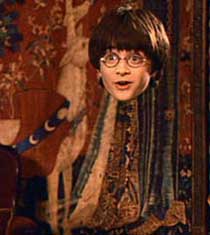
Invisibility Cloak in Action (Photo Credit: Warner Bros.)

movies brought the idea of an Invisibility Cloak into the public eye.  Everyone has thought at some point about what possibilities being able to make themselves invisible would present.   But invisibility is only the stuff of fiction.. right?

 Well, right now researchers haven’t quite got to the level of Harry’s cloak but they’re certainly getting there.  There are many different approaches that are being taken towards this technology and I’m going to give an insight into a few of them.

 The first and currently most effective technology is called optical camouflage technology.  This involves a camera filming what is behind an object and this image is then projected onto the front of the object, in effect allowing you to see ‘through’ the object.  This is similar to blue screen technology used in Hollywood but in this instance what you are wearing acts as the blue screen rather than you standing in front of one.  It is just like the technology seen on James Bond’s Aston Martin in the movie Die Another Day. 
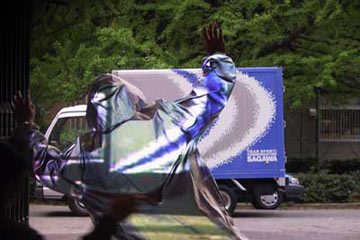
'Invisibility Coat' (Photo Credit: howstuffworks.com)

 Researchers at the University of Tokyo are leading this field and have created an ‘Invisibility Coat’ that resembles a rain jacket but is made out of retro-reflective material (that reflects and refracts the light back at the source) .  It is made from 50 micron beads that are lined up and tightly packed together.  Because the beads are so small, you can still project an image onto it regardless of how it is wrinkled.  There are many potential uses for the technology such as using it in car interiors to eliminate blind spots and be able to see right ‘through’ to the surroundings.

News Article on the Invisibility Coat

One Step Beyond: New Camouflage Technology Video

 Adaptiv technology, created by BAE systems is designed to conceal military vehicles.  It allows the vehicles to mimic the temperature outline of it’s surroundings.  This can make the vehicle invisible to both night vision systems that see infrared light and heat seeking systems which is clearly a major advantage on a  battlefield.  The technology works by projecting temperatures onto the special outer layer of the tank.  A database of recognizable outlines has been created and a tank can be made to look like anything from a cow to a truck when seen through an infrared camera.  Researchers are now working on making this technology work in other wavelengths, especially visible light, so as to create ‘true’ invisibility.  BAE estimate that the Adaptiv technology could go into production within 2 years.  Further reading and video can be found here.

 Finally, the technology that is most likely to be able to create the effect of Harry’s invisibility cloak are ‘meta-materials’ with negative refractive indexes that are being worked on by many researchers.  Meta-materials have the ability to manipulate light and can in effect bend light around them.  Last November Scientists managed to create flexible meta-materials that bent visible light for the first time.  Currently they can only be made on a small scale but this was a huge step forward.  Interestingly these meta-materials may also be used to create lenses that “can zoom to the micron level, making it possible to spot germs, chemical agents and even DNA, using basically a pair of binoculars.”

Further reading: BBC article on this finding, Wired.com article


References:

http://science.howstuffworks.com/invisibility-cloak.htm#mkcpgn=fb6

http://www.wired.com/dangerroom/2011/09/invisibility-cloak-tanks-cows/

http://en.wikipedia.org/wiki/Metamaterial

Other references as links in the article above.
 

Categories
General

Blame Education

For my blog, I wanted to share with you some of Ken Robinson’s views on how education kills children’s creativity. 

We all know how important it is to get an education. After all, we are raised to believe that we will not obtain a job without one. Our every step seems to be already planned out: first, go to school and then begin a career. But we do not know what the future will bring. Then why should we plan for the next 40+ years of our lives when realistically we do not know how the world will look in five years?


   Schools are teaching children to meet the future by what they did in the past. Mathematics, languages, and humanities were considered more important than the arts. However, this method is not practical anymore, for the world has drastically changed. The arts such as music, theatre, and dance now rival the once important subjects. Also, in the past kids went to school because they knew they would get a job afterwards. But nowadays, kids do not believe that they will secure a job once they finish high school or university. This is largely due to the struggling economy and thus observing how unemployment rates have sky rocketed. Therefore, what is the point of going to school if the probability of getting a job is not very high?


Robinson defines creativity as the original ideas that have value. What happened to adults’ creativity? The saying “making mistakes helps you learn” seems to be lost in adults. This is because today’s society penalizes people’s mistakes so harshly that adults are afraid to be wrong. And as a result their pure sense of creativity is lost. On the other hand, have you noticed what a child does when they are uncertain the answer? They will say something, anything that they believe to be correct. They are not afraid to take chances.


At birth, every parent has big dreams for their child. For example, they may want their child to achieve the highest academic standing in school. However, they fail to realize that children are naturally very creative and innovative. If a child is struggling in school, many parents think that they have a medical problem. For example, many of these children are diagnosed with Attention Deficit Hyperactivity Disorder (ADHD). Often times, they are required to take potentially harmful medications like Adderall and Ritalin to help them focus and calm down. But is this the solution? Is it their fault for being so distracted? Probably not. Children are surrounded by a flood of exciting things to do, like watching TV, going on the computer, or playing with iPhones; as such, to them, the subjects they learn at school are boring and pointless. And yet society is still penalizing children for getting distracted during school. Instead they should be reworking how the curriculum is taught. These medications deaden children’s senses, making them unable to fully be themselves; thus their creativity is being killed.


In addition, the structure of the education system restricts the potential of some children. For example, children learn in a variety of ways. Younger children may be smarter than older children, yet they are strictly placed into grades based on their age. Also, some children learn better at night than in the morning, and some children learn better on their own as opposed to working in groups. Our education system requires a strong level of conformity from children. Furthermore, children spend ten years in school programmed to think that there is just one answer to a problem. They steadily lose the ability to think outside the box.


Whether it is trying to find a quick fix for a distraction problem or the basic structure of how schools are run, children are not getting the individual attention they require. Robinson says that it is time for us to “…[see] our creative capacities for the richness they are and [see] our children for the hope that they are.”


You Tube Video:

How Can We Nurture Creativity In Educational Contexts?


Reference:

Robinson, K. (2006). Do schools kill creativity? Retrieved November 2, 2011, from


Categories
Course Reflections Issues in Science Public Engagement Science Communication

“A tablet a day, and I was limitless.”

Source: Film O Filia


If someone approached you claiming their product would allow you to use 100% of your brain, would you buy it?


Source: National Institute of Mental Health

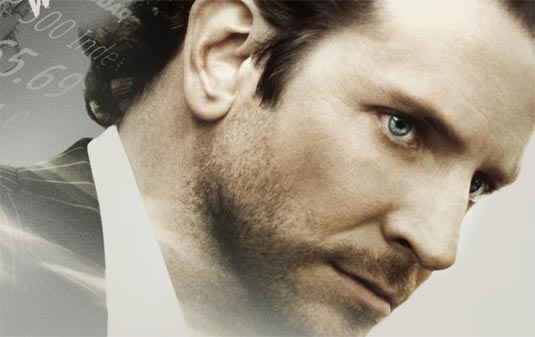
You are probably familiar with this scenario if you watched the thriller ‘Limitless’, released earlier this year, starring Bradley Cooper. The plot of ‘Limitless’ is based on one of the most commonly perpetuated ideas in society, that we use only 10% of our brains (this number varies depending on who you ask). But is this science fact or science fiction? Before you aspire to become an all-encompassing genius like Bradley Cooper in the film, let’s let science speak for itself.


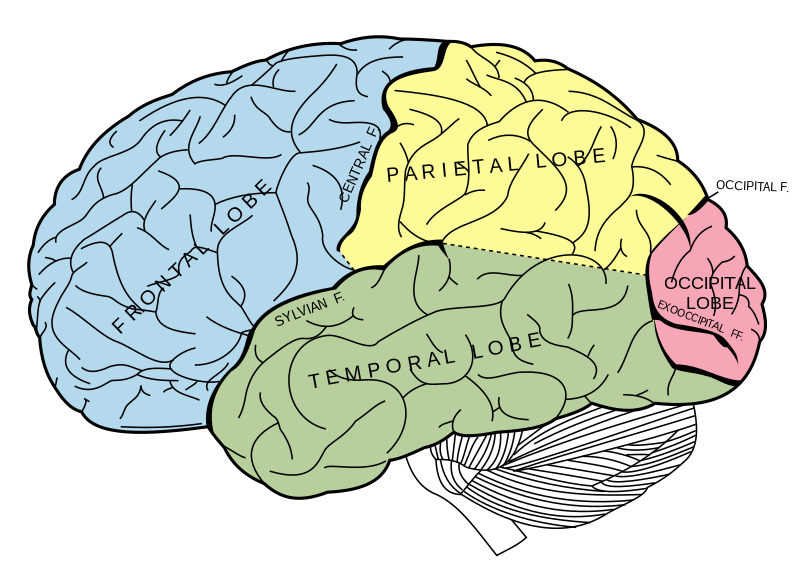
The human brain is the most complex organ of the body and controls every aspect of our lives. It weighs roughly 1.4 kg, and uses a whopping 20% of all the food energy we take in. Scientists have divided the brain into many sections based on the functions they perform. These are some of the major brain lobes and their function:

-Frontal Lobe: reasoning, planning, parts of speech, movement, emotions, and problem solving.

-Parietal Lobe: associated with movement, orientation, recognition, and perception of stimuli.

-Occipital Lobe: associated with visual processing.

-Temporal Lobe: associated with perception and recognition of auditory stimuli, memory, and speech.

This is by no means an exhaustive list, as these lobes contain several sub-divisions, which are known to perform even specific tasks.

Source: Mysid

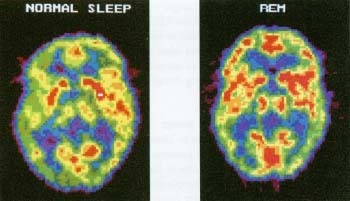
Evidently, these divisions compose the entire brain, not a mere 10% of it. What is true then, is that we may not use all parts of our brain at the same time, but every section of the brain is necessarily used at some point to perform certain tasks. We know this to be true by studies of brain damage. When almost any part of the brain is damaged, there is always a loss of abilities. Furthermore, brain-imaging technologies have shown several areas of the brain (more than 10%) to be active at the same time under many circumstances, such as during sleep. This fact alone is enough to debunk the notion of using 10% of our brains as a myth by default.


Source: Human Diseases and Conditions

So, despite how much science has progressed in studying the brain, most people still dwell in ignorant bliss. Perhaps because advertisers and the media prey on them by stating this phrase as scientific fact. Shockingly, even people who profess scientific background take part in spreading this misinformation. The truth is, this is a misquote that has gone viral, and is absolutely misleading people as science.


Let’s focus on the opening question.


There do exist substances, such as certain drugs or functional foods that can improve or enhance mental functions. One such substance that you may be familiar with is the caffeine in coffee or energy drinks, which improves memory and concentration. Nonetheless, based on the claims of the person, it would be wise to refuse their offer, because truly humans already use 100% of their brains.


Further reading:

http://faculty.washington.edu/chudler/tenper.html

 http://en.wikipedia.org/wiki/10%25_of_brain_myth

Categories
Environment Public Engagement Science in the News

“Doomsday” Pushed Back: Comet Elenin Desintegrated

A large comet spanning 3-5 km in width, large enough to have severe consequences if it had crash landed on Earth’s surface. Theorists hypothesized that it would be similar to the events that led to the extinction of dinosaurs 65 million years ago. These events may include unnatural drop in Earth’s atmospheric temperature, nuclear winters, and decreased sunlight.


http://en.wikipedia.org/wiki/Impact_event

A comet is made of rock, ice, dust, and organic compounds and can be several kilometers long in diameter. However, comets are fragile and can be broken into smaller pieces fairly easily. NASA noted that comet Elenin flew within 75 million kilometers of the sun and broke apart. As the comet approached Earth, it was only a cloud of debris, only visible through a telescope.


Don Yeomans of NASA’s Near-Earth Object Program says that the comet won’t be back for another 12,000 years. He noted that there has been hype on the internet about the comet and the consequences of it entering Earth. Yeomans said that in scientific reality, the comet is incredibly miniscule to have any impact on Earth’s gravitational pull to affect any environmental changes on Earth. The comet passed Earth at a distance that is ninety times the distance of the moon, and its mass was one-hundredths the size of the moon. If anything, the moon is currently exerting significantly more environmental changes than Elenin.

Image credit: NASA/JPL-Caltech


Maybe this event was nothing we should’ve been scared about in the first place. Only time will tell if the next space matter heading towards Earth is large enough for the hypothesized phenomena that were attributed to this comet.


Comet Elenin heads towards Earth


Further Reading:

http://thewatchers.adorraeli.com/2011/10/25/remains-of-comet-elenin-maybe-spotted/

http://www.jpl.nasa.gov/news/news.cfm?release=2011-135


Spam prevention powered by Akismet