Categories
Biological Sciences Final Project Interview Project Issues in Science

DNA, Prepare To Be Eaten!

DNA Uptake
Can you imagine working on something that is neither a plant nor an animal? Dr. Rosemary Redfield makes it her mission to study bacteria. Too small to see with the naked eyes, bacteria are unicellular microorganisms that do not have organelles or a nucleus. Some bacteria can be harmful to humans, whereas others can be beneficial. For example, some bacteria cause infections such as a strep throat whilst others aid in our digestion.


Many scientists commonly believe that it must be beneficial for bacteria to incorporate  DNA sequences into its own genome. They believe that this process of acquiring the DNA from the environment exists to make new random combinations of genes. These new combinations would replace the genes currently residing within the cell. However, Dr. Redfield did not simply accept this theory to be true; she began to question exactly what the purpose behind this process is. To her, the idea that the bacteria would take up genes lying around in the environment is not probable. One possible explanation is that the foreign DNA is left behind by dead cells; thus, they are unlikely to be useful. Dr. Redfield proposes that regardless of whether the DNA uptake will be beneficial to the bacteria or not, the accumulation of the DNA sequences in the cell would still occur.

The Redfield Lab

Dr. Redfield hypothesized that the bacteria were either making new combinations of the genes by accident or it could have been a side effect from another important process. Nevertheless, Dr. Redfield believes that the bacteria uptake DNA for food, which is a radical idea for many scientists.
Audio clip: Adobe Flash Player (version 9 or above) is required to play this audio clip. Download the latest version here. You also need to have JavaScript enabled in your browser.


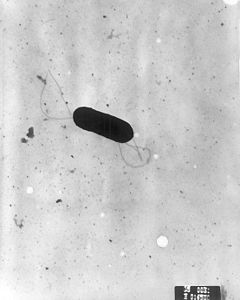
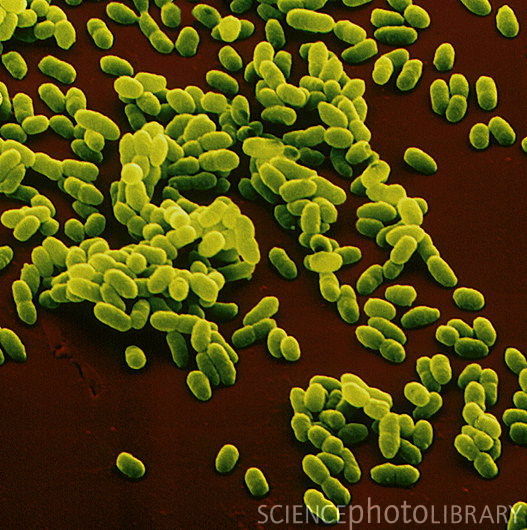
Haemophilus influenzae bacteria By SCIENCE PHOTO


To test her theory, Dr. Redfield needed to choose a type of bacteria that were “picky eaters.” Most bacteria do not have a preference for the DNA sequences that they uptake. However, she found two unusual types of bacteria that turned out to be picky eaters: Haemophilus influenzae and Neisseria gonorrheae. They both have a preference for the specific sequences of the DNA that they will accumulate; and these chosen sequences are similar to their own.


https://www.youtube.com/watch?v=LoQ16P0K4b0&feature=g-upl

How is Dr. Redfield’s research relevant to you?
Her research probably will not impact you drastically in your daily lives, but that does not mean that it will never affect you in the future. Scientists are now interested in how and when bacteria are able or unable to reproduce. Once they discover the types of DNA the bacteria eat and how they acquire their food, scientists will be able to control their growth.

Further research on this field will prove to be very essential for medical purposes.The knowledge of how bacteria work is crucial to humanity. Bacteria are all around us and they deserve our time for they can be beneficial, and yet harmful to our society.
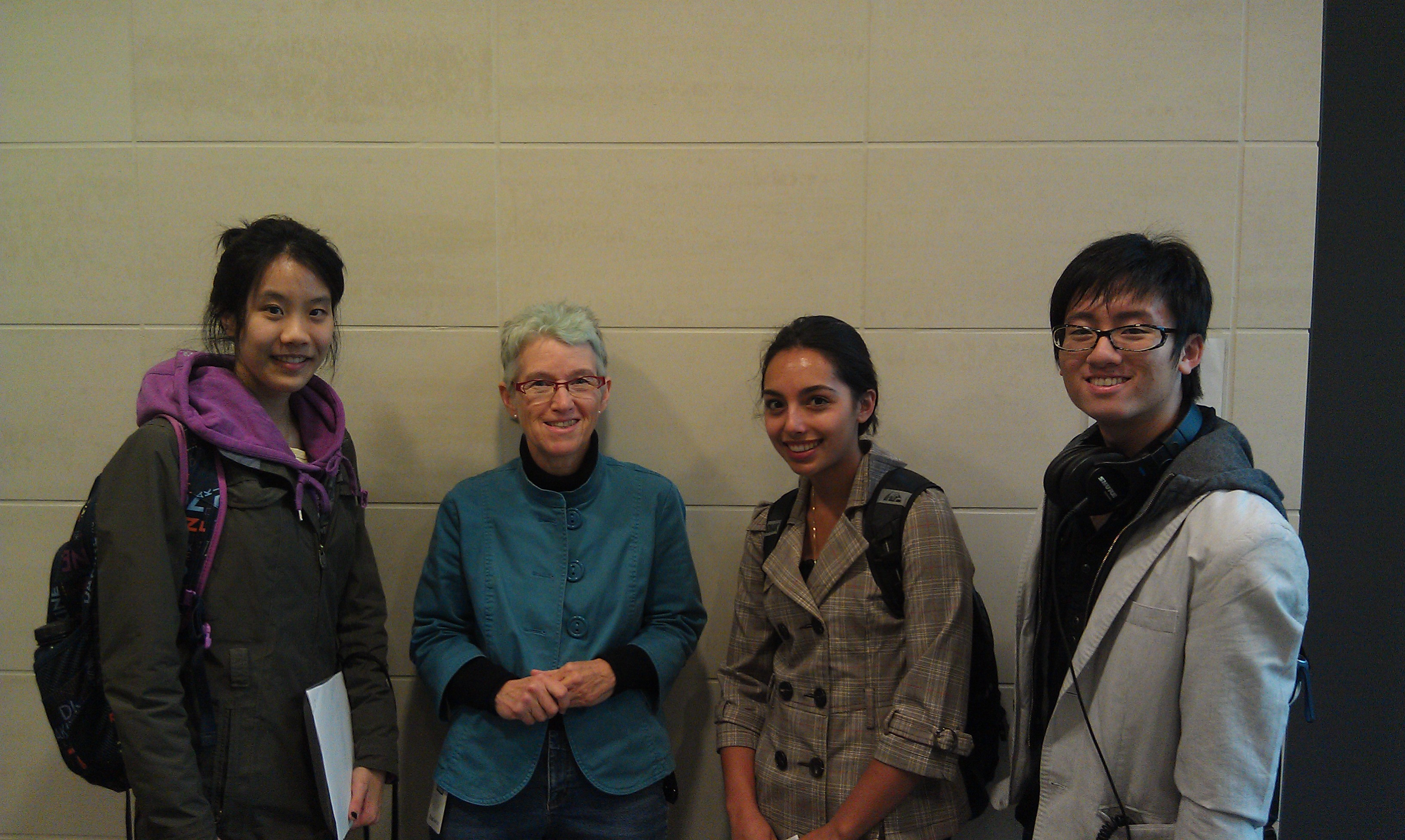
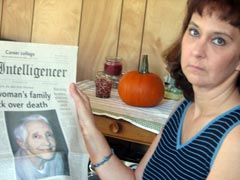
Photo with Dr. Rosemary Redfield Taken By: Hanna Oh at The Life Science Building


Credits for Podcast:
Script written by: Hanna Oh, Cha Tumtaweetikul, Jacyln Wiebe, Steven Xian
Interviewee: Dr. Rosemary Redfield
Narrated by: Hanna Oh, Cha Tumtaweetikul, Jacyln Wiebe, Steven Xian
Soundtrack credits to: suonho, Puniho, FreqMan, mansardian, BristolStories, digifishmusic, milton. and Setuniman.
Editted by: Steven Xian
Equipment and advices: Bruce Dunham, Eric Jandciu, Jackie Stewart, Andrew Trites from SCIE300.


Resources:
We would like to thank Dr. Rosemary Redfield for her interview and her Uptake Video animation and also the SCIE300 professors and teaching assistants: Bruce Dunham, Eric Jandciu, Jackie Stewart, and Andrew Trites for their advice.
 

For References and More Information, Check out Dr. Redfield’s Lab:
http://www.zoology.ubc.ca/~redfield/index.html
Categories
Biological Sciences Issues in Science Science Communication Science in the News

Are YOU a snake-lover or an ophidiophobia (snake-phobia)?

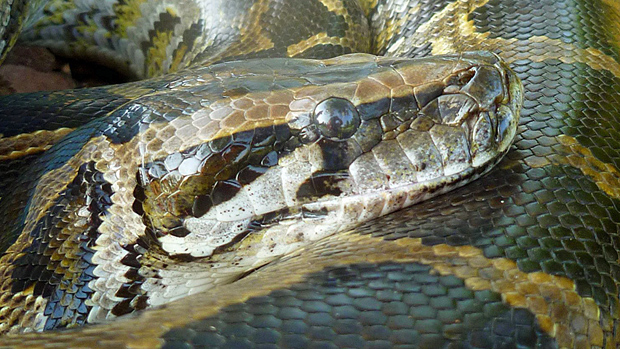
A picture of Burmese Python. Source: CBC News

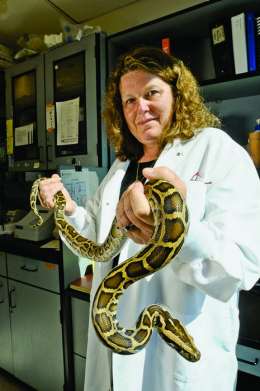
Are snakes one of your favourite animals or are they your least? Although some may adore them, I am among the people who are terribly afraid of them, or what people call an ophidiophobia. Who would have known that, “pythons’ big heart [could] hold clues for human health[?]” (The Associated Press). Scientists now learned that when the pythons undergo digestion, their hearts expand to the size similar to that of an Olympic athlete. How is this relevant to human? Scientists now look for clues from the pythons’ powerful heart muscles that could potentially benefit human’s hearts. A molecular biologist at the University of Colorado in Boulder, Leslie Leinwand, found that the pythons’ hearts expand because they are building up more muscles.

There have also been studies done on the pythons’ digestion pattern. For instance, reptile biologists observed that Burmese pythons could survive for almost a year without food. Furthermore, once they resume the meals, their metabolism would increase up to more than 40-fold. After digestion, their organs, except the brain, would grow larger in size. Leinward notices this distinct observation and tries to make a connection to human heart diseases. For people with chronic high blood pressure, their hearts are not able to circulate the blood as well as normal hearts. However, vigorous exercise might be able to enhance the recovery and strengthen heart muscles just like those of the pythons.

Dr. Leinwand working with the Python. Credit: Thomas Cooper

How is the research being conducted? Dr. Leinwand and her team worked with baby pythons to study their internal organs in details. Dr. Leinwand came to a conclusion that for these pythons, the fatty acids increase up to as much as 50 times during digestion. Theirs cells grow bigger, thus resulting in a larger heart size. Python’s blood is also full of fat, mainly three specific fatty acids in a particular combination, that enables this capability. Do these fatty acids have negative impacts on their hearts’ conditions? No, instead, they act as the heart protection. The pythons can rapidly burn the fat, turning it into fuel for energy. In contrast, humans’ metabolisms are not that efficient so the cells would accumulate fat and the accumulation might contribute to various heart diseases. As for the pythons, they already have enzymes to protect their hearts from damages during digestion.

A video on Dr. Leinwand’s interview in her laboratory.

One of the main researchers, Cecilia Riquelme, studied the applications of this knowledge. First, she bathed a rat’s heart cells with the plasma, blood cell, from the snake. The result turned out that the content of the python’s blood made the heart cells grew bigger and stronger. Researchers now continue to study that if putting fatty acid from the pythons’ blood into the rats would lead to any beneficial growths.

This is relevant to us because if these rats could benefit from the fatty acids and have their heart muscles strengthen, it implies that the pythons could be the key in helping human with heart diseases. Pythons may after all become our heroes!

Further Resources:

http://www.newscientist.com/article/dn21099-a-shot-of-snake-blood-makes-the-heart-grow.html

References:

http://www.cbc.ca/news/technology/story/2011/10/28/python-heart.html

http://cen.acs.org/articles/89/i44/Fatty-Acids-Heart.html

http://www.voanews.com/english/news/health/132940113.html

Categories
Biological Sciences Science in the News

Contamination in Maple Leaf Products?

If you think back of the summer in 2008, remember the contamination found in Maple Leaf Products? Yes that’s right, it was Listeriosis. The Listeriosis victims and families are now waiting for compensation after they have been sick from eating tainted meat. This largest food recall outbreak in Canada happened three years ago killing about 23 people and injuring many more. The victims were contaminated with the bacterium Listeria. One of the victim’s daughters, Francis Clark, reported viewing her mother became short of breath and suffering from the illness. The settlement for these victims was out-of-court and was declared in January 2009.  Michael McCain, CEP and president of Maple Leaf, payed about up to $27 million to the victims suffering from Listeriosis in the summer of 2008. None of the victims have received the money yet due the to the wait for Court approval.

Source from CBC News

“The reason for the settlement was two-fold: the families didn’t want to go through a long, drawn-out court case, which only increases the hurt and the agony and pain as the result of somebody’s death.

“And in fairness to the company involved, it didn’t want to go through a long, drawn-out court case that’s going to be bad for its reputation and costly. So you come to a settlement — but a settlement so that the money can get out there in a timely way. And this long after the fact is not timely at all.”

Source from The Vancouver Sun

The symptoms of Listeriosis would commonly appear after two to 30 days after the consumption of the product. However, it can also take up to 90 days for the symptoms to show. The average age of the people who were diagnosed with Listeriosis was 67. The Maple Leaf products is served widely among residential homes or elderlies. Young children, pregnant women, and elders are most vulnerable to getting sick due to their weak immune system.

McCain apologized to those victims and families. The company took full responsibility of their actions and this has saved their reputation as they confronted the situation heads-on rather than putting blames on others.

Source from The Globe and Mail

Listeriosis is the disease caused by Listeria monocytogenese. This bacterium exists in natural environment. The products that are contaminated with Listeria are hard to be detected. Thus to prevent the disease from further harming people, food product including farm products must be carefully detected by food inspection.

Source from Wikipedia

I believe we have to watch out for what we eat and beware there are more bacteria out there that could harm or even lead to severe illnesses. The best way to prevent any contaminations is to simply wash the raw food material thoroughly with water and avoid eating raw meat. Keeping up with the current events will also help us stay alert.

Videos on Listeriosis:

https://www.youtube.com/watch?v=p_S5d6OQCBM

Further Resources:

http://www.cbc.ca/news/story/2011/06/23/f-listeria-faq.html

References:

http://www.cbc.ca/news/canada/story/2011/10/08/pol-listeriosis-claim-payments.html

http://www.vancouversun.com/news/Maple+Leaf+pays+settle+listeriosis+suits/1090999/story.html?id=1090999

http://www.theglobeandmail.com/report-on-business/small-business/sb-growth/day-to-day/the-best-legal-advice-is-often-an-apology/article1889248/

http://www.ncbi.nlm.nih.gov/pubmedhealth/PMH0002356/

Categories
New and innovative science Science Communication Science in the News

The “Robot Legs,” LOPES

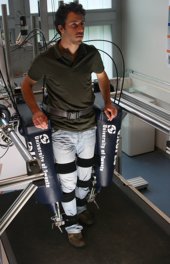
Dutch scientists have came up with the invention of robotic legs for stroke patients. LOPES, or the Lower-extremity Powered ExoSkeleton, helps improve the movement of the legs and for the patients to recover their natural steps. Spinal injury patients who have restricted movements have been given test trials. This device may be released to rehabilitation centres across different countries next year.

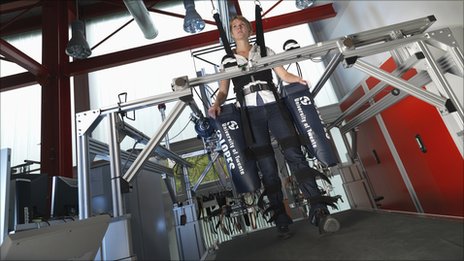
LOPES Supporting a patient; Source BBC News

Engineers from the University of Twente in Enschede, Netherlands, developed this device to help and support the patients while on treadmill in rehabilitation centre. The machine operates by either walking for the patient or by assisting support on either side of the patients’ legs. Furthermore, if the patient is not moving right, LOPES can also detect their mistakes.

 
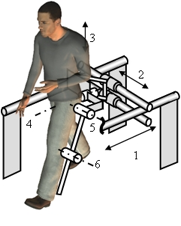
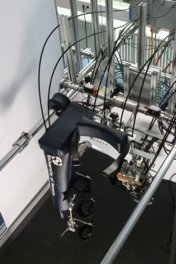
LOPES model

One of the testers of this device, Petra Hes, has what is known as “drop foot.” She has suffered a stroke at a very young age that caused her not being able to lift up or flex her left foot. Dr. Edwin van Asseldonk, a worker on the project, explained how LOPES is able to compare the patients’ movements to a reference and helps the patients by applying a force on them.

The forces exerted on the patients’ legs will physically guide the movement of the legs and feet. Researchers believe the machine acts as a memory aid to the patients who have forgotten how to move. The result with Hes has been turning out positively. By exerting the force on the patients, hence, LOPES aids the required signals in the brain to further regulate the movement.

LOPES exoskeleton; Source University of Twente
LOPES; Source University of Twente

Having such an innovation will help those who have suffered from strokes or those with impaired physical movement. Devices like these enable people to recover and start walking just as they used to! They are being tested in Netherlands before being released to clinics worldwide.

Furthermore, there are similar inventions called  “Military Exoskeletons” used in the military to help lift heavy loads. Human Universal Load Carrier (HULC) is designed by Berkeley Bionics of California. Soldiers can as much weight as 90kg. HULC is strapped around the soldier’s body and has been used by US Military.

Further Reading:

News Article Source: BBC News


Spam prevention powered by Akismet