Categories
Final Project Interview Project Issues in Science Public Engagement Science Communication Science in the News

The Bottle-Neck Effect


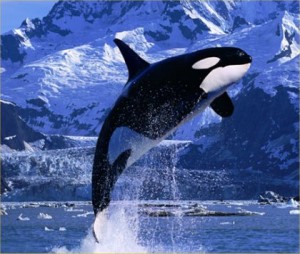
Photo of Killer Whale courtesy of http://www.maniacworld.com/killer-whale.htm


Over 500 species of plants and animals are considered at risk in Canada. The 2003 Species At Risk Act (SARA) was implemented to protect these species. However, out of those 500 species that are currently listed, only 150 have recovery strategies and only four have implemented recovery action plans.  It is clear that this act must be improved if Canadian species are going to be protected. This was the motivation behind the November 2010 paper, “Science, Policy and Species at Risk in Canada” by Dr.Jeannette Whitton et al. This paper took an in-depth look into how SARA works and how to improve it.   (See video for an overview of the paper.)


Video: The Bottleneck Effect

 Issues with SARA:

Listing stage


  • Lack of expertise
When the Committee On the Status of Endangered Wildlife In Canada (COSEWIC, www.cosewic.gc.ca) prioritizes the species that are more likely to go extinct, the species for which there is less expertise ends up being classified as “data deficient,” and most likely do not get listed. The government has no obligation to conduct further research or assessment on them, so “data deficient” species remain unaccounted for. This may become a bigger problem in the future as the focus switches to listing invertebrates, where there is even less knowledge.
  • Timing is Everything

Status assessment by COSEWIC and legal listing by the federal government are currently two separate steps in SARA. Unfortunately, this structure gives the government “an opportunity to avoid or delay the costs and consequences of protecting imperiled wildlife species.” This may explain why the federal government chose not to list 23% of the species recommended by COSEWIC between 2003 and 2007. On the other hand, this separation “allows a time window for stakeholders and civil society to become more involved in the legal listing process” and “allows for a transparent separation of science and policy.” Researchers believe these benefits far outweigh the negative effect of separation.

  • Economics vs. Science

Governments have to take into account the financial impacts of their decisions, and Canada’s government is no exception. The government relies on economic impact analysis to decide which COSEWIC-recommended species should be labelled “at risk” but researchers see their analysis as “incomplete.” Economic concerns make up “50% of the cases in which listing has been denied outright [by the government].” For this reason, researchers question the effectiveness of the current structure, stating that the “economic analysis is not supplied as independent science advice but rather is embedded in a nonscientific policy-based framework.” They suggest that the analysis comes too early in SARA’s evaluation process and thus economic concerns end up outweighing scientific considerations and dominating the listing process.


Recovery strategies: Ineffective meshing of science and policy.


  • Lack of Clarity
Creating recovery strategies has been “slow and problematic.” Scientific assessments and socioeconomic considerations quite often end up contradicting each other and therefore it should be made clear which is considered the most important in each case.
  • Lack of Definitions
To help at risk species survive and recover, we need to explicitly define these terms. The Canadian government has suggested survival “would mean maintaining the current population in the ‘short term’.”  But it is open to interpretation what represents ‘short term’ in Canadian policy? Also if this was the case, for a species at risk of extinction, merely maintaining its population in the short term “would provide little assurance of continued survival.” Recovery has been defined as “long-term persistence” or when decline is “arrested or reversed.” The ‘or’ in this definition allows the government to choose the easier option of arresting decline rather than reversing it.  Do you think stopping decline is enough to be classified as recovery?
  • Defining Habitat Issues

Classifying the critical habitat of species has been highly controversial. The law to identify critical habitat “to the extent possible using the best available information” is not reflected in how many habitats have actually been identified; habitat has only been defined for 23 of the 104 species with finalized recovery strategies. However, researchers think this may improve in the future as a result of two court cases in 2009 that successfully challenged recovery strategies that omitted known critical habitat from the final strategy.

  • Conflicting Interests Overshadow Scientific Content
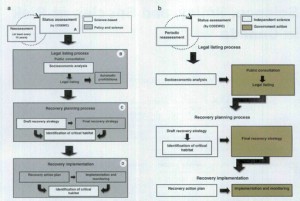
The biggest issue in preparing recovery strategies is that the government ministries that currently oversee the process “may have conflicting interests.”  To prevent this influence from distorting scientific assessments, researchers propose the science should be presented separately from governmental assessment in a new two-step listing process.  The proposed differences can be seen in figure 1 below.
Current and suggested structures of SARA "Science, Policy and Species at Risk in Canada"


Suggestions for Improving SARA
In conclusion, the current Species at Risk Act is leading to a bottleneck effect; only 4 species have recovery action plans even though over 500 species are listed as ‘at risk’.  SARA considers both scientific and economic concerns, but it is not always clear which of these two factors is viewed as the most important. To improve the number of action plans being finalised, the researchers make a number of suggestions.


The paper’s suggestions:

  1. creating a mandated framework with a two-step listing process to separate independent science and government policy decisions.
  2. incorporating timely independent, non-governmental peer review of decisions.
  3. defining important terms more clearly to avoid misinterpretation and taking shortcuts.
  4. making the whole process more transparent.


One of the researchers, Dr. Jeannette Whitton thinks the transparency of science is especially important during the creation of recovery strategies. It needs to be clear what the ideal situation for the recovery of a species is, what the most realistic scenario will be, and why these two assessments differ.  The taxpayers are funding this process and therefore they have a right to see what is happening.  The government is currently conducting a long overdue review of SARA and the researchers hope that their suggestions will be taken into account.


See the SARA website http://www.sararegistry.gc.ca/default_e.cfm for up to date information on the Species At Risk Act, new listings and recovery strategies.
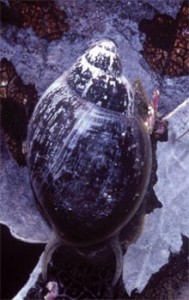
 

Banff Spring Snail Photo © Mark and Leslie Degner
Podcast – Detailed information of specific species
[kaltura-widget uiconfid=”535″ entryid=”0_xcn217mz” width=”100″ height=”86″ addpermission=”” editpermission=”” /]
 A discussion with Dr. Whitton about specific species at risk
References
  • Movie by: Grace Jauristo
  • Script by: Grace, Maki, Matt and Junaid
  • Blog by: Maki Sumitani and Matt Wagstaff
  • Podcast by: Junaid Sargana
  • “Science, Policy, and Species at Risk in Canada” by Arne O. Mooers, Dan F. Doak C, Scott Findlay, David M. Green, Chris Grouios, Lisa L. Manne, Azadeh Rashvand, Murray A. Rudd, and Jeannette Whitton.  Published in BioScience, Vol.60 No.10, November 2010
Thank you!
  • We would like to thank Dr.Jeannette Whitton and Geoff Hoare for their contributions
  • Thank you to the Beaty Biodiversity Museum at UBC and the Vancouver Aquarium for allowing us to film and take photos
  • Thanks to the science 300 professors, Eric Jandciu and Jackie Stewart for all their help and advice.
  • Take a look at this link for some more information: endangered species in Canada
Categories
New and innovative science Science in the News

A new ‘Sixth-Sense’


A clip from the movie ‘Minority Report’ starring Tom Cruise. From YouTube


Have you ever seem the movie The Minority Report starring Tom Cruise? In the movie, he plays Chief John Anderton who uses out-of–this world technology to find criminals and solve ‘pre-crimes.’ Well, modern science is not that far off from making Chief Anderton’s technology a reality.


Human Interface?

Scientists are working hard on creating a ‘seamless’ sixth-sense connection with the world around us. Sound crazy? Well it’s not that far fetched. Science is actually on the verge of making it a reality; in fact it’s so close you can touch it, literally. The goal of this sixth-sense technology is to provide the user with easy access to relevant information from the user’s environment and allow him or her to interact with the data by the touch of a finger.  And the best part of this technology is that when it is fully operational it will cost no more than your average cell phone.


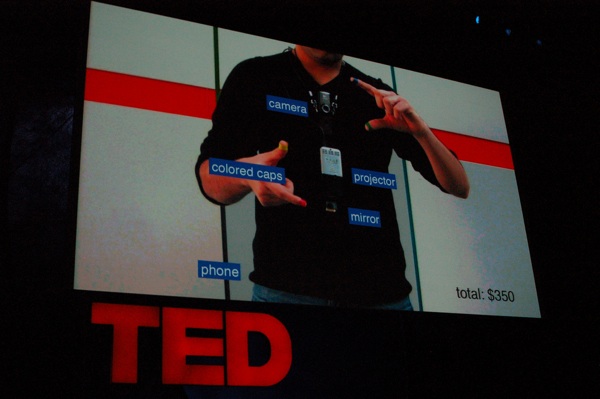
The system being demonstrated at a TED conference in 2009. (Eaton 2009)


Now, we’re not talking about a 50-year time schedule.  No, scientists are only a few years away from making this ‘movie dream’ a reality. Already, Microsoft has created surface-interface display technology that’s able to project information onto a surface for the user to interact with via their hands.


MIT student demonstrating the capabilities of their device. (Eaton 2009)


A recipe for success

Sounds pretty cool right? However, this still isn’t quite up to our ‘Tom Cruise’ standard.  At MIT, the fluid interface group at the University’s Media Lab is in the process of completing their version of this ‘sixth-sense’ technology. It combines a GPS-capable cell phone that gathers data from the environment, searches the Internet, collects the results and projects the information back to the user. It really is a “metadata system for real life” (Eaton 2009). The model includes a webcam, mirrors, a Smartphone and a pico-projector all hung together on a lanyard, and all available for a combined price of $350. Which makes this technology portable and able to work on any available surface, including your hands!

At MIT, the fluid interface group at the University’s Media Lab is in the process of completing their version of this ‘sixth-sense’ technology. It combines a GPS-capable cell phone that gathers data from the environment, searches the Internet, collects the results and projects the information back to the user. It really is a “metadata system for real life” (Eaton 2009). The model includes a webcam, mirrors, a Smartphone and a pico-projector all hung together on a lanyard, and all available for a combined price of $350. Therefore this technology is not only portable, but also able to work on any available surface, including your hands, and best of all it is affordable!


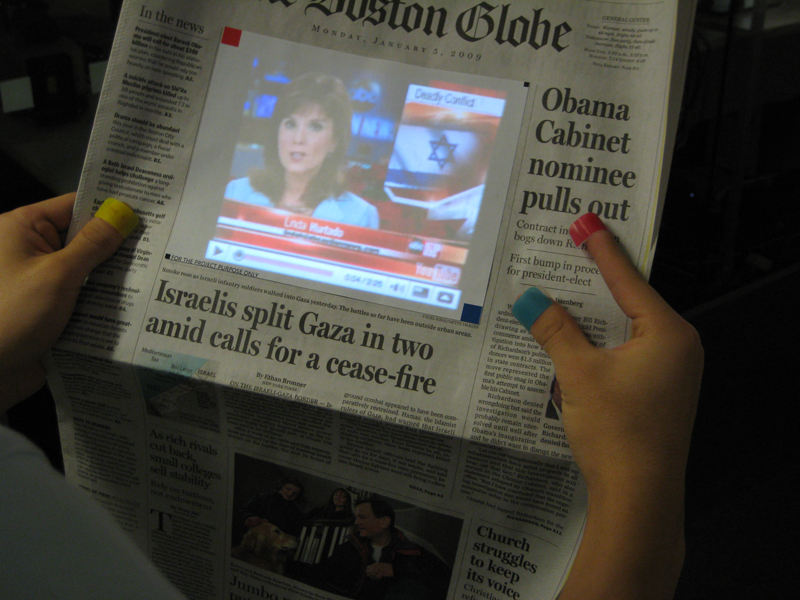
Demonstration on how the 'sixth-sense' can be used to view video clips related to certain newspaper articles. (photo credit: Sam Ogden)
'Sixth-sense' being used to sort and resize photos. (photo credit: Sam Ogden)


What does it do?

The system recognizes colored caps on the thumbs and index fingers via a webcam, and tracks their movements as a way of interacting with the projections. If this isn’t quite stylish enough for you, you could instead paint your nails in the same colors as the caps. Sounds all very techie, but what can it actually do? Well let’s say you’re taking a walk and want to take a photo, instead of taking out your camera, it’s as simple as making that iconic photo gesture with your hands and the interface will take the picture for you. Or, what if you want information on a book? A quick glance at the cover will give you a rating and a flip to the inside page will give you comments by critics. Even reading the newspaper becomes more exciting, with relevant video clips on the articles.

It’s even able to take social networking to the real world, literally. When meeting new people, the phone will look-up and project relevant information on them, including their name, contact details and tags associated with them from blog posts like this one. And it doesn’t stop there, how about finding out the time by simply drawing a circle on your wrist and having a watch projected? There are many more uses and applications for this sixth-sense technology and in a few years for the cost of a cell phone, we could all be as cool as Chief Anderton.


References and Further Reading:

Dr. Pattie Maes talks about the technology during TED talks

previous review made by Kit Eaton on Feb 5, 2009

More photos and video\’s on MIT\’s Sixth-Sense technology

Video on more applications of \’Sixth-Sense\’ (Really Worth A Look)


Categories
Environment Issues in Science Science in the News

Garbage as far as the eye can sea.


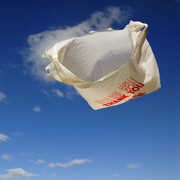
Plastic. Everyone is familiar with it; it’s used in the majority of products that are available to us. Yet because it is so frequent, many people do not take enough time to consider the effects that such a large industry has on the environment. Unknown to many, over 1 trillion plastic bags are used worldwide every year. According to the China Trade News, China alone uses 3 billion plastic bags per day. All this amounts to about 1 million plastic bags being used every minute. However, despite the immense usage of plastics bags, hardly any actually end up being recycled. For example, according to the BBC, in the UK, only 1 in 200 plastic bags get recycled. As such, more than 3.5 million tons of plastic was discarded in 2008 alone. This amounts to a massive global footprint, whose blame can be shared throughout the world.


What people fail to understand is that it takes up to 1,000 years for a plastic bag to degrade. This means that when you throw out the plastic bag that your subway sandwich came in only a few minutes ago, that bag will still be around a millennium later, long after your have passed away.


Plastic In Our World


plastic can end up in the environment by a simple gust of wind. (taken from www.reuseit.com)

So, from this, one can understand that every  piece of plastic ever made, since its creation in 1862 by Alexander Parkes, is still floating around somewhere today.  As such, where is all this plastic ending up? There are many theories and myths out there, but one of the main ones is of an island of plastic in the middle of the ocean that is bigger than the state of Texas. The sad thing is that this story holds more truth than fiction.


News broadcast on the Great Pacific Gyre found on YouTube


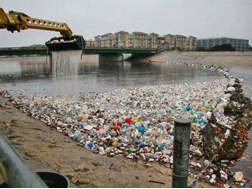
Even more plastics end up floating to the sea via our modern waterways


The Pacific Gyre


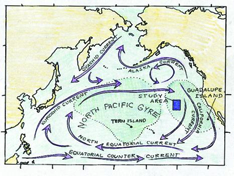
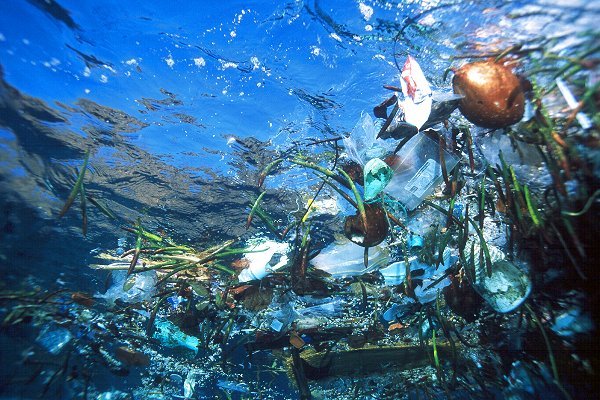
Every story about the island is slightly different, just as every researcher has observed a different thing. As such, many people have written it off as an urban myth. The fact is that there is a vortex of currents called to Pacific Gyre, located in the Pacific Ocean and stretching from coast of California to Japan. This current formation has historically been the collecting point for all different kinds of debris. However, in recent history, it has become known as the collection point for plastic. It is estimated that over 90% of the floating debris is plastic. Originating from land, waterways and wind, millions of tons of plastic are cast into the environment from all over the world. This has resulted in some areas having six times more plastic than plankton, which is the major source of food for many marine organisms. Basically, we have created an ecological disaster.


Current flow of the Pacific Gyre


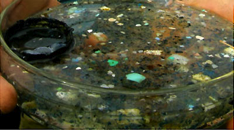
A scientist, named captain Charles Moore, who is the captain of an oceanographic research vessel, took a detour into North Pacific Gyre, on his way back to the United States from Australia. What he found was an ocean filled with tiny pieces of plastic. He and his crew cast plastic trolls into the water and found they came back filled with plastic. Moore commented that many people believe that the worst kind of spill for the ocean is oil, but the reality is that the worst is really the plastic bottles we throw away.


Sample taken from mile long troll for plastic in the Gyre.


Effects on Humans


Amazingly, this section of ocean, literally in the middle of nowhere, with no land or other ships around, holds one of the highest concentrations of plastic per square inch of water.  The danger here lies in the main component of plastic, Bisphenol A. This compound, used for the plastic polycarbonates, is made at 7 billion pounds per year and is completely non-recyclable. The scary part is that evidence from all over the world says that every person examined has these chemicals in their bodies. Worse still, in Japan, women who had increased levels of Bisphenol A were the ones who were unable to get pregnant, and continually had miscarriages.


Effects on Animals


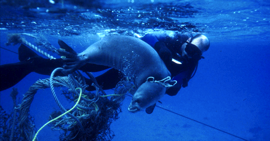
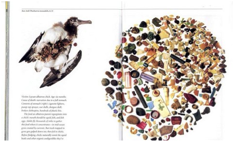
But how is it possible that our trash is coming back to haunt us? It can be explained with one word: bioaccumulation. The ecological effects of plastic in the oceans, starts out at the smallest scale: plankton. There is six times more plastic than plankton in many parts of the ocean, specifically in the Pacific Gyre. Since plankton is one of the most common food sources for marine life, animals are mistaking small pieces of plastic for their food. For example, turtles may mistake a floating plastic bag for a jellyfish, which they can consume. Thus, there is a build up of Bisphenol A in animals. These are then the prey of other, larger animals, and as such bioaccumulation begins. It doesn’t stop until it reaches the top of the food chains and humans. As a result, the contaminations and poison associated with plastic is passed on through nearly every organism. Even despite bioaccumulation, many marine animals die due to the direct effects of being caught in or choking on plastic pieces.


Seal tangled in mass of various strings and fishing line


Dead Albatross found filled with all sizes of various plastics in its stomach.


The main problem with plastic is that it doesn’t chemically break down over time; it simply slowly degrades into smaller and smaller pieces. As a result, the chemicals in this material, specifically the Bisphenol A, increases in concentration, as the pieces get smaller. So it becomes increasingly toxic and near impossible to clean up. These toxins all work their way up the food chain back onto our plates at home.


Since ocean is full of plastic products, the really mystery is, where in the world is there not exposure to them?


What can we do?

Although it seems like too big of a problem to even think about dealing with, we cannot give up hope. There are many ways that you can reduce your plastic intake and output.

  • Use reusable shopping bags to cut down on unnecessary plastic usage (not only for shopping, but for an everyday bag!)
  • Buy loose fruit and vegetables from  the shops instead of ones that are pre packed in plastic
  • Buy your meats from a butcher, that way it will be wrapped in paper instead of plastic
  • If you bring packed lunches with you, don’t wrap everything in plastic, use paper or other containers instead
The goal here, of course, is not to get rid of all the plastic in our lives, that would be impossible. Instead, it is for us to  be aware of the damaging effects plastic has on our environment and the simple things that we can do to limit our consumption. This is a real world problem that will be the test for our future scientists to come up with alternative solutions to plastic. As of today it is embedded into our everyday lives, so much so that many people don’t even realize it, but hopefully, in the future, an alternative can successfully be mass produced to limit out plastic waste.


References:

images from the environment

Blog about plastic in our environment


Facts and Stats about Plastic in our world

First of a series of videos done about a group who accompanied Charles Moore to the Pacific Gyre.

Ways to limit your plastic waste

how to live a plastic-free life (www.plasticless.com)


Categories
New and innovative science Science in the News

Water water everywhere but not a drop to drink?

One of the most deadly killers in our modern day world is an invisible one. It is clear, scentless and tasteless and goes by the common name: water. In Canada, we are fortunate enough to be able to grab a quick glass of water from the kitchen sink and trust that it comes from a safe source. However, we are one of the few countries in the world that can boast about such a luxury.

Some statistics about dirty water

  • 884 million people in the world do not have access to safe water (approximately 1/8th of the worlds population)
  • 2.6 billion people in the world do not have access to adequate sanitation (approximately 2/5th of the worlds population)
  • 1.4 million children die every year from diarrhea caused by unclean water and poor sanitation (approximately 4,000 child deaths a day)
  • 50 percent of people are affected by diarrhea from dirty water

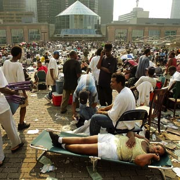
In many third world countries, when disasters such as tsunamis hit, people are forced to flee their homes for higher ground and drink contaminated water. Yet when hurricane Katrina hit New Orleans, in 2005, it took five days to get water to the superdome despite the fact that it occurred in the United States, a first world country. It seems as though there hasn’t been any improvements in the way governments handle these disasters, no matter if it is a poor or rich region.

Thousands of people gather at the Super Dome in New Orleans after the city was destroyed by Hurricane Katrina: August 2005

Normally in a crisis, governments and aid relief workers are able to ship water and set up camps for people in approximately a few weeks following a disaster. This means that people are forced to come to the camps for safe drinking water. Unfortunately, when so many people are clumped together, disease is spread, more resources are needed and the problem inflates.When faced with such a problem, it sometimes seems too huge to be able to deal with. Governments and society, as a whole, think that it is an impossible situation. However, one man decided to think differently and change our way of dealing with this problem.

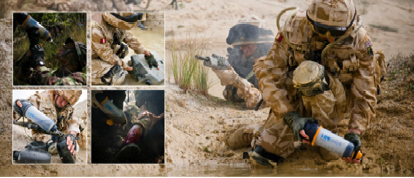
The LifeSaver Bottle has many applications including use in the military.

A scientist by the name of Micheal Pritchard has created a water filtration system that by far out-competes the old designs. Until now, the best hand filters available on the market were able to filter down to 200nm material. However, Mr. Pritchard realized that the smallest bacteria are 200nm and the smallest viruses are 25nm. As such, these filtration systems are not nearly good enough to completely sterilize dirty water.

As a result, Micheal Pritchard created his ‘Life saver bottle.’ His design utilizes 15nm-filtering pores, which means that absolutely no impurities will get through and potentially infect the consumer. The bottles last for up to 6000L and the 25000L Jerrycan is enough for a family of 4 for 3 years, with a total cost of half a cent per day to run.  Each comes with fail-safe technology that automatically shuts off the system when it reaches this amount to protect the user. 


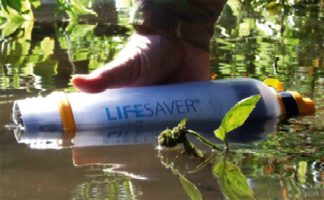
The LifeSaver Bottle can take water from any source and quickly sterilize it. (Image taken from lifesaversystems.com)

                  What this means, is that people can stay put and get their own water, and governments won’t have to ship water for copious amounts of money to aid masses of affected people. They will never again need to walk miles to get to the nearest clean water source. It is as simple as filing up the bottle with whatever water source is available, whether that’s a dirty river or a nearby pond, giving the pump handle a few pushes, and in seconds sterile, clean drinking water is produced. 


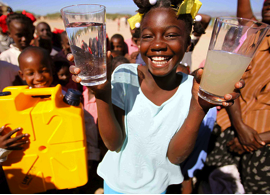
LifeSaver Bottles were taken to a small village in Haiti to solve their dirty water problem.


             For just $8 billion, we can obtain the worlds ‘millennium goal’ and halve the amount of people without access to safe drinking water. However, for only $20 billion, everyone in the world can have access to safe drinking water. This means that the 3.5 billion people that suffer every year and the 2 million children that die every year will now live.


LifeSaver Jerrycans put into action in Haiti (YouTube)

References

Lifesaver Bottle- Water purification systems

Statistics on dirty water

Micheal Pritchard talks about the Lifesaver Bottle

Spam prevention powered by Akismet