You may have heard of the “double rainbow song,” in which a man named Paul Vasquez ecstatically reacts to seeing a double rainbow. Now imagine Vasquez’s excitement when he finds out that a quadruple rainbow does indeed exist, and was just recently captured on camera for the first time by German meteorologist Michael Theusner. His findings were published in the October 1, 2011 issue of the Applied Optics journal.
Rainbows form from the refraction of light. Source:Wikimedia Commons
Rainbows are formed by the refraction of light through water droplets in the air. This refraction sometimes occurs a second time after being reflected once in the droplet to form a double rainbow. Rarely does the process occur inside the water droplet a third or fourth time for a triple or quadruple rainbow.
Sightings of triple and quadruple rainbows are extremely rare, as the conditions needed for them to form are increasingly more difficult (only a small portion of the light rays are reflected for a second refraction, and even smaller for the third and fourth refraction). Due to the drastic decrease in intensity, triple and quadruple rainbows are nearly invisible to the naked eye, and require image editing to be able to be seen. Additionally, the third and fourth rainbows can be easily missed because they are located away from the first and second rainbows.
Original and digitally enhanced pictures of the triple and quadruple rainbow. Source: Michael Theusner
The discovery and photography of triple and quadruple rainbows contributes to more than just another Internet meme. In addition to being a scientific breakthrough, it is also a reminder for all scientists to be meticulous and detailed when making and recording observations, as there can be more contributing factors and things going on in a particular experiment than what’s immediately visible. Much like how a series of image manipulations was required to see the additional rainbows, a detailed and thorough analysis of data could lead to discoveries that might not otherwise be found.
In our society, people probably have wondered about what is in one’s mind. We are always curious about what others think; but we cannot just dissect their brains to figure out. Now there is an alternate way to do this. The ‘mind-reading machines’ have been developed. Scientists have developed a computerized mind-reading technique which lets them accurately predict the images that people are looking at by monitoring brain activity.
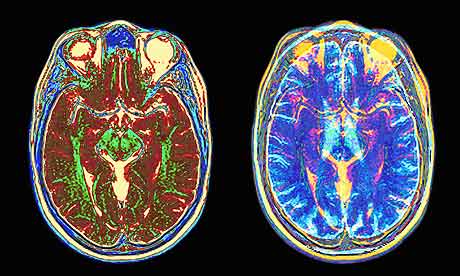
Scientists at the University of California have developed a computational model that uses functional MRI (fMRI) data to decode information from an individual’s visual cortex – the part of the brain responsible for processing visual stimuli.
The scientists have tested three of their members in fMRI to watch videos and they have figured out that blood is gathered at a certain part of the brain when members watched a specific video. For example, the scientists compare the different signals of brain when two different images of a hammer and ball are watched. Based on the database, they have developed a computer program that selects the most similar image of the actual image. This computer program also selects number of the most similar videos and engrafts them into one video. The scientists say that the study raises the possibility in the future of the technology being harnessed to visualize scenes from a person’s dreams or memory.
Furthermore, there is a similar machine developed in Korea in 2009. The team has made a motion detecting system that expresses a delicate face expression into an exaggerated face motion. This technology allows a machine to read a very detail change on face and possibly detect expressions of people. This technology is similar to a recent digital camera mode which automatically takes picture once people smile. There has been 88% of successful reading of the face when Dr. Kim’s team has tested on 20 people.
Moreover, United States also has a system that is much like a movie, “Minority report” which introduces a system that predicts crimes and prevents them beforehand. The cameras and sensors check people’s heart rate, respiratory rate, and body temperature to find out people with intention of committing crimes.
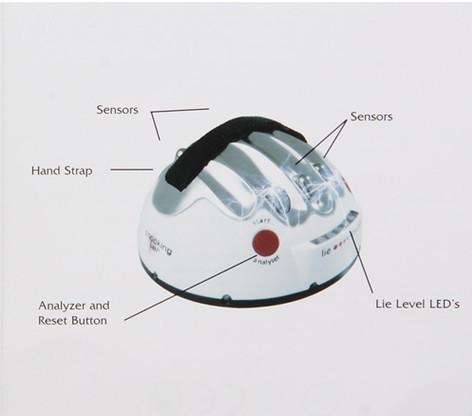
There have been different approaches to sort out liars through lie-detecting machine. Even though this machine is not reading one’s mind, it could be seen as application of detecting a change in mind state; breathing rate, blood pressure, and heartbeat will likely be different if one is telling a lie, and feel nervous.
Unfortunately, we cannot just accept and apply this continuous development of new techniques to our lives. Even though these machines could make our lives convenient, there is a risk. It has potential to disrupt individual’s private rights and result in moral violation. We should be aware that there is no scientific evidence about the accuracy of machines. Therefore, communicating skills to deal with this dilemma, further supports to provide evidences, and enough discussion on pros and cons of ‘the new’ are required for accepting new technology in science.
Scientists from universities across the United Kingdom are hoping to test one of their solutions to the worldwide issue of global warming. To understand the mechanism of the project, however, one must first be familiar with the process of global warming.
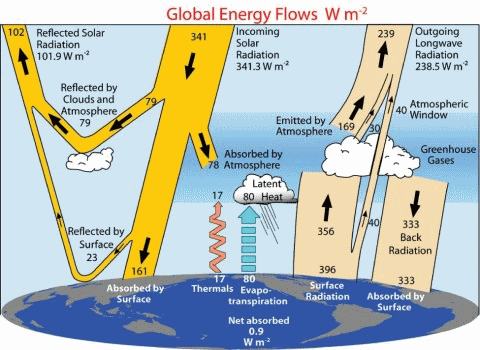
Global warming is based on the imbalance of infrared radiation (IR) entering and leaving the planet. This imbalance is caused by gases in the atmosphere, commonly referred to as greenhouse gases, which absorb the IR and emit it back towards the Earth’s surface instead of allowing it to travel back out into space. This process means more energy in the form of heat is being stored in the atmosphere and is consistently increasing Earth’s average temperature each year. Most of the greenhouse gases that are accumulating in the atmosphere are released through aspects of human activity such as farming, transportation, and electricity. Stopping all of these aspects isn’t going to stop the problem, as some of these harmful gases that have already been released will remain in the atmosphere for thousands of years. This gives scientists the opportunity to devise a system to cool the planet.
Global energy overview of radiation flow
The SPICE project (Stratospheric Particle Injection for Climate Engineering) aim is to discover the best particle to introduce into the top of the atmosphere that will decrease the amount of IR entering the atmosphere. Their plan is to inject reflective aerosol particles into the atmosphere in hopes that they reflect the incoming radiation before it can enter the atmosphere. They based this idea on volcanic eruption effects on global temperature. Large eruptions release multiple cubic kilometers of ash and gas that then disperses across the globe creating a layer or reflective particles. Two years following the Mount Pinatubo eruption the global temperature dropped by 0.5 degrees Celsius.
Ash cloud produced from Mount Pinatubo eruption
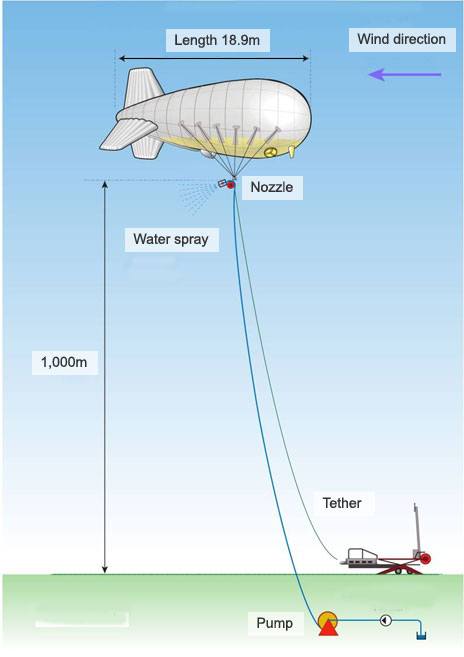
Scientists want to mimic this effect in their tests by spraying reflective particles from a hose at a rate of 100 liters per hour from a 20 m long balloon at a height of 1 km. The balloons success in launch and recovery and its tolerance to high winds will be monitored and help in planning the final result of a colossal balloon at a 20 km altitude. Projections indicate we could lower the global temperature by 2 degrees Celius by spreading 10 – 20 of these balloon mechanisms set at a 20 km altitude around the world.
I think that though global warming isn’t showing how devastating it can be quite yet but will prove a difficult problem in the near future. The problem scientists are facing is either trying to convince people that global warming is real or that it is an urgent issue we should address. To accomplish this they have to be able to convey their message effectively to their specific audiences. This is where Science 300 concepts apply as we are learning how to use wording, diagrams, and presentation to entice and convince our audience. These skills need to be utilized by scientists to explain the necessity of their research to the public.
Sources:
Note from EOSC 340-Global Climate Change Class
Archer, David. Global warming: understanding the forecast. USA: Blackwell Pub., 2007. Print.
Battison, Leila. “Giant balloon to be launched to test climate fix hope.” BBC News: Science and Environment. BBC, 14 Sept. 2011. Web. 29 Sept. 2011. <www.bbc.co.uk/news/science-environment-14916451 >.
“Global warming – Wikipedia, the free encyclopedia.”Wikipedia, the free encyclopedia. N.p., n.d. Web. 2 Oct. 2011. <http://en.wikipedia.org/wiki/Global_warming>.
“Greenhouse gas – Wikipedia, the free encyclopedia.” Wikipedia, the free encyclopedia. N.p., n.d. Web. 2 Oct. 2011. <http://en.wikipedia.org/wiki/Greenhouse_gas>
“The SPICE project: a geoengineering feasibility study .” NERC. N.p., 14 Sept. 2011. Web. 30 Sept. 2011. <www.nerc.ac.uk/press/releases/2011/22-spice.asp>.
One of the most deadly killers in our modern day world is an invisible one. It is clear, scentless and tasteless and goes by the common name: water. In Canada, we are fortunate enough to be able to grab a quick glass of water from the kitchen sink and trust that it comes from a safe source. However, we are one of the few countries in the world that can boast about such a luxury.
Some statistics about dirty water
884 million people in the world do not have access to safe water (approximately 1/8th of the worlds population)
2.6 billion people in the world do not have access to adequate sanitation (approximately 2/5th of the worlds population)
1.4 million children die every year from diarrhea caused by unclean water and poor sanitation (approximately 4,000 child deaths a day)
50 percent of people are affected by diarrhea from dirty water
In many third world countries, when disasters such as tsunamis hit, people are forced to flee their homes for higher ground and drink contaminated water. Yet when hurricane Katrina hit New Orleans, in 2005, it took five days to get water to the superdome despite the fact that it occurred in the United States, a first world country. It seems as though there hasn’t been any improvements in the way governments handle these disasters, no matter if it is a poor or rich region.
Thousands of people gather at the Super Dome in New Orleans after the city was destroyed by Hurricane Katrina: August 2005
Normally in a crisis, governments and aid relief workers are able to ship water and set up camps for people in approximately a few weeks following a disaster. This means that people are forced to come to the camps for safe drinking water. Unfortunately, when so many people are clumped together, disease is spread, more resources are needed and the problem inflates.When faced with such a problem, it sometimes seems too huge to be able to deal with. Governments and society, as a whole, think that it is an impossible situation. However, one man decided to think differently and change our way of dealing with this problem.
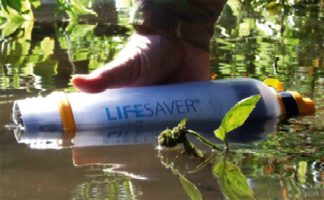
The LifeSaver Bottle has many applications including use in the military.
A scientist by the name of Micheal Pritchard has created a water filtration system that by far out-competes the old designs. Until now, the best hand filters available on the market were able to filter down to 200nm material. However, Mr. Pritchard realized that the smallest bacteria are 200nm and the smallest viruses are 25nm. As such, these filtration systems are not nearly good enough to completely sterilize dirty water.
As a result, Micheal Pritchard created his ‘Life saver bottle.’ His design utilizes 15nm-filtering pores, which means that absolutely no impurities will get through and potentially infect the consumer. The bottles last for up to 6000L and the 25000L Jerrycan is enough for a family of 4 for 3 years, with a total cost of half a cent per day to run. Each comes with fail-safe technology that automatically shuts off the system when it reaches this amount to protect the user.
The LifeSaver Bottle can take water from any source and quickly sterilize it. (Image taken from lifesaversystems.com)
What this means, is that people can stay put and get their own water, and governments won’t have to ship water for copious amounts of money to aid masses of affected people. They will never again need to walk miles to get to the nearest clean water source. It is as simple as filing up the bottle with whatever water source is available, whether that’s a dirty river or a nearby pond, giving the pump handle a few pushes, and in seconds sterile, clean drinking water is produced.
LifeSaver Bottles were taken to a small village in Haiti to solve their dirty water problem.
For just $8 billion, we can obtain the worlds ‘millennium goal’ and halve the amount of people without access to safe drinking water. However, for only $20 billion, everyone in the world can have access to safe drinking water. This means that the 3.5 billion people that suffer every year and the 2 million children that die every year will now live.
While most of us don’t remember much of anything about our 9 months in the uterus, you would probably be just a little freaked out if you found out that those 9 months weren’t spent in a uterus at all… but in a man-made artificial uterus with several scientists devoted to bringing you to full term.
This is exactly what happened to 6 lucky grey nurse sharks.
The grey nurse shark or sand tiger shark, as it is also known, is one of Australia’s most endangered marine species and is considered by the International Union for Conservation of Nature to be under threat of endangerment on a worldwide basis. How could this be? Weighing in at over 200 pounds and reaching over 11 feet, the grey nurse shark is a powerful beast, one you wouldn’t expect of being vulnerable to predators.
Grey Nurse Shark. Photo by Richard Ling
However, they are… and that predator is man. Despite their rather intimidating appearance, they are completely harmless to humans unless provoked; yet humans have been killing the sharks for decades. Most of the time the deaths are accidents as the sharks are caught in commercial and recreational fishing equipment. But several of the deaths are intentional as the sharks are considered a delicacy in Japan.
To make matters even worse for the shark, they are only capable of producing two pups per year. The mother shark actually starts her pregnancy with about forty fertilized embryos separated in two separate uteri, but as they mature, the embryos undergo adelphophagy where they attack and eat one another. Eventually, only the two toughest embryos are left to mature. Talk about sibling rivalry!
Scientists Nick Otway and Megan Ellis think they have found a way to prevent this.
In a lab at the Port Stephens Fisheries Institute, in New South Wales of Australia, these scientists have made an artificial uterus, which is basically a very complex aquarium.
From a euthanized pregnant female, 6 embryos were extracted and all six were brought to full-term in this artificial uterus. The pups were born to a length of about three feet, an average size for a grey nurse shark pup. After only three months, they were released into the wild.
Whether or not they will suffer a mommy complex has yet to be seen but already, we can conclude these results are amazing.
If we can figure out a way to keep the mother alive, we have the potential to save an endangered species by literally tripling its birthing capacity. Furthermore, if we can extract the embryos even earlier on, we could do a lot more than just tripling it.
Pregnancy, Image from Microsoft Word 2000
Now, this brings up an interesting thought for the future of the human race…
Will the exhausting task of carrying a baby for nine months become an event of the past? Will you and your partner simply drop off your eggs and sperm at a lab and a few months later, pick up our baby without ever gaining a pound?
Certainly, this won’t be happening any time soon but it is definitely interesting to think about in a society where convenience is king.
Otway, N. & Ellis, M. (2011). Construction and test of an artificial uterus for ex situ development of shark embryos. Zoo Biology. doi: 10.1002/zoo.20422
Pollard, D. & Smith, A. (2005). Carcharias taurus. IUCN Red List of Threatened Species: Version 2011.1. Retrieved from www.iucnredlist.org.
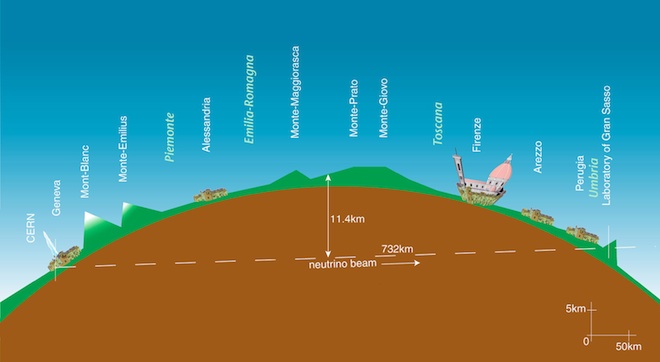
Cross-section of the CNGS experiment through the Earth.
On the 23rd of September 160 scientists from the OPERA experiment published a paper online suggesting they have found evidence of neutrinos travelling faster than the speed of light. This announcement has thrown neutrinos and the potential implications of the finding with relation to Einsteins Theory of Relativity into the scientific spotlight.
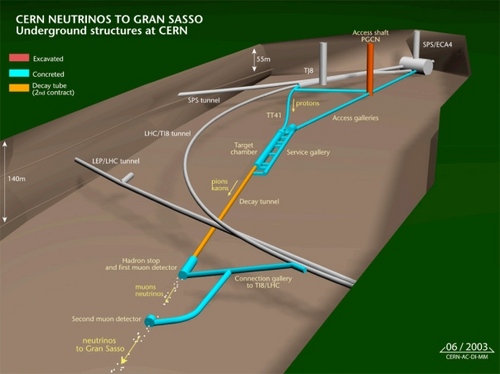
First of all to provide a little background to the study, neutrinos are tiny subatomic particles each with a “mass of less than a millionth the mass of an electron”. They are uncharged, hence the name neutrino coming from the word neutral, and hardly react with other matter which allows them to pass right through the Earth. Most neutrinos we know of are radiated by our Sun, with 65 billion neutrinos passing through every square centimeter of the Earth perpendicular to the Suns rays every second. They are also hit the Earth from other cosmic rays and are produced as a product of radioactive decay. Scientists can create neutrinos in particle accelerators like the one at the CERN research facility in Geneva, Switzerland (home of the Large Hadron Collider) shown below.
Artistic view of the underground layout of CERN and the SPS (Super Proton Synchrotron)
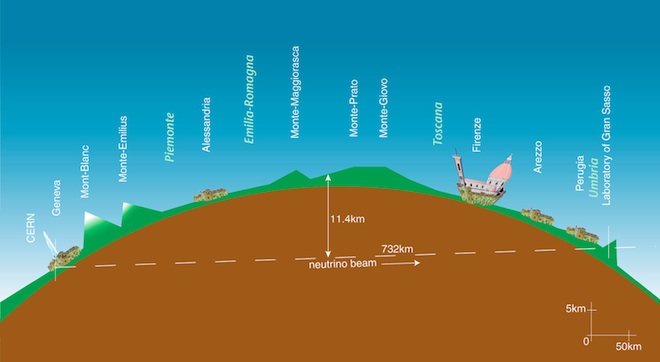
The CNGS (CERN Neutrinos to Gran Sasso) experiment’s main focus is to investigate the phenomenon of how neutrinos ‘oscillate’ (change between the 3 types or flavours of neutrinos (electron, muon and tau neutrinos)) as they travel long distances through matter. Determining the velocity of neutrinos is a secondary aim of the experiment (however after these findings I’m sure it moved up the list of priorities). Muon neutrinos are created in the Super Proton Syncrotron (SPS) particle accelerator at CERN and fired 732km through the Earth to the OPERA (Oscillation Project with Emulsion-tRacking Apparatus) detector in Gran Sasso, Italy. The speed of these neutrinos is calculated using the same basic physics of Speed = Distance / Time that you learned in high school, however with more precision than ever before. The distance between the SPS in Switzerland and the OPERA detector in Italy is known to within 20cm and the timing is measured using GPS timing signals and a cesium atomic clock with the sensitivity of this experiment “roughly an order of magnitude better than previous experiments.” This experimental design is shown below.
Cross Section of the CNGS Experiment through the Earth
Neutrinos are notoriously hard to detect due to their neglible mass but after 3 years the OPERA experiment has managed to collect 16,000 neutrinos (only 10^-14 % of the neutrinos created!) with some very interesting findings. When comparing the time it took the neutrinos to make the trip to Gran Sasso to how long it would take light, they were shocked to find the neutrinos “arrived at Gran Sasso sixty billionths of a second earlier, with an error margin of plus or minus 10 billionths of a second”. This has led them to publish their findings for the wider scientific community to scrutinise.
This paper has pushed physics into the media spotlight due to the implications this finding could have if it is replicated. If it is proven that the neutrinos are in fact travelling faster than the speed of light (rather than this being the result of some experimental error or statistical miscalculation) then they are breaking one of the fundamental laws of modern physics – that nothing can exceed the speed that light travels at in a vacuum (effectively the speed limit of the universe). This is the foundation of Einsteins Theory of Relativity and a cornerstone of the maths we use to understand and model the universe. Brian Cox, a professor of particle physics at the University of Manchester said, “If you’ve got something travelling faster than light, then it’s the most profound discovery of the last 100 years or more in physics. It’s a very, very big deal. It requires a complete rewriting of our understanding of the universe.”
If neutrinos do in fact travel faster than light then this “raises the troubling possibility of a way to send information back in time, blurring the line between past and present and wreaking havoc with the fundamental principle of cause and effect.” Another explanation being proposed is that the neutrinos are skipping through another dimension on their way to Gran Sasso which also raises a lot of fascinating questions.
However the media should be prepared to wait a long time before this is proven/disproven because theres an important paragraph in the paper published by the OPERA team that hasn’t recieved as much attention (or the media has chosen to ignore).
“Despite the large significance of the measurement reported here and the stability of the analysis, the potential great impact of the results motivates the continuation of our studies in order to investigate possible still unknown systematic effects that could explain the observed anomaly. We deliberately do not attempt any theoretical or phenomenological interpretation of the results.”
I find this very interesting because it shows how the team of scientists are not reading too much into their own results, at least for now and are cautious of making a revelationary claim that could be disproven. “They do not claim that the neutrinos are actually exceeding the speed of light, only that the measurements to date show something unexpected [and they] are reaching out to the high-energy physics community to improve the experiment and data analysis.” Therefore despite the enthusiasm of the world’s media, the scientists lack of belief suggests we shouldn’t rush to get too excited or too worried about the consequences of this finding until other scientists such as those working on the T2K experiment in Japan have replicated their results.
However, one thing’s for sure, it’s definitely an intriguing time for the physics community.
Bananas are common fruits that one can fine in grocery stores. Many people dislike banana for its taste, its texture, or other reasons. I am a person who do not eat banana for its taste until I came across this video: Dole Banana Nutrition Facts. It makes me think twice about it. Is it the taste of banana much important than the health benefits that it provides?
Here are some nutritional facts of bananas:
Bananas have resistant starch that aides the digestion of fat. Including bananas in diet helps weight loss.
Stroke is a leading cause of death in Canada, and bananas prevent stroke because the ratio between the content of potassium and the content of sodium in banana is ideal.
Potassium also helps the body regulate hear rate and water balance.
The high content of iron content in bananas can prevent anemia, a low level of red blood cells in blood.
Vitamin B6 that are present in bananas helps to repair DNA and prevent cancer.
Eating bananas in prenatal stage can decrease the chance of baby’s being born with leukemia.
Consumption of bananas can help children build a good immune system.
Tryptophan, an amino acid, in bananas decreases the chance of getting depression.
It is said “do not judge a book by its cover”, and I think it is true that I cannot dislike banana for its taste, because it has a lot of health benefits.
With these information in mind, be sure to consider including bananas in your diet!
He was the man that explained the world and the universe around us. He was the one who provided us with the fundamental laws of physics that helped us make immeasurable strides in science and technology. He was the scientist who proposed that nothing in the universe could travel faster than the speed of light in a vacuum. But would it be possible that one century later, Albert Einstein’s fundamental laws would be disproved?
E = mc2 is the equation describing the conservation of mass and energy, where energy (E) is equal to the mass of an object (m) multiplied by the speed of light (c) in a vacuum. Einstein proposed that the speed of light was an unbreakable barrier: no object could travel faster than 299 792 km/s. But in September 2011 at the Gran Sasso research facility outside of Rome, scientists recorded neutrinos traveling faster than the speed of light.
This discovery began as an experiment timing 16 000 neutrinos as they travelled from CERN (the European Organization for Nuclear Research near Geneva, Switzerland) to the Oscillation Project with Emulsion-tRacking Apparatus (OPERA): a 1300 metric tonne particle detector located 1400m underground at Gran Sasso, Italy. Scientists recorded the speed of light travelling from CERN to OPERA and compared it to the travelling time of neutrinos. Surprisingly, the neutrinos arrived 60 nanoseconds faster than their counterparts. That is more than a lifetime in particle physics! It seems Einstein’s unbreakable barrier is in fact breakable – with the help of a neutrino.
How has the scientific community reacted to this turn of events?
Although this is a monumental development, it is hard to believe that a majority of the scientific community will accept these results until they can be reproduced several times over with the same accuracy. After all, the fundamental laws of physics have withheld the test of time for a century! To this end, the experimental design and entire research project have been up for scrutiny by world experts and CERN scientists have specifically asked American and Japanese researchers to validate their results. This method of peer review is indispensible in the scientific process and it should be noted that each discovery (regardless of the magnitude or implications of the results) undergoes the same procedure in any scientific field.
Doesn’t it feel good knowing that the scientific method and publication processes we’ve learned during our undergraduate degrees correspond to the orderliness and structure of science used in the broader scientific community?
Walking down the isle of a grocery store, you come across a bag of cookies and a jug of milk. What do the two have in common? The presence of trans fat. Trans fat is the common name for unsaturated fat. To the everyday consumer, it’s the “bad stuff” that increases the risk chronic health problems.
So, what exactly are trans fats? They are fatty acids in the trans formation, which assemble into a solid much easier than those in cis shape. In industrial production level, they are made through hydrogenation of fatty acids.
Consumption of trans fats leads to many health issues. They include, increased risk of coronary heart disease, imbalance in the LDL:HDL ratio, obesity, liver dysfunction, diabetes and depression. With so many health risks attached to the consumption of trans fats, it is not surprising why they are labeled as the “bad stuff” among consumers.
Interestingly, not all trans fats are the bad. Recent research done by the Alberta Institute for Human Nutrition, and the Department of Applied Microbiology and Food Science, found that natural source of trans fat, such as milk and beef, may have potential benefits to cardiovascular health. According to Spencer Proctor, one of the researchers, their early research suggest that the intake of natural trans fats give similar effects as consuming polyunsaturated fatty acids. The potential benefits of natural trans fats include reduced weight gains, and cholesterol. On top of that, it may have anti-inflammatory effects.
Trans fat may be more beneficial than we thought previously, given that we only consume the natural ones. As they give similar outcomes as consuming polyunsaturated fatty acids, which are found mostly in nuts, seeds, fish, and vegetables. For those that avoided beef and milk due to trans fat can now go enjoy those products once again!.
Next time you go grocery shopping, keep this in mind!
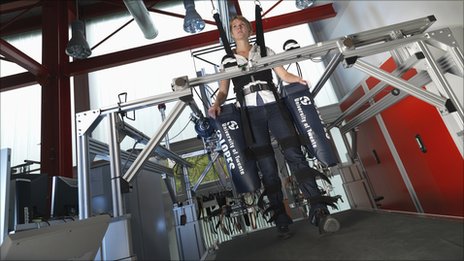
Dutch scientists have came up with the invention of robotic legs for stroke patients. LOPES, or the Lower-extremity Powered ExoSkeleton, helps improve the movement of the legs and for the patients to recover their natural steps. Spinal injury patients who have restricted movements have been given test trials. This device may be released to rehabilitation centres across different countries next year.
LOPES Supporting a patient; Source BBC News
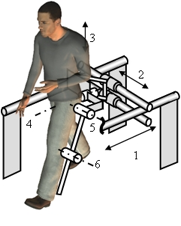
Engineers from the University of Twente in Enschede, Netherlands, developed this device to help and support the patients while on treadmill in rehabilitation centre. The machine operates by either walking for the patient or by assisting support on either side of the patients’ legs. Furthermore, if the patient is not moving right, LOPES can also detect their mistakes.
LOPES model
One of the testers of this device, Petra Hes, has what is known as “drop foot.” She has suffered a stroke at a very young age that caused her not being able to lift up or flex her left foot. Dr. Edwin van Asseldonk, a worker on the project, explained how LOPES is able to compare the patients’ movements to a reference and helps the patients by applying a force on them.
The forces exerted on the patients’ legs will physically guide the movement of the legs and feet. Researchers believe the machine acts as a memory aid to the patients who have forgotten how to move. The result with Hes has been turning out positively. By exerting the force on the patients, hence, LOPES aids the required signals in the brain to further regulate the movement.
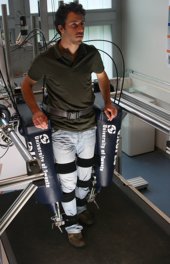
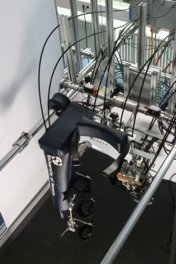
LOPES exoskeleton; Source University of TwenteLOPES; Source University of Twente
Having such an innovation will help those who have suffered from strokes or those with impaired physical movement. Devices like these enable people to recover and start walking just as they used to! They are being tested in Netherlands before being released to clinics worldwide.
Furthermore, there are similar inventions called “Military Exoskeletons” used in the military to help lift heavy loads. Human Universal Load Carrier (HULC) is designed by Berkeley Bionics of California. Soldiers can as much weight as 90kg. HULC is strapped around the soldier’s body and has been used by US Military.