After a long hard day, you come home and you are ready to relax. But beforehand, you want to alleviate you headache first. Naturally you pop up an aspirin. Aspirin is also known as acetylsalicylic acid and it is commonly used as a painkiller, anti-flammatory drug and antipyretic to reduce fever. However, many people underestimate the power of aspirin. The truth is that aspirin can play huge roles in improving our health, such as preventing heart attacks, strokes and bowel cancers.
Lynch Syndrome
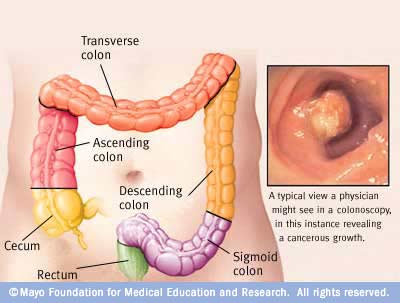
In a recent study done by Newcastle University’s professor Dr. Sir John Burn, two pills a day for two years reduced the incidence of bowel cancer by 63% in a group of 861 at-risk patients. All the patients had Lynch syndrome, which is also known as HNPCC( Hereditary nonpolyposis colorectal cancer ). This syndrome is a genetic condition which has a high risk of bowel cancer as well as other cancers in stomach, ovary and small intestine. This increased risk for these cancers is because patients with this syndrome have genes that fail to detect and repair damaged DNA. Since cancer is made of cells that grow uncontrollably, if your body cannot fix damaged DNA, you are more likely to develop cancer in many parts of the body.
Photo credit: Personal Health
The research
What is marvelous about this new study done by Sir John Burn is that it provided an overwhelming evidence of a way that patients with Lynch Syndrome can reduce the development of bowel cancer. Over the two years, those who were given 600 milligrams of aspirin every day developed bowel cancer 63% less than the patients who simply took the regular medications for at least two years.
Therefore Sir John recommends that “people who’ve got a clear family history of, particularly, bowel cancer should seriously consider adding low dose of aspiring to their routine and particularly those people who’ve got a genetic predisposition.”
Photo credit: Journal Live
The ugly side effects
Although aspirin may help to prevent developing bowel cancer, it has some potential deadly side effects. Some of them include gastrointestinal bleeding, angioedema (swelling of skin tissues), ulcers, and strokes caused by aspirin. Therefore, one of the questions that arise is that whether healthy people with no family risks should take aspirin to prevent cancer development. Sir John said that it was a “finely balanced argument” and that he decided the risks were worth it for him.
“I think where we’re headed for is people that are in their 50s and 60s would look very seriously at adding a low dose aspirin to their daily routine because it’s giving protection against cancer and heart attack”
In a way, aspirin is a double edged sword. It can be hugely beneficial for those who have lynch syndrome but it could also bring the unwanted side effects. Even though this may be a breakthrough in preventing cancer development, we must remember that it is us, the patients, who have the power to choose what is the best for ourselves. Therefore, we must educate ourselves and decide what is the most suitable option for our bodies.
More Resources:
The BBC News articles :
Daily aspirin ‘blocks bowel cancer’ by James Gallagher
Burn,John, et.al. Long-term effect of aspirin on cancer risk in carriers of hereditary colorectal cancer: an analysis from the CAPP2 randomised controlled trial. (2011 )The Lancet . DOI: 10.1016/S0140-6736(11)61049-0
On October 28, 2011, Dr. John Hepburn, (Vice President, Research and International) sent an email to the UBC community on the subject of animal research. He outlined the university’s plans to increase transparency on its animal research by releasing details on the number of animals and categories of species being used.
According to www.animalresearch.ubc.ca, 211,764 animals were used in research at UBC in 2010. Of those, 56% were rodents, 35% were fish, and 6% were reptiles or amphibians. Chimpanzees, gorillas and orangutans were not studied at all, and are not used for research in Canada primarily due to their classification as endangered species. Instead of these primates, rhesus macaques are often used in research. At UBC they are involved in studies investigating depression, Parkinson’s disease and other brain disorders.
It is worth noting that not all animals involved in research are used in a typical lab setting. Animals involved in catch & release and observational studies are counted, as well as those in laboratory research. The majority (68%) of animal research at UBC involves less than minor or short-term stress to the animal. Examples of this type of research include tagging of wild animals for conservation purposes.
Part of the reason that UBC has not released such details about its animal research until now is because of the potential negative backlash from animal rights activists. Undoubtedly this is a problem that faces every member of the animal research community, and increasingly this is an issue that they are attempting to address.
This video from Understanding Animal Research outlines some of the key reasons why animal research is critical in modern society.
Highlighted in this video is what can happen when proper animal research and testing is not carried out on drugs prior to their release to the public. Thalidomide was sold starting in 1957 as an effective tranquilizer and painkiller, often prescribed to pregnant women to treat morning sickness. However, thalidomide caused major birth defects in over 10,000 children, and was outlawed in most countries by 1962. Much stricter testing is now required on drugs before they can be approved for sale as a result of the thalidomide disaster, often referred to as one of the worst medical tragedies of modern times.
In today’s society where humans are extremely close to their pets, animal research is often though of as harmful and unnecessary. However, not only does animal research help humans, but other animals as well. For example, a cure for feline leukemia, a type of cancer common to both humans and cats, has been found thanks to animal research.
While scientists make every effort not to use animal research by taking advantage of computer modeling, there is only so much an inanimate machine can replicate. If the day ever comes when a computer can accurately represent an animal cardiovascular system, perhaps animal research can stop. Until then we will have to make do with the next best thing, and remain diligent about our ethics.
Chris Cook of NovusTV interviews Iain Fraser, Science Facilitator at Science World about Extreme Dinosaurs. Source: Youtube Channel (NovusTV)
Not everyone can truthfully say that they work amongst a collection of giant robotic dinosaurs. However, I actually can live up to that claim, as I work part-time as a Science Facilitator at Science World during the weekend.
The Extreme Dinosaurs exhibition currently at Science World hosts 18 species of dinosaurs in animatronic form (essentially robots that look and move in a very lifelike fashion), most of which are life-sized. All of these dinosaurs have strange characteristics that were used to help them survive during the Mesozoic Era; these range from horns, plates, and crests to even feathery down, bony tail clubs, and thick skulls.
Pachycephalosaurus skeleton on display at the Royal Ontario Museum. Source: Wikimedia Commons
The actual purpose of some of these adaptations is still up for debate. For example, some scientists hypothesize that Pachycephalosaurus may have butted heads like rams to show dominance while looking for mates due to their thick skulls. Others think that the skulls were too fragile for the dinosaurs to butt heads, and aimed for the side of their competitors’ bodies instead.
Even with fossil evidence, there are still many adaptations that paleontologists have not been able to come to a consensus as to what their purposes were. There are some characteristics that can’t be verified from the fossil record, like the colour of dinosaurs and the sounds that they make. These still remain a mystery, and the best that scientists can do is to make an educated guess.
With many new species of dinosaurs being discovered within the past few years, the scientific method of making and testing hypotheses is alive and well in the field of paleontology.
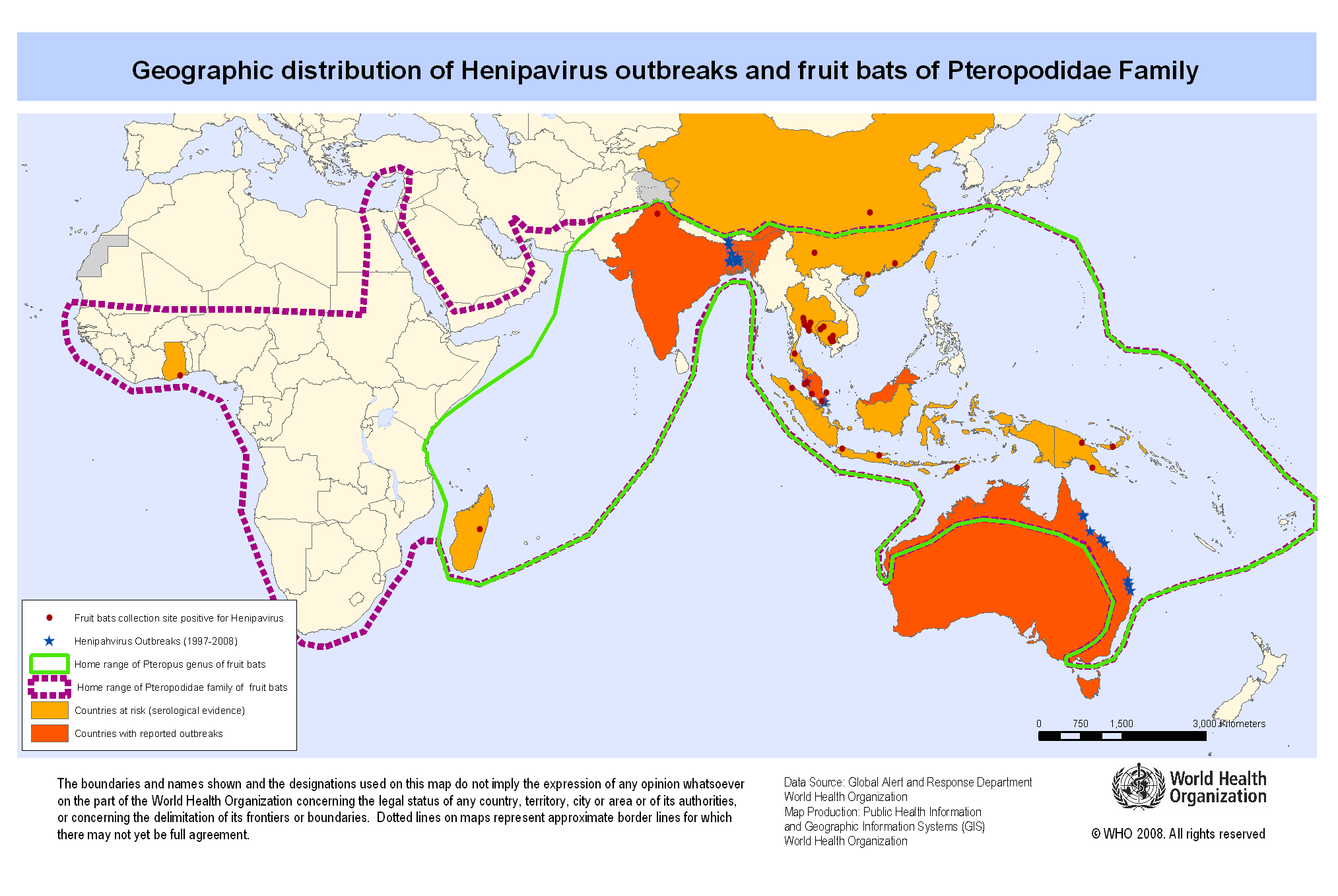
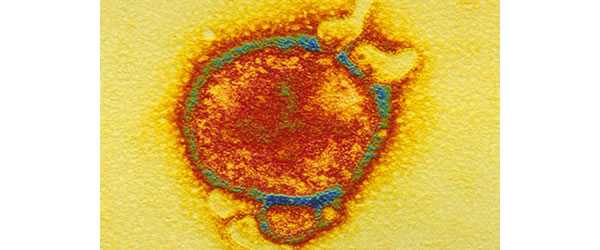
Have you ever heard of the Hendra virus? What about the Nipah virus? Living in the western hemisphere means you have most likely never heard of either of these viruses. However, you probably heard of the movie “Contagion”, a movie that was released early September of this year. The featured virus of the movie, MEV-1, was inspired by the Nipah virus, both being spread by fruit bats. An antibody against the Hendra virus has been designed (source: http://www.sciencenews.org/view/generic/id/335331/title/Stopping_a_real-life_Contagion), and is in the process of mass production. The Nipah virus invades cells through the same portals as the Hendra virus, and as such, the antibody has the potential to cure both viruses.
The Hendra virus is not known for killing people. Rather, it is better known for infecting and killing horses, with only a dozen people having contracted the Hendra virus, and even fewer dying. Conversely, the Nipah virus, its close cousin, is transmitted from infected pigs, and has infected hundreds of people in south East Asia, with a mortality rate of 40 to 70 percent.
A team of Canadian and American scientists were testing antibodies for the Hendra virus, and found that a particular antibody, named m102, had the ability to block the Hendra virus from attaching to a cell. The antibody was then modified and, like a drug, mass-produced.
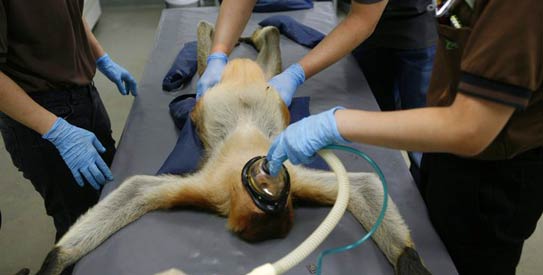
In the Health’s Rocky Mountain Laboratories in Hamilton, Montana, the researchers tested the fruits of their work on 14 African green monkeys. The Hendra virus was squirted into the monkey’s tracheas to infect them with the Hendra virus.
The control group contained two of the infected monkeys, both left untreated. Within eight days, both monkeys were lethally diseased.
The 12 monkeys of the experimental group were given two doses of the m102 antibody within 10, 24, or 72 hours of being infected. All 12 monkeys survived.
The Hendra and Nipah virus use two cell-surface protein transporters to invade cells. The modified m102 antibody binds to these membrane proteins, preventing entry of the Hendra and Nipah virus.
The m102 antibody has already proven successful on fending the Nipah virus in ferrets, with testing on Nipah-infected green monkeys currently underway
With the test on monkeys yielding positive results, the research team now plans to pass the regulations that bar them from human testing. Prior to this, a woman and her daughter had taken the antibody as an emergency treatment to a possible infection to the Hendra virus. While they did not become sick, it is yet unclear whether they were in fact, exposed to the Hendra virus.
The findings of this study are good news to those who live in South East Asia, the most exposed region of the world to the virus. Since 1998, 10 tragic Nipah virus outbreaks have been recorded. The most recent outbreak, in February 2011, resulted in the deaths of 21 infected schoolchildren. Clearly, the Nipah disease is still deadly and prevalent. With all the regulations that the antibody must pass, it may be a while till the antibody is available for public use. While the regulations for human testing and human use serves to protect us from further debilitation or even worse problems, it may hamper the process of making the modified m102 antibody available. In the face of the Nipah virus’ 40-70 percent fatality rate, do the regulations become inconveniences?
Figure 1: Demonstates potential incorporation of technology into existing sidewalks in populated areas.
The world today is constantly struggling to find new, environmentally friendly ways to generate energy. The major power sources today include oil, gas, coal, hydroelectric, and nuclear power. Until recently no one has thought to use everyday life to help generate usable energy.
Laurence Kembell-Cook, director of Pavegen Systems, has had the ingenious idea to harvest electrical energy from pedestrian’s footsteps. He is going to use sidewalk tiles that will be connected to a lithium battery to supply energy to electrically powered devices in the surrounding area. This could range from traffic lights to advertisement boards on sidewalks or supply energy to light up displays at the mall.
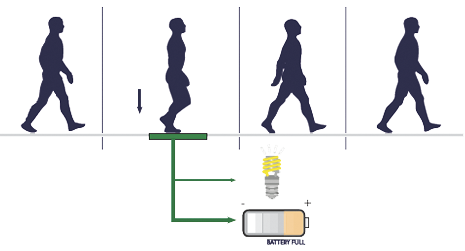
Figure 3:Simple schematic of Pavegen tile mechanism
The basic design is outlined in Figure 2 and a demonstration of the Pavegen tile system can be found online . The pedestrian will step on the tile, displayed in Figure 3, which will cause it to glow, just like the tiles in Michael Jackson’s “Billie Jean” music video. The five-millimeter compression will initiate a mechanism (unreleased to the public) which allows the kinetic energy to by converted to usable electricity. The tile can also store the energy for up to three days in an onboard battery. Each step on one of these tiles contributes 2.1 W per hour of electricity. Out of the energy the tile absorbs, only five percent goes into lighting up the tile leaving 95 percent of the energy to be used elsewhere. Personally, I believe the energy to light the tile is significant as it gives people a positive reinforcement,which may increase their participation. However,
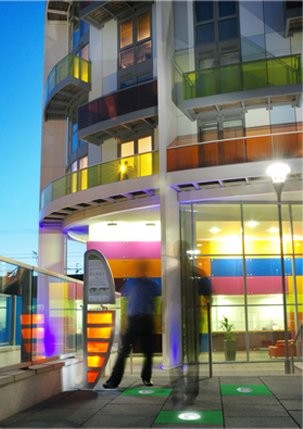
Figure 3: The light up tile model to be used
it also could be argued that energy lighting the tile is wasting energy that could be used elsewhere which I also recognize. The tile itself is made of nearly 100 percent recycled materials, mostly consisting of rubber and some stainless steal which both contribute to its durability. These tiles are designed to be weather resistant, water-resistant, and are easily added to existing structures. The company claims the lifespan of each tile is approximately 5 years or 20 million steps.
Figure 4: Computer generated models of the applications of this technology on sidewalks in front of the Westfield Stratford City Mall.
The first commercial application will be placing 20 tiles across a very busy intersection in London between London’s Olympic stadium and the newly opened Westfield Stratford City mall. The opening of the mall alone is estimated to bring in around 30 million customers within the first year, that’s a lot of steps!
The aim of this project it to collect a small amount of energy from a large number of people. The growth of this technology will rely heavily on the tiles production costs. If this project gets approved the company hopes to introduce this technology into subway stations, malls, or any other high traffic areas. I believe this would be a fantastic venture for our society so we can finally take a stand, or a stroll, towards helping generate clean energy in the future.
Figure 5: Computer generated models of the applications of this technology in subway staircases.
You might be familiar with the green horseradish paste that comes with sushi — wasabi. Scientists in Japan used the pungent smell of wasabi as an alarm to alert people of a fire. This idea seems incredible, but it was motivated by efforts to create an alarm system effective for people with hearing difficulties.
Wasabi smoke alarm. Photo by Air Water Safety Service.
Japan’s news stations Asahi and NHK described the progress of this project from 2006 to 2008 (link to news in Japanese text). The basic structure of the alarm is as follows. A mix of wasabi and mints create a bitter and stinging smell that stimulates the mucous membrane within the nose. This smell is then collected into a pressurized can. When the fire alarm bell rings, the machine detects the sound and relays an electric signal to trigger the release of the wasabi smell.
Medical equipment manufacturers collaborated to produce this wasabi alarm. Experiments conducted by the Shiga University of Medical Science illustrated the efficacy of this wasabi alarm to wake up people who are sound asleep. For a subject pool of 14 males and females in their 20s to 40s, the researchers found that except for one person who had a stuffy nose, all other 13 people woke up within 2 minutes. Four of these subjects had a hearing impairment, and these people woke up within thirty seconds. The fastest record-response was ten seconds. After experiencing the pungent smell, the test subjects strongly supported the implementation of this wasabi alarm device.
This invention received international attention in the Ig Nobel Prize and in news reports by BBC and Reuters. The following video shows BBC’s report on the wasabi alarm.
Other fire alarm systems made for the deaf have used light and vibrations but with mediocre success. Light is hard to notice while asleep, and vibrations require the machine to be worn by the person at all times to detect any movement. Researchers hope that this wasabi alarm system would be used effectively in conjunction with these earlier alarm systems.
“Achievements that first make people laugh, and then make them think” is the core principle of the Ig Nobel Prize. The humorous aspect of the wasabi alarm caught my attention. However, I soon started to question the use of such an invention, and this curiosity directed me to read about the weaknesses of a sound-based alarm. This research for sure made me think.
Plastic. Everyone is familiar with it; it’s used in the majority of products that are available to us. Yet because it is so frequent, many people do not take enough time to consider the effects that such a large industry has on the environment. Unknown to many, over 1 trillion plastic bags are used worldwide every year. According to the China Trade News, China alone uses 3 billion plastic bags per day. All this amounts to about 1 million plastic bags being used every minute. However, despite the immense usage of plastics bags, hardly any actually end up being recycled. For example, according to the BBC, in the UK, only 1 in 200 plastic bags get recycled. As such, more than 3.5 million tons of plastic was discarded in 2008 alone. This amounts to a massive global footprint, whose blame can be shared throughout the world.
What people fail to understand is that it takes up to 1,000 years for a plastic bag to degrade. This means that when you throw out the plastic bag that your subway sandwich came in only a few minutes ago, that bag will still be around a millennium later, long after your have passed away.
Plastic In Our World
plastic can end up in the environment by a simple gust of wind. (taken from www.reuseit.com)
So, from this, one can understand that every piece of plastic ever made, since its creation in 1862 by Alexander Parkes, is still floating around somewhere today. As such, where is all this plastic ending up? There are many theories and myths out there, but one of the main ones is of an island of plastic in the middle of the ocean that is bigger than the state of Texas. The sad thing is that this story holds more truth than fiction.
News broadcast on the Great Pacific Gyre found on YouTube
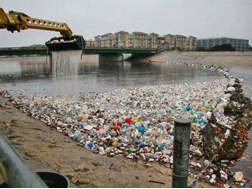
Even more plastics end up floating to the sea via our modern waterways
The Pacific Gyre
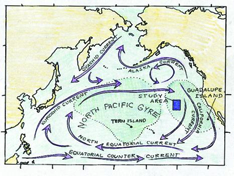
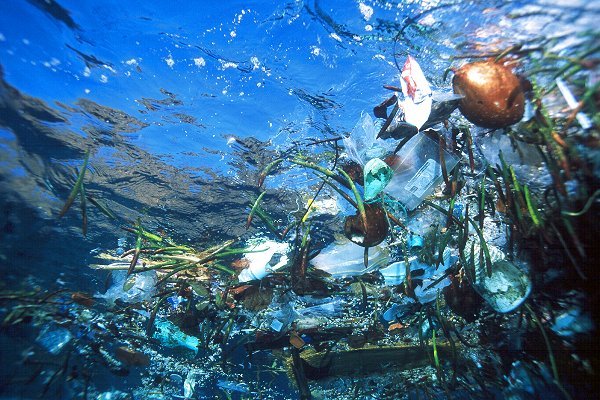
Every story about the island is slightly different, just as every researcher has observed a different thing. As such, many people have written it off as an urban myth. The fact is that there is a vortex of currents called to Pacific Gyre, located in the Pacific Ocean and stretching from coast of California to Japan. This current formation has historically been the collecting point for all different kinds of debris. However, in recent history, it has become known as the collection point for plastic. It is estimated that over 90% of the floating debris is plastic. Originating from land, waterways and wind, millions of tons of plastic are cast into the environment from all over the world. This has resulted in some areas having six times more plastic than plankton, which is the major source of food for many marine organisms. Basically, we have created an ecological disaster.
Current flow of the Pacific Gyre
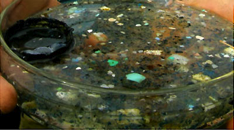
A scientist, named captain Charles Moore, who is the captain of an oceanographic research vessel, took a detour into North Pacific Gyre, on his way back to the United States from Australia. What he found was an ocean filled with tiny pieces of plastic. He and his crew cast plastic trolls into the water and found they came back filled with plastic. Moore commented that many people believe that the worst kind of spill for the ocean is oil, but the reality is that the worst is really the plastic bottles we throw away.
Sample taken from mile long troll for plastic in the Gyre.
Effects on Humans
Amazingly, this section of ocean, literally in the middle of nowhere, with no land or other ships around, holds one of the highest concentrations of plastic per square inch of water. The danger here lies in the main component of plastic, Bisphenol A. This compound, used for the plastic polycarbonates, is made at 7 billion pounds per year and is completely non-recyclable. The scary part is that evidence from all over the world says that every person examined has these chemicals in their bodies. Worse still, in Japan, women who had increased levels of Bisphenol A were the ones who were unable to get pregnant, and continually had miscarriages.
Effects on Animals
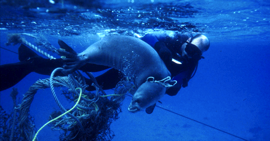
But how is it possible that our trash is coming back to haunt us? It can be explained with one word: bioaccumulation. The ecological effects of plastic in the oceans, starts out at the smallest scale: plankton. There is six times more plastic than plankton in many parts of the ocean, specifically in the Pacific Gyre. Since plankton is one of the most common food sources for marine life, animals are mistaking small pieces of plastic for their food. For example, turtles may mistake a floating plastic bag for a jellyfish, which they can consume. Thus, there is a build up of Bisphenol A in animals. These are then the prey of other, larger animals, and as such bioaccumulation begins. It doesn’t stop until it reaches the top of the food chains and humans. As a result, the contaminations and poison associated with plastic is passed on through nearly every organism. Even despite bioaccumulation, many marine animals die due to the direct effects of being caught in or choking on plastic pieces.
Seal tangled in mass of various strings and fishing line
Dead Albatross found filled with all sizes of various plastics in its stomach.
The main problem with plastic is that it doesn’t chemically break down over time; it simply slowly degrades into smaller and smaller pieces. As a result, the chemicals in this material, specifically the Bisphenol A, increases in concentration, as the pieces get smaller. So it becomes increasingly toxic and near impossible to clean up. These toxins all work their way up the food chain back onto our plates at home.
Since ocean is full of plastic products, the really mystery is, where in the world is there not exposure to them?
What can we do?
Although it seems like too big of a problem to even think about dealing with, we cannot give up hope. There are many ways that you can reduce your plastic intake and output.
Use reusable shopping bags to cut down on unnecessary plastic usage (not only for shopping, but for an everyday bag!)
Buy loose fruit and vegetables from the shops instead of ones that are pre packed in plastic
Buy your meats from a butcher, that way it will be wrapped in paper instead of plastic
If you bring packed lunches with you, don’t wrap everything in plastic, use paper or other containers instead
The goal here, of course, is not to get rid of all the plastic in our lives, that would be impossible. Instead, it is for us to be aware of the damaging effects plastic has on our environment and the simple things that we can do to limit our consumption. This is a real world problem that will be the test for our future scientists to come up with alternative solutions to plastic. As of today it is embedded into our everyday lives, so much so that many people don’t even realize it, but hopefully, in the future, an alternative can successfully be mass produced to limit out plastic waste.
As you start thinking about your video and podcast projects, I thought I would post a couple tutorials about making videos from the Vimeo Video School. There are a lot more to be found if you follow the link, but here are a couple embedded right here on the blog that I think I particularly important. The first one includes some shooting basics and the second one discusses general video editing. Depending on which piece of software you are using for the editing, you can watch a more detailed video about using Microsoft Movie Maker (on a PC) or iMovie (on a Mac).
Warning: Blog Post contains graphic images and video which may offend or disturb some viewers. Blogger does not take responsibility for any sudden onsets of nausea. Viewer discretion is advised.
What Is It?
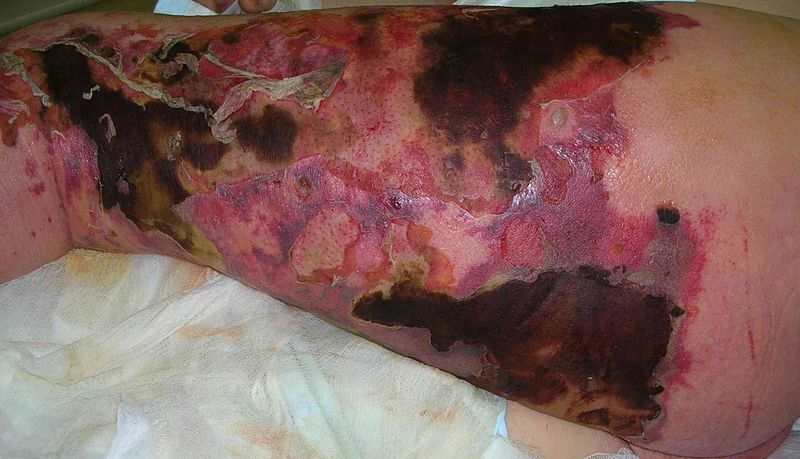
Flesh-eating disease, or Necrotizing fasciitis as it is formally known, is actually a bacterial infection caused by several types of bacteria but most commonly, Streptococcus pyogenes. Invading by a very small wound, the bacteria will produce chemical toxins which begin to destroy tissues and muscles. Within a day, symptoms will begin to appear but they are mild at first and often mistaken as the flu with fever, nausea, and vomiting common. Eventually, the wound area will begin to swell and pain will increase. In the picture below, you can see the presence of gangrene or dead tissue in a leg with the disease.
Necrotizing fasciitities left leg. Image from Wikipedia.
Now, antibiotics will treat the disease in its early state but all too often, the disease is discovered too late in its progression. In that case, the only treatment is to remove the infected body parts. A few patients have gone to the hospital, only to wake up a few days later out of a medical coma to find themselves missing their limbs. About 20-30% of cases are fatal.
Check out this compelling video of a woman who was lucky enough to survive the disease but was not lucky enough to keep all her limbs.
“Flesh-eating disease took her arms and legs, but not her spirit.” Video posted by YouTube user druidhills2005.
Where Is It Today?
In New Zealand, cases of flesh-eating disease have actually been on the rise according to the Ministry of Health of New Zealand. In 1990, there were only about 10 cases of the disease but in 2006, there were more than 70 cases. New Zealand is a first world country just like Canada and the United States so this is some surprising news that should hit close to home.
Whoa! What Should I Do?
Don’t panic yet! The disease is still very rare and in Canada (with a population almost 8 times larger than New Zealand), only 90-200 cases are reported each year. However, it is still probably a pretty good idea to avoid it. To minimize your risk, Health Canada advises you to “take care of minor wounds and cuts” making sure to “wash the affected area in warm soapy water.” Additionally, if you do come in contact with someone you know that has been inflicted with the disease, see a doctor immediately. In general, take care of yourself. Those with a weakened immune system or with chronic diseases are particularly vulnerable.
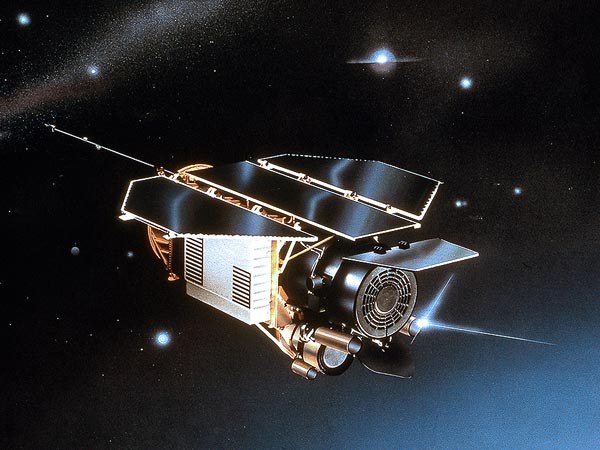
Illustration courtesy DLR: An artist’s impression of ROSAT in orbit.
Dead Satellites are being ‘unwelcome guests’ recently. The 6-ton Upper Atmosphere Research Satellite (UARS) satellite has entered the Earth’s atmosphere early morning of September 24th 2011, but where it has crashed remains unknown. According to NASA, debris would likely have fallen in Ocean, and it may never be found.
Another defunct German satellite called ROSAT is headed straight for the earth this weekend and there is a higher chance(1 in 2,000 while UARS’ has been 1 in 3,200) that a piece of space debris could hit someone.
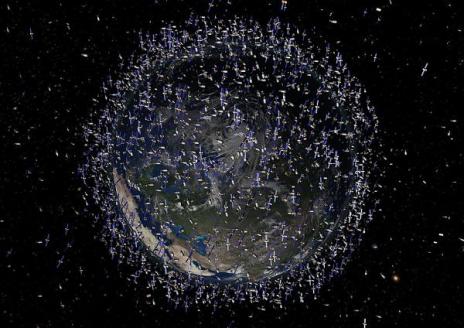
European Space Agency : The Earth
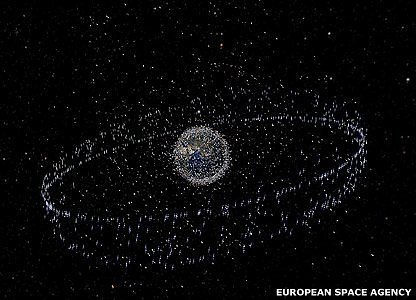
Usually satellites’ lifespan depends on their sizes; life span is determined by how much liquid fuel they carry aboard. A satellite that has exceeded its useful purpose has several final resting places. These depend on the amount of fuel available on the satellite, and whether ground control is still able to manoeuvre it. One method is to move the satellite into a ‘graveyard orbit’ (geostationary orbit), which is higher in orbital band and no other satellites are orbiting. Dying satellite can be left to degrade over time, but as it breaks up and potentially shifts in orbit, this could still prove dangerous to other satellites.
European Space Agency: Red dots= debris, White dots= operating satellites, Outer ring= satellites in geostationary orbit
Some satellites are merely left in their current orbits if uncontrollable. Other satellites are purposely moved lower into the atmosphere so they burn up and hopefully disintegrate before reaching the Earth. While this is usually the case there have been some notable exceptions, including NASA’s Skylab station in 1979, NASA’s UARS and ROSAT as mentioned earlier.
According to the Federal Communications Commission, any satellite with altitude in geostationary orbit, meaning that satellites just below 36,000 km, must be moved farther away from the Earth at the end of its useful life.
Satellites fall because of frictions and resistance of the atmosphere. In theory, if satellites’ centrifugal force and the Earth’s gravity balance, satellites can circulate the orbit without falling. Scientists probably have worked on different calculations on how satellites work; however, such recent events may appear as lack of preparation and carefulness. There are no clear back-up plans suggested if their expectations are not met. Our lives certainly have become more convenient with satellites, but if what we sent out in the past can come back to hurt us, how meaningful are those techniques? We have to look out for the safety of satellites rigorously.
European Space Agency: Computer-generated image of the Earth
Not only that, there is a real danger. Concerning that we are sending the dead satellites to outer orbit and keep sending new satellites without proper disposal methods, our planet is turning into the largest dumping ground. Is this what you expect our planet to look like? Would this be what aliens expect the earth to be? They will have problems figuring out whether this Saturn-like planet is the earth!