
Categories
Course Reflections Issues in Science Public Engagement Science Communication

“A tablet a day, and I was limitless.”

Source: Film O Filia


If someone approached you claiming their product would allow you to use 100% of your brain, would you buy it?


Source: National Institute of Mental Health

You are probably familiar with this scenario if you watched the thriller ‘Limitless’, released earlier this year, starring Bradley Cooper. The plot of ‘Limitless’ is based on one of the most commonly perpetuated ideas in society, that we use only 10% of our brains (this number varies depending on who you ask). But is this science fact or science fiction? Before you aspire to become an all-encompassing genius like Bradley Cooper in the film, let’s let science speak for itself.


The human brain is the most complex organ of the body and controls every aspect of our lives. It weighs roughly 1.4 kg, and uses a whopping 20% of all the food energy we take in. Scientists have divided the brain into many sections based on the functions they perform. These are some of the major brain lobes and their function:

-Frontal Lobe: reasoning, planning, parts of speech, movement, emotions, and problem solving.

-Parietal Lobe: associated with movement, orientation, recognition, and perception of stimuli.

-Occipital Lobe: associated with visual processing.

-Temporal Lobe: associated with perception and recognition of auditory stimuli, memory, and speech.

This is by no means an exhaustive list, as these lobes contain several sub-divisions, which are known to perform even specific tasks.
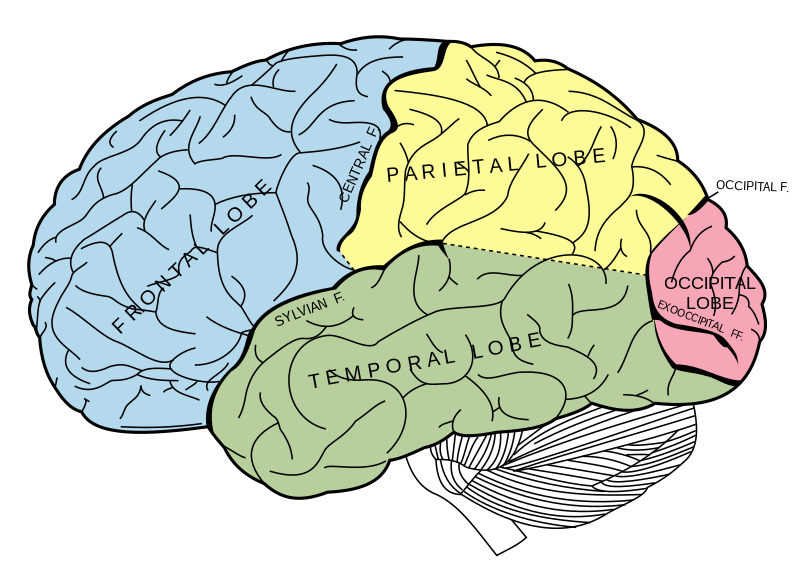
Source: Mysid

Evidently, these divisions compose the entire brain, not a mere 10% of it. What is true then, is that we may not use all parts of our brain at the same time, but every section of the brain is necessarily used at some point to perform certain tasks. We know this to be true by studies of brain damage. When almost any part of the brain is damaged, there is always a loss of abilities. Furthermore, brain-imaging technologies have shown several areas of the brain (more than 10%) to be active at the same time under many circumstances, such as during sleep. This fact alone is enough to debunk the notion of using 10% of our brains as a myth by default.
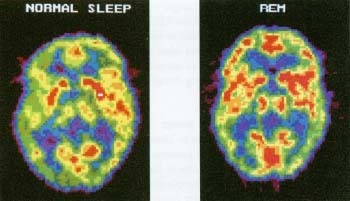
 

Source: Human Diseases and Conditions

So, despite how much science has progressed in studying the brain, most people still dwell in ignorant bliss. Perhaps because advertisers and the media prey on them by stating this phrase as scientific fact. Shockingly, even people who profess scientific background take part in spreading this misinformation. The truth is, this is a misquote that has gone viral, and is absolutely misleading people as science.


Let’s focus on the opening question.


There do exist substances, such as certain drugs or functional foods that can improve or enhance mental functions. One such substance that you may be familiar with is the caffeine in coffee or energy drinks, which improves memory and concentration. Nonetheless, based on the claims of the person, it would be wise to refuse their offer, because truly humans already use 100% of their brains.


Further reading:

http://faculty.washington.edu/chudler/tenper.html

 http://en.wikipedia.org/wiki/10%25_of_brain_myth

Categories
Biological Sciences

Music Training: Brain Plasticity

Music and Neuroscience

“Music relates to many brain functions like perception, action, cognition, emotion, learning and memory and therefore music is an ideal tool to investigate how the human brain is working and how different brain functions interact.”

Music is a research area for neuroscientists – scientists who study nervous system – because of its relation to various brain functions mentioned above. I came across a very interesting video on YouTube on Music Processing. The video demonstrates the basic knowledge of the processing of music in the brain.

About Neuroplasticity and Means to Investigate

The brain develop much quickly at early childhood of a person’s life; however, the development of the brain does not stop at early childhood. The brain continues developing and being modified by experiences.  To investigate and observe the changes within the brain, non-invasive scientific methods are developed, such as electroencephalography (EEG) and magnetoencephalography (MEG).

Music and Plasticity

Both long-term and short-term music trainings have effects on brain plasticity. Experiments were done on musicians and non-musicians. Some interesting findings are:

  • Musicians are generally better in recognition of tones, especially in instrumental tones (piano), than non-musicians. The longer the music training, the large the difference in representation between pure tones and piano tones.
  • Musicians can much readily distinguish the timbre from their trained instruments than from an untrained instrument.
  • When non-musicians were exposed to short-term music training, the ones that had practiced on piano performed better than the ones that only had auditory training.
  • etc.

Those are wonderful things associated with music on the topic of neuroplasticity. Nonetheless, there is a “dark side” to it, because maladaptive reorganization in auditory nervous system can result tinnitus. This condition can severely affect people’s quality of life in a negative way. Through music training, the effects of tinnitus on subjects can be dramatically decreased.

“The effects of training on cortical plasticity involving music hold promising prospects for neuronal rehabilitation, as shown in the last tinnitus study”.

——————————————————————————————————–

Further Reading:

Pantev, Christo; Herholz, Sibylle C. Plasticity of the human auditory cortex related to musical training. Elsevier. Neuroscience & Biobehaviroral Review. November 2011.


Categories
Biological Sciences Fun! Science Communication

It’s like Autocorrect, but for your brain


If you’ve ever used a word processor like Microsoft Word before, you’ve probably encountered the wonderful Autocorrect function. Autocorrect fixes some commonly made spelling errors as you type, which helps improve typing speed by reducing the need to manually correct those mistakes.

Interestingly enough, the human brain also has a built-in mechanism that catches these types of errors and mentally fixes them while they’re being read. Let’s take a look at this paragraph:

Aoccdrnig to a rscheearch at Cmabrigde Uinervtisy, it deosn’t mttaer in waht oredr the ltteers in a wrod are, the olny iprmoetnt tihng is taht the frist and lsat ltteer be at the rghit pclae. The rset can be a toatl mses and you can sitll raed it wouthit porbelm. Tihs is bcuseae the huamn mnid deos not raed ervey lteter by istlef, but the wrod as a wlohe.

Weird, isn’t it? However, there are a few flaws in this argument.

According to the way the letters are supposed to be shuffled (the first and last letter of each word stays in the same position), words with three or fewer letters are unchanged. There are 32 words that are unaffected by the shuffling — that’s almost half the paragraph! Likewise, the shuffled four-letter words are easy to read because they can only be rearranged by swapping the middle two letters. For the remaining words, the rearrangements of the letters are fairly intuitive. For example, “porbelm” is only two letter switches away from “problem.”

Although it is true that we consider the entire word instead of just the individual letters when we read, the examples presented in the paragraph above are much too simple. Consider words like “Cgibramde” as opposed to “Cmabrigde” that was in the paragraph; a well-shuffled word is much harder to recognize.

What does this have to do with communicating science? Being able to be clearly understood is an important skill to have when it comes to sharing knowledge and information with others. While there is some truth with the “letter order doesn’t matter” argument (in the fact that the brain processes entire words at a time instead of letter-by-letter), a lot of it is just misleading science.


Further reading:

Spam prevention powered by Akismet