Categories
Environment Issues in Science Public Engagement Science Communication Science in the News

So is it too late?! Just ask David Suzuki…

On November 3rd, I witnessed one of the greatest examples of communicating science that I have ever seen. That evening, the University of British Columbia (UBC) was the lucky host to one of the most influential Canadians of our time: David Suzuki. He presented a lecture entitled “The Global Eco-crisis: Is it too late?”

 

David Suzuki, with a grayling from the Hart River, 2011. Photo by peelwatershed.

Who is David Suzuki?

If you have been living under a rock for the past few decades, you wouldn’t know that David Suzuki is one of the most well-known activists for reversing climate change, writing many books and hosting several TV shows on the subject. Most notably, he hosted the Canadian TV series, “The Nature of Things.” In 1990, David Suzuki co-founded the “David Suzuki Foundation,” a non-profit organization, which focuses on sustainability and climate change.


As David Suzuki braced the speaking podium, I prepared myself to be changed.


Humans are unique

David Suzuki began to trace the origin of humans from our common ancestors in Africa to today. What made   humans unique, he claimed, was their foresight. That is, our innate ability to predict or plan the future. He   explained that humans moved from Africa to eventually cover the world. Using our foresight, we exploited the resources of every location, only to move on when those resources were depleted.


Laws that we CAN change

Dr. Suzuki went on to describe the so-called “laws” that we have imposed on society today, specifically, a “law” called capitalism. But, he said, “laws” like capitalism aren’t really laws at all but they are “nuts!” because we can change them. With capitalism, economists rule the world and they just don’t give a “shit” about our environment and what we do to it. It is time that we change these laws and take control back from the economists. To do so, we have to take back our government and make it more representative. Vote.


Stop the excuses!

Moving on to current efforts being made, David Suzuki claimed that our government is full of excuses. As an example, he discussed the carbon tax. In Canada, we claimed that our businesses couldn’t survive a $15/ton carbon tax. But in Sweden, their business are doing just fine with a $120/ton carbon tax. It is time that we stop making excuses and get to work.


Never too late

Drop in the bucket. Photo by theilr.


Inspiring us, David Suzuki concluded that it isn’t too late. We can save our environment but first, we have to take back our government and the only way to do that is to vote. You may just feel like a drop in a bucket but he reminded us, with enough drops, we can fill the bucket.

From this lecture, I didn’t just learn that we need to change our environment but I also learned how to connect with your audience. David Suzuki kept the science basic and used language that was not only fun (there were more than a few swear words…) but easy to understand.

David Suzuki left me stirred.
Categories
General

Blame Education

For my blog, I wanted to share with you some of Ken Robinson’s views on how education kills children’s creativity. 

We all know how important it is to get an education. After all, we are raised to believe that we will not obtain a job without one. Our every step seems to be already planned out: first, go to school and then begin a career. But we do not know what the future will bring. Then why should we plan for the next 40+ years of our lives when realistically we do not know how the world will look in five years?


   Schools are teaching children to meet the future by what they did in the past. Mathematics, languages, and humanities were considered more important than the arts. However, this method is not practical anymore, for the world has drastically changed. The arts such as music, theatre, and dance now rival the once important subjects. Also, in the past kids went to school because they knew they would get a job afterwards. But nowadays, kids do not believe that they will secure a job once they finish high school or university. This is largely due to the struggling economy and thus observing how unemployment rates have sky rocketed. Therefore, what is the point of going to school if the probability of getting a job is not very high?


Robinson defines creativity as the original ideas that have value. What happened to adults’ creativity? The saying “making mistakes helps you learn” seems to be lost in adults. This is because today’s society penalizes people’s mistakes so harshly that adults are afraid to be wrong. And as a result their pure sense of creativity is lost. On the other hand, have you noticed what a child does when they are uncertain the answer? They will say something, anything that they believe to be correct. They are not afraid to take chances.


At birth, every parent has big dreams for their child. For example, they may want their child to achieve the highest academic standing in school. However, they fail to realize that children are naturally very creative and innovative. If a child is struggling in school, many parents think that they have a medical problem. For example, many of these children are diagnosed with Attention Deficit Hyperactivity Disorder (ADHD). Often times, they are required to take potentially harmful medications like Adderall and Ritalin to help them focus and calm down. But is this the solution? Is it their fault for being so distracted? Probably not. Children are surrounded by a flood of exciting things to do, like watching TV, going on the computer, or playing with iPhones; as such, to them, the subjects they learn at school are boring and pointless. And yet society is still penalizing children for getting distracted during school. Instead they should be reworking how the curriculum is taught. These medications deaden children’s senses, making them unable to fully be themselves; thus their creativity is being killed.


In addition, the structure of the education system restricts the potential of some children. For example, children learn in a variety of ways. Younger children may be smarter than older children, yet they are strictly placed into grades based on their age. Also, some children learn better at night than in the morning, and some children learn better on their own as opposed to working in groups. Our education system requires a strong level of conformity from children. Furthermore, children spend ten years in school programmed to think that there is just one answer to a problem. They steadily lose the ability to think outside the box.


Whether it is trying to find a quick fix for a distraction problem or the basic structure of how schools are run, children are not getting the individual attention they require. Robinson says that it is time for us to “…[see] our creative capacities for the richness they are and [see] our children for the hope that they are.”


You Tube Video:

How Can We Nurture Creativity In Educational Contexts?


Reference:

Robinson, K. (2006). Do schools kill creativity? Retrieved November 2, 2011, from


Categories
Communicator Profiles Issues in Science Public Engagement Science Communication

CoSTEP: Communicators in Science and Technology Education Program

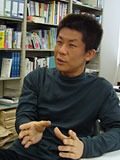
There is a communications in science course that I would like to share. This past summer, I heard about a Japanese researcher named Dr. Gensei Ishimura, and I found through his website that he is one of the leading members of a program for training effective science communicators. This program is called CoSTEP, or Communicators in Science and Technology Education Program. This effort started out in Hokkaido University in northern Japan. It also received international attention through the American Association for the Advancement of Science (AAAS) held in Boston in 2008.


In an interview, Dr. Ishimura shared some methods of getting people involved in science communication.

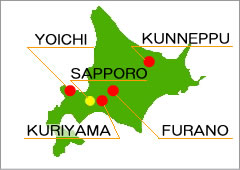
  1. Sapporo Kanko Science Map (Sapporo Tourism Science Map)—This project explored how to use the web to communicate information, a similar aim to this SCIE300 course blog assignment. The CoSTEP teaching team preferred blogs as a blog format offers a simple method of updating information on the web. Dr. Ishimura reasoned that since there is so much information on the web, he must make his blog stand out by emphasizing the aspects unique to CoSTEP. Students enrolled in CoSTEP are mostly residents of Sapporo city with a science background, so they were asked to write feature articles on aspects of science found in various locations around Sapporo and to organize them into a map. As a final assessment, they compiled a manual for creating the science map and made it accessible to the public.


This shows that the content of the blogs as well as the method of creating it is important to learn about communication.


  1. Newspaper publication—In this component of the CoSTEP course, students learned how to write and publish newspaper articles. There were four workshops in total to understand and expand on the publishers’ ability to communicate to readers through newspapers. An example of the questions explored was “where do people pay attention to on a newspaper?” This type of data turned out to be a novel finding even for the publishers. Students also modeled a grocery store management group and presented on the advantages of posting an advertisement in a high school newspaper. This aimed to connect high school students and the publishers.


Newspapers are another popular mode of communication. This activity seems to address important ideas such as layout and targeting a specific audience.


Dr. Ishimura himself is a science communicator. His previous experience in the management of science museum exhibits shows a career where science communication skills directly apply to the aims of the institution.


References

Hokkaido University. (2008, January 29) Ishimura Gensei san ni kiku – Hokkaido Daigaku, AAAS e [Asking Mr. Ishimura Gensei – Hokkaido University, to AAAS]. Message posted to http://fox231.hucc.hokudai.ac.jp/AAAS2008/2008/01/post-6.html


IFES-GCOE Kankyo Kyoiku Kenkyu Koryu Suishin shitsu [Regioinal Education and Outreach Promotion Office. HokkaidoUniversity]. (2011). Ishimura Gensei san – “Watashi” no Kenkyuusha Zukan [Mr. Gensei Ishimura – “My” Researcher Encyclopedia]. Retrieved September 30, 2011, from http://gcoe.ees.hokudai.ac.jp/mfrs/?p=1160&page=2

Spam prevention powered by Akismet