One of the most deadly killers in our modern day world is an invisible one. It is clear, scentless and tasteless and goes by the common name: water. In Canada, we are fortunate enough to be able to grab a quick glass of water from the kitchen sink and trust that it comes from a safe source. However, we are one of the few countries in the world that can boast about such a luxury.
Some statistics about dirty water
- 884 million people in the world do not have access to safe water (approximately 1/8th of the worlds population)
- 2.6 billion people in the world do not have access to adequate sanitation (approximately 2/5th of the worlds population)
- 1.4 million children die every year from diarrhea caused by unclean water and poor sanitation (approximately 4,000 child deaths a day)
- 50 percent of people are affected by diarrhea from dirty water
In many third world countries, when disasters such as tsunamis hit, people are forced to flee their homes for higher ground and drink contaminated water. Yet when hurricane Katrina hit New Orleans, in 2005, it took five days to get water to the superdome despite the fact that it occurred in the United States, a first world country. It seems as though there hasn’t been any improvements in the way governments handle these disasters, no matter if it is a poor or rich region.
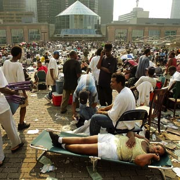
Normally in a crisis, governments and aid relief workers are able to ship water and set up camps for people in approximately a few weeks following a disaster. This means that people are forced to come to the camps for safe drinking water. Unfortunately, when so many people are clumped together, disease is spread, more resources are needed and the problem inflates.When faced with such a problem, it sometimes seems too huge to be able to deal with. Governments and society, as a whole, think that it is an impossible situation. However, one man decided to think differently and change our way of dealing with this problem.
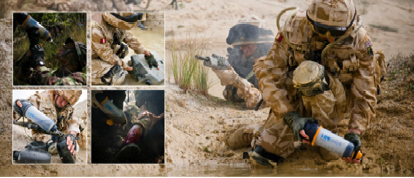
A scientist by the name of Micheal Pritchard has created a water filtration system that by far out-competes the old designs. Until now, the best hand filters available on the market were able to filter down to 200nm material. However, Mr. Pritchard realized that the smallest bacteria are 200nm and the smallest viruses are 25nm. As such, these filtration systems are not nearly good enough to completely sterilize dirty water.
As a result, Micheal Pritchard created his ‘Life saver bottle.’ His design utilizes 15nm-filtering pores, which means that absolutely no impurities will get through and potentially infect the consumer. The bottles last for up to 6000L and the 25000L Jerrycan is enough for a family of 4 for 3 years, with a total cost of half a cent per day to run. Each comes with fail-safe technology that automatically shuts off the system when it reaches this amount to protect the user.
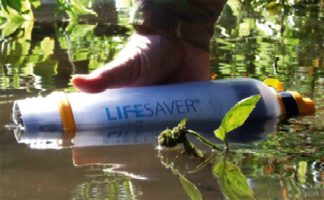
What this means, is that people can stay put and get their own water, and governments won’t have to ship water for copious amounts of money to aid masses of affected people. They will never again need to walk miles to get to the nearest clean water source. It is as simple as filing up the bottle with whatever water source is available, whether that’s a dirty river or a nearby pond, giving the pump handle a few pushes, and in seconds sterile, clean drinking water is produced.
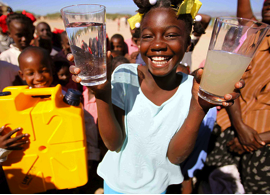
For just $8 billion, we can obtain the worlds ‘millennium goal’ and halve the amount of people without access to safe drinking water. However, for only $20 billion, everyone in the world can have access to safe drinking water. This means that the 3.5 billion people that suffer every year and the 2 million children that die every year will now live.
LifeSaver Jerrycans put into action in Haiti (YouTube)
References