Categories
Employment Funding and Awards

Tandem UBC Language Exchange

From: Tandem UBC [mailto:tandemubc@gmail.com]
Sent: October-15-12 10:05 PM
Subject: Exciting opportunity for EDCP students!

Hello!

My name is Olivia and I am the Coordinator for the Tandem UBC Language Exchange Program, a student-run program that works closely together with the Centre for Intercultural Language Studies (CILS). We are currently taking in applications for becoming a Facilitator next semester, and we would really appreciate it if you could help us distribute this message, maybe through a list-serv or social media? The small blurb is below:

Are you interested in languages and in cultural exchange? There’s an exciting opportunity for next term! Apply to be a Volunteer Facilitator for TANDEM UBC Language Exchange Program. Applications accepted until Saturday October 20th.
www.goo.gl/adbFc

Thank you very much! Please let me know if you have any questions.

Best regards,

Olivia

Categories
AERA Conferences

Call for Proposals – CSSE 2013 Victoria June 1-5

On behalf of the CSSE Board of Directors, I would like to take this opportunity to invite faculty, staff and graduate students from your institution to submit a presentation proposal for the 2013 CSSE Annual Conference in Victoria, British Columbia on June 1–5, 2013. Held in conjunction with the Congress of the Humanities and Social Sciences, this bilingual conference provides an opportunity for discussion of educational issues among practitioners and educational scholars from across the nation.

We encourage participative sessions in various formats including themed, symposium/panel, small round table, multiple paper, single paper, and poster (featuring the use of graphic or other multimedia material). Presentation proposals can be submitted October 10, 2012 – November 21, 2012 by going to our website: http://www.csse-scee.ca/conference/. I have also attached a Call for Presentations flyer for your convenience.

We would appreciate you forwarding this invitation to other faculty, staff and graduate students, and look forward to your participation in this key event for education professionals – The 2013 CSSE Annual Conference.

Sincerely,

Victor Glickman, EdD
CSSE President – Président
Canadian Society for the Study of Education

Categories
AERA Funding and Awards

Funding – AERA Fellowship and Grant Deadlines

Dear AERA Member:

In our efforts to strengthen the pipeline to education research, AERA announces its 2013–2014 fellowship programs and funding opportunities for graduate students and early career scholars. These programs provide mentoring and funding support to develop research skills and conduct studies in education related fields and topics. We are seeking your assistance in sharing this information and identifying potential candidates. Information about the programs and the upcoming application deadlines are available at http://www.aera.net/AERAfundingopportunities. Underrepresented racial and ethnic minorities and women are encouraged to apply. Below are brief descriptions of the AERA research funding opportunities.

Minority Fellowship Program in Education Research
AERA offers dissertation support through the Minority Dissertation Fellowship Program in Education Research. This program offers doctoral fellowships to enhance the competitiveness of outstanding minority scholars for academic appointments at major research universities by supporting their research and by providing mentoring and guidance toward completion of their doctoral studies. Application deadline: November 30, 2012.

AERA-AIR Fellows Program
In collaboration with the American Institutes for Research (AIR), the AERA-AIR Fellows Program aims to build the talent pool of high skilled education researchers experienced in large-scale studies in a major research organization. Fellows will receive mentoring from a diverse group of highly recognized researchers and practitioners in a variety of substantive areas in education. Fellows will hone their skills in all aspects of the research process from proposal development through writing and presentations. Up to three fellows are selected annually for a two-year, rotational position at AIR in Washington, DC. Application deadline: November 30, 2012.

AERA-ETS Fellowship Program in Measurement and Education Research
In collaboration with Educational Testing Service (ETS), AERA offers the AERA-ETS Fellowship Program in Measurement and Education Research. This fellowship is designed to provide learning opportunities and practical experience to recent doctoral degree recipients and to early career research scientists in areas such as educational measurement, assessment design, psychometrics, statistical analyses, large-scale evaluations, and other studies directed toward explaining student progress and achievement. Up to two fellows will be selected for this rotational research position at ETS’s facilities in Princeton, NJ. Application deadline: November 30, 2012.

AERA Grants Program
The AERA Grants Program provides dissertation support and small grants for researchers who conduct studies of education policy and practice using quantitative methods and data from the large-scale data sets sponsored by the National Center for Education Statistics and the National Science Foundation. Application deadline: January 23, 2013.

Visit http://www.aera.net/AERAfundingopportunities for complete program descriptions and application information.

Please feel free to contact me at 202-238-3200 or via e-mail at fellowships@aera.net with any questions. Thank you in advance for sharing this information.

Sincerely,
George L. Wimberly, Ph.D.
Director of Social Justice and Professional Development

Categories
Announcements Publication Opportunities

Call for papers – Canadian Journal of Science, Mathematics, and Technology Education

Dear members of the CCGSE community, 
 
I would like to invite you to submit manuscripts for the upcoming special issue of the Canadian Journal of Science, Mathematics, and Technology Education. This special issue focusses on graduate student innovation in Science, Mathematics, and Technology Education, and will feature articles that are primarily authored by graduate students.

For more information on the call, please see:

http://www.tandf.co.uk/journals/cfp/ucjscfp2.pdf

And for submission, please proceed to:
http://mc.manuscriptcentral.com/ucjs The closing date for submissions is October 31, 2012. Thank you, and I hope you will consider the Journal as the venue for the publication of your work.

sincerely,

michael tan
National Institute of Education (Singapore) http://www.nie.edu.sg
Categories
Announcements

TLEF Events

Our office would like to notify all faculty, staff and students about the following upcoming events related to the Teaching and Learning Enhancement Fund:

  • There will be a TLEF Workshop this Friday, October 5th, 2:00-3:30pm in the Dodson Room (3rd floor) of the Irving K. Barber Learning Centre.  The Workshop will provide information and advice to faculty, staff and students who are considering submitting proposals to the Teaching and Learning Enhancement Fund this year.  Everyone is welcome.
  • We extend a special invitation to all faculty, staff and students to the second annual TLEF Showcase, which will be held on Monday, October 29th, 12:00-1:30pm on the 4th floor of the IKBLC as part of Celebrate Learning Week 2012.  The event features brief presentations from several recipients of TLEF funding, who will describe what they are doing with their TLEF funding and how these initiatives are impacting student learning at UBC.   Following the presentations there will be an opportunity to converse with the presenters and ask questions or share comments and ideas over light refreshments.  The event will launch the annual TLEF Poster Display which will run Oct. 29 – Nov. 2, 2012.

For more information about the TLEF, please visit http://tlef.ubc.ca.

For the Celebrate Learning Week schedule (in progress), please visit http://celebratelearning.ubc.ca/2012-events/.

Categories
Conferences CSSE

Call for Proposals (Poster & Round table) – The Canadian Committee for Graduate Students in Education (CCGSE)

The Canadian Society for the Study of Education (CSSE) is hosting our 41st Annual Conference which will be held between June 1 and June 5 at the University of Victoria in Victoria, BC. Graduate students are invited to submit proposals to the Canadian Committee for Graduate Students in Education (CCGSE) by 15 November 2012 (23h59 Eastern). Proposals received after this date will not be considered.

The general Call for Presentations for the 2013 conference of the Canadian Society for the Study of Education will be posted soon at http://www.csse-scee.ca/conference/.

To ensure a positive conference experience, please read the entire “Call for Presentations” and the “Proposal Submission Primer”. Proposals that do not meet submission requirements will not be considered. Please note: The Canadian Committee for Graduate Students in Education (CCGSE) hold roundtable and poster presentation formats ONLY. Single-paper, multi-paper and symposiums will not be considered within this association. Proposals can be submitted in either the English or French languages.

Description of Formats:

Small Round Table Session includes a small group discussion centered upon prepared paper(s);

Poster Session is an informal presentation and discussion featuring the use of graphic or other multimedia material.

Proposal Summary

The summary must be double-spaced, 11 point or greater, sans-serif font.  The summary must be no more than three pages with an accompanying reference list.

The summary must present specific information based on the type of proposal being submitted and detailed as follows:

Roundtable and Poster Sessions.

The summary should address the following in the order specified and as applicable:

(a) purpose;

(b) perspective(s) or theoretical framework;

(c) methods and/or techniques;

(d) data source(s);

(e) results, conclusions and/or interpretations; and

(f) educational importance of the study.

The deadline for submissions is 15 November 2012.  CSSE is using the Open Conference System (OCS). Please access the system through the CSSE webpage.

Important Dates:

15 November 2012 – Deadline for submission of proposals.

16 November 2012 to January 2013 – Associations and SIGs develop their preliminary programme by reviewing the proposals received.

February 2013 (tentative) – Development of programme, and sending of acceptance or rejection of proposal by Association or SIG coordinator.

March 2013 (tentative) – Programme placed on CSSE Web site.

31 May 2013 – Preconferences

1 – 5 June 2013 – CSSE Annual Conference.  Printed conference programme available at CSSE registration desk.

Categories
Announcements Conferences CSSE

Call for Proposals – Canadian Committee for Graduate Students in Education

The Canadian Society for the Study of Education (CSSE) is hosting our 41st Annual Conference which will be held between June 1 and June 5 at the University of Victoria in Victoria, BC. Graduate students are invited to submit proposals to the Canadian Committee for Graduate Students in Education (CCGSE) by 15 November 2012 (23h59 Eastern). Proposals received after this date will not be considered.

The general Call for Presentations for the 2013 conference of the Canadian Society for the Study of Education will be posted soon at http://www.csse-scee.ca/conference/.

To ensure a positive conference experience, please read the entire “Call for Presentations” and the “Proposal Submission Primer”. Proposals that do not meet submission requirements will not be considered. Please note: The Canadian Committee for Graduate Students in Education (CCGSE) hold roundtable and poster presentation formats ONLY. Single-paper, multi-paper and symposiums will not be considered within this association. Proposals can be submitted in either the English or French languages.

Description of Formats:

Small Round Table Session includes a small group discussion centered upon prepared paper(s);

Poster Session is an informal presentation and discussion featuring the use of graphic or other multimedia material.

Proposal Summary

The summary must be double-spaced, 11 point or greater, sans-serif font.  The summary must be no more than three pages with an accompanying reference list.

The summary must present specific information based on the type of proposal being submitted and detailed as follows:

Roundtable and Poster Sessions.

The summary should address the following in the order specified and as applicable:

(a) purpose;

(b) perspective(s) or theoretical framework;

(c) methods and/or techniques;

(d) data source(s);

(e) results, conclusions and/or interpretations; and

(f) educational importance of the study.

The deadline for submissions is 15 November 2012.  CSSE is using the Open Conference System (OCS). Please access the system through the CSSE webpage.

Important Dates:

15 November 2012 – Deadline for submission of proposals.

16 November 2012 to January 2013 – Associations and SIGs develop their preliminary programme by reviewing the proposals received.

February 2013 (tentative) – Development of programme, and sending of acceptance or rejection of proposal by Association or SIG coordinator.

March 2013 (tentative) – Programme placed on CSSE Web site.

31 May 2013 – Preconferences

1 – 5 June 2013 – CSSE Annual Conference.  Printed conference programme available at CSSE registration desk.

Categories
Announcements

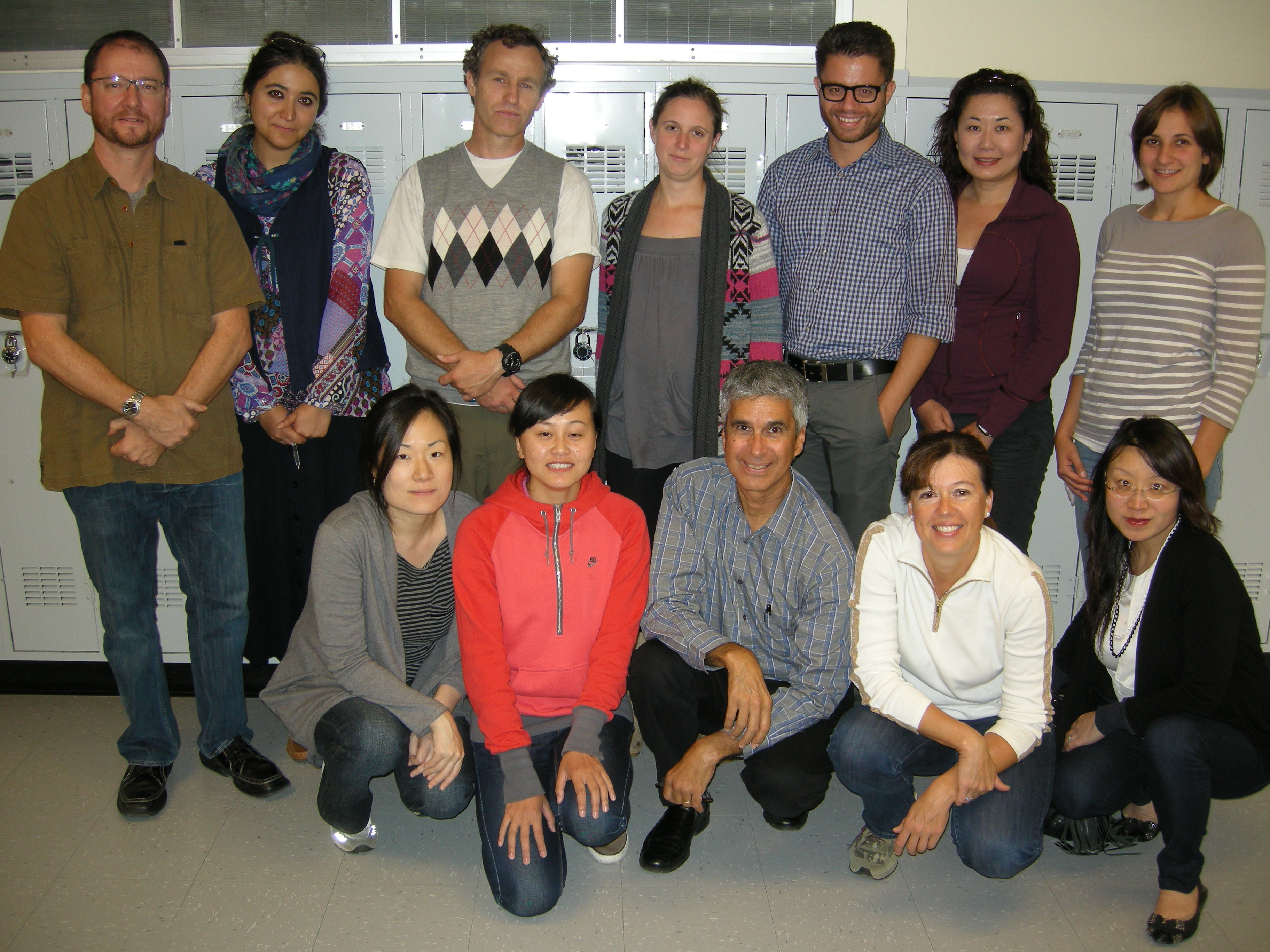
WELCOME! To the EDCP 2012/2013 cohort

Please take a moment to welcome the new EDCP PhD cohort. If you see any of these people in the hallways of Scarfe say hi!


Categories
Conferences

Call for Chapter Proposals – Teaching and Assessing Teaching Dispositions

Effective or Wise? Teaching and Assessing Professional Dispositions in Education Under Contract with Peter Lang Publishing. Inc.

Editors:
Dr. Julie A. Gorlewski
State University of New York at New Paltz
Secondary Education
New Paltz, NY
USA
gorlewsj@newpaltz.edu

Dr. Bradley Porfilio
Educational Leadership
School of Education
Lewis University
Chicago, IL
USA
porfilio16@aol.com

Dr. David A. Gorlewski
D’Youville College
School of Education
Buffalo, New York
USA
gorlewsd@dyc.edu

Jed Hopkins
Edgewood College
629 Emerson Street
Madison, WI 53715
USA
jhopkins@edgewood.edu

Julie Gorlewski is Assistant Professor of Secondary Education at the
State University of New York College at New Paltz. Dr. Gorlewski
earned her Ph.D. in the Social Foundations of Education at the
University at Buffalo, The State University of New York in 2008. She
has New York State Certification in Secondary English and Elementary
Education, as well as over 15 years experience teaching English at the
Secondary level. She has published three books and numerous
peer-reviewed articles, book chapters, and conference papers on topics
including literacy and identity, neoliberalism and schooling,
multiculturalism, and transformative education.

Brad J. Porfilio is Assistant Professor of Education at Lewis
University in Romeoville, IL. Dr. Porfilio received his Ph.D. in
Sociology of Education in 2005 at the University at Buffalo. During
his doctoral studies, he served as an Assistant Professor of Education
at Medaille College and D’Youville College, where he taught courses
across the teacher education spectrum and supervised pre-service and
in-service teachers from Canada and the US. He has published numerous
books, peer-reviewed articles, book chapters, edited volumes, and
conference papers on the topics of urban education, youth culture,
neoliberalism and schooling, transformative education, teacher
education, gender and technology, and cultural studies

David A. Gorlewski is Assistant Professor of Education at D’Youville
College in Buffalo, NY, where he teaches courses in curriculum
planning and English methods. Dr. Gorlewski earned his EdD in
Educational Administration at the University at Buffalo, The State
University of New York in 2000. He is a former high school English
teacher and assistant superintendent for curriculum and instruction
with extensive experience in mentoring preservice and practicing
teachers.  He has published two books and several articles involving
educational reform (specifically, how reforms change schools and how
schools change reforms), and the interrelations between and among
classroom and program assessment.

Jed Hopkins is Associate Professor of Education at Edgewood College,
Madison, WI.  Dr. Hopkins received his Ph.D in the Department of
Curriculum and Instruction at the University of Minnesota in 2009. Dr.
Hopkins began his teaching career in London as an Elementary teacher
almost thirty years ago. Since then he has taught at numerous levels
from elementary through middle as well as college pre-service and
in-service teachers at the undergraduate and graduate levels.  His
teaching and research interests straddle literacy, teacher education,
and philosophy of Education.  In particular, Hopkins is interested in
appropriating neo-Heideggerian phenomenology for his work developing
new approaches to teacher education.  Currently he is working on
phenomenological approaches to drama-in-education and investigating
ways of using video to create more authentic collegial communities.

Premise for the book
Teaching, rightfully, carries the title professional; and although
this sentiment may resonate well with those of us in the field, its
foundational core has been rendered problematic by federal and state
policies and practices that frame teaching as “less than” a profession
– and teachers as “less than” professional.

A key set of these policies and practices are marked by
standardization – of testing, curriculum, and instruction. In
addition, Federal Race to the Top legislation measures the level of
teacher competence based on student performance on standardized tests.
Programmed instruction and a focus on “strategies,” as exemplified by
short-term programs like Teach for America, increasingly view teachers
as trainers rather than educators.

To counter this, we suggest that teacher educators, working in
collaboration with their partners in Pre K-12 schools, ought to focus
on professionalism and how professional dispositions matter as a means
to position teachers to produce what we call wisely effective learning
environments for their students.

There are two broad contexts in which Schools of Education operate:
the first deals with the entire certification and licensure process.
But the second is related to the liberal arts tradition. This means
that Schools of Education are involved, albeit in different ways and
to different degrees, with the work of the humanities, the social
sciences, and the hard sciences. These two contexts are in tension –
perhaps never more in tension than they are now. How and to what
extent can we balance the pragmatic and civic responsibility of the
first context with the critical, pluralistically intellectual, and
creative commitments that are inherent in the second? The resolution
is difficult because both contexts operate with different assumptions,
different discourses, and different stances toward the phenomenon of
education.

How can teacher education programs instill professional dispositions
in their candidates? How can we measure or assess those dispositions?
How can we balance the obsession with the mechanisms of accountability
with the need for authentic education? How can we position the liberal
arts and the humanities more centrally in teacher education programs?
What might be the parallel issues in education today that work against
the professionalism of teachers?

Audience

This volume will be a valuable resource for instructors who teach in
the fields of teacher education; assessment; educational leadership;
social, and cultural and philosophical foundations of education; and
sociology – as well as for their students. It may also be of interest
to researchers, scholars, and the broader education public as well as
mainstream and media sources. In addition, this text would be useful
for school district administrators and teacher mentors to use with
early career and practicing teachers. The text will offer an excellent
vantage point for initiating professional discussion around complex,
challenging issues regarding accountability that face educators today.

Time-frame
1) Proposals due by October 15, 2012;
2) Confirmation of selected chapters by December 15, 2012;
3) Contributors will have their first drafts completed by February 15, 2013.
4) The editors will review these first drafts, and provide detailed
comments and suggestions by April 15, 2013.
5) The contributors will make all of the necessary edits, and send the
final chapters to the editors by June 1, 2013.
6) The editors will draft a comprehensive introductory chapter and
have the foreword written by a well-known scholar in the field, which
will be ready along with the index and other editorial issues by July
1, 2013.
7) Once the publisher’s Editor has approved the text, the finalized,
formatted volume will be submitted to the publisher by August 1, 2013
which should allow for copy-editing and other related matters to be
completed for a publishing date sometime late in 2013.

Process for Chapter proposals
Submit the following:
**Proposed title of chapter
**Authors, with complete addresses and 150-word biography for each author
**300-word outline of proposed chapter, including, where applicable,
theoretical, methodological and conceptual considerations.
To Julie Gorlewski at gorlewsj@newpaltz.edu by October 15, 2012.
For questions or queries, contact  Julie Gorlewski at
gorlewsj@newpaltz.edu, Brad Porfilio at porfilio16@aol.com, David
Gorlewski at gorlewsd@dyc.edu, or Jed Hopkins at
jhopkins@edgewood.edu.
Categories
Funding and Awards

Trudeau Scholarships

The EDCP deadline for this competition is: NOON on Tuesday, October 16, 2012

The Faculty of Graduate Studies is pleased to announce the competition for the highly prestigious Trudeau Scholars Programme. These awards are for outstanding doctoral students whose work addresses one of the following four themes:

– Human Rights and Dignity

– Responsible Citizenship

– Canada in the World

– People and their Natural Environment

Each scholarship consists of an annual stipend of $40,000 and an annual travel allowance of $20,000, for up to four years.  The Foundation will award up to 15 new scholarships per year across Canada.

Students submit their application packages to their UBC graduate program.  Students are advised to verify their graduate program’s deadline well in advance.  Of the applications received, each UBC graduate program may submit up to two nominations to the Faculty of Graduate Studies.  Application packages (original and three copies) must be received from graduate programs by the Faculty of Graduate Studies by 4:00pm on Friday, October 26, 2012.

For further details, please see our website:

http://www.grad.ubc.ca/awards/trudeau-foundation-doctoral-scholarship

Categories
Announcements

NEW COURSE – EDST 508G (086) Review of Research: Qualitative Inquiry using Photo-elicitation

EDST 508G (086) – REVIEW of RESEARCH in Educational Studies
See below information about an interesting research methods course to be offered by EDST in Winter 2 term.
EDST 508G (086)  Review of Research in Educational Studies: Qualitative Inquiry Using Photo-Elicitation.
Wednesdays, 4:30-7:30pm Term 2, Ponderosa F 203
Instructor: Genevieve Creighton
In recent decades the use of photo methods in research has gained popularity. The benefits to researchers are many: it allows for the creation of data that goes beyond words; it contextualizes voices in the social spaces that participants occupy; it can facilitate rapport between the researcher and participant; it provides structure to the interview and reduces the strangeness of the interview context. Photo methods can allow research participants to externalize their experiences while, at the same time, engage in a more profound reflection about the research topic at hand.
Photo methods have been used to enhance and deepen study findings for the researcher but they have also been employed as a strategy for community base participatory research (CBPR). Photo research has been used, for example, by community activists as a way of defining and intervening in public health concerns from “the ground up”. They have been used with great success in bringing the voices and experiences of children and youth, the elderly, those with chronic illness and the homeless  to policy makers to effect political change.
The purpose of this course is to introduce students to the various ways in which photography can enrich the research process in the stages of data collection, analysis and dissemination. Students will be exposed to the different theoretical underpinnings of the approaches to photo research and how to discern an appropriate strategy. Students will gain a practical understanding of, and have the opportunity to try out, methods such as photovoice, participatory photo mapping, photo elicitation, digital storytelling and photo novellas. The course will cover strategies of photo analysis and interpretation and the accompanying ethical issues involved in doing photo research.
Instructor Bio: Gen Creighton received her PhD from UBC in 2011 and is a currently a researcher in the Department of Pediatrics at BC Childrens Hospital. She used photo elicitation in her doctoral studies, research with young men who had experienced the accidental death of a friend. Currently Gen is using photo methods to investigate the way that fathers consider risk taking and injury  prevention as they parent their young children.
Categories
Announcements Department Events Employment

Graduate Student Volunteer Opportunity – Let’s Talk Science

Interested in Science and Engineering? Enjoy working with kids and youths? Want to give back to your community?

Let’s Talk Science is a national volunteer-driven program that strives to improve science literacy through outreach. We motivate and empower youth to use science, technology, math and engineering to develop critical skills, knowledge, and attitudes needed to thrive in our world. We aim to make science FUN and interactive for kids in attempts to spark their interest in all areas of science.

There are numerous volunteer opportunities at Let’s Talk Science that suit a variety of personalities and schedules. At our core is the Teacher Partnership Program- a program which pairs a grad student volunteer with a teacher in the community and the volunteer goes into the classroom to  perform hands-on experiments with the kids. We also take part in a number of community events such as science fairs, programs for underprivileged children from the Downtown Eastside, visits to rural BC communities, mentorships, Community Learning Initiative events and Reading Week projects.

Commitment is flexible! No experience is necessary (we provide training).

We’re holding two info/training sessions in the next week where you can learn more about our program:

On campus

When: Wednesday, September 26th from 6:00pm to 8:00pm
Where: Hennings Building, Room 202 (6224 Agricultural Rd.)

Off campus
When: Monday, October 1st from 6:00pm to 8:00pm
Where: BC Cancer Research Centre, Gordon and Leslie Diamond Family Theatre (675 W10th Ave.; NOT the Gordon and Leslie Diamond Health Care Centre on Laurel St.)

Pizza and drinks will be served! Please RSVP your attendance to volunteer@ubclts.com so we can be sure to have enough food for you! Feel free to contact us with any questions or comments, or check out our website for further information: www.ubclts.com

I look forward to hearing you!

Natasha Holmes
Volunteer Coordinator
UBC Let’s Talk Science

Categories
Announcements

UBC Academic English Support 2012/13

The UBC Academic English Support 2012/13 program has now opened for applications. Please inform any English as a second/additional language student who might benefit. If you have any questions about this program please find contact info at: http://cstudies.ubc.ca/academic-english-support-program/contact.html.

Categories
Announcements

Documents about Expectations Regarding the Graduate Student-Supervisor Relationship‏

-----Original Message-----
From: On Behalf Of Cheung, Junnie
Sent: August-30-12 8:53 AM
Subject: Documents about Expectations Regarding the Graduate Student-Supervisor Relationship
 
August 29, 2012
 
Dear Graduate Advisors and Staff,
 
I am writing this letter to let you know about a useful new resource the Faculty of Graduate Studies has created for faculty members and their research graduate students. We are all aware that graduate education represents a significant investment for students and the university. The relationship a research graduate student has with his/her supervisor is one of the most important factors in the success of their program, and the most positive outcomes for supervisors depend on mutually open, committed, and respectful relationships with their students.  
 
The resource we have created, with input from the Graduate Student Society and UBC Counsel Office is a document outlining the expectations of the student-supervisor relationship. Although not all points in the document may be applicable in all circumstances, and additional elements may be important, we view these generally as hallmarks of a positive, productive, and respectful relationship between a research student and his/her supervisor. We strongly encourage students and their supervisors to have a conversation at the start of the student's program about their relationship, and the document is meant to facilitate that process.  If used as such, it may be modified according to circumstances. We encourage signing by both parties to indicate a high level of mutual commitment to the principles laid out.  We have also created a template letter that may be used by the supervisor to expand on the conditions of supervision or to place the expectations in context.
 
UBC Policy 85 on Scholarly Integrity stipulates that "research conditions for all involved in a research team should be outlined in a letter from the Principal Investigator before team members become engaged".  The document may also assist faculty members in meeting this important university requirement.
 
Several UBC graduate programs are already using similar documents as required practice.  It is my hope that, if you are not already doing so, you will consider instituting such a system, or at the least, encouraging it in your own programs.
 
We are attaching an electronic version of the documents to this email. The documents will also be available on our website, under information for supervisors (further resources), http://www.grad.ubc.ca/faculty-staff/information-supervisors/further-resources. We are aware that it may not be a priority for many faculty members to visit this site, and even if you do not require the use of these documents, your assistance with increasing their visibility would be much appreciated. With thanks for the important role you play in supporting our faculty and students.
 
Kind regards,
 
Wendy Hall, Associate Dean, Faculty and Program Development, Faculty of Graduate Studies

Faculty of Graduate Studies Template Letter August 2012
Faculty of Graduate Studies Expectations Document August 29 2012

Spam prevention powered by Akismet