Educational Studies Blog
Curated by EDST Students
Welcome to the UBC Educational Studies Blog!
Curated and led by EDST graduate students, this blog is a space for our whole community—students, faculty, staff, and alumni—to share ideas, research, and creative work. It supports graduate students in building their skills and competencies as early career researchers and education professionals, while fostering dialogue and connection across the department.
From personal narratives and poetry to multimedia projects and public-facing scholarship, the blog highlights diverse voices and perspectives that spark conversation and inspire learning.

Supporting Early Career Researchers, Faculty & Education Professionals
The EDST Blog is proudly funded by the UBC Department of Educational Studies (EDST) as part of its commitment to supporting early career researchers and education professionals. The Blog Editor role was created to provide graduate students with opportunities for mentorship, skill development, and leadership in research communication and writing.
While the blog’s editorial team is composed of graduate students who guide its content and direction, contributions are welcomed from all members of the EDST community. Our aim is to amplify student voices while also engaging faculty, staff, and alumni in meaningful dialogue that strengthens our shared commitments to education, within the university and beyond.
Latest Posts
-
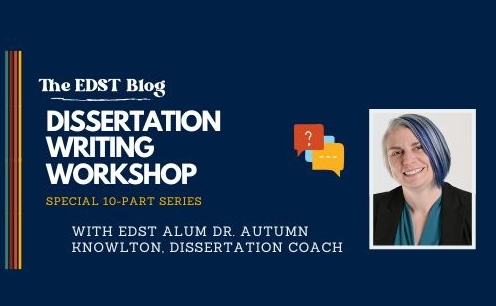
Dissertation Writing Workshops with Dr. Autumn Knowlton: 10-Part Special Blog Series
This 10-part blog series shares key insights from two dissertation writing workshops led by EDST alum Dr. Autumn Knowlton, offering practical guidance on how to plan, write, and complete your dissertation with clarity and confidence.
-

From Research Question to Research Day: Reflecting on AI, Equity, and Educational Policy
A few months ago, if someone had asked me how many British Columbia school districts had publicly available policies on artificial intelligence (AI) in K–12 education, I probably would not have known the answer. Today, after spending nearly a year researching AI policy through the lens of Equity, Diversity, and Inclusion (EDI), I can tell…
-

EDST Well-Being Series: Mindfulness with Mahfida – June, 2026: Collage Scrapbooking Workshop
Our current Department Head, Professor André Mazawi, will be completing his term at the end of August 2026. Throughout his time as Head, Professor Mazawi has been a strong supporter of the Department as a whole, and especially of its students. In recognition of his years of dedication, care, and support, the SSL team planned…
-
Research Day, 2026
Highlights A Welcoming Speech by Prof André Elias Mazawi SSL Recognition and Appreciation Award for Exemplary Service to the Student Community Prof Nadena Doharty’s Keynote Presentation Daniel Gallardo in the Role of Facilitating Discussion Session Presentation Sessions Social Event Winners of the EDST 2026 Research Day Blog Publication Award The EDST Student Support Lead (SSL)…
-
Winner of the 2026 EDST Research Day Blog Publication Award: Mahfida Tahniat (Three-Time Winner!)
Congratulations to Mahfida Tahniat for winning the 2026 EDST Research Day Blog Publication Award in the reflection writing category for the third consecutive year. We thank her for her dedication, persistence, and consistent contributions to the blog. Toxicity in Education: A Vicious Circle by Mahfida Tahniat In his Research Day presentation, “Cost-Benefit Analysis of Receiving…
-
Winner of the 2026 EDST Research Day Blog Publication Award: Sai Manjari Kaladindi,, Stephen Sarmento, and Zhuqing Mei
Congratulations to Sai Manjari Kaladindi, Stephen Sarmento, and Zhuqing Mei. They won the 2026 EDST Research Day Blog Publication Award for presentation. They presented their research at the event and published it on the blog. We appreciate their time and dedication. A Comparative Study on the Purposes of Arts Education in Middle School in Canada,…
-

EDST Well-Being Series: Mindfulness with Mahfida – May, 2026: Mother’s Day Special
This month’s session was dedicated to all mothers and their unconditional love for their children. Mahfida encouraged participants to share their love for their mothers by expressing it through words, pictures, and artwork on heart-shaped wooden pieces. This activity helped them remember happy moments and feel a deeper connection with their mothers. During the workshop,…
-

EDST Well-Being Series: Mindfulness with Mahfida – March, 2026: Painting Workshop
For this month’s 2-hour painting workshop session, Mahfida set up all the tools, canvases, and colors. Participants enjoyed creating their own masterpieces! They couldn’t believe that without any prior experience, they could paint with such ease! It was fun to dive into the world of watercolors and experiment with different shades with each careful stroke. This…
-

EDST Well-Being Series: Mindfulness with Mahfida – February, 2026: Valentine’s Day Special Workshop
For this month’s session, it was dedicated to thoughts of love, whether for a person or for anything someone is passionate about. Mahfida arranged lovely wooden heart-shaped features that allow the participants to draw pictures and write words for their loved ones. While participants enjoyed designing their personalized wooden hearts, the conversation flowed about how…
-

EDST Well-Being Series: Mindfulness with Mahfida – January, 2026: Jewelry Making Workshop
For this month’s event, Mahfida Tahniat once again invited Sai Manjari to facilitate her Mindfulness with Mahfida event. Sai taught participants the basic steps and some easy techniques for making lovely jewelry. Participants picked their own colors, charms (such as butterflies, dolphins, hearts, stars and so on), and letter beads. They enjoyed making earrings, necklaces,…
-

EDST Well-Being Series: Mindfulness with Mahfida – December, 2025: Crochet Butterfly Making Workshop
For this month’s session, Mahfida invited one of the EDST students, Sai Manjari to facilitate the crochet-making event. She taught the basic steps and techniques to the participants. Our wonderful EDST staff member, Carl Luke, happily joined the event. As beginners, none of the participants could complete making the butterfly within the one-hour time frame! However, as…
-

EDST Well-Being Series: Mindfulness with Mahfida – November, 2025: Diamond Art Painting Workshop # 2
For this month’s session, Mahfida continued the Diamond Art Painting Workshop from September. She invited students to bring the keychains they started last time so they could finish their glittering butterfly designs. Anyone who missed the September session could also join in and make their own sparkling butterfly keychain. The students leaned in, focused and…
-

EDST Well-Being Series: Mindfulness with Mahfida – October, 2025: Tote Bag Designing Workshop
To live a happy, healthy, and successful life, it is important to de-stress everyday anxiety and focus on mental well-being. The EDST community is invited to join Mindfulness with Mahfida — a monthly series of mindfulness practices designed to nurture calm, connection, and creativity in academic life. Each session offers a new theme, such as arts and crafts, mindful eating,…
-

2026 EDST Research Day Blog Publication Award
If you are presenting at EDST Research Day, you are invited to submit a 500 to 1200-word essay for the blog. This is an opportunity to share your research with a wider audience and receive a $50 gift card What to Submit Please outline your research topic and highlight the key ideas you wish to…
-

EDST Well-Being Series: Mindfulness with Mahfida – September, 2025: Diamond Art Painting Workshop
Diamond Painting Workshop with EDST
-
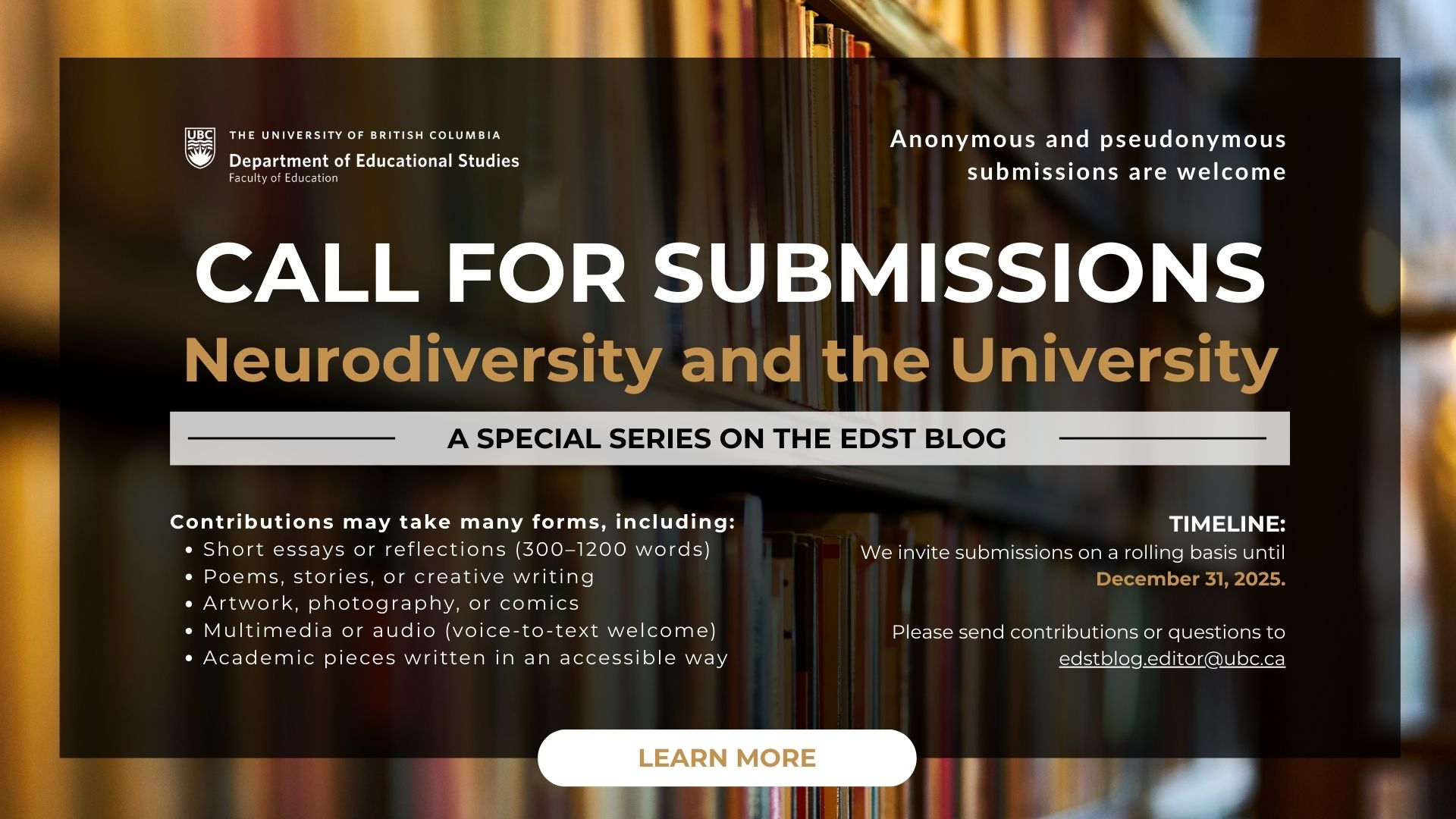
Call for Submissions: Neurodiversity and the University
The EDST Blog is launching a new Special Series: Neurodiversity and the University. This series celebrates the creativity and strengths of neurodivergent people while also creating space to reflect on the realities of navigating neuro-normative systems. We welcome contributions from across the UBC community—students, staff, faculty, and beyond—in any form: essays, stories, artwork, poetry, or…
-

In Memoriam: Ngũgĩ wa Thiong’o
In Memoriam: Ngũgĩ wa Thiong’o, who passed away, written by Handel Kashope Wright
-

Dissertation Training Series, Post 10 – Don’t Go in Circles: Writing, Editing, and Staying Sane
Separate writing from editing, use APA7 for structure, and manage your dissertation process with tools and strategies that help you finish strong.
-

Dissertation Training Series, Post 9 – “What I Did, Why It Matters”: Writing Your Scholarly Conclusion
Your conclusion chapter reflects on what you did, why it matters, and how your work contributes to future research, policy, or practice.
-

Dissertation Training Series, Post 8 – Weaving the Threads: Discussion and Meaning-Making
The discussion chapter weaves together your findings, framework, and literature to show meaning—and make your original contribution clear.
-

Dissertation Training Series, Post 7 – Sock Time: Presenting Your Findings with Clarity and Confidence
Your findings chapter is where your Significant Original Contribution to Knowledge (SOCK) begins to emerge, and where your scholarly voice comes alive.