Category Archives: Reflections

Negotiations Under Way

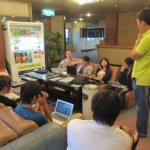
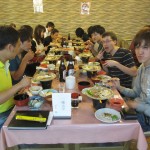
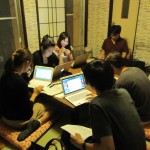
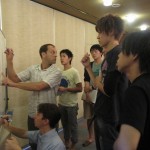
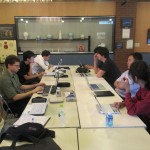
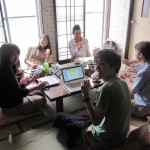
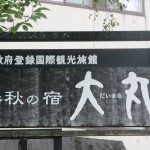
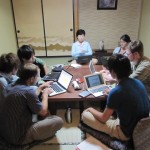
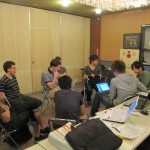
Students from the MAAPPS program and from 一橋大学 are currently holed up in a hotel just inside of Niigata Prefecture on the border with Nagano Prefecture participating in a simulation of a Canada-Japan Economic Partnership Agreement. Two and a half days into the negotiations and with only tonight and tomorrow morning to go, there are pairs of students negotiating in many corners and on lobby sofas in the hotel.

Unfortunately, the internet connection in this hotel is slightly shaky, so more detailed posts on results and reflections on the project will have to wait until we’re in reach of a better connection again.

While the intensity of the activities is exhausting, participants clearly seem to enjoying themselves as well. The fact that we’re in a hot springs resort certainly helps.

My current prediction is that there still is a good chance that one of the teams might walk out of the negotiations due to insurmountable differences. Demands for a liberalization of Canadian financial services and investments in natural resources are proving to be especially difficult topics.
And So it Begins….

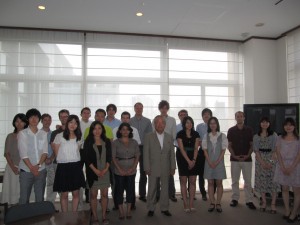
Last night students from University of British Columbia and Hitotsubashi University attended a negotiation simulation orientation to prepare them for the actual simulation starting this Sunday, August 21st.  Spirits are lively, as students finally found out which team they would represent and started to delve into preliminary talks with their team memebers to address areas of interest within the prospective EPA.  I wish all participants the best of luck, especially the two team leaders, Kentaro Morita (Team Japan) and Yongmin Lee (Team Canada).

Canadian Initiatives after 3/11

Even in the early days of the 東日本大震災 (Great East Japan Earthquake), I had speculated that this event would come to be known as “3/11”. We have heard several interlocutors in Tokyo now refer to it as such. The impact the “triple disaster” has had on the affected communities is traumatic and relatively obvious, but it is clearly also becoming a watershed for national policy-makers.

Given the extent to which policy-makers in Japan see their current work as shaped by 3/11, it was noteworthy that several interlocutors in Tokyo emphasized several initiatives taken by Canada in response to the disaster.

  • humanitarian aid, including donations, immediately following the disaster itself (Embassy of Canada, Tokyo)
  • in June the Canadian Trade Commissioner Service organized a series of seminars throughout Canada, entitled “Japan: Still Open for Business
  • on June 23, Canada lifter all additional restrictions on food imports from Japan and was the first country to do so

While so much of world politics seems to be determined by competitive pursuit of seemingly clear (material) national interests through Realpolitik today, it was clear in our discussions that Japanese policy-makers have taken clear note of these Canadian initiatives. These initiatives have thus very much become part of the context in which trade negotiations may be unfolding in the future.

“Japan: Still open for business”

Our morning started off with a brief meeting with Mr. Ogawa, the managing director of the Japanese Studies & Intellectual Exchange department at the Japan Foundation Tokyo headquarters. The Japan Foundation was set up by the Japanese Diet to promote the international dissemination of Japanese culture, language and education.  The organization has offices and branches throughout the world, and the their Toronto office (especially Mr. Suzuki, Ms. Lytle and Mr. Yamada) has been instrumental to the success our Canada-Japan trade negotiation program. We sincerely thank you for all your support!

Next, we had the pleasure of listening to former Ambassador Sadaaki Numata give us an overview of the current Canada-Japan trade context, as well as discuss how the current TPP negotiations and other relevant FTAs/EPAs will impact Canada-Japan trade. Ambassador Numata expressed his deep appreciation of the Canadian government’s support and relief efforts during the March 11th disaster, emphasizing the fact that Canada was the only country to have lifted the additional restrictions on food imports from Japan as early as June 23rd. The disaster has inevitably played a significant role in slowing down the advancements of a Canada-Japan EPA/FTA, but both countries have shown strong commitment in the past few months in completing the Joint Study as soon as possible.

Both Mr. Ogawa and Ambassador Numata echoed the idea that Japan is still open for business, and pointed to EPAs and TPPs as important avenues for Japan to re-engage as a global player.


A Visit to the Diet

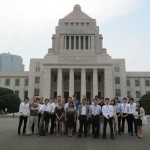
Yesterday the entire UBC contingent and part of the Hitotsubashi group were fortunate enough to visit the Japanese Diet and meet with a DPJ member of the Lower House, Makoto Yamazaki. Mr. Yamazaki is a member of the Committee on Environment, and spoke to us on the current state of Japan’s environmental commitments and possible alternatives to nuclear power. Afterward, we were taken on a tour of the Diet building. Mr. Yamazaki came out to meet us once again as we left, and gave each of us a small gift. It was an interesting experience and we’re all grateful to Mr. Yamazaki for taking the time to meet with us over the Japanese holiday season of Obon.