Categories
Vegetables Winter

Visit to a community garden

On Friday we visited the local community garden where we hope to secure a plot this spring. We wanted to check out the plot sizes and general condition of the gardens, and found some inspiration too!

Amazing hoop house

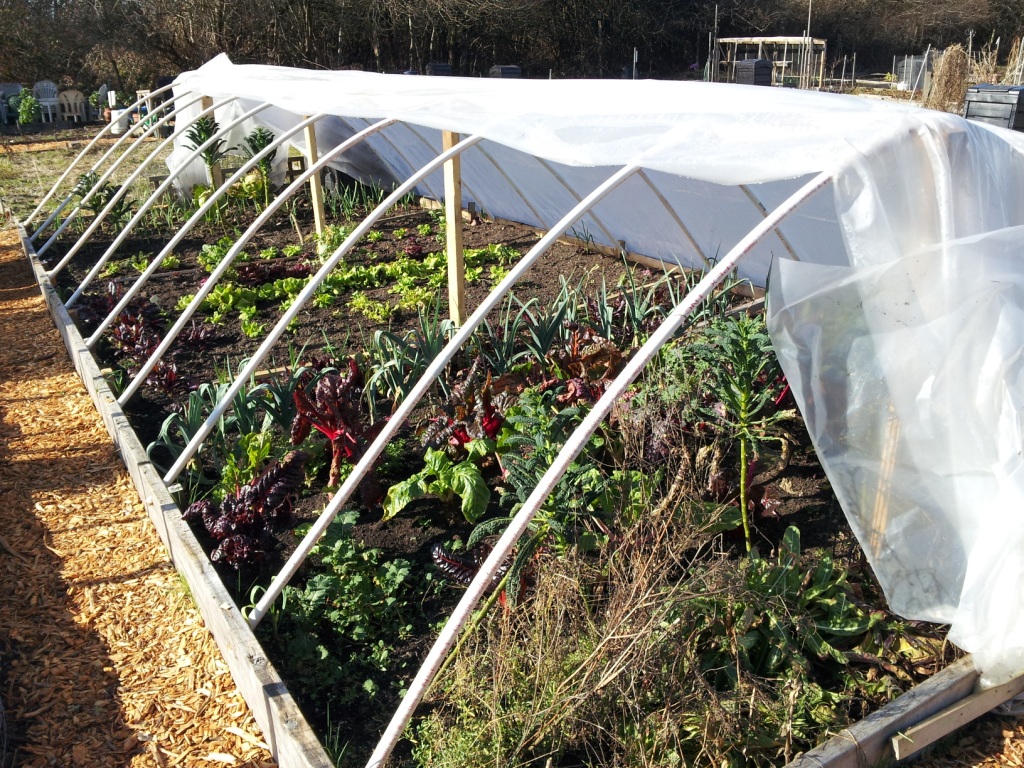
This hoop house covered the entire plot, which we eyeball at 8′ x 16′. They used PVC pipe ribs which were pushed down into the ground against the wood border, and supported by 2’x4’s in the middle and along the top.

They used plastic film, though in talking with a neighbouring gardener, it seems the plastic gets too warm and damp inside. I will likely use heavy row cover in the winter and then switch to light-weight row cover in the summer to maintain air circulation.

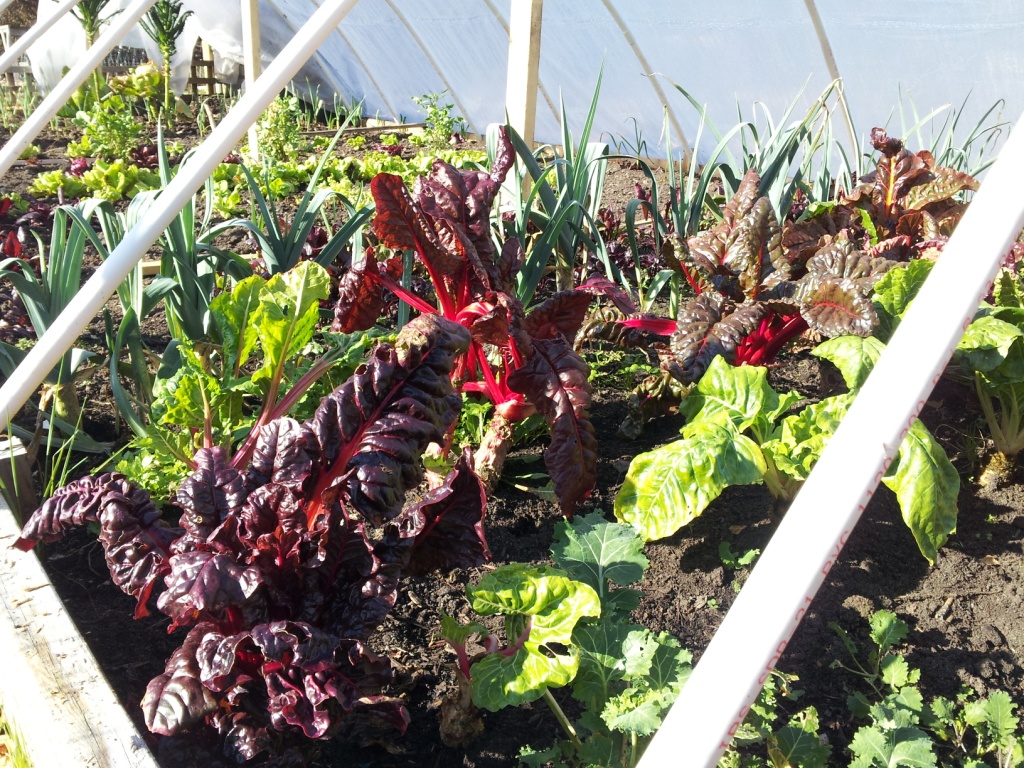
However, check out this amazing bounty (see pic below) these gardeners are growing in mid-Februrary.

Hoop house bounty

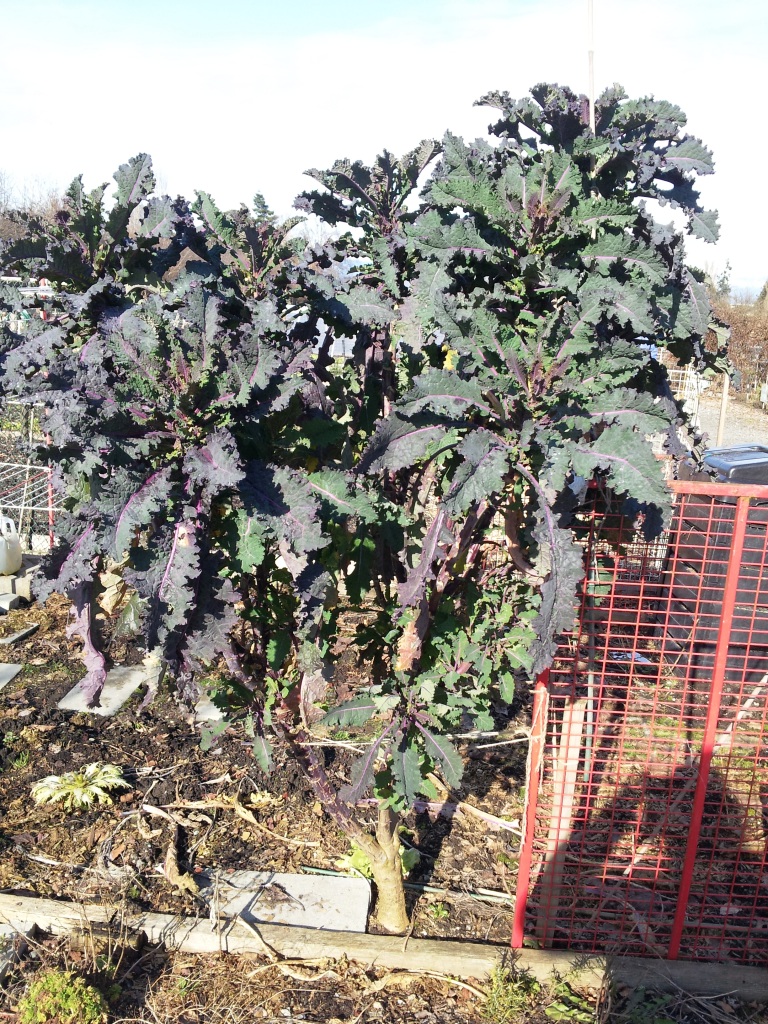
Another garden plot is growing some kind of kale… perhaps Red Russian? I don’t think it’s a tree collard or tree kale, but I guess our winters are so mild that it’s turned into a tree. The ‘trunk’ was almost 2″ thick!

Kale tree

Categories
Spring Vegetables

Patiently waiting for spring

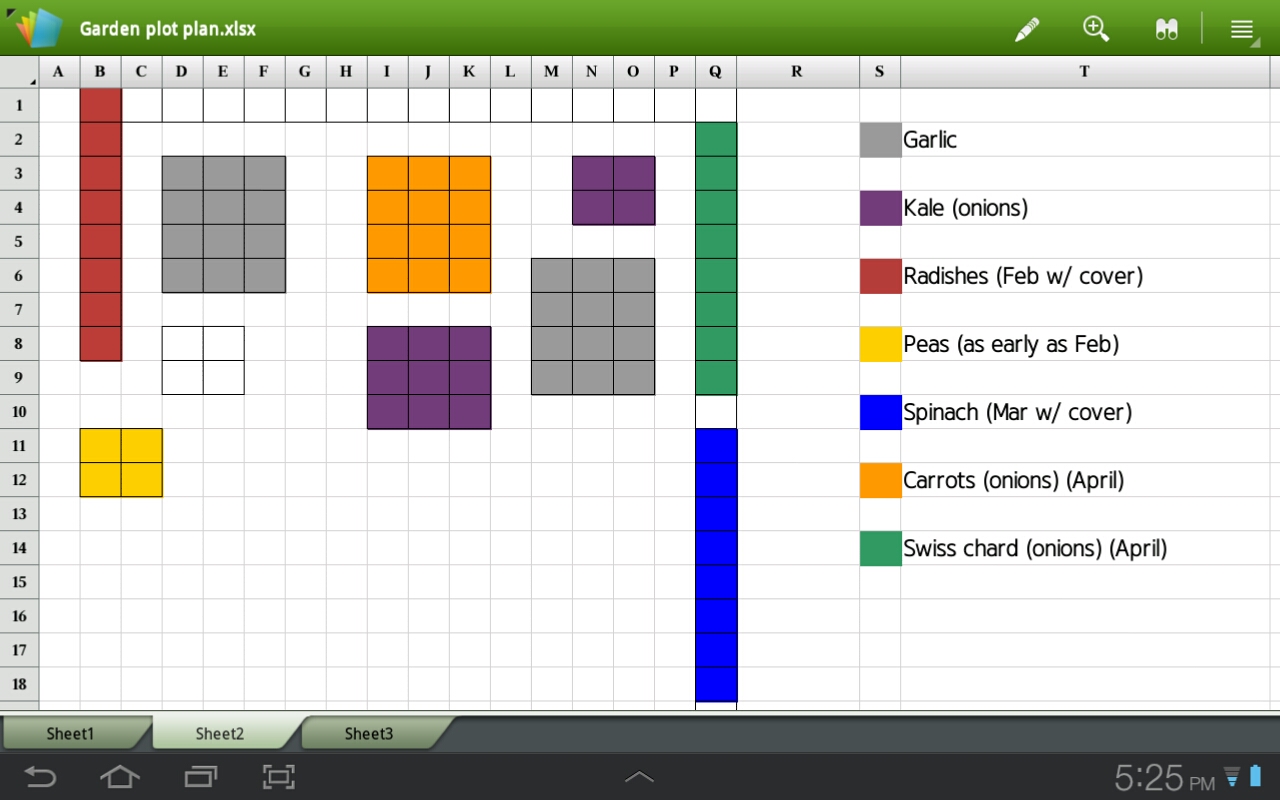
I have my meagre winter containers planted and still have no word as to whether we have been assigned a community garden plot, so in all my spare time I’ve planned out the patio garden for next year. It’s not the snazziest picture, but it makes sense to me!

The garlic and kale were planted this fall. The kale will be ready in the new year and the garlic next July. The radishes, spinach, and chard will be grown in the long planters that sit on the concrete surround. The pot with the carrots currently holds beets (which I am hoping to harvest near Christmas time. I will have to transfer the soil into some of the long pots, as according to rotation gardening I shouldn’t plant root veggies in the same place consecutively. The hanging basket which will hold peas again in 2013 currently holds my gai lan plant, which I’m beginning to doubt if the container is large enough, but we’ll see! I’m also planning on interspersing scallions amongst some of the planters in order to deter pests. We’ll also see how that works.

Categories
Spring Vegetables

Patio overview

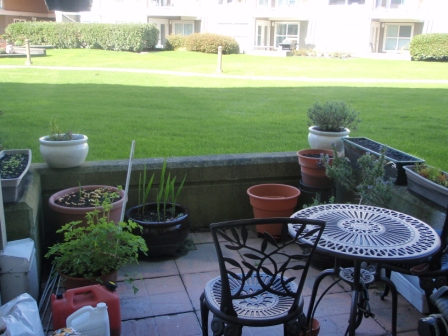
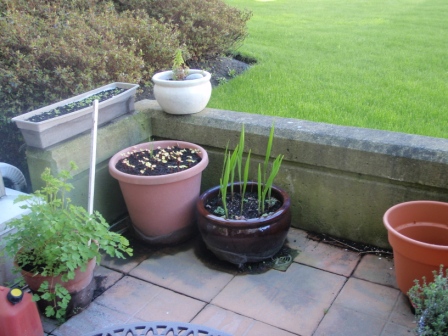
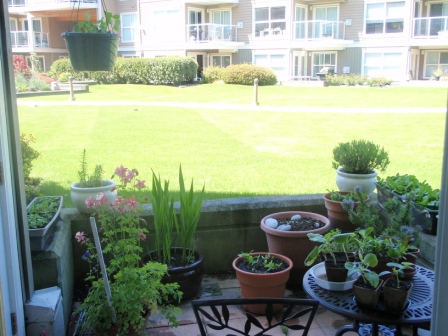
I should have posted overview pictures of my patio at an earlier date to show the space that I have to work with. My patio is roughly 8′ x 12′ in the inner courtyard of our ‘U’-shaped building on the main floor of the east arm of the ‘U’ (the top of the ‘U’ faces north). I only get about 6 hours of direct sun at the height of summer on the outer half of my patio.

These pictures were taken 3 weeks ago on April 20th (facing west). The first photo is taken from inside my bedroom looking out toward the patio.

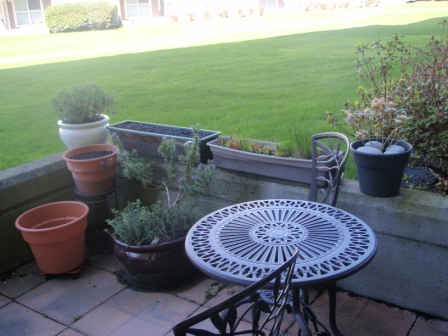
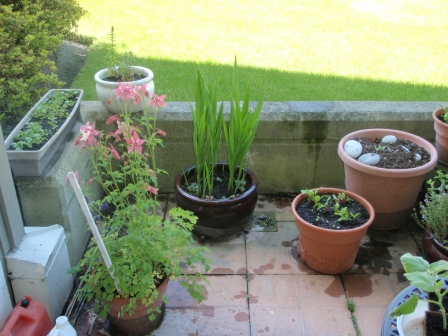
Three weeks later on May 13th, pots have moved a bit and things are a lot more green!

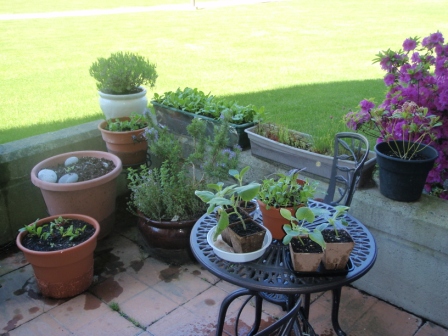
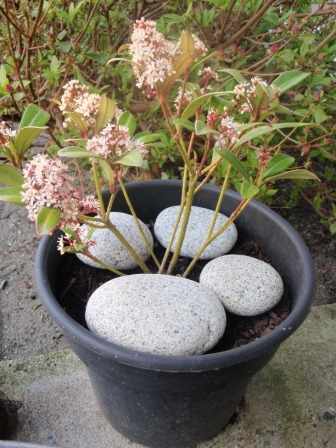
Moving from left to right on the patio (and in the photos): 1. Toy choy is in the long grey-brown container on the ledge; 2. hanging in the top left is the trailing Oregon Sugar Pod peas; 3. butterfly bush is in the white ceramic pot on the ledge on the left; 4. columbine are the pink flowers; 5. crocosmia are the tall spiky leave in the dark brown ceramic pot; 6. Swiss chard are in the smaller clay-coloured pot; 7. the larger clay coloured pot (with white rocks sitting on top of soil) is the future home of butternut squash; 8. the smaller clay-coloured pot sitting on a pedestal is the Little Marvel bush peas; 9. lavender is in the white ceramic pot on the ledge on the right; 10. rosemary, thyme and oregano are in the dark brown ceramic pot; 11. above the herbs in the long container sitting on the ledge are beets and radishes; 12. the grey-brown long container sitting next to it holds chives and mint; 13. the black pot at the very right of the ledge holds Skimmia; 14. on the patio table are mescluns and squash seedlings that will go to my dad’s garden.

Categories
General Update Spring

Harvest time and update

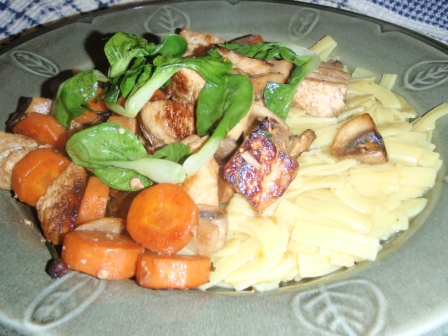
I made my first toy choy stir fry this weekend almost 6 weeks after planting my first toy choy seeds on March 20th. In truth they could be a little bigger before harvesting (they were about 2 inches tall), but I actually needed to thin them a little and decided they shouldn’t go to waste, so I made a chicken stir fry.


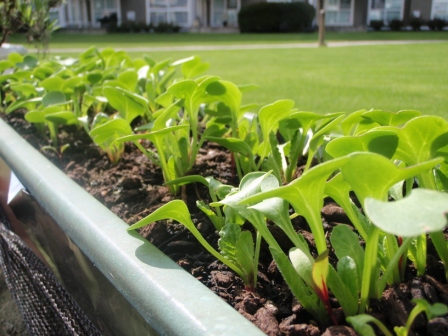
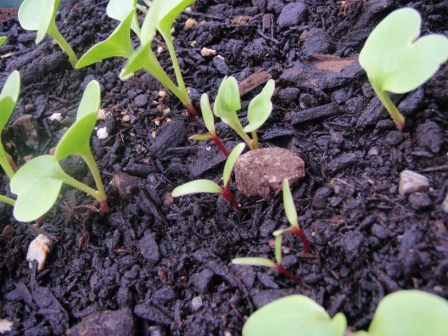
The beets and radishes are growing well and I have started to thin a few radishes. These were sown in mid-April, so about 3 weeks on, this is what they look like. The radishes should be ready in another 2-3 weeks, while the beets will be another month or so. The beets, like the Swiss chard, seems to have multiple seeds in one pod, so I had to thin the double beets.


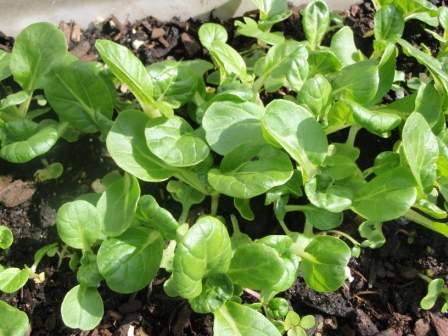
The mesclun mix is also growing well, and I transplanted the stray lettuce that was growing amongst the buckwheat. I’ve been thinning out the mesclun every few days, as they can grow to be full-sized heads of lettuce if I let them. I’ll try to keep them around the size of the plant in the foreground so the plan is that we’ll have salad greens once a week or so.


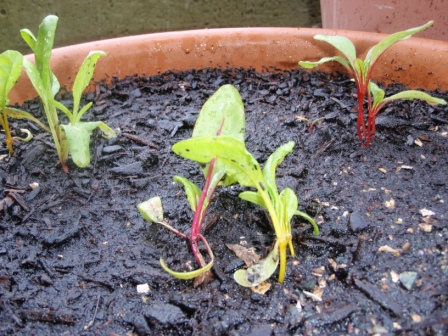
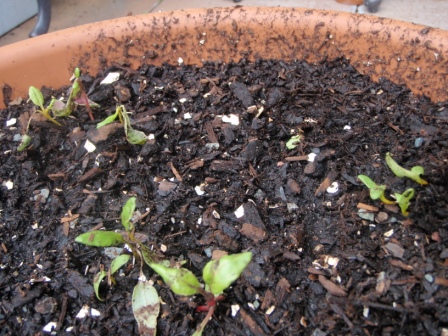
The Swiss chard is a bit of a mystery to me. I wonder if I should have just direct-sown them into the pot rather than starting them indoors and transplanting. They started out quite tall and spindly, though they are starting to grow their second and third sets of leaves and beginning to look like Swiss chard. However, they are still very floppy and fall over whenever I water them. I’ve since sown a few more seeds in case some of the transplants don’t make it.

My two varieties of peas are really starting to do well. The Little Marvel that had struggled with our cold, wet spring is starting to fill in, though again, I may have to sow one or two more seeds. And the Oregon Sugar Pod in the hanging basket is also doing well. I notice they have tendrils for gripping and climbing, but I’m hoping the vines will trail downwards. I’ll have to keep an eye on them and train them to trail (if possible!).

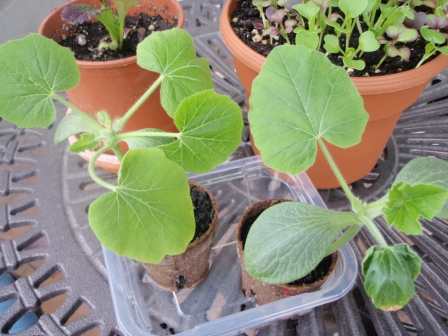
The squash seedlings I started indoors for my dad’s garden, Baby Blue Hubbard squash, are doing well… almost too well because they’ve started blossoming already! I have moved them outside to start hardening off the stems and readying them to be transplanted soon. The early butternut squash are also being prepared for transplanting too.


The buckwheat has also struggled with the cold spring, and they never really did a good job as a cover crop because they didn’t flourish. However, they will still work as green manure, adding nutrients and improving soil composition as they break down once it is turned-under into the soil. After rescuing the errant mesclun, I turned the buckwheat under to prepare the soil for my butternut squash experiment. Buckwheat can apparently break down within a few days, but I will give it a week or two before planting the squash. I’m also tossing the thinned seedlings into this pot for additional compost.

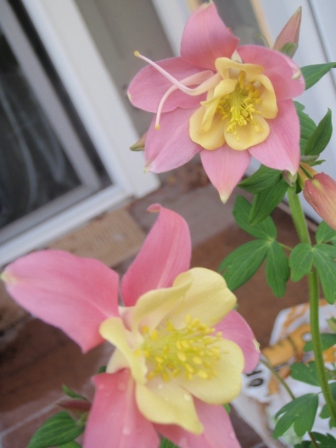
Aside from veggies, my flowers are doing well. Still no sign of blossoms on the crocosmia, but the columbine is in full bloom now and I’ve spotted a few pollinating insects checking out the flowers. I also have an alpine columbine that is a dwarf version planted in the same pot. I thought it was done-for as it has struggled in past years, but lo-and-behold it is blooming this year! As well, I have FINALLY seen the first sign of life of the butterfly bush (Aesclepias), so now I know they won’t generally pop up until the first two weeks of May.

Categories
General Update Spring Vegetables

General Update – Busy week

I’ve been pretty busy this week and didn’t get to post as much as usual, but I did take some photos. Temperatures have warmed up to consistently above 10 degrees Celsius and have had some very sunny days, as well as some very rainy days! Ah springtime in Vancouver! But we also had several days where the wind was blowing in from the west and there was a salty sea air that is so refreshing! That’s one of my favourite things about living on the coast!

It’s about 5 1/2 weeks into Spring and since I started working on my outdoor vegetable garden. I have seedlings galore and can’t wait to start harvesting!

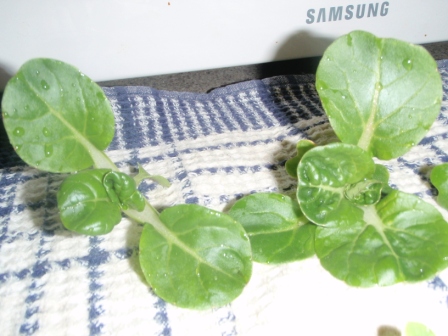
Toy Choy – At 5 1/2 weeks, my baby bok choy is about 2 inches tall. I’ll wait until they get a little bigger before I harvest them, as I really like them in stir fry! I initially spread seeds all over the container, then 2 weeks later added more to the right-hand side of the planter, then 2 weeks after that I reseeded the left-hand side. Next year, I will seed one side, then seed the other, and alternate… that makes more sense.

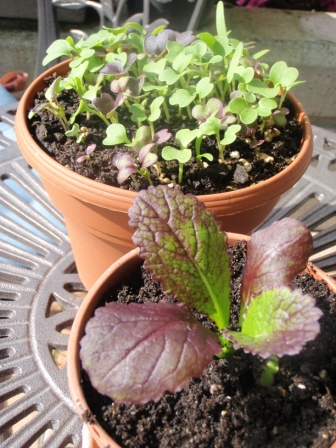
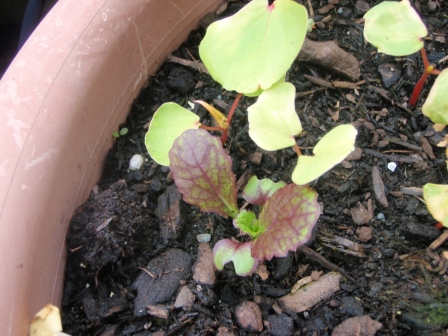
Buckwheat – At 5 1/2 weeks the buckwheat seems to be suffering. We’ve had a pretty cold spring and quite a bit of rain, so I think that’s why the buckwheat is still so small and yellow. It does tell me that I need to add some more sand to the container to improve drainage, though, before I plant my squash in the same soil. However, I have a rogue mesclun lettuce seed that grew from last year (the purply plant). This is what the mesclun in my small patio table container will eventually look like.

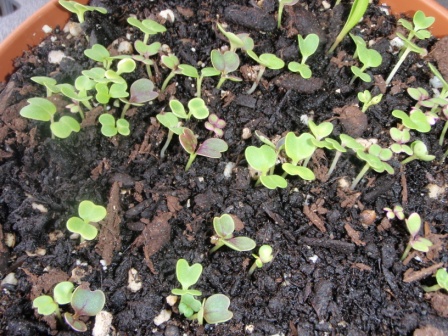
Mesclun – About 11 days after planting the mesclun seed mix, I have a lot of tiny seedlings. They benefited from being covered for two days under a plastic produce bag to create a greenhouse effect. The planter was uncovered for several days after sowing with no movement, then I covered it over and within a day they sprouted. Just providing the extra few degrees of warmth really seems to make a difference. I will have to thin these out soon, but when they are a little bigger.

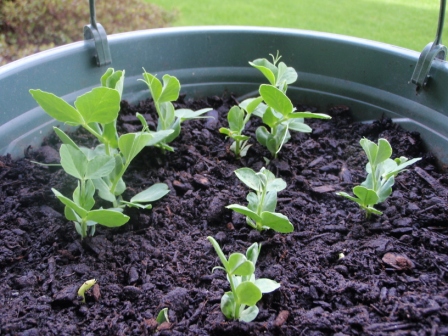
Peas – Both the Little Marvel and Oregon Sugar Pod are doing well after their second sowing. The Oregon Sugar Pod seems to have done well even with the cool Spring, though it is placed much closer to the building and likely got more ambient warmth to help with germination. The Little Marvel has been less successful and I think I may need to re-sow a third time to fill in some gaps. However, that planter was further from the building and was exposed to more cold, wind and rain. It’s very possible that, even though I didn’t soak the seeds prior to sowing, they could have gotten water-logged with all the rain we’ve had. I also didn’t plant them very deep, so that could have also exposed the seedlings a bit too early. In any case, the Little Marvel seems to be doing better and I still think they’ll flourish soon.


Swiss chard – About 6 days after I transplanted the Swiss chard outside, I seem to have had a planter mis-hap… or more accurately, a planter misplacement. I inadvertently had placed the planter under the corner of the balcony above my patio. We had some heavy rainfalls this week and the rain gathered at the point right above my chard planter and continuously dripped on my poor fragile seedlings (and made a big splashy mess on the patio floor!). So I’ve moved the planter and planted some backup seeds in case my seedlings don’t make it. I also went over to a friend’s house (she is the one who gave me the chard seeds) and found that she has over 10 plants growing really well in a much shallower container! Even if all of my transplants survive and the new seeds sprout, I think I’m safe to keep them all!


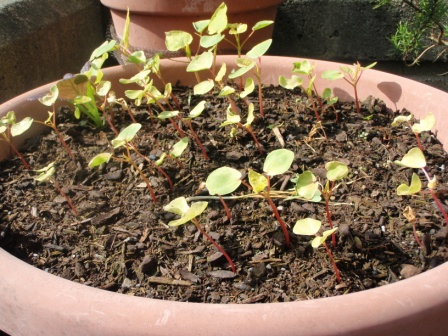
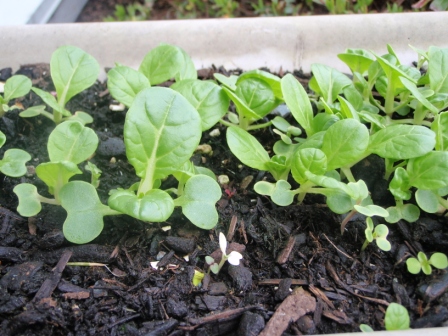
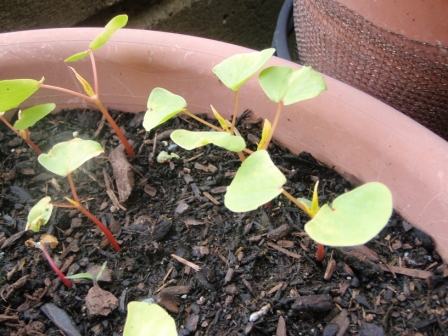
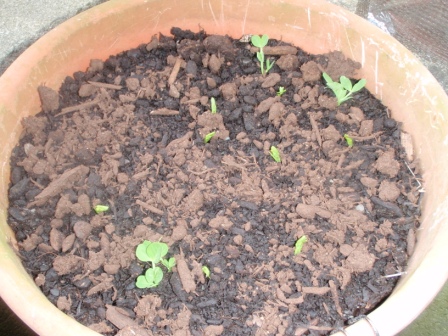
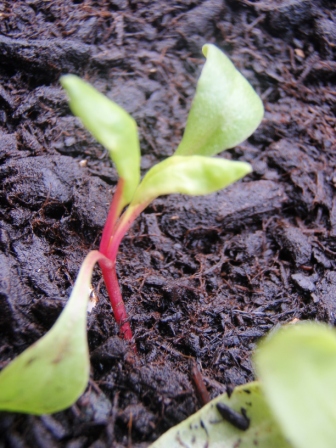
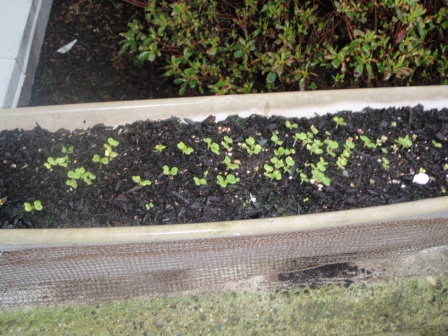
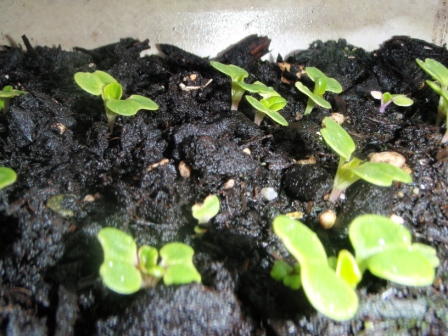
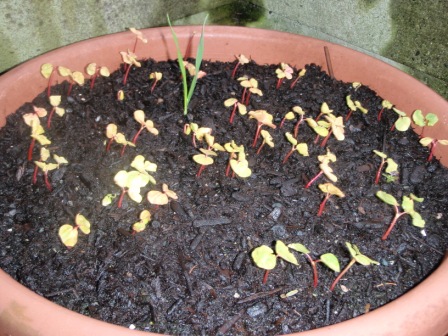
Beets & Radishes – The beets and radishes have also already sprouted and they’re not kidding that radishes grow fast! These seeds were sown about 14 days ago. The bigger seedlings with heart-shaped leaves are radishes, while the seedlings with the thin red stems are beets. They look similar to the Swiss chard seedlings because they are closely related.

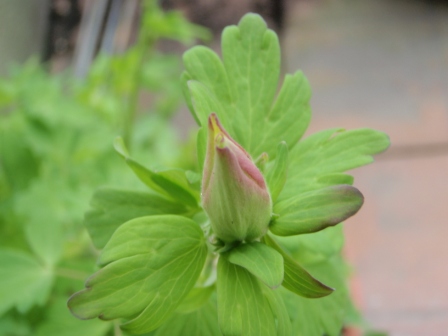
Columbine – Aside from the Skimmia, the first of my flowers to bloom will be the columbine. It has had foliage most of the year, but it did die back in the winter. It has about 5 flowering stalks this year with multiple buds on each. Can’t wait for it to open!


Categories
Garden Stuff Vegetables

Light reflection for lower light areas

I was looking through the West Coast Seeds catalogue at the books they carry, and one caught my eye because it mentioned techniques to reflect light for small gardens. Although you should first and foremost make sure you can meet the light requirements of the plants you are growing and not rely on reflected light, reflecting additional light to your plants can help boost the intensity of the light that is available. A quick web search turned up a number of suggestions:

  • Use light coloured mulch (including white river rocks, pine shavings, white plastic) or large white pavers or stones around the base of plants to reflect light upwards.
  • Place white coloured garden decorations or pots throughout your garden, strategically positioned to reflect light to the plant (be careful not to create more shade).
  • Paint surrounding areas white, such as walls and fences, if possible. Because I live in a condo, I do not have control over the colour of our building exterior. However, I do wonder if the sunlight reflected from the windows on the other side of our courtyard make a difference in my garden.
  • Try mirrors or foil to reflect light, but be careful as these can focus sunlight too much and burn your plants. I am using the flat side of tin foil behind my peas to try to reflect light and warmth to them
  • Plant white, yellow or light green flowers and foliage around your garden which can also help to reflect light to other plants.

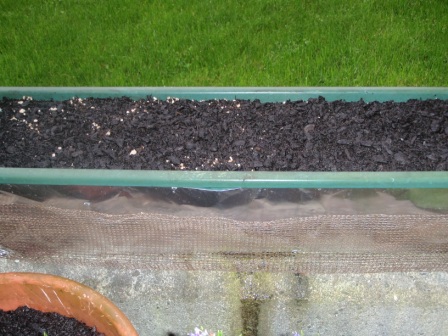
I have lined the outside of a long, dark green planter with the matte side of tin foil and a white pot surrounding my container of Little Marvel peas.


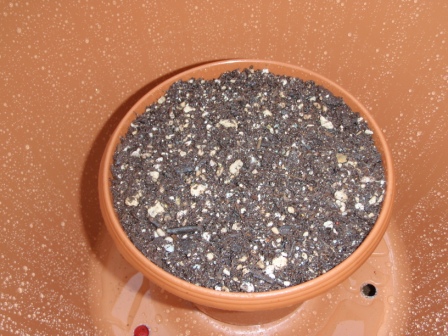
I also have a number of larger, light coloured stones that I collected from a river and that were once decoration in my fish tank. I have scrubbed the algae off and will use these around the base of my butternut squash plant. I know that I marginally have the minimum light requirements to grow a butternut squash plant, so I went into this with the mindset that this would be a bit of an experiment.


Some resources to check out:
.
Fresh Food from Small Places book

How can I reflect more light onto my outdoor garden?

Vegetable gardening (see section on Container Gardening)

Categories
General Update Vegetables

General Update – I’m addicted!

I’m officially addicted and can’t seem to stop planting things. This weekend I even went over to my dad’s garden (dragging my accommodating hubby along with me) to weed, till, and plant some side beds. Now he’ll have some buckwheat and a blend of wildflowers that will attract bees to pollinate his garden.

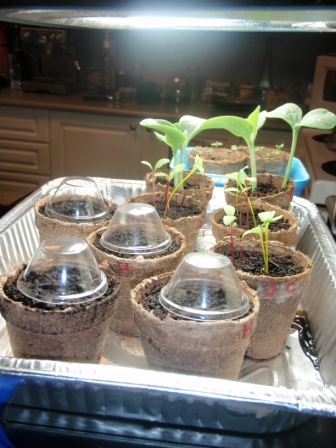
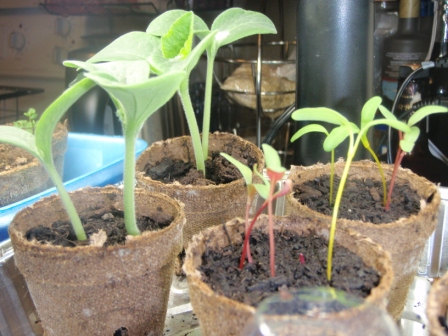
Below is an updated shot of the seedlings in my Aerogarden. The butternut squash (at the back) and Swiss chard (in the middle) were planted on Easter Monday night (9 days ago). I need to get larger peat pots because the butternut squash seedlings are quickly outgrowing these small ones. I already see roots poking out the side walls! About 2 days ago, I planted two more pots of swiss chard (1 ‘Bright Lights’ and 1 rhubarb chard) and two pots of baby blue hubbard squash (which will go to my dad’s garden). Those are the pots with the little domes over top to help keep the soil moist. In the close up shot you can see the different colours of the Swiss chard stalks.

The Toy Choy sprouts continue to grow. You can see some smaller seedlings coming up from when I had thrown more seeds into the right-hand side of the planter 2 weeks ago. Yesterday I added some more seeds to the left-hand side of the planter. This is so that I hopefully have some good successive crops because I really do love baby bok choy stirfry!

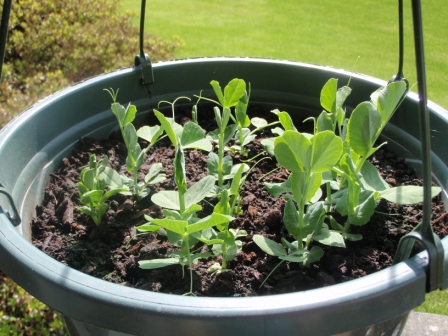
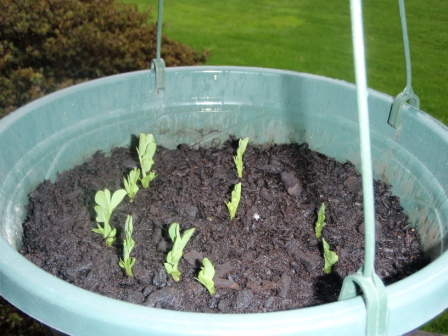
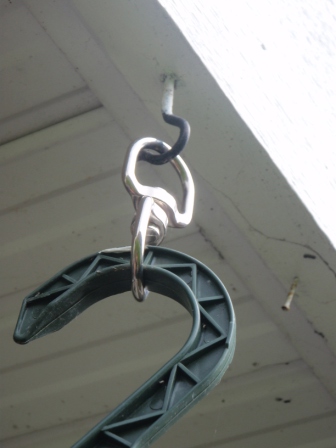
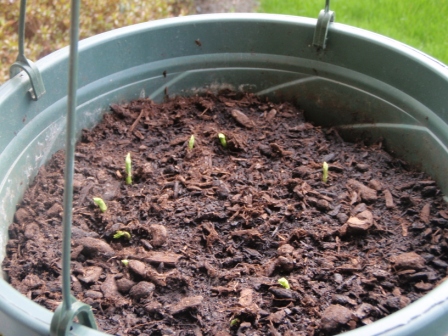
My peas are really starting to do well. The Oregon Sugar Pod in my hanging basket is doing great! I think I may pop in a couple more seeds to fill in the gaps. It will be a good time to top up the soil too! I also found this great swivel connector that will allow me to spin my hanging planter around to share the sunshine evenly.

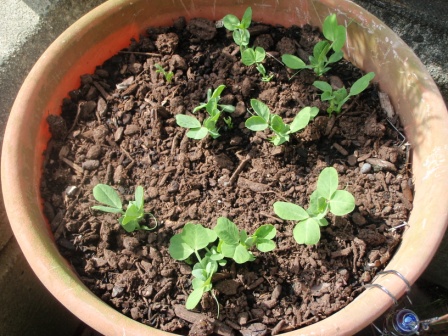
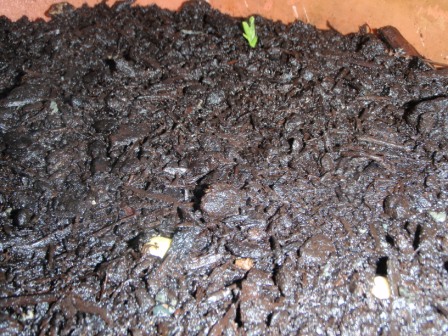
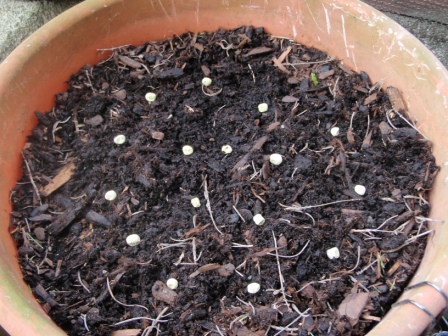
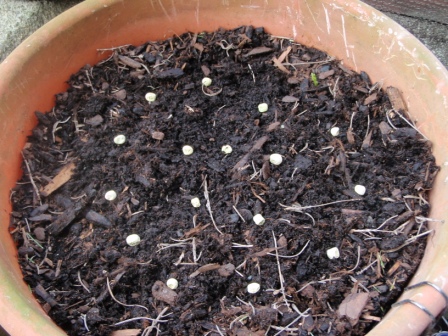
I posted a few days ago that I replanted my Little Marvel peas because only one out of about twelve seeds sprouted. That was a little disappointing and I still don’t know what happened. However, just a few days later and I can already see some sprouts beginning to pop out (the white things in the foreground below) in front of the lone seedling from the first round of planting.

I wasn’t supposed to add another container to the patio – this is what I said last week after I bought a 24″ pot for the Swiss chard – but I’ve added another one. But in my defense it is small (8″) and is meant to be a decorative but edible feature that will sit on our patio table. And I had the seeds already from last year, so I couldn’t let them go to waste, could I? I’ve planted a mesclun mix of mustard greens with a few spinach seeds thrown in for good measure. These will be ‘cut-and-come-again’ salad greens for when I have a hankering for fresh salad.

Below are photos of the buckwheat (29 days) and beet & radish (4 days) progress.


Categories
Spring Vegetables

Update – Container Peas

There have been some positives and negatives with the container peas.

The Oregon Sugar Pod that I planted in the hanging basket has done well. This photo was taken a few days ago and the seedlings are already over an inch tall and have started to develop another set of leaves. There are about 10 seedlings so far. I will have to add some soil when they are a little bigger because I forgot that the soil compacts after watering.


The Little Marvel on the other hand has not germinated as well, and I have only one seedling in 20 days, so I am reseeding the pot and just adding soil on top. I poked around to see if there were any seedlings on their way that just hadn’t broken through the surface yet, but there was no sign of life. I didn’t add inoculant as I had already put some in during the first sowing, so when the roots reach that level the inoculant should take effect. Let’s hope it works better this time! Perhaps I put too much soil on top… or perhaps the seeds were eaten?

Categories
Spring

Skimmia – Mystery (partially) solved

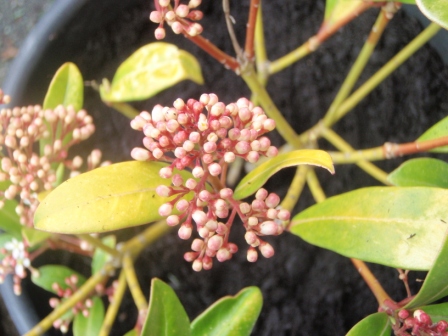
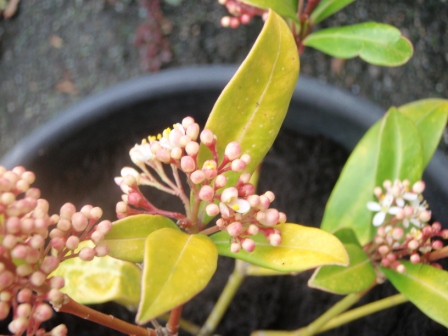
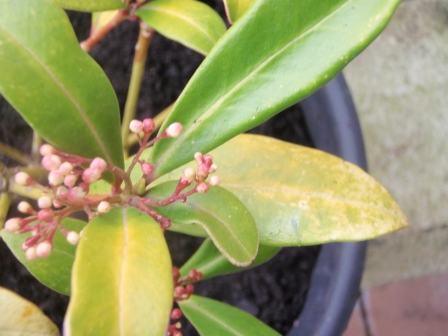
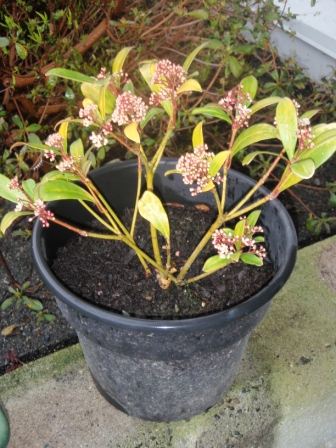
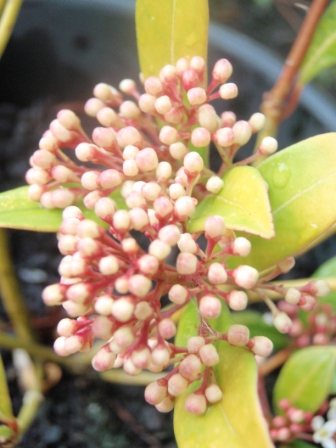
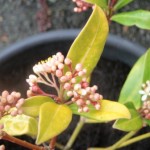
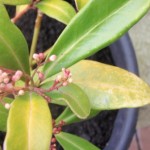
My post last week got me thinking about the mystery plant I had been neglecting. I have had the plant since 2008 and had just hoped it would perk up over time. Every year I topped it up with Sea Soil and assumed nutrients would filter down to the roots. A couple of years ago I repotted it, thinking it was outgrowing its pot, but the root ball was very small and compacted. And every year it has sickly yellow leaves. It always develops pink buds through the winter and flowers in March to April, but has not grown much since I first got it. So this year I will put in some effort to see if I can cure its sad look.

The first step was to figure out what the heck it is called so I can learn more about it! A quick internet search of ‘shade tolerant shrub’ turned up some nursery webpages that had lots of pictures I could scroll through. It is some type of Skimmia. Though I don’t know the variety, Skimmia japonica seems pretty common.

I searched the UBC Botanical Garden Forum for Skimmia posts, keeping an eye out for threads about sickly or unhealthy plants. They like acidic soil (check, since our rain is naturally quite acidic), but if it is too much below 6.0 pH, the soil should be ‘sweetened’ a bit with garden lime. They also are sometimes prone to spider mites, so I’ll have to keep an eye out for that. They do like shade (check) as their leaves can get burned in the summer. As well, well-draining soil is important as it can get root rot. Also, they are dioecious plants, which means they require a male and female plant in order for berries to set. However, I don’t know if I have a male or female.
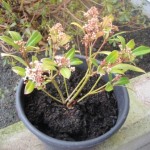
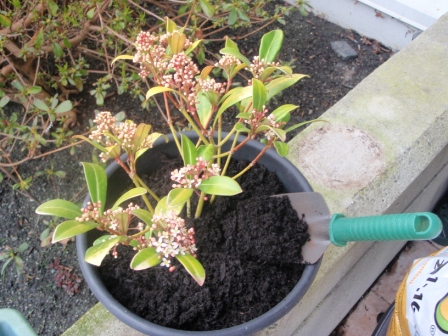
Armed with this new knowledge, I turned a new leaf (haha…) and began caring for my Skimmia by amending its soil last Saturday.

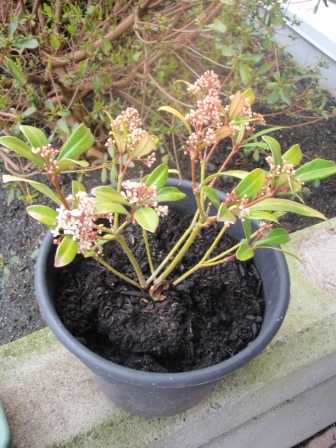
This is the ‘before’ picture. As you can see it is very sparse, and leaves are yellowy green.
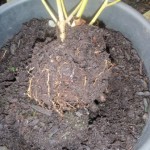
 

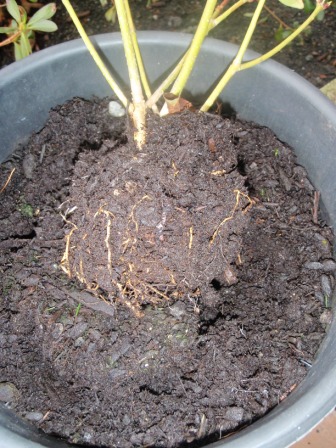
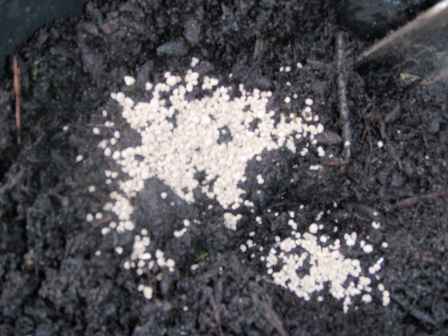
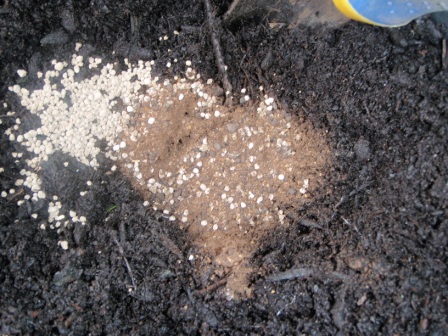
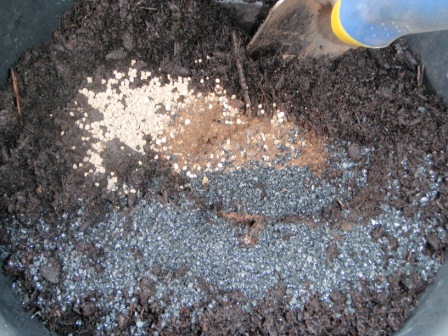
In a wide circle around the base of the plant, I dug in to pull it up with (hopefully) minimal disturbance of its root ball. It doesn’t look like there has been much root growth in the past two years. I loosened the soil remaining in the pot and amended it with bone meal, dry fish fertilizer, and large sand/fine gravel.
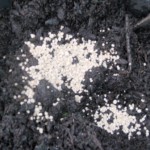
 

Bone meal (white stuff) provides an organic source of phosphorus and promotes root growth. Ideally, you should always add some bone meal when transplanting, so that was a mistake I made when I first potted up. If you have bulbs, it is also helpful to spread bone meal annually.
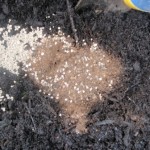
 

Dry fish fertilizer (brownish mixture) is organic and provides a balance of nutrients. I added this because I did not change out the soil that was in the pot already. I’m currently using a brand called Organika, but have used Gaia Green in the past. In any case, I rely on natural rather than chemical fertilizers.
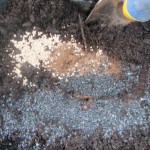
 

Sand and/or small gravel help to improve soil drainage. In my case, I had a bag of decorative garden sand (shiny black stuff), so I mixed this in. Poor drainage could be the reason for the yellow leaves, as it rains most days through the winter.
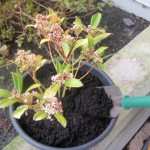
 

All amendments were mixed thoroughly and then I replanted the Skimmia. I topped up the pot with new Sea Soil. Usually when you do this, you will want to water the plant well. However, it has been raining all week and the soil was already pretty wet, and it is expected to rain again today, so I passed on the watering.


Although I have figured out what this plant is, I still don’t know why it is so unhappy. So I’ll keep an eye on it through the summer and see how it does. Since it is not good for me to dig it up every year to check out the root growth, I’ll pay particular attention to its leaves.
Categories
General Update Herbs Spring Vegetables

General update – Container progress

This week has been slightly warmer, with temperatures around 7 degrees Celsius. Here is a photo log of seed and plant progress:
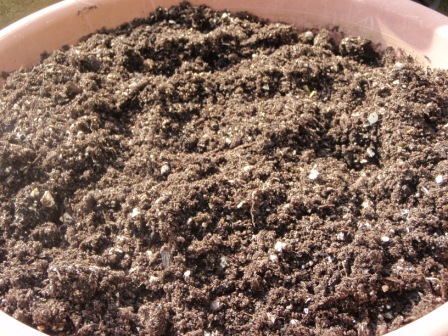
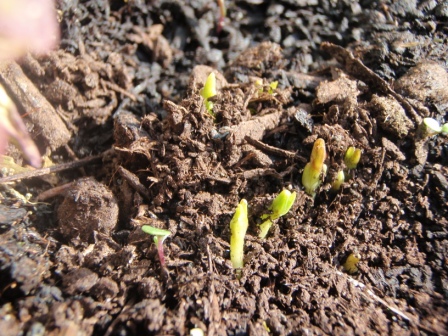
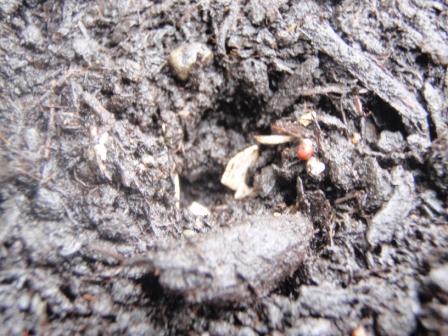
Toy Choy (planted 10 days ago on March 20) – I’m unsure if this is a Toy Choy sprout… or just a weed. It also appears something has been digging in the soil to pull out a larger piece of eggshell and exposed an ungerminated seed.
 

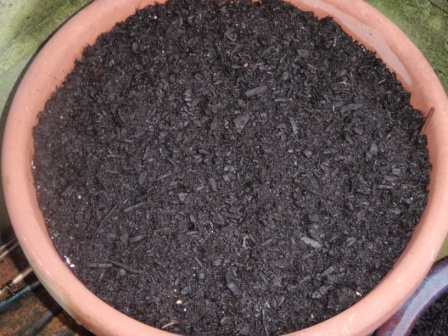
Buckwheat (planted 10 days ago on March 20) – No sign of life yet to cover and protect my soil!


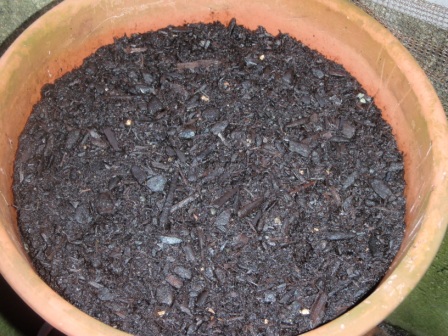
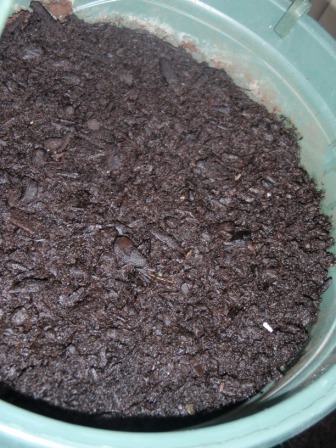
Peas (planted 5 days ago on March 25) – No sprouts yet for both Little Marvel and Oregon Sugar Pod. The package says 7-10 days for germination.


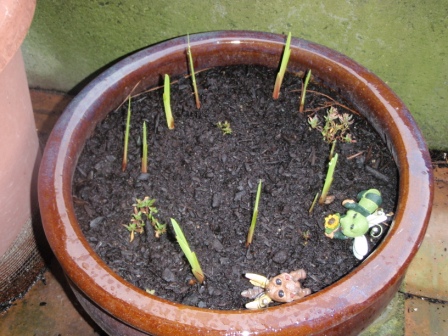
Crocosmia & Calla Lily (perennial) – Crocosmia continues to do well. Still no sign of Calla Lily.


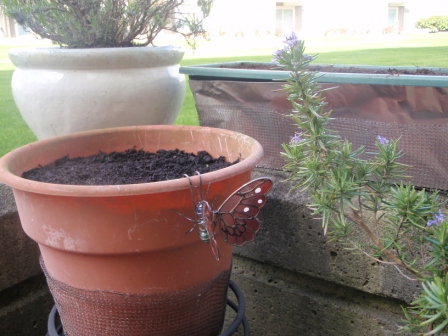
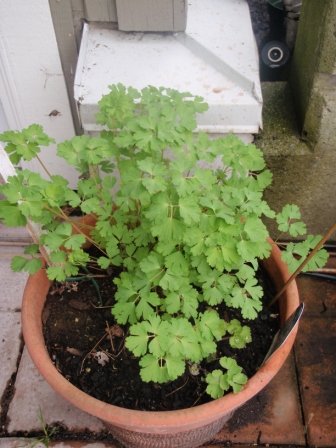
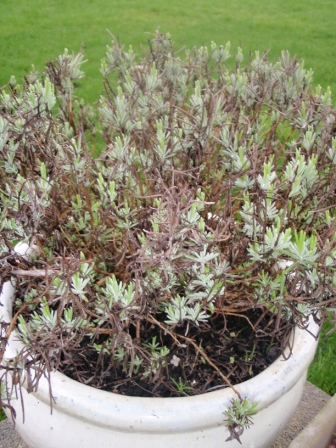
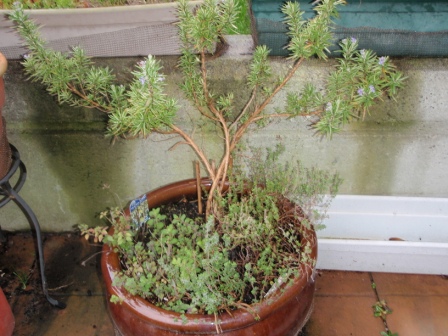
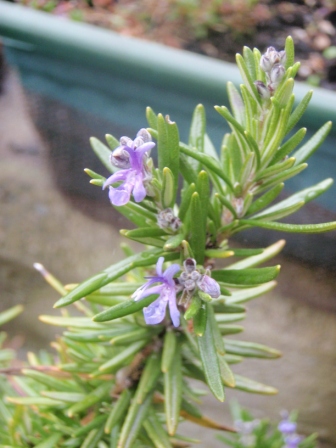
Columbine, Lavender & Herb container (perennial) – All are doing well. The rosemary always flowers early in the Spring.

Mystery plant – This is a plant that I won as a door prize one year. I’m not sure what it is, but it always survives the winter. However, when I transplanted it a couple of years ago its roots looked pretty sad. Given the sparse yellow leaves I’m not sure that it’s doing much better, though it is flowering. I know it is a cool weather, shade liking plant. However, I’m not sure how to help it thrive.

Spam prevention powered by Akismet