Categories
Autumn Vegetables

Fall/winter vegetables coming along

I may have mentioned that I am trying winter gardening this year.
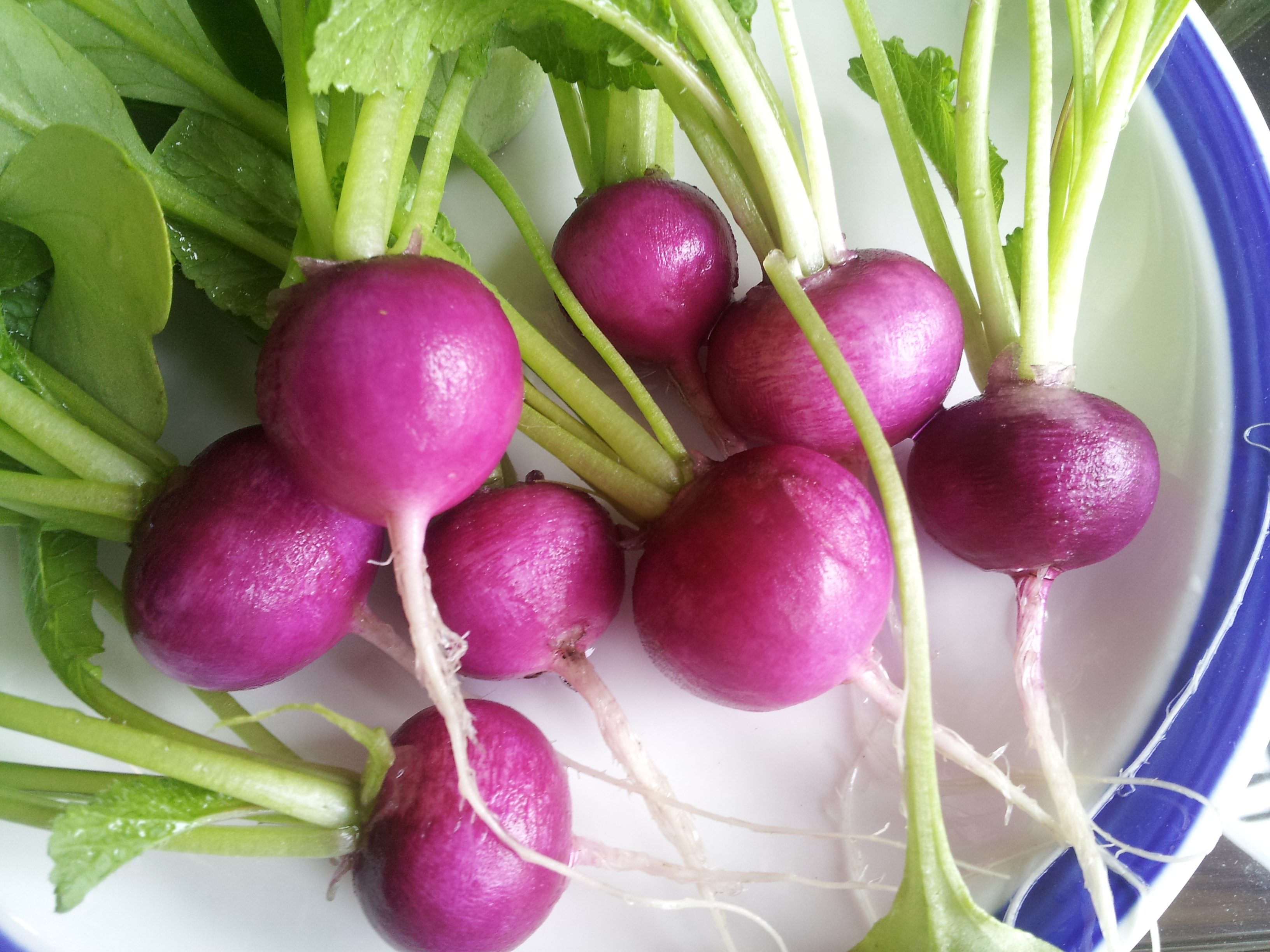
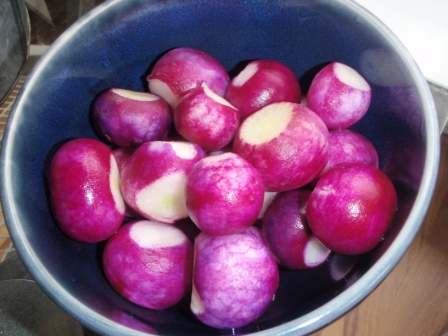
I have already harvested my radishes, which matured very quickly with our warm September. These were planted on September 10th and harvested the second weekend of October. We had an unseasonably warm and dry September this year, though I’m not complaining!
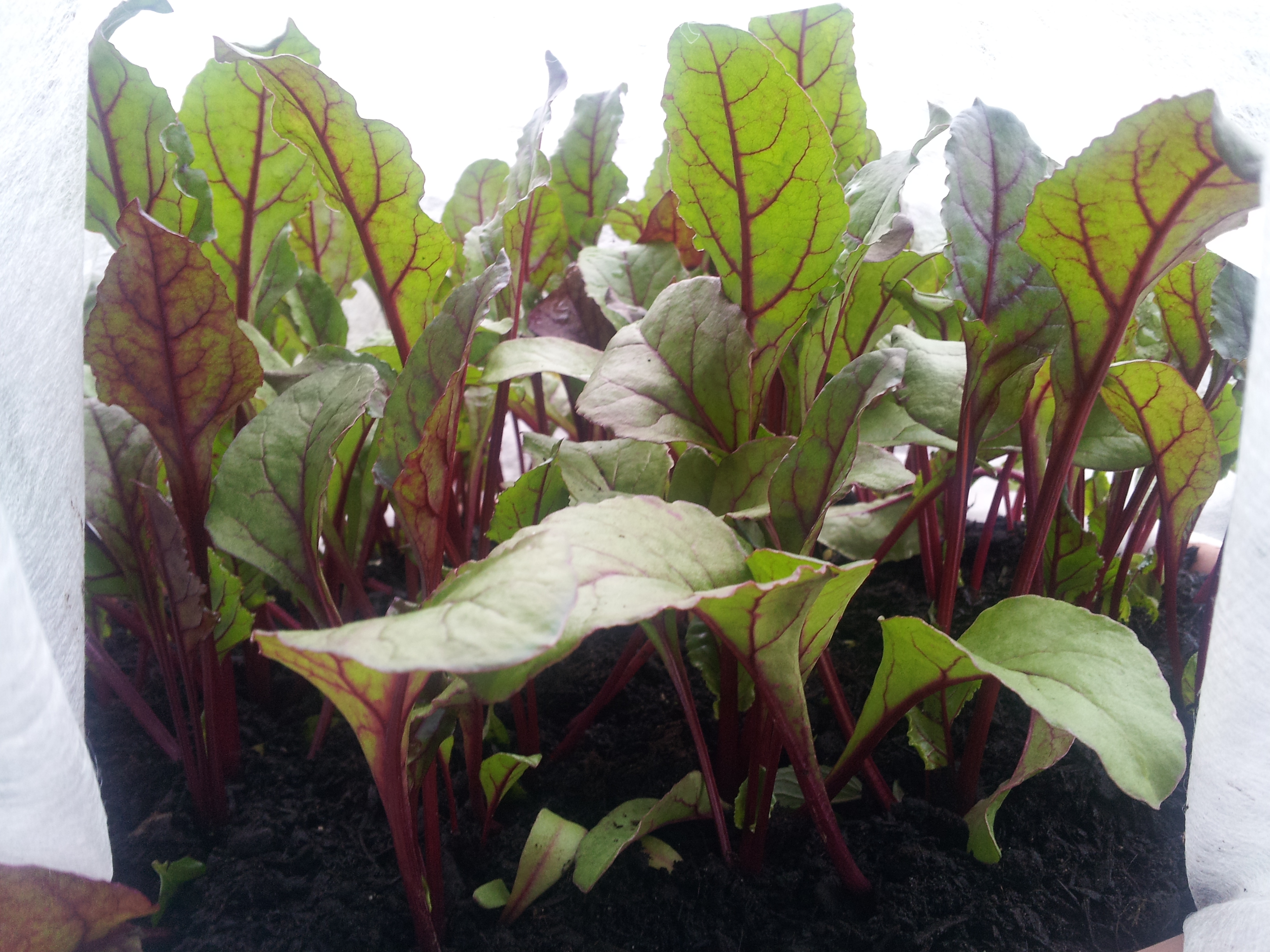
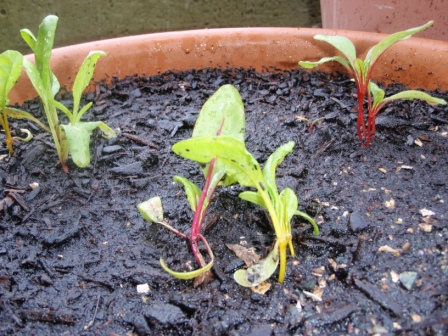
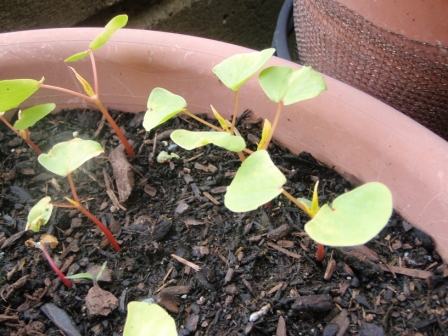
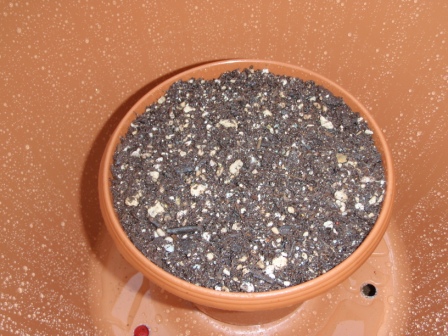
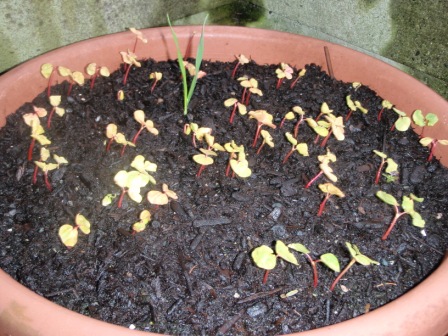
These Kestrel beets were also planted on September 10th and have been growing under a light weight row cover cloth to keep out pests. This progress picture was taken on November 2nd, and while I have added a layer of SeaSoil as mulch and moved the pot close to the building to keep them as warm as possible, it may still be a month before they are ready.  These beets are growing in 18″ of soil.
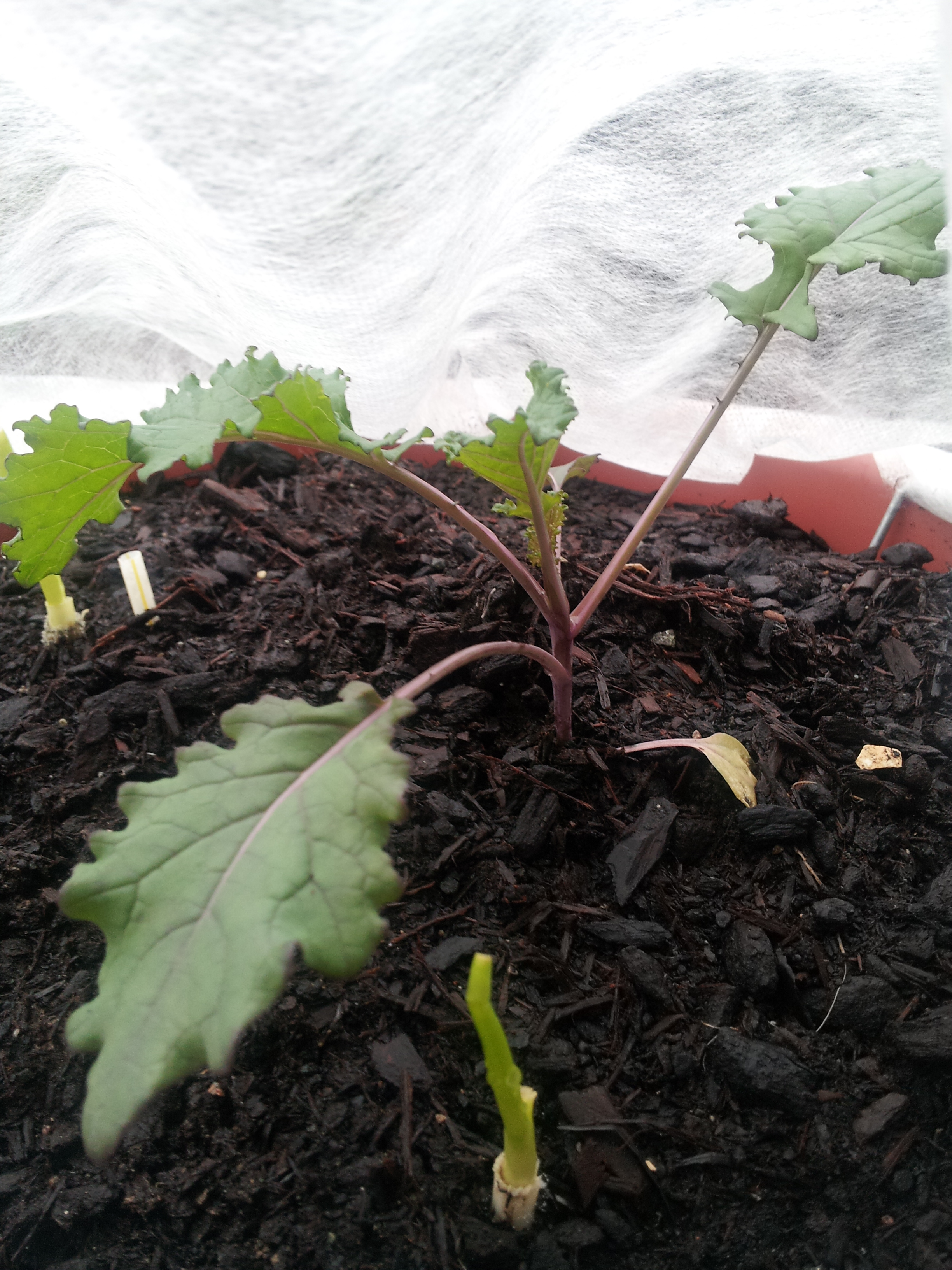
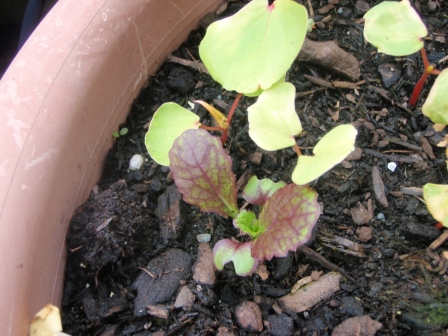
This is my first time growing kale. This is a Rainbow Lacinato kale, which is a cross between Redbor and Lacinato. This was also planted on September 10th and update photo taken on November 2nd, but I am a little disappointed in its growth. I know that through the fall growth will slow, but I will admit that since kale is a cold weather veggie I expected it to be huge by now! There is definitely new growth, and perhaps because this plant is growing where the Swiss chard lived in the summer time the soil may be a bit depleted. I can’t remember if I had added a bit of fertilizer prior to seeding, but regardless it may be too cold for the the fertilizer to break down and make the nutrients available. I just did a feeding of (stinky) liquid fish emulsion fertilizer. I have also topped it up with some new SeaSoil and dug in some glacial rock dust to amend the soil, so hopefully this all helps. My other Rainbow Lacinato which is growing in the pot that held the peas this summer seems to be doing a touch better. I’m guessing it is because the peas helped to fix nitrogen in the soil, especially since I used the inoculant.
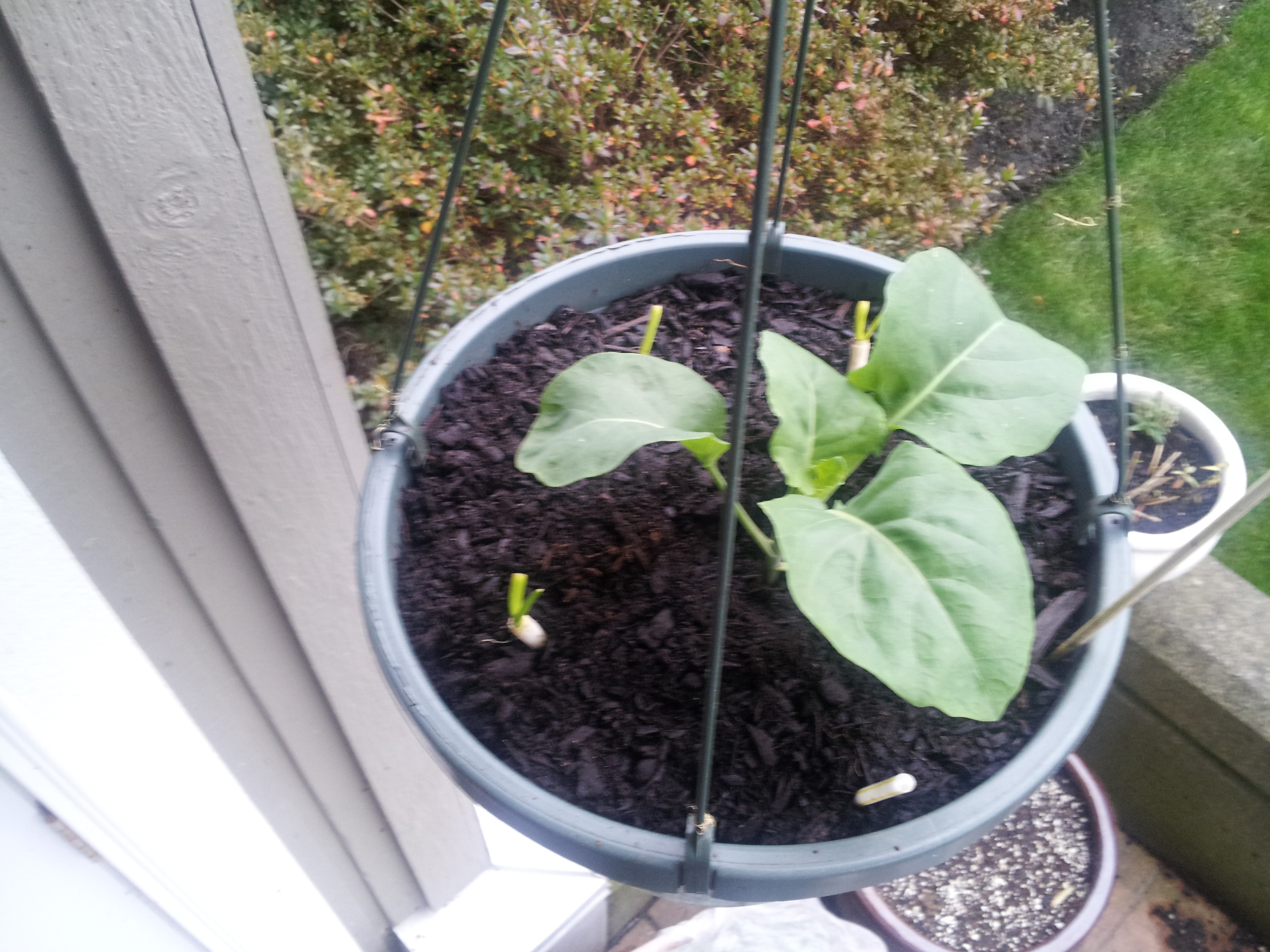
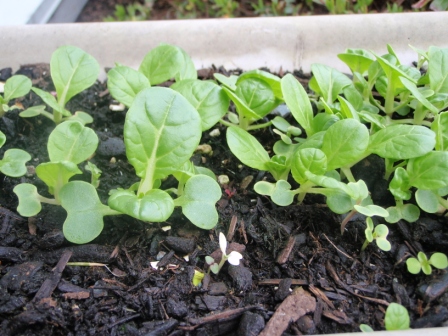
This is also my first attempt at gai lan, an Asian vegetable that is like sprouting broccoli or rapini. I didn’t really know how big these plants get (this is why it wound up in the hanging basket) so I’m not sure how well it will do. I don’t expect to harvest anything until closer to February, but it seems to be doing well. Again, it could be due to the fact that it is in another planter which held peas and therefore there is good nitrogen content in the soil. Next year I may have to plant more of these if we actually want a meal of gai lan.

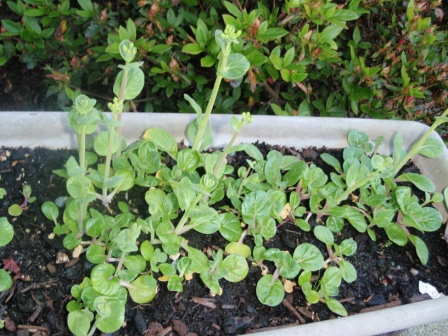
One vegetable that did not do well when I started it from seed in September was my new batch of Swiss chard. The plants I had throughout the summer had started to bolt, so I popped some seeds into one of my 6″ deep planters, but alas they are still a whole one centimeter tall.

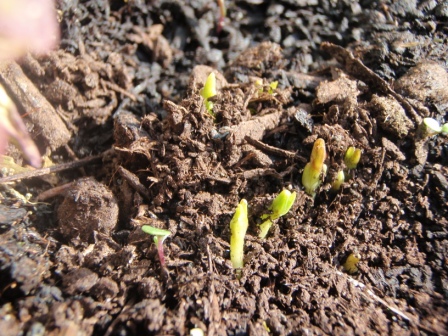
You will also see that there are a few scallions popping up in some of the photos. I put out the roots from scallions we bought from the grocery store just to see if they would sprout again. Lo and behold even in the cold snap we had during October they sprouted up like it was nothing! I have started some more seeds indoors, and actually I even started some outdoors just to see what happens. The worst that can happen is, well, nothing! I’ll update in the future on how these little seeds do: Tyee spinach, Rouge d’Hiver lettuce, and Little Gem lettuce. The seeds I’ve got started indoors include Rouge d’Hiver, Little Gem, and Cimmaron lettuce, as well as Apache scallions.
Categories
Spring Vegetables

Patiently waiting for spring

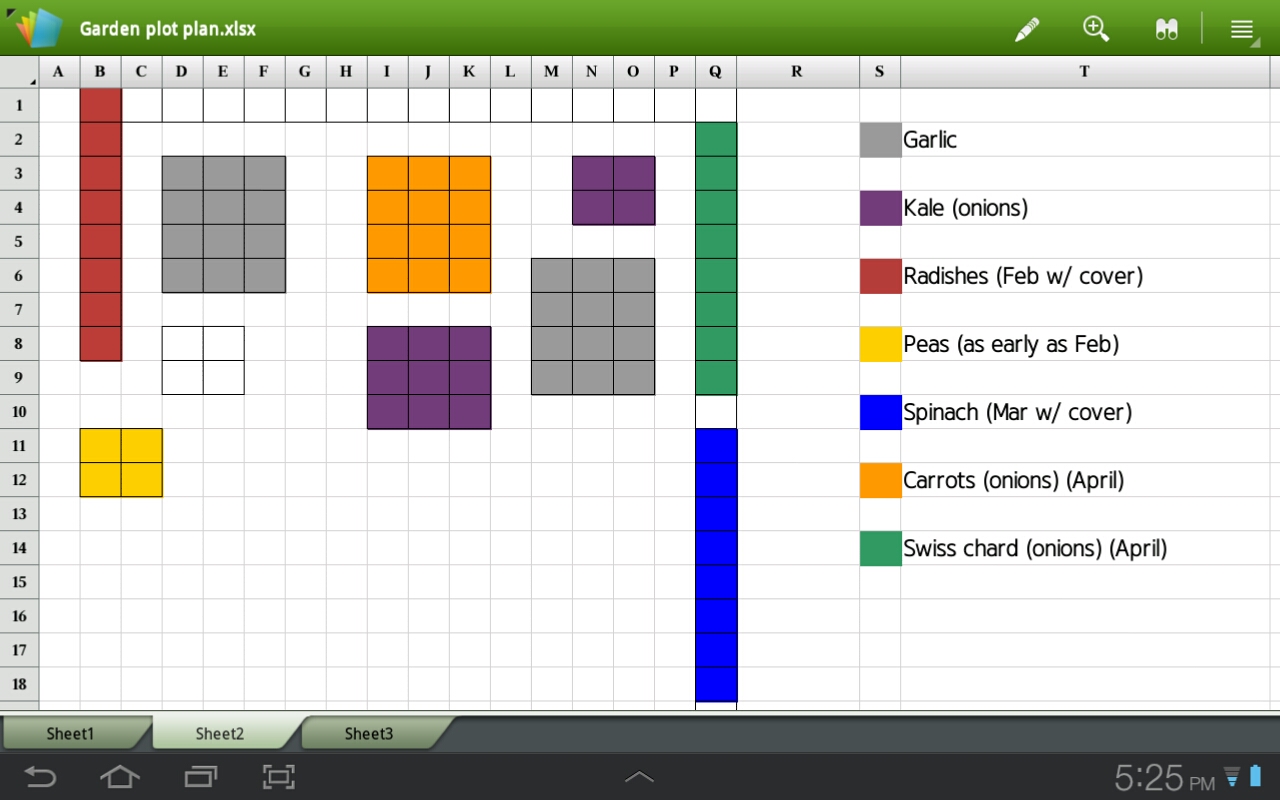
I have my meagre winter containers planted and still have no word as to whether we have been assigned a community garden plot, so in all my spare time I’ve planned out the patio garden for next year. It’s not the snazziest picture, but it makes sense to me!

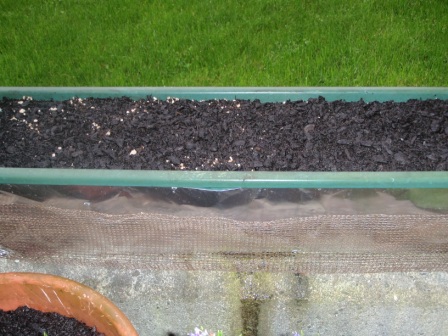
The garlic and kale were planted this fall. The kale will be ready in the new year and the garlic next July. The radishes, spinach, and chard will be grown in the long planters that sit on the concrete surround. The pot with the carrots currently holds beets (which I am hoping to harvest near Christmas time. I will have to transfer the soil into some of the long pots, as according to rotation gardening I shouldn’t plant root veggies in the same place consecutively. The hanging basket which will hold peas again in 2013 currently holds my gai lan plant, which I’m beginning to doubt if the container is large enough, but we’ll see! I’m also planning on interspersing scallions amongst some of the planters in order to deter pests. We’ll also see how that works.
Categories
Autumn

It’s been a while!

It’s been a while since I wrote a post. Summer time got very busy and while the garden kept growing, I didn’t get to update as much as I had hoped. Here’s a run down of how things went:

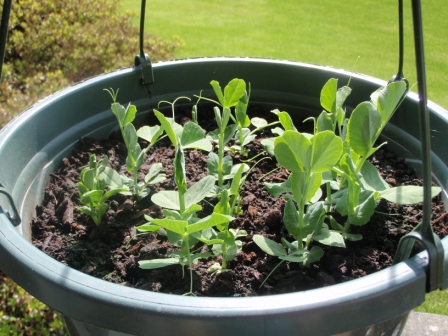
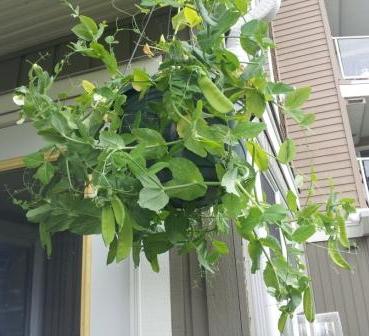
Hanging sugar peasThe sugar peas grew really well in the hanging basket and gave us several harvests – it seemed to just keep growing more and more pea pods! However, we have to make sure we’re at home when they’re ready to be picked!


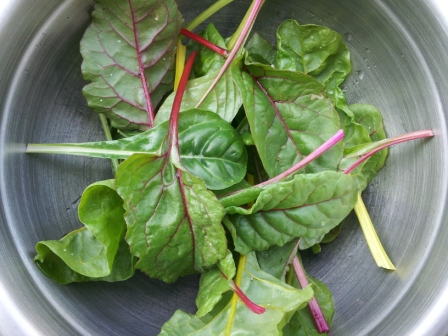
Swiss chardThe Swiss chard grew well as cut-and-come-again baby salad greens, but I had a mid-summer infestation of leaf miners. These little pests bore tunnels between the top and bottom layers of the leaf, and cause a fair bit of damage! I had to keep cutting and throwing out the leaves with the leaf miners to get rid of them to prevent them from turning into moths which would then lay more eggs in the soil. I broke the cycle by the end of August, but by then some of the plants had bolted. Next year I’ll plant fewer plants and let them grow larger. I’ll also use a row cover to keep the moths away!

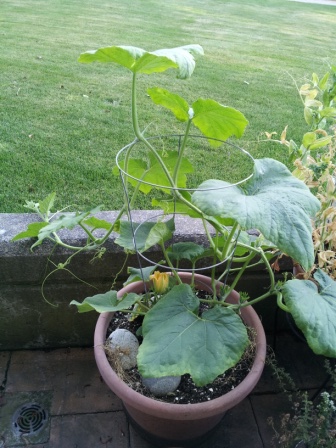
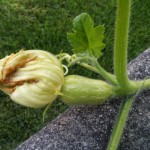
Butternut squash   Butternut squash - female blossom

I only ended up with one (small) butternut squash – barely 6 inches in length. The photo above is a picture of a female fruit-bearing blossom. I had to hand-pollinate the blossoms with the male blossoms because I only had one plant and the flowers opened one at a time. Next year, I don’t think I will grow squash again.

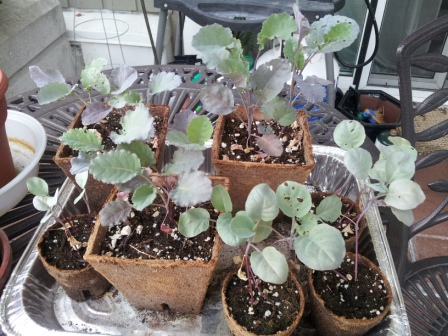
Kale & Gai Lan seedlings

I had also planted some kale and gai lan seedlings in mid-July for winter gardening, and set them out in August to get acclimated to the outdoors. However, they got decimated by cabbage moth larvae – big fat green caterpillars!


So I wound up direct seeding my pots on September 10th with kale, radishes, gai lan, Swiss chard, and beets. We had an amazingly warm and dry September, so luckily most of the seedlings had a great start! More on that next time!

Also, I’m hoping to get into a community garden plot next year, so I’ll be able to have a proper garden! I’ll still grow in the containers on my patio, but having a garden plot will allow me to grow a bigger range of veggies!

Categories
Spring Vegetables

Radishes – A review

I did a companion planting experiment where I planted quick-growing radishes with slower-growing beets. The  idea is that the radishes will be ready to harvest about a month before the beets, therefore loosening the soil for the beets when the radishes are harvested.

While the radishes have been successful, I don’t know if it’s the best idea to broadcast sow the two seed varieties as I did. When I was pulling the radishes, some of the beet seedlings were coming out with them because the roots were tangled together. I have tried again with baby carrots (similar to these) and radishes in another container, and this time I planted them in more orderly rows, about one seed per inch.

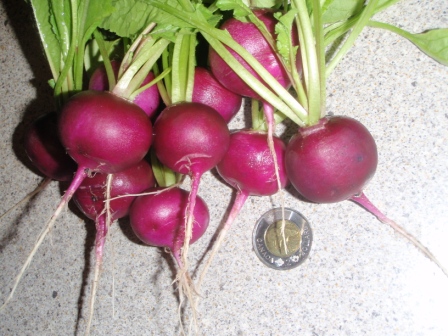
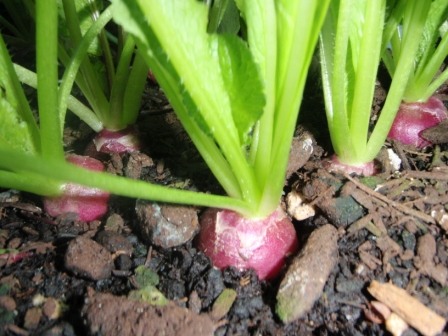
The radish variety I planted this year is Amethyst, which should mature in 25-30 days. This variety is meant to be slow to go woody, which seems to be true in my case. At 45+ days, the larger ones are just starting to get a bit fibrous.

June 3, 2012
(49 days since planting)

4th Harvest – 23 radishes in this harvest. After this, we still have one more harvest to go. In total, I think we will have harvested 50-60 radishes grown in one 24″ x 6″ x 8″ planter.


May 27, 2012
(42 days since planting)

3rd Harvest – Approximately 10 radishes in this and past harvests. Many of them are larger than a twoonie.


May 18, 2012
(33 days since planting)


May 5, 2012
(20 days since planting)


April 27, 2012
(12 days since planting)

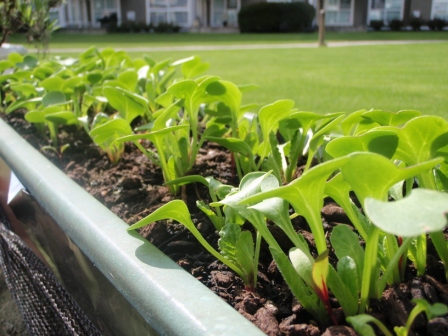
Heart-shaped leaves.


April 15, 2012
(Seeds planted)

24″ l x 6″ w x 8″ h planter

Categories
Spring Vegetables

Time for something new!

The weather has warmed up significantly and we’ve had a good stretch of sunshine. I was able to harvest my Toy Choy twice before it bolted. Now I have to think of what to plant in this pot, since I think it may be too warm for bok choy.

I could plant more radishes, since the ones I planted with the beets are growing incredibly fast! We already harvested 2 (but I didn’t take a photo of those). The lot of them will be ready to be picked pretty soon!

Many of the other leafy greens like spinach and lettuce tend to bolt easily, but I may try one of the slow-bolting lettuces, such as: Red Deer Tongue, Merlot Organic, or Lovelock.

Categories
Spring Vegetables

Patio overview

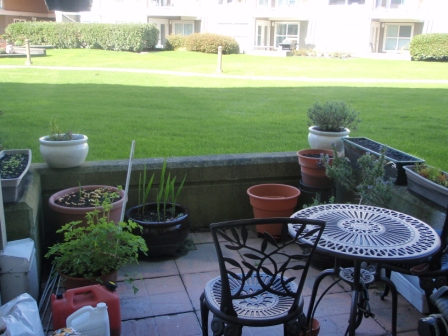
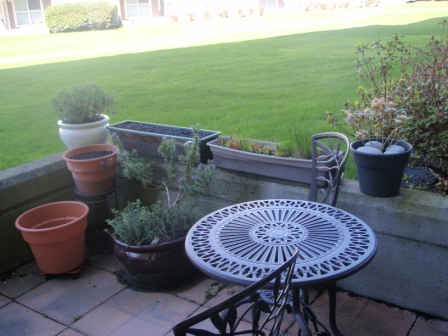
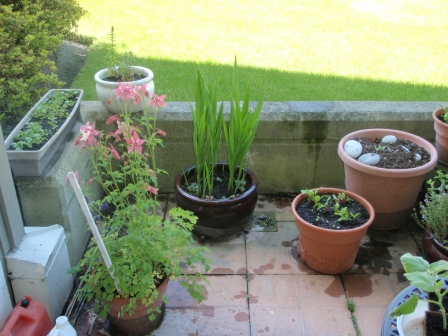
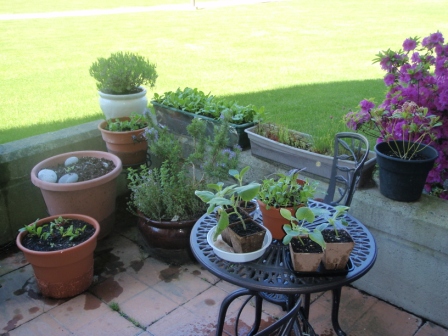
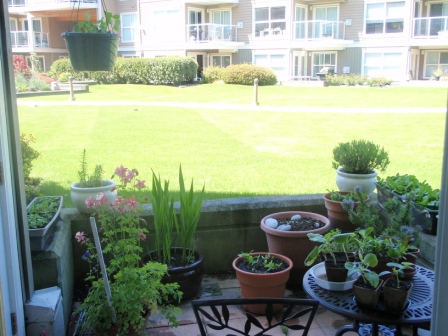
I should have posted overview pictures of my patio at an earlier date to show the space that I have to work with. My patio is roughly 8′ x 12′ in the inner courtyard of our ‘U’-shaped building on the main floor of the east arm of the ‘U’ (the top of the ‘U’ faces north). I only get about 6 hours of direct sun at the height of summer on the outer half of my patio.

These pictures were taken 3 weeks ago on April 20th (facing west). The first photo is taken from inside my bedroom looking out toward the patio.

Three weeks later on May 13th, pots have moved a bit and things are a lot more green!

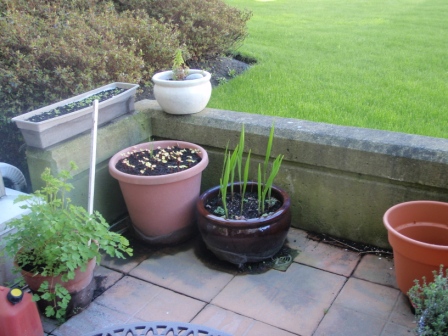
Moving from left to right on the patio (and in the photos): 1. Toy choy is in the long grey-brown container on the ledge; 2. hanging in the top left is the trailing Oregon Sugar Pod peas; 3. butterfly bush is in the white ceramic pot on the ledge on the left; 4. columbine are the pink flowers; 5. crocosmia are the tall spiky leave in the dark brown ceramic pot; 6. Swiss chard are in the smaller clay-coloured pot; 7. the larger clay coloured pot (with white rocks sitting on top of soil) is the future home of butternut squash; 8. the smaller clay-coloured pot sitting on a pedestal is the Little Marvel bush peas; 9. lavender is in the white ceramic pot on the ledge on the right; 10. rosemary, thyme and oregano are in the dark brown ceramic pot; 11. above the herbs in the long container sitting on the ledge are beets and radishes; 12. the grey-brown long container sitting next to it holds chives and mint; 13. the black pot at the very right of the ledge holds Skimmia; 14. on the patio table are mescluns and squash seedlings that will go to my dad’s garden.

Categories
General Update Spring

Harvest time and update

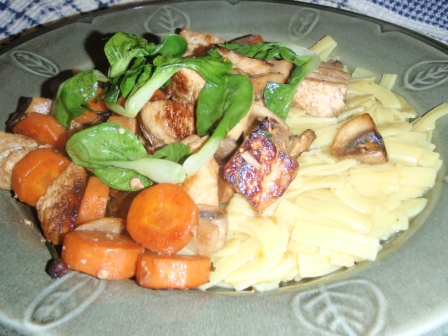
I made my first toy choy stir fry this weekend almost 6 weeks after planting my first toy choy seeds on March 20th. In truth they could be a little bigger before harvesting (they were about 2 inches tall), but I actually needed to thin them a little and decided they shouldn’t go to waste, so I made a chicken stir fry.


The beets and radishes are growing well and I have started to thin a few radishes. These were sown in mid-April, so about 3 weeks on, this is what they look like. The radishes should be ready in another 2-3 weeks, while the beets will be another month or so. The beets, like the Swiss chard, seems to have multiple seeds in one pod, so I had to thin the double beets.


The mesclun mix is also growing well, and I transplanted the stray lettuce that was growing amongst the buckwheat. I’ve been thinning out the mesclun every few days, as they can grow to be full-sized heads of lettuce if I let them. I’ll try to keep them around the size of the plant in the foreground so the plan is that we’ll have salad greens once a week or so.


The Swiss chard is a bit of a mystery to me. I wonder if I should have just direct-sown them into the pot rather than starting them indoors and transplanting. They started out quite tall and spindly, though they are starting to grow their second and third sets of leaves and beginning to look like Swiss chard. However, they are still very floppy and fall over whenever I water them. I’ve since sown a few more seeds in case some of the transplants don’t make it.

My two varieties of peas are really starting to do well. The Little Marvel that had struggled with our cold, wet spring is starting to fill in, though again, I may have to sow one or two more seeds. And the Oregon Sugar Pod in the hanging basket is also doing well. I notice they have tendrils for gripping and climbing, but I’m hoping the vines will trail downwards. I’ll have to keep an eye on them and train them to trail (if possible!).

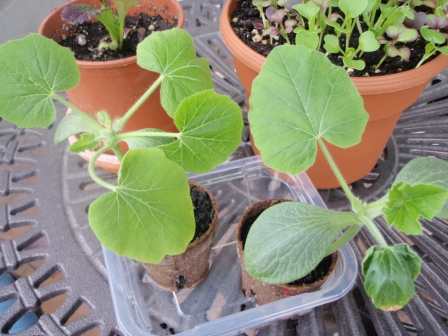
The squash seedlings I started indoors for my dad’s garden, Baby Blue Hubbard squash, are doing well… almost too well because they’ve started blossoming already! I have moved them outside to start hardening off the stems and readying them to be transplanted soon. The early butternut squash are also being prepared for transplanting too.


The buckwheat has also struggled with the cold spring, and they never really did a good job as a cover crop because they didn’t flourish. However, they will still work as green manure, adding nutrients and improving soil composition as they break down once it is turned-under into the soil. After rescuing the errant mesclun, I turned the buckwheat under to prepare the soil for my butternut squash experiment. Buckwheat can apparently break down within a few days, but I will give it a week or two before planting the squash. I’m also tossing the thinned seedlings into this pot for additional compost.

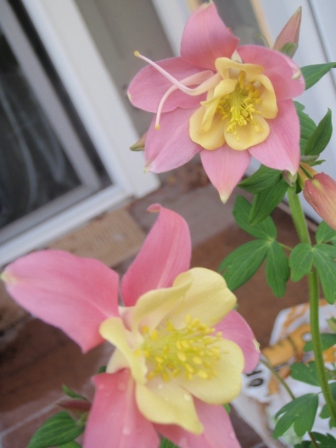
Aside from veggies, my flowers are doing well. Still no sign of blossoms on the crocosmia, but the columbine is in full bloom now and I’ve spotted a few pollinating insects checking out the flowers. I also have an alpine columbine that is a dwarf version planted in the same pot. I thought it was done-for as it has struggled in past years, but lo-and-behold it is blooming this year! As well, I have FINALLY seen the first sign of life of the butterfly bush (Aesclepias), so now I know they won’t generally pop up until the first two weeks of May.

Categories
General Update Spring Vegetables

General Update – Busy week

I’ve been pretty busy this week and didn’t get to post as much as usual, but I did take some photos. Temperatures have warmed up to consistently above 10 degrees Celsius and have had some very sunny days, as well as some very rainy days! Ah springtime in Vancouver! But we also had several days where the wind was blowing in from the west and there was a salty sea air that is so refreshing! That’s one of my favourite things about living on the coast!

It’s about 5 1/2 weeks into Spring and since I started working on my outdoor vegetable garden. I have seedlings galore and can’t wait to start harvesting!

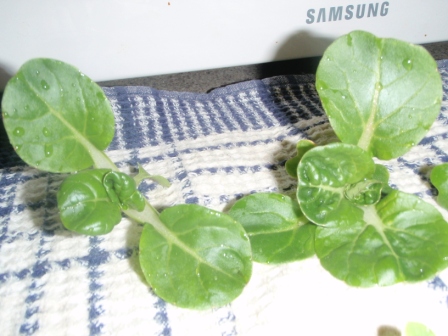
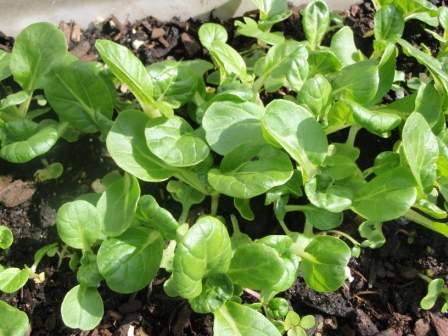
Toy Choy – At 5 1/2 weeks, my baby bok choy is about 2 inches tall. I’ll wait until they get a little bigger before I harvest them, as I really like them in stir fry! I initially spread seeds all over the container, then 2 weeks later added more to the right-hand side of the planter, then 2 weeks after that I reseeded the left-hand side. Next year, I will seed one side, then seed the other, and alternate… that makes more sense.

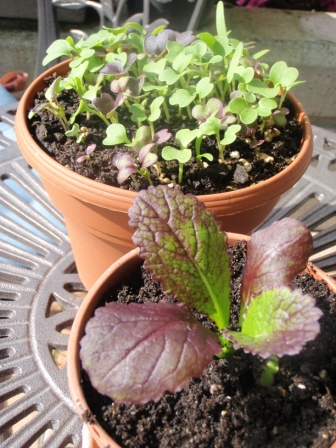
Buckwheat – At 5 1/2 weeks the buckwheat seems to be suffering. We’ve had a pretty cold spring and quite a bit of rain, so I think that’s why the buckwheat is still so small and yellow. It does tell me that I need to add some more sand to the container to improve drainage, though, before I plant my squash in the same soil. However, I have a rogue mesclun lettuce seed that grew from last year (the purply plant). This is what the mesclun in my small patio table container will eventually look like.

Mesclun – About 11 days after planting the mesclun seed mix, I have a lot of tiny seedlings. They benefited from being covered for two days under a plastic produce bag to create a greenhouse effect. The planter was uncovered for several days after sowing with no movement, then I covered it over and within a day they sprouted. Just providing the extra few degrees of warmth really seems to make a difference. I will have to thin these out soon, but when they are a little bigger.

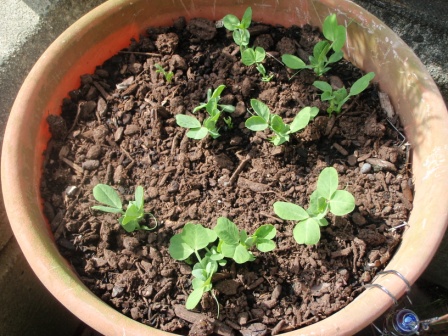
Peas – Both the Little Marvel and Oregon Sugar Pod are doing well after their second sowing. The Oregon Sugar Pod seems to have done well even with the cool Spring, though it is placed much closer to the building and likely got more ambient warmth to help with germination. The Little Marvel has been less successful and I think I may need to re-sow a third time to fill in some gaps. However, that planter was further from the building and was exposed to more cold, wind and rain. It’s very possible that, even though I didn’t soak the seeds prior to sowing, they could have gotten water-logged with all the rain we’ve had. I also didn’t plant them very deep, so that could have also exposed the seedlings a bit too early. In any case, the Little Marvel seems to be doing better and I still think they’ll flourish soon.


Swiss chard – About 6 days after I transplanted the Swiss chard outside, I seem to have had a planter mis-hap… or more accurately, a planter misplacement. I inadvertently had placed the planter under the corner of the balcony above my patio. We had some heavy rainfalls this week and the rain gathered at the point right above my chard planter and continuously dripped on my poor fragile seedlings (and made a big splashy mess on the patio floor!). So I’ve moved the planter and planted some backup seeds in case my seedlings don’t make it. I also went over to a friend’s house (she is the one who gave me the chard seeds) and found that she has over 10 plants growing really well in a much shallower container! Even if all of my transplants survive and the new seeds sprout, I think I’m safe to keep them all!


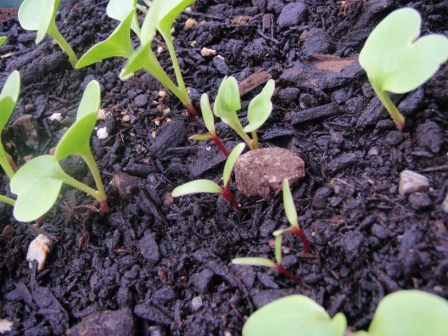
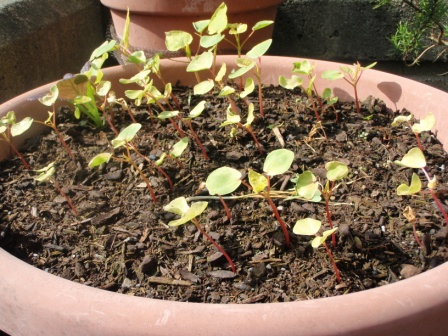
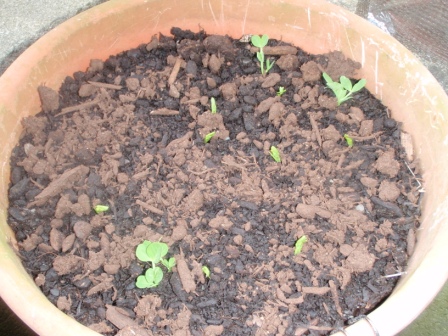
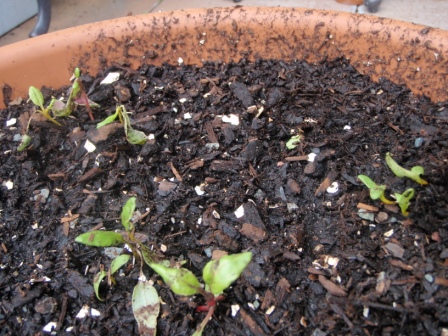
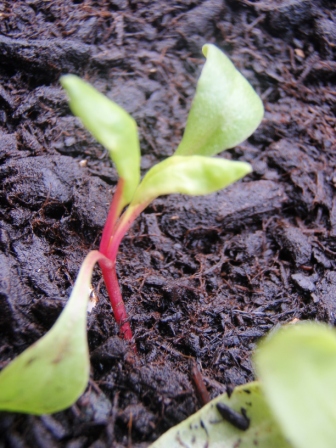
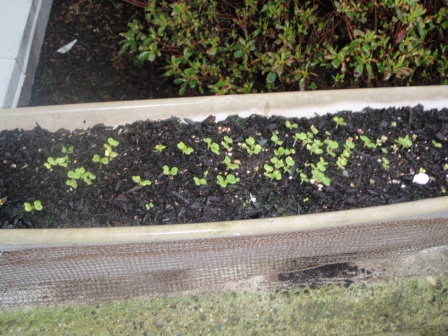
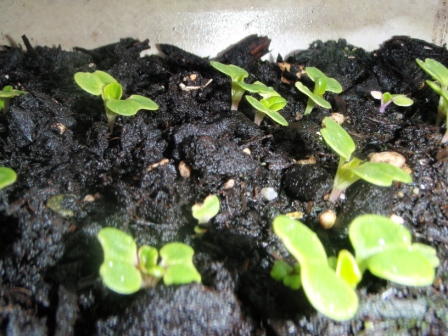
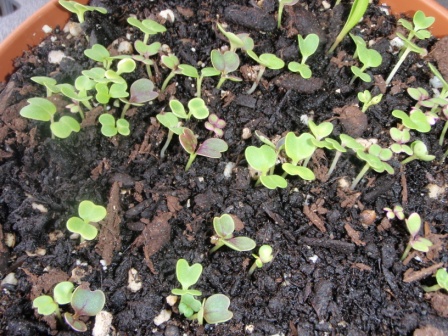
Beets & Radishes – The beets and radishes have also already sprouted and they’re not kidding that radishes grow fast! These seeds were sown about 14 days ago. The bigger seedlings with heart-shaped leaves are radishes, while the seedlings with the thin red stems are beets. They look similar to the Swiss chard seedlings because they are closely related.

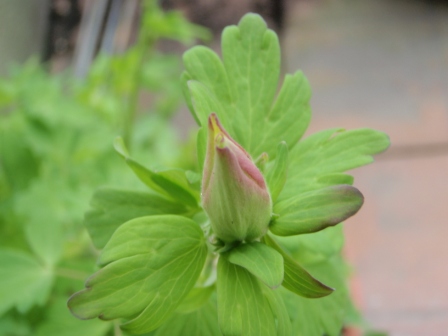
Columbine – Aside from the Skimmia, the first of my flowers to bloom will be the columbine. It has had foliage most of the year, but it did die back in the winter. It has about 5 flowering stalks this year with multiple buds on each. Can’t wait for it to open!


Categories
General Update Vegetables

General Update – I’m addicted!

I’m officially addicted and can’t seem to stop planting things. This weekend I even went over to my dad’s garden (dragging my accommodating hubby along with me) to weed, till, and plant some side beds. Now he’ll have some buckwheat and a blend of wildflowers that will attract bees to pollinate his garden.

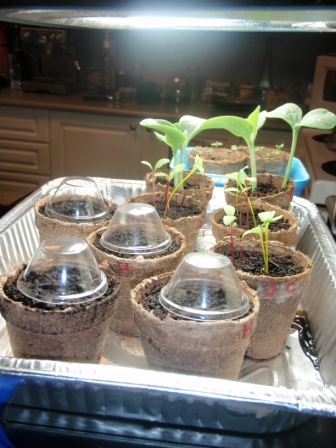
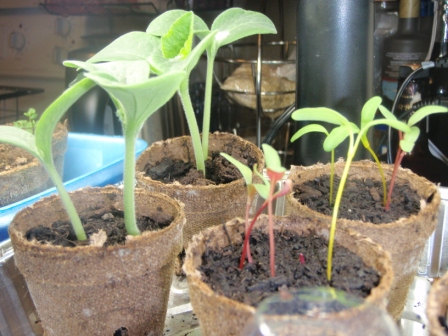
Below is an updated shot of the seedlings in my Aerogarden. The butternut squash (at the back) and Swiss chard (in the middle) were planted on Easter Monday night (9 days ago). I need to get larger peat pots because the butternut squash seedlings are quickly outgrowing these small ones. I already see roots poking out the side walls! About 2 days ago, I planted two more pots of swiss chard (1 ‘Bright Lights’ and 1 rhubarb chard) and two pots of baby blue hubbard squash (which will go to my dad’s garden). Those are the pots with the little domes over top to help keep the soil moist. In the close up shot you can see the different colours of the Swiss chard stalks.

The Toy Choy sprouts continue to grow. You can see some smaller seedlings coming up from when I had thrown more seeds into the right-hand side of the planter 2 weeks ago. Yesterday I added some more seeds to the left-hand side of the planter. This is so that I hopefully have some good successive crops because I really do love baby bok choy stirfry!

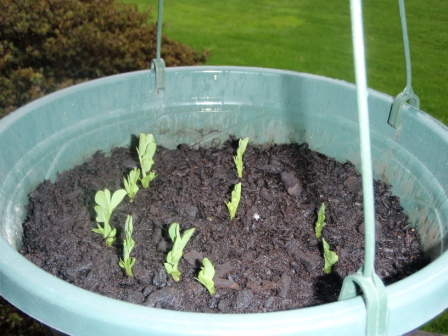
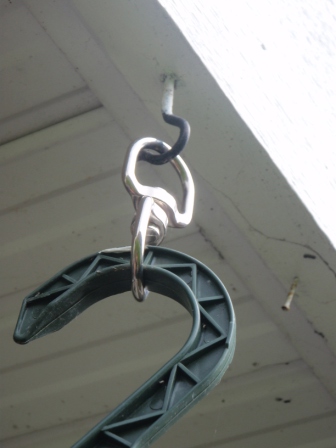
My peas are really starting to do well. The Oregon Sugar Pod in my hanging basket is doing great! I think I may pop in a couple more seeds to fill in the gaps. It will be a good time to top up the soil too! I also found this great swivel connector that will allow me to spin my hanging planter around to share the sunshine evenly.

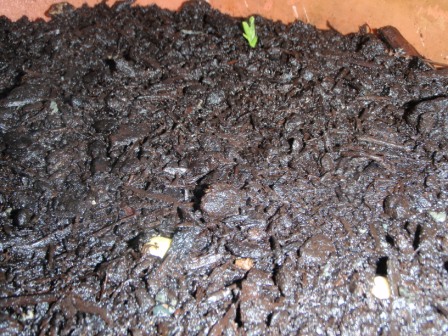
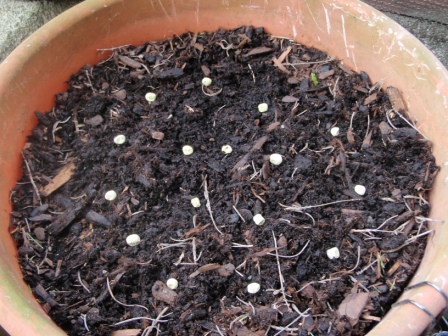
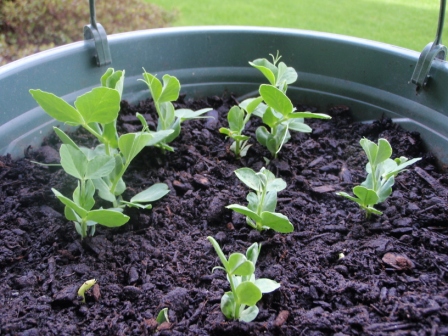
I posted a few days ago that I replanted my Little Marvel peas because only one out of about twelve seeds sprouted. That was a little disappointing and I still don’t know what happened. However, just a few days later and I can already see some sprouts beginning to pop out (the white things in the foreground below) in front of the lone seedling from the first round of planting.

I wasn’t supposed to add another container to the patio – this is what I said last week after I bought a 24″ pot for the Swiss chard – but I’ve added another one. But in my defense it is small (8″) and is meant to be a decorative but edible feature that will sit on our patio table. And I had the seeds already from last year, so I couldn’t let them go to waste, could I? I’ve planted a mesclun mix of mustard greens with a few spinach seeds thrown in for good measure. These will be ‘cut-and-come-again’ salad greens for when I have a hankering for fresh salad.

Below are photos of the buckwheat (29 days) and beet & radish (4 days) progress.


Categories
Vegetables

Companion planting – Radishes & Beets

Companion planting is when different types of plants are grown together for some mutually beneficial reason. For example, yarrow (Achillea) can be planted with other flowers and vegetables to deter aphids. As well, beans can be planted with corn, as corn provides a pole which the beans can climb up.

I’m not sure if this 100% counts as companion planting, but I will plant fast-growing radishes and slower-growing mini beets together in a container. Because I hate the thought of thinning out perfectly fine vegetable seedlings, planting radishes that grow within 28 days amongst beets that grow in 55-60 days will allow me to harvest the radishes while thinning and loosening the soil for the mini beets.

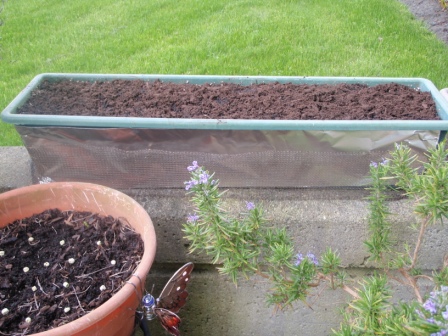
In my 24″ x 4″ x 6″ pot, I planted Amethyst radishes and Baby Ball beets on April 13th. Both should be planted in cooler weather (direct seed throughout April), and if this works well, I can plant for a winter harvest in August.

I added sand to Sea Soil to lighten the growing medium a bit. I like Sea Soil for the organic matter, but it can get heavy once watered.

Also, because of my experience with my container peas where the soil settled after watering and left an extra inch from the top of the pot, I pre-watered the soil and added more compost before sowing the seeds. Since these are root crops, I wanted to provide as much soil depth as possible.

Some tips and tricks (see below for source):

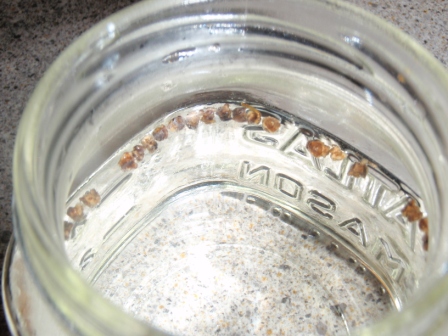
  • For quicker germination, soak beet seeds in warm water prior to planting to break through the tough shell.
  • Cover the seeds with peat moss instead of soil to keep seeds warm and moist, but will be easy for seedlings to break through.


For more info on beets and companion planting:

West Coast Seeds – Companion planting article

How to grow beets – good tips and tricks!


Spam prevention powered by Akismet