Categories
Biological Sciences New and innovative science

Will this New Drug End the Obesity Epidemic?

Orlistat. Sibutramine. Rimonabant. Metformin. Exenatide. Pramlintide. These are the six main anti-obesity drugs that are prescribed to patients suffering from morbid obesity. The reason these names are not better known is because of the side of effects that each of these drugs possess. Only in a last ditch effort, are these drugs prescribed, where the benefits outweigh the potential side effects.

Red Pill or Blue Pill?

For example, the use of Sibutramine, a now withdrawn drug, resulted in higher blood pressure, higher incidence of strokes and heart attacks, and even seizures.  What is worrying is that it was recently withdrawn in 2010.  This speaks volumes on the now-prescribed weight-loss drugs, all of which possess side-effects of their own, but only serve to suppress appetite or increase metabolism.


Adipotide, the potential cure

Fortunately, another drug is now posed to join the fray.  Adipotide, an experimental drug, has recently been tested on obese rhesus monkeys by a team of scientists at the University of Texas Anderson Cancer Centre.  This new drug acts on white adipose tissue, the unhealthy type of fat that is found under the skin and engulfing the abdomen, and is also a predictor of mortality.


Adipotide destroys the blood supply of the white adipose tissue.  With the use of a homing agent, the drug binds to a protein on the white adipose tissue, and uses a synthetic peptide to trigger cell death.  The fat cells, having lost their blood supply, are then reabsorbed and metabolized.  This is completely different from the six above-mentioned drugs, which indirectly control obesity by suppressing appetite, while Adipotide attacks the problem directly by cell death.

Fat Monkey
Overweight Primate


The obese monkeys that were administered Adipotide lost on average 11 percent of their body weight, lowering their body mass index (BMI) and abdominal circumference (waistline) as well.  The rhesus monkeys that were in shape did not lose any weight, demonstrating that the drug only has an effect on obese subjects.  Only one side effect was noted for the kidneys, which was said to be dose-dependent, predictable, and reversible.  Furthermore, the monkeys did not experience any nausea or food avoidance. A prior study testing Adipotide on obese mice resulted in 30 percent weight loss.

Fat Rat
Fat Rat


Anti-obesity drugs that are developed to work on rodents tend to fail when administered to primates, due to the vast differences in metabolism and control of appetite.  With Adipotide’s stellar results, the team of scientists are preparing for a 28 day clinical trial on obese prostate cancer patients, seeking to improve their condition through weight loss and reduction of the associated health risks that come with obesity.

Obesity rates
America: From Seam to Splitting Seam

Obesity is a serious condition, especially in the United States, with approximately 75 percent of Americans overweight or obese.  It increases the possibility of breast, ovarian, prostate, and colon cancer, and diabetes.  Furthermore, it has been cited as a contributing factor for up to 400,000 deaths in the United States per year.  One problem lies in the terminology used in the explanation of Adipotide’s method of weight control: Cell death.  While it may sound worrisome to the uneducated, the fact that cell death occurs at a rate of 50 to 70 billion cells per day in the average human adult should settle the uneasiness that comes with the word “death”.  With the advent of Adipotide, can the obesity epidemic be ended?

References

http://www.sciencedaily.com/releases/2011/11/111109143009.htm:

http://www.forbes.com/2007/02/07/worlds-fattest-countries-forbeslife-cx_ls_0208worldfat_2.html

https://www.youtube.com/watch?v=ybbVHTnmI4A&feature=related

Karam, Jose A. (2009). Apoptosis in Carcinogenesis and Chemotherapy. Netherlands: Springer. ISBN 978-1-4020-9597-9.

Media:

http://upload.wikimedia.org/wikipedia/commons/8/82/USObesityRate1960-2004.svg

http://www.geninv.net/wp-content/uploads/lipozene-weight-loss-pill-truth-lipozene-medicine.jpg

http://3.bp.blogspot.com/_j4SmoTqBAQA/SEkTtrKdPJI/AAAAAAAAAPo/kkOQFyJEn-0/s400/ohama_fat_monkey1.jpg

http://autotechie.com/blog/wp-content/uploads/2008/11/fatmouse.jpg

Categories
Environment Issues in Science

Will the Polar Bear be our new national animal?

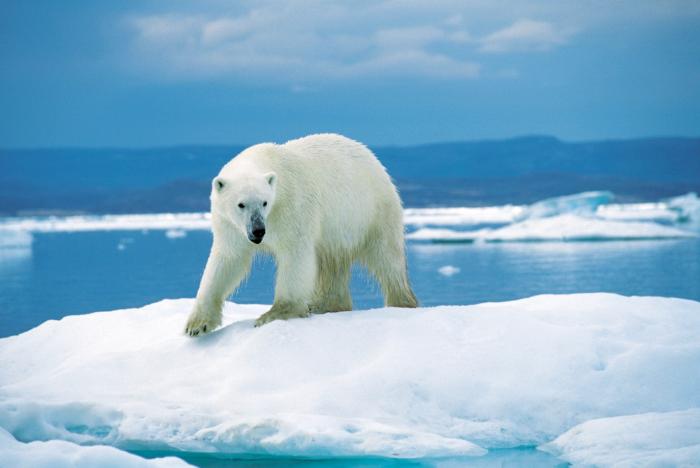
We are all familiar with the increasing global temperatures that encourage the melting of arctic ice but we don’t really think too much about how this will effect species other then ourselves. “Canada is home to two-thirds of the world’s polar bear population and we have a unique conservation responsibility to effectively care for them,” said Environment Minister Peter Kent. Best estimates suggest the polar bear population is approximately 15,000 in Canada. Polar bears have an important effect on the animal populations in the arctic. They provide food for animals lower on the food chain by leaving behind animals they have killed and not fully finished eating in addition to their bodies being food for animals once they have died.


CBC News Report


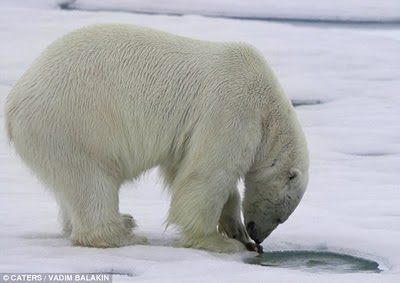
Polar bear waiting for a seal at the edge of a hole in the ice


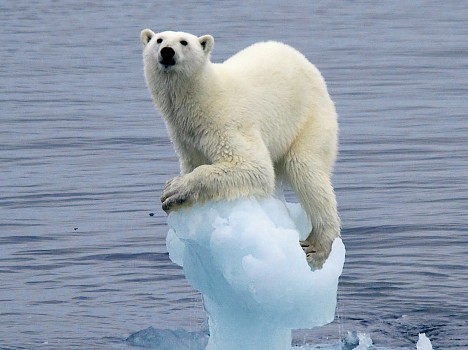
Polar bears are the worlds largest carnivores and are also tied for the largest bears on Earth. Being carnivores in the arctic, their main diet consists of bearded and ringed seals.The polar bears hunt the seas in a very specific way. They find holes in the ice sheet where the seals would come up to breath. When a seal surfaces the polar bear can easily attack from above and haul the seal onto the sheet. Climate change is therefore causing the ice  area to shrink therefore causing a decrease in hunting ground for polar bears. The population is therefore decreasing as many polar bears cannot find enough food to survive or reproduce.

Polar bear perched on shrinking ice sheet

On Thursday November 10,2011, Environment Canada formally declared that polar bears were to be considered a “species of concern”. This decision was made through consultation with provincial and territorial governments, regional wildlife management boards, aboriginals and other stakeholders. The classification of “species of concern” is one level below a  threatened classification and two levels below an endangered classification under Canada’s Species at Risk Act. Peter Kent continued to say, “Our government is demonstrating leadership in protecting this iconic species. Listing the polar bear under the Species at Risk Act represents an important contribution to protecting our environment and the animals that live in it.”


There is some controversy around this issue as not all were in favour of labelling the polar bears a “species of concern”. One argument is that there has not been enough surveying done to make these claims as the surveys conducted were both too infrequent and too limited.  Others feel that climate change is impacting many animal species but polar bears are very good at adapting so it may not be as large an impact as they’re predicting. Some claim the polar bear population is actually increasing but is simply changing location.


Aboriginal hunting polar bear

The government will be taking action by setting strict quotas on polar bear hunting. To exercise traditional rights aboriginals will be allowed to continue hunting the bears. Currently about 534 polar bears are killed annually in Canada, 325 of them by Inuit in Nunavut. To increase awareness of this issue a Conservative senator recently proposed that we replace the beaver with a polar bear as Canada’s national animal. I think that would be a simple way to get the issue out there and also polar bears make a much cooler national animal!


References:


CBC National News:

http://www.cbc.ca/news/technology/story/2011/11/10/environment-polar-bear-listing.html


Wikipedia:

http://en.wikipedia.org/wiki/Polar_bear


Photos:

http://dailyanimalfwd.blogspot.com/2011/09/maybe-i-should-have-brought-some-bait.html

http://donate.cwf-fcf.org/site/MessageViewer?dlv_id=6101&em_id=3401.0

http://www.second-opinions.co.uk/should-all-animals-eat-a-high-fat-low-carb-diet-2.html

http://www.humanevents.com/article.php?id=45447

Categories
New and innovative science Science in the News

A new ‘Sixth-Sense’


A clip from the movie ‘Minority Report’ starring Tom Cruise. From YouTube


Have you ever seem the movie The Minority Report starring Tom Cruise? In the movie, he plays Chief John Anderton who uses out-of–this world technology to find criminals and solve ‘pre-crimes.’ Well, modern science is not that far off from making Chief Anderton’s technology a reality.


Human Interface?

Scientists are working hard on creating a ‘seamless’ sixth-sense connection with the world around us. Sound crazy? Well it’s not that far fetched. Science is actually on the verge of making it a reality; in fact it’s so close you can touch it, literally. The goal of this sixth-sense technology is to provide the user with easy access to relevant information from the user’s environment and allow him or her to interact with the data by the touch of a finger.  And the best part of this technology is that when it is fully operational it will cost no more than your average cell phone.


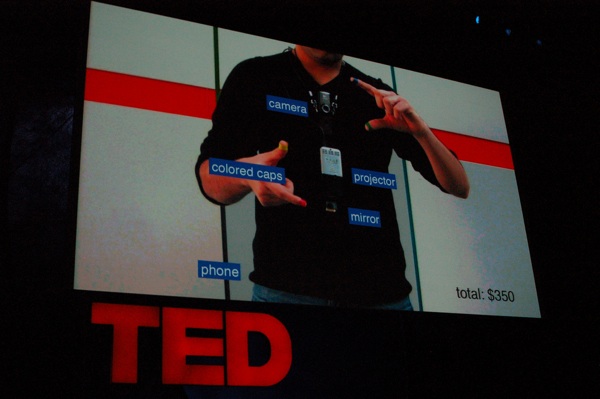
The system being demonstrated at a TED conference in 2009. (Eaton 2009)


Now, we’re not talking about a 50-year time schedule.  No, scientists are only a few years away from making this ‘movie dream’ a reality. Already, Microsoft has created surface-interface display technology that’s able to project information onto a surface for the user to interact with via their hands.


MIT student demonstrating the capabilities of their device. (Eaton 2009)


A recipe for success

Sounds pretty cool right? However, this still isn’t quite up to our ‘Tom Cruise’ standard.  At MIT, the fluid interface group at the University’s Media Lab is in the process of completing their version of this ‘sixth-sense’ technology. It combines a GPS-capable cell phone that gathers data from the environment, searches the Internet, collects the results and projects the information back to the user. It really is a “metadata system for real life” (Eaton 2009). The model includes a webcam, mirrors, a Smartphone and a pico-projector all hung together on a lanyard, and all available for a combined price of $350. Which makes this technology portable and able to work on any available surface, including your hands!

At MIT, the fluid interface group at the University’s Media Lab is in the process of completing their version of this ‘sixth-sense’ technology. It combines a GPS-capable cell phone that gathers data from the environment, searches the Internet, collects the results and projects the information back to the user. It really is a “metadata system for real life” (Eaton 2009). The model includes a webcam, mirrors, a Smartphone and a pico-projector all hung together on a lanyard, and all available for a combined price of $350. Therefore this technology is not only portable, but also able to work on any available surface, including your hands, and best of all it is affordable!


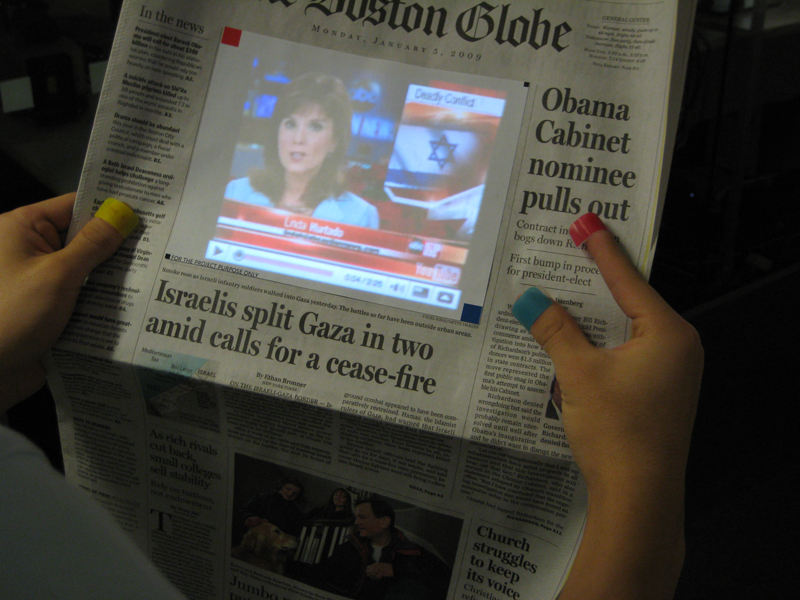
Demonstration on how the 'sixth-sense' can be used to view video clips related to certain newspaper articles. (photo credit: Sam Ogden)
'Sixth-sense' being used to sort and resize photos. (photo credit: Sam Ogden)


What does it do?

The system recognizes colored caps on the thumbs and index fingers via a webcam, and tracks their movements as a way of interacting with the projections. If this isn’t quite stylish enough for you, you could instead paint your nails in the same colors as the caps. Sounds all very techie, but what can it actually do? Well let’s say you’re taking a walk and want to take a photo, instead of taking out your camera, it’s as simple as making that iconic photo gesture with your hands and the interface will take the picture for you. Or, what if you want information on a book? A quick glance at the cover will give you a rating and a flip to the inside page will give you comments by critics. Even reading the newspaper becomes more exciting, with relevant video clips on the articles.

It’s even able to take social networking to the real world, literally. When meeting new people, the phone will look-up and project relevant information on them, including their name, contact details and tags associated with them from blog posts like this one. And it doesn’t stop there, how about finding out the time by simply drawing a circle on your wrist and having a watch projected? There are many more uses and applications for this sixth-sense technology and in a few years for the cost of a cell phone, we could all be as cool as Chief Anderton.


References and Further Reading:

Dr. Pattie Maes talks about the technology during TED talks

previous review made by Kit Eaton on Feb 5, 2009

More photos and video\’s on MIT\’s Sixth-Sense technology

Video on more applications of \’Sixth-Sense\’ (Really Worth A Look)


Categories
Environment Issues in Science Public Engagement Science Communication Science in the News

So is it too late?! Just ask David Suzuki…

On November 3rd, I witnessed one of the greatest examples of communicating science that I have ever seen. That evening, the University of British Columbia (UBC) was the lucky host to one of the most influential Canadians of our time: David Suzuki. He presented a lecture entitled “The Global Eco-crisis: Is it too late?”


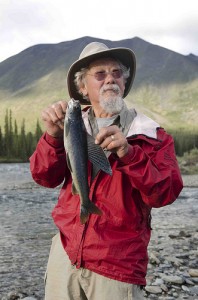
David Suzuki, with a grayling from the Hart River, 2011. Photo by peelwatershed.

Who is David Suzuki?

If you have been living under a rock for the past few decades, you wouldn’t know that David Suzuki is one of the most well-known activists for reversing climate change, writing many books and hosting several TV shows on the subject. Most notably, he hosted the Canadian TV series, “The Nature of Things.” In 1990, David Suzuki co-founded the “David Suzuki Foundation,” a non-profit organization, which focuses on sustainability and climate change.


As David Suzuki braced the speaking podium, I prepared myself to be changed.


Humans are unique

David Suzuki began to trace the origin of humans from our common ancestors in Africa to today. What made   humans unique, he claimed, was their foresight. That is, our innate ability to predict or plan the future. He   explained that humans moved from Africa to eventually cover the world. Using our foresight, we exploited the resources of every location, only to move on when those resources were depleted.


Laws that we CAN change

Dr. Suzuki went on to describe the so-called “laws” that we have imposed on society today, specifically, a “law” called capitalism. But, he said, “laws” like capitalism aren’t really laws at all but they are “nuts!” because we can change them. With capitalism, economists rule the world and they just don’t give a “shit” about our environment and what we do to it. It is time that we change these laws and take control back from the economists. To do so, we have to take back our government and make it more representative. Vote.


Stop the excuses!

Moving on to current efforts being made, David Suzuki claimed that our government is full of excuses. As an example, he discussed the carbon tax. In Canada, we claimed that our businesses couldn’t survive a $15/ton carbon tax. But in Sweden, their business are doing just fine with a $120/ton carbon tax. It is time that we stop making excuses and get to work.


Never too late

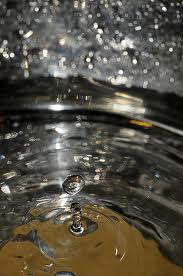
Drop in the bucket. Photo by theilr.


Inspiring us, David Suzuki concluded that it isn’t too late. We can save our environment but first, we have to take back our government and the only way to do that is to vote. You may just feel like a drop in a bucket but he reminded us, with enough drops, we can fill the bucket.

From this lecture, I didn’t just learn that we need to change our environment but I also learned how to connect with your audience. David Suzuki kept the science basic and used language that was not only fun (there were more than a few swear words…) but easy to understand.

David Suzuki left me stirred.

Categories
Biological Sciences General Issues in Science Science in the News

After the Fukushima Nuclear Disaster- The Effect of Radiation on Human Health


  There was Fukushima Daiichi nuclear disaster on March 15th 2011 which released radioactive materials due to equipment failures and nuclear meltdown. Concern remains over the potential effect on human health from radiation leaks at the stricken Fukushima Daiichi nuclear plant.


What is radiation? 

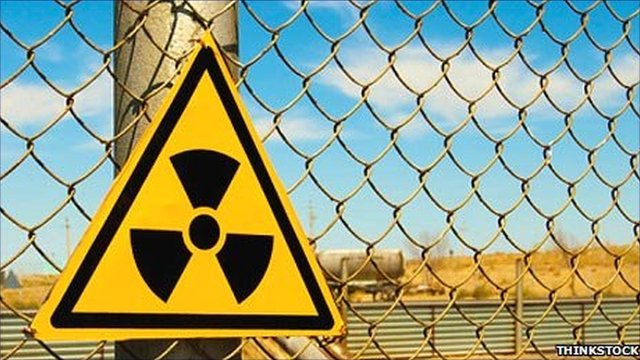
Thinkstock: radiation sign

  Radiation is a process in which energetic particles or waves travel through a medium or space. The energy comes from a source and travels through space and may penetrate various materials. Iodine and cesium are examples of radioactive elements. There are two types: ionizing, and non-ionizing. Both types can be harmful to organisms while ionizing radiation is more harmful as it can cause DNA damage.

   We are all naturally exposed to background radiation from radon (Rn), colourless, odorless chemical gas found in soil, water and air.  We are also exposed to unnatural sources such as X-rays which deliver about 10days’ worth of naturally occurring radiation.


  Symptoms

 Symptoms of radiation sickness occur when the body is damaged by a very large dose of radiation over a short period of time. The more radiation a person absorbs, the sicker one will get. The best way to prevent harm is to prevent exposure. The strength of the radiation itself and distance from it are key factors in the severity of radiation sickness. 

 Nausea and vomiting often begin within hours of exposure, followed by diarrhea, headaches and fever. Since radiation destroys infection-fighting white blood cells, the greatest short-term risk after exposure is infection and the spread of infectious diseases.


 Human impacts 

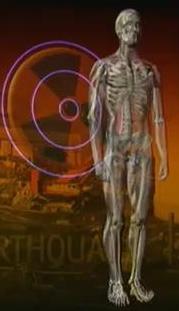
abcnews: radiation and the body

 Ionizing radiation damages the body’s internal chemistry. Our bodies are able to repair effects of radiation on tissues, but too much radiation can cause DNA damage that the body can’t repair, leading to cancer. 

Vulnerable areas include:

  • -Thyroid gland
  • -Bone marrow
  • -Cells lining the intestine and stomach

  Babies and young children are more sensitive to radiation exposure because their cells typically divide faster than adults; increasing their risk of developing a radiation-related cancer later in life.


 Treatment

  Drugs can stimulate the growth of white blood cells and help people fight off infections. Exposed individuals can also be given capsules containing a dye that binds to thallium and cesium and helps the body get rid of these radioactive elements.

 Potassium iodide tablets are often given out to people at risk of contamination. The compound prevents or reduces absorption of radioactive iodine, through the thyroid gland, which uses iodine to produce thyroid hormones. But potassium iodide cannot prevent radioactive iodine from entering elsewhere in the body and does not affect the absorption of other radioactive elements, such as cesium, which stays in organs, tissue and the environment much longer than iodine.

  We must watch out our nuclear plant cells since one disaster may cause series of problems. There are many nuclear plants that can potentially become  problems and we should find ways to minimize or avoid further disasters.

Categories
New and innovative science Public Engagement Science in the News

Robot suits put to use in countering radiation in Fukushima

Not many news stations talk about Fukushima any more. After the 9.0 magnitude earthquake struck Northeast Japan, I remember being glued to the computer for hours and hours trying to get the most recent news on the situation in Japan. What is happening now? A quick search turned up a news headline on robot suits in Fukushima. A robot suit that reads signals from the brain seems to be the most recent solution to Northeast Japan’s nuclear radiation problem.


How do robot suits tie into this event? A major concern still is the radiation leak from the Dai-ichi Nuclear Power Plant in Fukushima prefecture. To fix the damage done by the earthquake and tsunami, power plant workers and rescue teams need protective gear against the high levels of radiation around the plant. However, the required metal suit can weigh up to 15kg—a significant hindrance to movement. A solution to this problem was a “robot suit.” Just by thinking “walk,” the robot motor helps move the legs for you.

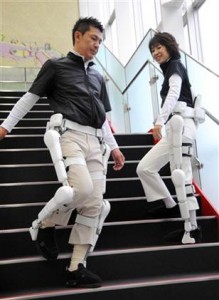
HAL assists walking for people with physically weakened limbs. Photo by Katsumi Kasahara.


The robot suit was actually invented three years ago at the University of Tsukuba in Tokyo. It was initially meant for elderly and handicapped people to assist in walking. They named it HAL, for “Hybrid Assistive Limb”. When the wearer tries to walk, nerve signals are sent to the leg muscles. Such signals are detected by the suit through the skin, and triggers the robot limb to move along with the leg. This battery-powered movement and firm structure of HAL enables it to offer extra support for movement.

After 3 years, further developments on HAL added support for the arms as well.

2011 Exhibition of HAL. Photo from Center for Cybernics Research.

This video from the International Forum on Cybernics 2011 introduces HAL.


Here are photos from the same event.


Researchers are now investigating a new application for this technology. Tsukuba University suggested that the robot will be useful not only for the disabled and care for the elderly, but also for heavy labor and rescue work. Last week, Japanese news station NHK (link to original Japanese news) reported the use of this novel technology to solve the problem of radiation in the earthquake-struck nuclear power plant in Fukushima.

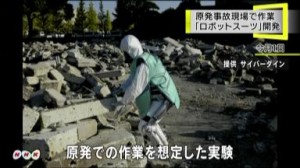
Simulation of the use of HAL at the nuclear site. Photo from NHK.

Experimental tests showed that this robot suit could carry weights up to 60kg. The inventor, Dr. Yoshiyuki Sankai, hopes that implementing HAL at Fukushima Dai-ichi Nuclear Plant would make possible previously risky recovery work and allow longer hours of rescue efforts.


At the time I saw this news on NHK, I could not find information about this initiative in English. However, only two days later, the Telegraph picked up on this. Thought-controlled robots–what a way to bring back attention to Fukushima.

Categories
Biological Sciences Issues in Science Science Communication Science in the News

Are YOU a snake-lover or an ophidiophobia (snake-phobia)?

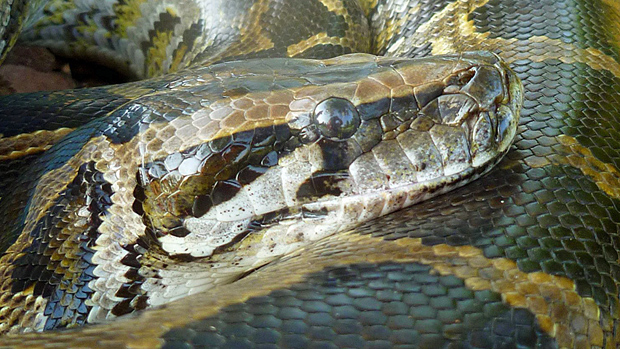
A picture of Burmese Python. Source: CBC News

Are snakes one of your favourite animals or are they your least? Although some may adore them, I am among the people who are terribly afraid of them, or what people call an ophidiophobia. Who would have known that, “pythons’ big heart [could] hold clues for human health[?]” (The Associated Press). Scientists now learned that when the pythons undergo digestion, their hearts expand to the size similar to that of an Olympic athlete. How is this relevant to human? Scientists now look for clues from the pythons’ powerful heart muscles that could potentially benefit human’s hearts. A molecular biologist at the University of Colorado in Boulder, Leslie Leinwand, found that the pythons’ hearts expand because they are building up more muscles.

There have also been studies done on the pythons’ digestion pattern. For instance, reptile biologists observed that Burmese pythons could survive for almost a year without food. Furthermore, once they resume the meals, their metabolism would increase up to more than 40-fold. After digestion, their organs, except the brain, would grow larger in size. Leinward notices this distinct observation and tries to make a connection to human heart diseases. For people with chronic high blood pressure, their hearts are not able to circulate the blood as well as normal hearts. However, vigorous exercise might be able to enhance the recovery and strengthen heart muscles just like those of the pythons.

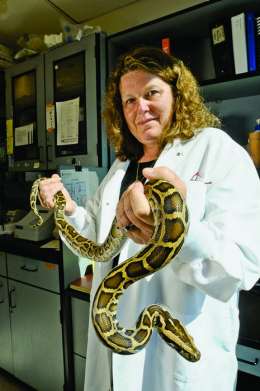
Dr. Leinwand working with the Python. Credit: Thomas Cooper

How is the research being conducted? Dr. Leinwand and her team worked with baby pythons to study their internal organs in details. Dr. Leinwand came to a conclusion that for these pythons, the fatty acids increase up to as much as 50 times during digestion. Theirs cells grow bigger, thus resulting in a larger heart size. Python’s blood is also full of fat, mainly three specific fatty acids in a particular combination, that enables this capability. Do these fatty acids have negative impacts on their hearts’ conditions? No, instead, they act as the heart protection. The pythons can rapidly burn the fat, turning it into fuel for energy. In contrast, humans’ metabolisms are not that efficient so the cells would accumulate fat and the accumulation might contribute to various heart diseases. As for the pythons, they already have enzymes to protect their hearts from damages during digestion.

A video on Dr. Leinwand’s interview in her laboratory.

One of the main researchers, Cecilia Riquelme, studied the applications of this knowledge. First, she bathed a rat’s heart cells with the plasma, blood cell, from the snake. The result turned out that the content of the python’s blood made the heart cells grew bigger and stronger. Researchers now continue to study that if putting fatty acid from the pythons’ blood into the rats would lead to any beneficial growths.

This is relevant to us because if these rats could benefit from the fatty acids and have their heart muscles strengthen, it implies that the pythons could be the key in helping human with heart diseases. Pythons may after all become our heroes!

Further Resources:

http://www.newscientist.com/article/dn21099-a-shot-of-snake-blood-makes-the-heart-grow.html

References:

http://www.cbc.ca/news/technology/story/2011/10/28/python-heart.html

http://cen.acs.org/articles/89/i44/Fatty-Acids-Heart.html

http://www.voanews.com/english/news/health/132940113.html

Categories
Environment Issues in Science Public Engagement

Biodegradeability: (Bio)Plastic and its (re)use

Plastic Bags and Landfills: A Perspective from SJSU NEWS on Vimeo.

Even though plastic, which is present in many aspects of our lives, has many applications and usages, it is not biodegradeable. The reason of the continuation of manifacturing plastic is that it “only takes up 5 percent of the world’s oil supplies and, in doing so, provides us with an exhaustive supply of material”. You might think “what about replacing plastic with biodegradeable material?” Aluminum and glass are more expensive and not as versatile as plastic. Wood processed products also have their downsides, such as the chemical treatment and clear-cutting.

Today, researchers are working on the synthesis of bioplastics that are based on “renewable biomass resources”. Some of the bioplastics are made to be biodegradeable, and their main applications are: packaging, easily-discarded items (e.g. utensils, bottles), and storage (e.g. food containers). The other that are produced to be nonbiodegradeable are used in areas that need endurability.

 While bioplastics will eventually provide a clean, recyclable, nontoxic alternative, energy and environmental analyst Christopher Flavin, author of “The Future of Synthetic Materials” insists that oil-based plastics aren’t going anywhere just yet. He predicts that the next 20 years will see bioplastics absorb a mere 5 percent of the global plastic market [source: Kahn].

 Meanwhile, we can use daily plastic products in an environmental friendly manner. For example, we can re-use plastic bags.  I recommend you to read “10 Smart Uses for Old Plastic Bags” and “5 Unusual Uses for Plastic Bags” for ideas of re-using old plastic bags.

According to 2007 estimates, most plastic bags are only used an average of 12 minutes and then discarded. Consider that the world uses a staggering 1 million bags a minute and you begin to see how big the problem is [source: Batty].

Take action and conserve the world!

——————————————————————————————

Further reading:

http://en.wikipedia.org/wiki/Bioplastic

http://www.realsimple.com/home-organizing/new-uses-for-old-things/10-smart-uses-old-plastic-bags-10000001097755/

http://science.howstuffworks.com/environmental/green-science/can-we-replace-plastic.htm

Categories
Environment Fun! New and innovative science

One Plastic Bottle Can Light Up My Life

One of the goals of education is to teach students to apply the knowledge they’ve acquired in the classroom to solve problems that exist around the world. Inspired by the Appropriate Technologies Collaborative principles, students from the Massachusetts Institute of Technology (MIT) took heed to this concept and developed the “solar bottle bulb.”

In Manila, the capital city of the Philippines, there is a remarkable contrast in the quality of life between the rich and the poor. Specifically, there are millions of homes in the poorer areas without a single light source because very few of these homes have connections to electrical grids, and even fewer families have the resources to pay for lighting and electricity. In addition, the metal roofs of these homes block out all the light.


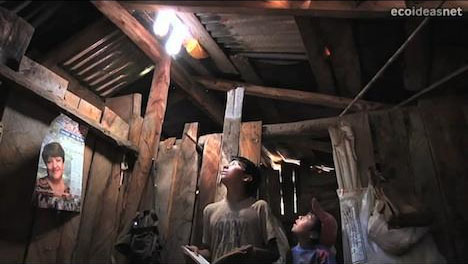
Source: Eco Ideas Net

An illustration demonstrating the capabilities of the solar bottle bulb.

To combat this problem, students at MIT developed a solar bottle bulb to be inserted into the roofs of these homes. It is a one-liter, plastic bottle filled with water and three tablespoons of bleach. In contrast to developing a single hole in the roof that would supply light to a single spot – picture shining a flashlight onto a wall in complete darkness – the water diffracts light 360° and is capable of illuminating an entire room. The solar bottle bulb is able to emit as much light as a 55-Watt light bulb. Furthermore, the added bleach prevents algae, mold and bacteria growth within the bottle.

Because the materials to build a solar bottle bulb are readily available in these communities, installation is simple. It requires sealant, one sheet of metal with a hole (of the same diameter of the bottle) cut in the middle and an equivalent hole cut in the metal roof it is to be installed in.

To make this sustainable innovation accessible, Isang Litrong Liwanag (A Liter of Light), a Philippines-based organization, plans to supply indoor lighting to one million homes throughout the country by 2012. They have currently installed over 10 000 solar bottle bulbs. Moreover, the Manila city government has helped fund the expenses of lighting homes in their city respectively.


[youtube=https://www.youtube.com/watch?v=5Ms-oX-kdb8&w=640&h=385]

A video by Isang Litrong Liwanag reposted by SaurabhMore introducing the solar bottle bulb.


Although one of the cons of this innovation is its inability to store energy and generate light at night, we need to recall that many of these homes do not have access to light during any time of the day. To this end, any illumination is helpful. Also, this design does not create any harmful pollutants and prevents electrical fires due to the faulty electrical connectors that exist in some homes.

Overall, we should remember not to take lighting and electricity for granted. If it is possible for countries overseas to find sustainable resources and limit their carbon footprint, we should follow in their footsteps and stay green as well! Next time you are the last person to leave a room, turn off the lights and save some energy!


Further Reading:

http://www.gizmag.com/pop-bottles-provide-light/19829/

Categories
Biological Sciences General Public Engagement

What Are You Doing Right Now? Get To Sleep!

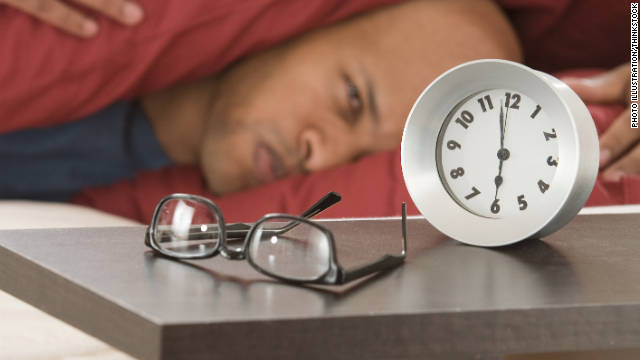
Everyone has adjusted their watches, clocks, phones and laptops an hour earlier on November 6th. It may be that we all got “25” hours on the day, but let’s face it and allow me to ask, what have we done with the extra hour? With all the assignments and projects from different courses, social events with friends, schedules working times, most of us probably were not in our bed, sleeping.
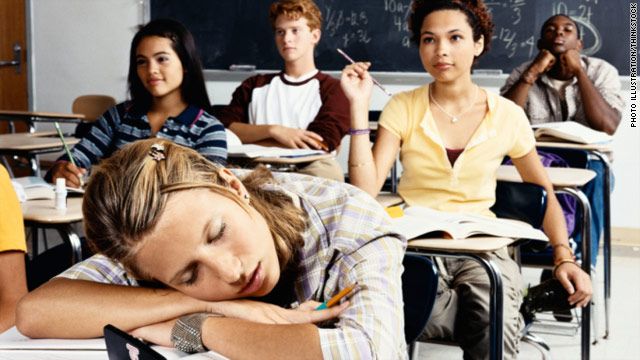
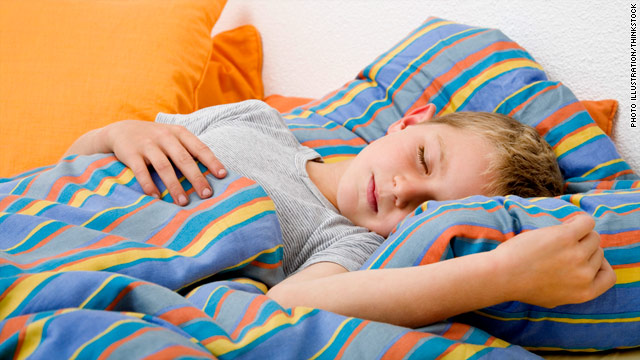
Sleep-deprived individuals are usually associated with 10 out of 11 health risk behaviours, including smoking, drinking alcohol, lower physical activities, sexually active, feeling sad or helpless, suicidal thoughts, etc. Dr. Lisa Shives mentions “Chronic, partial sleep deprivation affects our ability to think straight, make good decisions, and impacts our behavior”, and that is the reason why we were always told to get a good night’s sleep before a test or exam.

In fact, researches had proved that lack of sufficient sleep means we are prone to increase our risk of high blood pressure, explained Dr. Susan Redline, Professor of Sleep Medicine at Brigham and Women’s Hospital and Beth Israel Deaconess Medical Center at Harvard Medical School in Boston. When we have inadequate amount of sleep, especially with the lack of deep sleep, we tend to be tired during the day and wake up frequently during our sleep. Not getting enough sleep, i.e. at least six to eight hours of sleep every day, could also reduce our efforts in losing weight, even if we are on a diet and exercising regularly and properly.

Now, we might just assume that if we sleep-in on a weekend, we would make everything up during the week. However, Banks et. al. (2010) proves to be not enough to recover the effects of sleep loss. Just because we sleep 12 hours on a Saturday, it does not make up for the sleep debt accumulated during the weekdays.

So the next time you plan to stay up for whatever reason, have a second thought about it, because what is lost is lost, and there is no way to recover that.

For those of your who wish to improve your quality of sleep, please refer to this blog post by Dr. Lisa Shives. (http://nssleep.com/blog/sleep-disorders/insufficient-sleep-makes-losing-and-keeping-weight-off-more-difficult/)

References:

http://thechart.blogs.cnn.com/2011/09/27/sleep-deprived-teens-take-more-risks/
http://thechart.blogs.cnn.com/2011/08/29/study-lack-of-deep-sleep-raises-blood-pressure/
http://www.aasmnet.org/articles.aspx?id=2332
http://www.aasmnet.org/articles.aspx?id=1817
http://www.journalsleep.org/ViewAbstract.aspx?pid=27855

Spam prevention powered by Akismet