Categories
Final Project Interview Project

Steller Sea Lions: How can we help?


Steller Sea Lions live in the Pacific Rim from Japan to California with 70% living in Alaska. Sadly, their population has been drastically declining since the 1970s due to many reasons:

  • predation by killer whales,
  • increase in parasites and diseases
  • nutritional stress due to competition for food with humans.

Some fishing companies even deliberately kill these animals since they view them as competition and a threat to fish stocks. Currently, the western stock is endangered and the eastern stock is listed as threatened.

Check out our video below for what Beth Young and her colleagues are doing now to save the Steller sea lions and to meet these friendly animals!

https://www.youtube.com/watch?v=pcueT8-PTPE


What is the government doing?

Because Steller sea lions are endangered, several laws have been implemented to protect their survival.

  • Fisheries Act: a license is required to operate a fishery, and records of transactions and operations must be produced on demand of a fishery inspector or conservation officer.  This practice keeps fisheries from over harvesting, which would harm the Steller sea lion population.
  • Endangered Species Act: ensures that federal agencies do not harm any listed species which includes the Steller sea lion. Habitats where the listed animals are found are protected by the Habitat Conservation Plan.
  • Marine Mammal Protection Act:  provides population censuses, health assessments, development of conservation plans, and protection regulations.  This act also appoints staff to conserve and manage the populations of marine mammals that are at risk.


What about other animals?

Steller sea lions aren’t the only animals that can benefit from Beth’s research…


California Sea Lion (Zalophus californianus) on Morro Strand State Beach, Morro Bay, CA. Photo by Mike Baird.


The California sea lion is a close cousin to the Steller sea lion. Currently classified as low risk concern on the IUCN endangered species red list, with time, they may become just as threatened as the Steller sea lion.


Northern fur seal at the New England Aquarium, Boston, Massachusetts. Photo by flickr user cphoffman42.


Another species that could benefit from Beth’s findings is a much smaller second cousin: The Northern Fur Seal. Currently listed as at risk for endangerment on the IUCN list, they are experiencing a downward population trend.


With Beth’s results, we could ensure the food requirements of these species are met so they don’t become a forgotten fossil.


Check out the SCIE 300 communicating science podcast for more information on the Steller sea lion species, how Beth believes her findings could be applied to other species, and potential sources of error in her experiment.

Audio clip: Adobe Flash Player (version 9 or above) is required to play this audio clip. Download the latest version here. You also need to have JavaScript enabled in your browser.

Interview with Beth Young


In Conclusion…

The Steller sea lion plays an important part in the delicate balance of the ecosystem. Every species of life that it interacts with, from the food it eats, to its natural predators, will be greatly affected if the Steller sea lion population continues to decrease. We hope that our various media (the above video, podcast, and this blog post) are able to convey some of the latest research findings on Steller sea lions in a clear and understandable manner, and bring more attention of this matter to the public eye.

More information on why Steller sea lions are endangered, as well as summaries of the latest research findings made at the Open Water Research Lab can be found at the Vancouver Aquarium website.
 

Categories
Fun!

Fish are smarter than we think

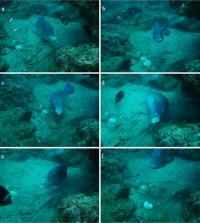
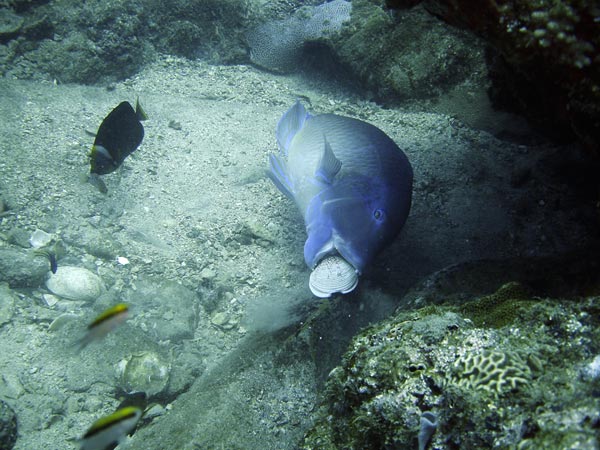
Scientists have captured videos showing that primates, birds and other mammals are not the only organisms that utilize tools; the newest addition to this list is fish! The Blackspot Tuskfish has been filmed to pick up a clam and repeatedly throw it against a rock until it breaks open. Even though the ability to use tools has been identified in a wide variety of animals such as crows and octopus, this is the first time that evidence has proven that fish are just as intelligent.


Credit: Scott Gardner


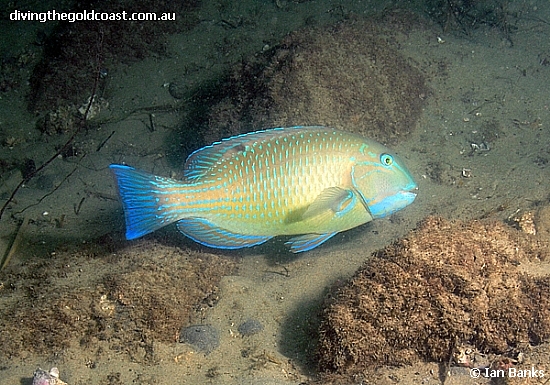
Blackspot Tuskfish (Choerodon schoenleinii) are found in coral reefs located in the South China Sea as well as Southeast Asia including Australia. They are typically one foot long and weigh an average of about 14 kg.


Credit: Ian Banks


Professional diver Scott Gardner took the first ever photo of the tuskfish using a rock to crack open a shellfish off of the coast of the Great Barrier Reef. Even though this appears to be very simple task, the mental process that the fish must go through to associate throwing clams at rocks with cracking the shells is phenomenal and unexpected of typical wild fish. Gardner found many fragments of shells close to nearby rocks which indicate that this behavior was not a result of mere coincidence.


Credit: Scott Gardner


In 2009, evolutionary biologist Giacomo Bernardi from the University of California provided definitive proof of this process by capturing a video from the Pacific island of Palau. Experts who analyzed the video said that the fish are very “forward thinking in their hunt for sustenance.”


Below is the video that is taken by Dr. Bernardi:


Categories
New and innovative science

Combining body and machine. Science fiction? Maybe not.

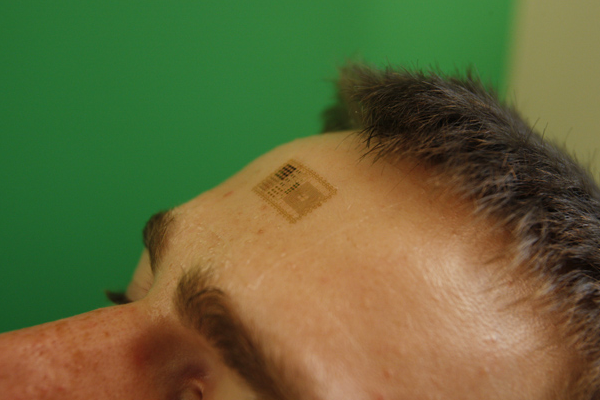
Researchers led by John Rogers from the University of Illinois at Urbana-Champaign have developed the world’s first flexible, stretchable, and skin-like monitor, which is capable of attaching to the epidermis of the skin by a process similar to applying a temporary tattoo. This wireless device can accurately collect data from the human body for up to 6 hours without irritating the skin.


Credit: John Rogers, University of Illinois


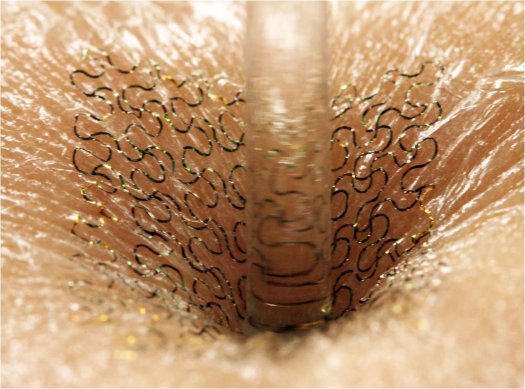
Inspired by the concept of telephone cords, this device features a netted S-shaped circuitry that can be greatly deformed without disturbing the function of the monitor. To make them even more durable, both sides are covered with protective layers of a polymer called polyimide. The device can be hidden under a tattoo to help it be concealed and remain attached longer. At the moment, long term use is limited because of surface skin cells sloughing off periodically.


Credit: John Rogers, University of Illinois


In its current form, the device would be most applicable in the medical field because of its ability to be seamlessly integrated into the skin of patients to monitor their activity constantly. By placing them in different locations on the body, medical staff could collect different electrical signals from the body such as brain waves, heart beats and skeletal muscle activity. This new technology is especially useful for premature babies because it could monitor their progress without any bulky electronics irritating their fragile skin.


Credit: John Rogers, University of Illinois


Aside from the medical community, security groups and intelligence agencies such as the CIA are also developing an interest in this technology; slight changes to this technology could enable agents to communicate silently with a patch hidden on their throats. This kind of patch would sense muscle movements in the throat and silently transmit the messages via wireless waves. With the initial prototype developed by Dr. Rogers’ team, many changes can be made to this technology to create a virtually infinite number of adaptations in the future.


Watch the Youtube video describing the epidermal electronic below: 

http://youtu.be/fl1VS_kONlQ

Categories
Uncategorized

The Sparkliest Star in the Milky Way


Among the many celestial objects in this galaxy, there are few that stand out more than this proverbial gem of a planet. This isn’t just any gem, it’s a massive, super dense crystal made of carbon; it’s a diamond.

Recently, a research team at Swinburne University of Technology in Melbourne, Australia lead by Professor Matthew Bailes discovered a massive diamond planet orbiting around a pulsar star located 4000 light years away from Earth. This planet is assumed to be the extremely dense center core of a once giant planet that lost its outer layer due to the radiation emitted from the dead neutron star in which it orbits every 2.2 hours. The orbit is so tight that rotation of the planet around the pulsar would fit inside the sun.


Source: Swinburne Astronomy


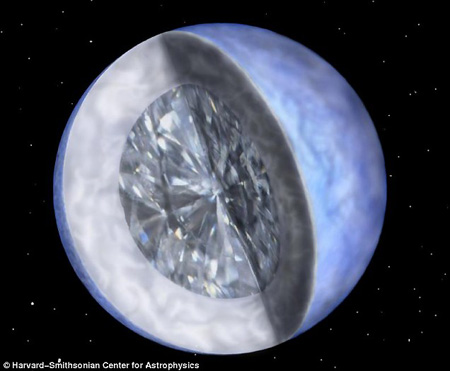
The planet is about five times the size of Earth and weighs as much as Jupiter, but is approximately 20 times denser. The majority of the outer core has been shed leaving only 0.01% of the original mass which leads scientists to believe that it is a carbon white dwarf. According to Professor Bailes “the evolutionary history and amazing density of the planet all suggest it is comprised of carbon”. Based on their research, scientists also believe that the planet is likely to contain oxygen at the surface with very rare quantities at the center of the dense carbon core. Lighter elements such as helium and hydrogen are assumed to be non-existent.


Source: Harvard-Smithsonian Center for Astrophysics


The question that some researchers are wondering now is whether the planet actually looks like a giant diamond up close. Researchers have not devised a way to look at the planet directly, but Professor Bailes has hypothesized that a beam of light hitting the planet would cause it to sparkle just like a real diamond. As long as scientists are unable to view the planet directly however, we will simply have to use our imagination and attempt to picture what this new mysterious planet could look like.

Reporter Discusses the Diamond Star on Newsy

https://www.youtube.com/watch?v=g1lRUxuo0fA

Spam prevention powered by Akismet