Categories
Biological Sciences Issues in Science Science in the News

Who’s Your Mama?!


While most of us don’t remember much of anything about our 9 months in the uterus, you would probably be just a little freaked out if you found out that those 9 months weren’t spent in a uterus at all… but in a man-made artificial uterus with several scientists devoted to bringing you to full term.


This is exactly what happened to 6 lucky grey nurse sharks.


The grey nurse shark or sand tiger shark, as it is also known, is one of Australia’s most endangered marine species and is considered by the International Union for Conservation of Nature to be under threat of endangerment on a worldwide basis. How could this be? Weighing in at over 200 pounds and reaching over 11 feet, the grey nurse shark  is a powerful beast, one you wouldn’t expect of being vulnerable to predators.

 

Grey Nurse Shark. Photo by Richard Ling


However, they are… and that predator is man. Despite their rather intimidating appearance, they are completely harmless to humans unless provoked; yet humans have been killing the sharks for decades. Most of the time the deaths are accidents as the sharks are caught in commercial and recreational fishing equipment. But several of the deaths are  intentional as the sharks are considered a delicacy in Japan.

To make matters even worse for the shark, they are only capable of producing two pups per year. The mother shark actually starts her pregnancy with about forty fertilized embryos separated in two separate uteri, but as they mature, the embryos undergo adelphophagy where they attack and eat one another. Eventually, only the two toughest embryos are left to mature. Talk about sibling rivalry!


Video posted by youtube user Megabeeach.


Scientists Nick Otway and Megan Ellis think they have found a way to prevent this.

In a lab at the Port Stephens Fisheries Institute, in New South Wales of Australia, these scientists have made an artificial uterus, which is basically a very complex aquarium.

From a euthanized pregnant female, 6 embryos were extracted and all six were brought to full-term in this artificial uterus. The pups were born to a length of about three feet, an average size for a grey nurse shark pup. After only three months, they were released into the wild.

Whether or not they will suffer a mommy complex has yet to be seen but already, we can conclude these results are amazing.

If we can figure out a way to keep the mother alive, we have the potential to save an endangered species by literally tripling its birthing capacity. Furthermore, if we can extract the embryos even earlier on, we could do a lot more than just tripling it.

 

Pregnancy, Image from Microsoft Word 2000

Now, this brings up an interesting thought for the future of the human race…

Will the exhausting task of carrying a baby for nine months become an event of the past? Will you and your partner simply drop off your eggs and sperm at a lab and a few months later, pick up our baby without ever gaining a pound?

Certainly, this won’t be happening any time soon but it is definitely interesting to think about in a society where convenience is king.


Works Cited

Froese, Rainer, & Daniel Pauly, eds. (2005). Carcharias taurus. Fish Base 09 2005 version. Retrieved from http://www.fishbase.org/summary/Carcharias-taurus.html.

Otway, N. & Ellis, M. (2011). Construction and test of an artificial uterus for ex situ development of shark embryos. Zoo Biology. doi: 10.1002/zoo.20422

Pollard, D. & Smith, A. (2005). Carcharias taurus. IUCN Red List of Threatened Species: Version 2011.1. Retrieved from  www.iucnredlist.org.

Venton, D. (2011, September 29) Baby Sharks Birthed in Artificial Uterus. Weird Science Retrieved from http://www.wired.com/wiredscience/2011/09/artificial-shark-uterus/
Categories
Biological Sciences Fun! General Science Communication Science in the News

“Go” health benefits of “Bananas”

Bananas are common fruits that one can fine in grocery stores. Many people dislike banana for its taste, its texture, or other reasons. I am a person who do not eat banana for its taste until I came across this video: Dole Banana Nutrition Facts. It makes me think twice about it. Is it the taste of banana much important than the health benefits that it provides?

Here are some nutritional facts of bananas:

  • Bananas have resistant starch that aides the digestion of fat. Including bananas in diet helps weight loss.
  • Stroke is a leading cause of death in Canada, and bananas prevent stroke because the ratio between the content of potassium and the content of sodium in banana is ideal.
  • Potassium also helps the body regulate hear rate and water balance.
  • The high content of iron content in bananas can prevent anemia, a low level of red blood cells in blood.
  • Vitamin B6 that are present in bananas helps to repair DNA and prevent cancer.
  • Eating bananas in prenatal stage can decrease the chance of baby’s being born with leukemia.
  • Consumption of bananas can help children build a good immune system.
  • Tryptophan, an amino acid, in bananas decreases the chance of getting depression.

It is said “do not judge a book by its cover”, and I think it is true that I cannot dislike banana for its taste, because it has a lot of health benefits.

With these information in mind, be sure to consider including bananas in your diet!

Sources:

Banana Nutrition Facts, Health Benefits of Bananas, Banana Nutrients

Dole Banana Nutrition Facts

WHFoods: Bananas


Categories
Biological Sciences

“Mirror, mirror on the wall, who is the smartest animal of them all?”

Self-awareness is an ability that was previously thought to be unique only to humans. For example, how many times have you stationed yourself in front of a full length mirror (alone) and checked yourself out? If you are a guy, maybe you are flexing your muscles; or if you are a girl, perhaps you are examining your blemishes. I know we are all hopelessly guilty of this! After all, we are experts on self-awareness.


However, it has been discovered that humans are not alone in their ability to self-recognize.
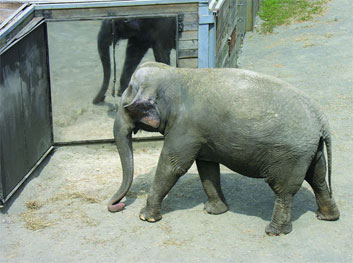
Animals such as select chimpanzees, dolphins, magpies, and elephants have all
been observed to comprehend their existence as individuals separate from
thought, other individuals and the environment. In addition, a recent study
conducted on the Rhesus Monkeys (Macaca mulatta) has successfully added another mammal onto the growing list of self-observers.

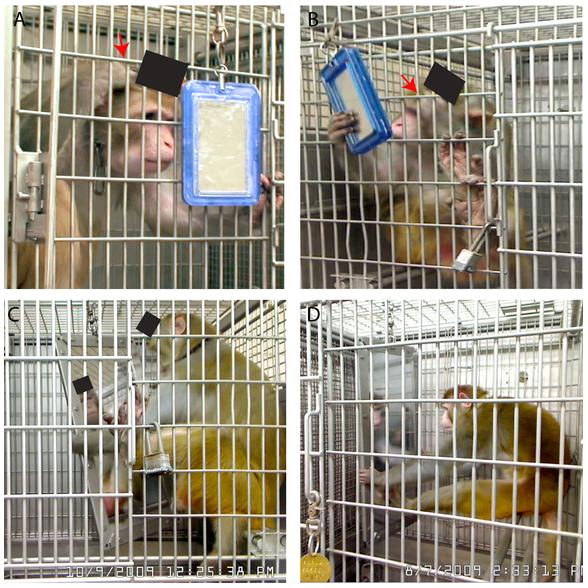
With the use of a surgical implant, several mirrors, and a mark test, a team of researchers from the University of Wisconsin tested these monkeys for the ability to self-recognize and thus be self-aware. The first experiment began by implanting an electrophysiological device into the monkeys’ skull to aid in physiological recordings of their brains. A mirror would then be placed inside their cages and the observations would begin. Researchers observed the monkeys grasp their new mirrors with one hand and tilt it at specific angles to groom the area around the implant. Similarly, researchers noted that the monkeys always turned to face their mirror and use it to guide their grooming process. Equally important, the monkeys did not try to groom the image in the mirror; they accepted the image to be their own reflection. Meanwhile, monkeys that had not been implanted were seen to not use the mirror. This suggests that the implant acted as a stimulus which prompted them to examine the location of the implant in the mirror. Therefore, this experiment was a success because the monkeys used the mirror as a tool to look at their reflection.

Source: PLos One

Self-recognition caught on camera! Rhesus Monkeys examining themselves in the mirror.

(The red arrow in A and B show which hand is used for grooming and the implants are masked with the black square for discretion in A, B, and C.)


Furthermore, another experiment the researchers conducted was a test of self-recognition through different mirrors.  A small, a large, and an all black mirror (covered in a non-reflective plastic) were placed outside the Rhesus monkeys’ cage. The monkeys were found to use both the large and small mirrors but not the black mirror. Also, with the use of these mirrors, they were seen to inspect body parts that normally would be out of direct sight. As a result, the monkeys’ rate of touching and grooming was determined to be 10 times greater with mirrors than without. Therefore, this experiment was a success because the monkeys demonstrate self-directed actions.


Despite both of the above experiments showing the capability of Rhesus Monkeys self-recognition, one test failed in its objective. This failed test consisted of applying marks on the animal’s faces and observing their behaviour in front of a mirror. The hypothesis was that the Rhesus Monkey would look into the mirror, acknowledge the presence of the marks and touch them. This would conclude that the animal recognized itself in the mirror and therefore was self-aware. Unfortunately, this test failed because there was no attempt by the monkeys to touch the markers. This result could suggest either that they had observed the markers but made no attempt to touch them, or that they had not recognized them at all.

In conclusion, with two successful experiments and one failed experiment, the University of Wisconsin research team determined that overall the Rhesus Monkeys can recognize themselves in the mirror and therefore can be considered self aware.


Although in the past humans selfishly considered themselves the only species capable of self-recognition; science has one again proved us wrong. Thanks to advances in scientific research, we now have another common characteristic linking us to different species. The Rhesus Monkey is only one of a handful of animals that can acknowledge their own reflections as being unique. Before too long, maybe we will even discover these creatures checking out their appearances in the mirror in hopes to fix their hair or flex their muscles.


http://youtu.be/w4nM4Gd7ybg


Further Reading:

Research Article: Rhesus Monkeys (Macaca mulatta) Do Recognize Themselves in the Mirror: Implications for the Evolution of Self-Recognition

Science News: Rhesus Monkeys Appear to Have a Form of Self-Awareness Not Previously Attributed to Them, Research Suggests

Categories
Biological Sciences Science in the News

Natural trans fats: Beneficial for our bodies?

Walking down the isle of a grocery store, you come across a bag of cookies and a jug of milk. What do the two have in common? The presence of trans fat. Trans fat is the common name for unsaturated fat. To the everyday consumer, it’s the “bad stuff” that increases the risk chronic health problems.

So, what exactly are trans fats? They are fatty acids in the trans formation, which assemble into a solid much easier than those in cis shape. In industrial production level, they are made through hydrogenation of fatty acids.

Consumption of trans fats leads to many health issues. They include, increased risk of coronary heart disease, imbalance in the LDL:HDL ratio, obesity, liver dysfunction, diabetes and depression. With so many health risks attached to the consumption of trans fats, it is not surprising why they are labeled as the “bad stuff” among consumers.

Interestingly, not all trans fats are the bad. Recent research done by the Alberta Institute for Human Nutrition, and the Department of Applied Microbiology and Food Science, found that natural source of trans fat, such as milk and beef, may have potential benefits to cardiovascular health. According to Spencer Proctor, one of the researchers, their early research suggest that the intake of natural trans fats give similar effects as consuming polyunsaturated fatty acids. The potential benefits of natural trans fats include reduced weight gains, and cholesterol. On top of that, it may have anti-inflammatory effects.

Trans fat may be more beneficial than we thought previously, given that we only consume the natural ones. As they give similar outcomes as consuming polyunsaturated fatty acids, which are found mostly in nuts, seeds, fish, and vegetables. For those that avoided beef and milk due to trans fat can now go enjoy those products once again!.

Next time you go grocery shopping, keep this in mind!


Further Reading:

Research Article: Trans-11 Vaccenic Acid Dietary Supplementation Induces Hypolipidemic Effects in JCR:LA-cp Rats.

News Article: Vancouver Sun


Categories
Biological Sciences Public Engagement Science in the News

The Ugly Truth of Fast-Food Playlands

When you go into a typical fast food restaurant, you see workers busily cleaning the tables and washing the floors to make sure everything are sanitized. However, do you ever ponder how often and how well they clean the children’s playgrounds in the restaurant?

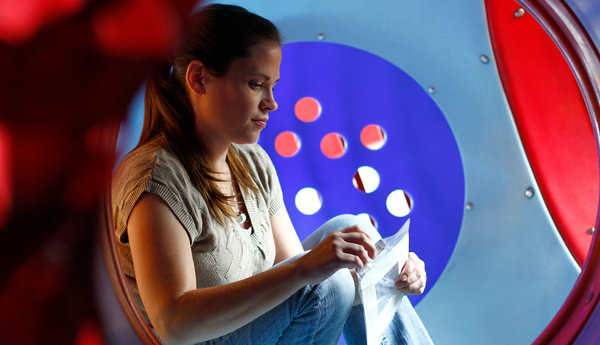
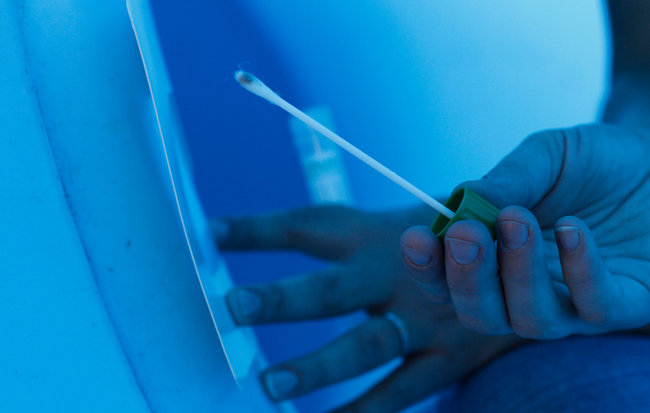
Dr.Erin Carr-Jordan, a child development professor and a mother of four children from Arizona, has visited dozens of restaurant playgrounds in 11 states and over 50 restaurants, such as McDonald’s, Burger King and Peter Piper Pizza, to test them for cleanliness. After taking samples from each playground, she sent the specimen Legend Techincal Services Inc., which is a commercial laboratory that analyses the types of bacteria or pathogens present.

Dr. Erin Carr-Jordan checking playgrounds' sanitation levels


The results were even more shocking than the horrible physical conditions of the playgrounds. Not only were some playgrounds covered with filth and contamination, it was full of harmful microorganisms. The lab analyses have shown a widespread of presence of pathogens. Two strains of bacteria called Streptococcus pneumoniae was found, which causes meningitis. There are two forms of Meningitis, viral and bacterial, and bacterial meningitis is more serious since it can cause severe disease that can result in brain damage and even death.


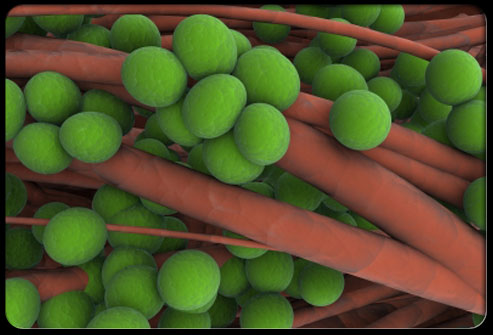
In addition, the results revealed four strains of Staphylococcus, which is a group of bacteria that can cause a multitude of diseases as a result of infection in various tissues of the body. Over 30 different types of Staphylococcus can infect

humans, but most common one is Staphylococcus aureus. It causes Staphylococcal infection, which can progress to crusting or inflammation of the skin. If the bacteria enter the bloodstream, and spread to other organs, a number of serious infections can occur. Staphylococcal pneumonia can affect the lung and lead to abscess formation within the lungs. The infections are contagious and can be transmitted from person to person. Since children, who have weaker immune system, are the ones who use playgrounds, it is appalling to see how contaminated these places are.


Although Dr.Carr-Jordan has a Ph.D. in developmental psychology, she is not an expert in microbiology. Therefore, Philip M. Tierno Jr., director of clinical microbiology and immunology at NYU Langone Medical Center in New York has surveyed Dr. Carr-Jordan’s results to authenticate her claims. He strongly agrees with her by saying “There are very high counts, and that means these places are not cleaned properly or not cleaned at all.”

This is an excellent example of how scientific testing is used to in our daily lives to improve the public facilities. I wish the article covering the story in the New York times would have explained the procedures of the analyses so the public learns what happens when specimens enters the laboratories. Nonetheless, Dr.Carr-Jordan’s efforts in fighting the fast food restaurants for cleaner playground has been successful due to her evidence found in scientific analyses. Now the ugly truth has surfaced, it is time for all fast food restaurants to make the efforts to make the playground a safer and healthier place for children to play in.


 VIDEO

Dr.Carr-Jordan talking about her sanitation investigation

Categories
Biological Sciences Fun! Issues in Science Science Communication

I’m sorry this is late, I really meant to post this earlier…..or iProcrastinate

As summer comes to an end and we’re back to school, some of us are still on vacation time. Assignments just keep coming, due dates are approaching and, surprisingly, nothing gets done. Where did the excitement for the new school year go? Procrastination is the answer.

Are we the only victims of procrastination? Definitely not. Ancient Greeks used to represent procrastination as a “state of acting against one’s better judgment”, or akrasia. Akratic behaviour is documented in discussion between Socrates and Protagoras. Socrates claimed “No one goes willingly toward the bad”. This makes sense from a biological prospective of natural goals of an individual. Aristotel, however, took this idea and examined it deeper. From his prospective, akrasia occurs as a result of opinion. An opinion is mentally developed form of reality or truth.

So when we think another 30min nap before writing a paper might help, we are sincere in our intentions to write the paper. However it does not necessarily mean we are right that we need a nap.

Did modern scientists figure out something more useful than ancient Greeks’ theory? Yes.

According to physiologists, procrastination arises in the front part of our brain, or prefrontal cortex. Earlier studies agreed upon the impulsive nature of procrastination. Prefrontal cortex is responsible for such brain functions as planning, attention, motivation and impulse control. When impulse control does not function in its maximum ability, the overall function of planning, attention and motivation decreases. This causes procrastination.

Is a procrastination purely physiological phenomenon or are the psychological aspects? Needless to say there are numerous psychological theories trying to explain procrastination. One of the most common theories is the lack of self-confidence. Also anxiety levels of procrastinators are especially high near exam period, and these individuals feel the most relief right after exams are done or papers are turned in.  Tice and Baumeister (1997) reported a study where they show a number of college students, procrastinators and non-procrastinators. Research found that procrastinators get lower grades than non-procrastinators, as opposed to a belief that best work is done under pressure.

Procrastination is a problem for scientists publishing a paper. As we know, whoever publishes his work first gets the acknowledgments. That is why it is so important to concentrate on true long term benefits and produce a great piece of work that will contribute to humankind, whether is it is just another paper or a finished experiment. Procrastination should neither affect the quality of our work not stay in our way of enjoying what we do.

Further reading:

Evans, James R. (8 August 2007). Handbook of Neurofeedback: Dynamics
Adler, J.E. (July 2002). “Akratic Believing?”. Philosophical Studies 110 (1): 1–27
Ferrari, J.R.(2001). Procrastination and attention: Factor analysis of attention deficit, boredomness, intelligence, self-esteem, and task delay frequencies. Journal of Social Behaviour and Personality, 16, 185-196

Categories
Biological Sciences Fun! Science Communication

It’s like Autocorrect, but for your brain


If you’ve ever used a word processor like Microsoft Word before, you’ve probably encountered the wonderful Autocorrect function. Autocorrect fixes some commonly made spelling errors as you type, which helps improve typing speed by reducing the need to manually correct those mistakes.

Interestingly enough, the human brain also has a built-in mechanism that catches these types of errors and mentally fixes them while they’re being read. Let’s take a look at this paragraph:

Aoccdrnig to a rscheearch at Cmabrigde Uinervtisy, it deosn’t mttaer in waht oredr the ltteers in a wrod are, the olny iprmoetnt tihng is taht the frist and lsat ltteer be at the rghit pclae. The rset can be a toatl mses and you can sitll raed it wouthit porbelm. Tihs is bcuseae the huamn mnid deos not raed ervey lteter by istlef, but the wrod as a wlohe.

Weird, isn’t it? However, there are a few flaws in this argument.

According to the way the letters are supposed to be shuffled (the first and last letter of each word stays in the same position), words with three or fewer letters are unchanged. There are 32 words that are unaffected by the shuffling — that’s almost half the paragraph! Likewise, the shuffled four-letter words are easy to read because they can only be rearranged by swapping the middle two letters. For the remaining words, the rearrangements of the letters are fairly intuitive. For example, “porbelm” is only two letter switches away from “problem.”

Although it is true that we consider the entire word instead of just the individual letters when we read, the examples presented in the paragraph above are much too simple. Consider words like “Cgibramde” as opposed to “Cmabrigde” that was in the paragraph; a well-shuffled word is much harder to recognize.

What does this have to do with communicating science? Being able to be clearly understood is an important skill to have when it comes to sharing knowledge and information with others. While there is some truth with the “letter order doesn’t matter” argument (in the fact that the brain processes entire words at a time instead of letter-by-letter), a lot of it is just misleading science.


Further reading:

Spam prevention powered by Akismet