Please take a moment to welcome the new EDCP PhD cohort. If you see any of these people in the hallways of Scarfe say hi!
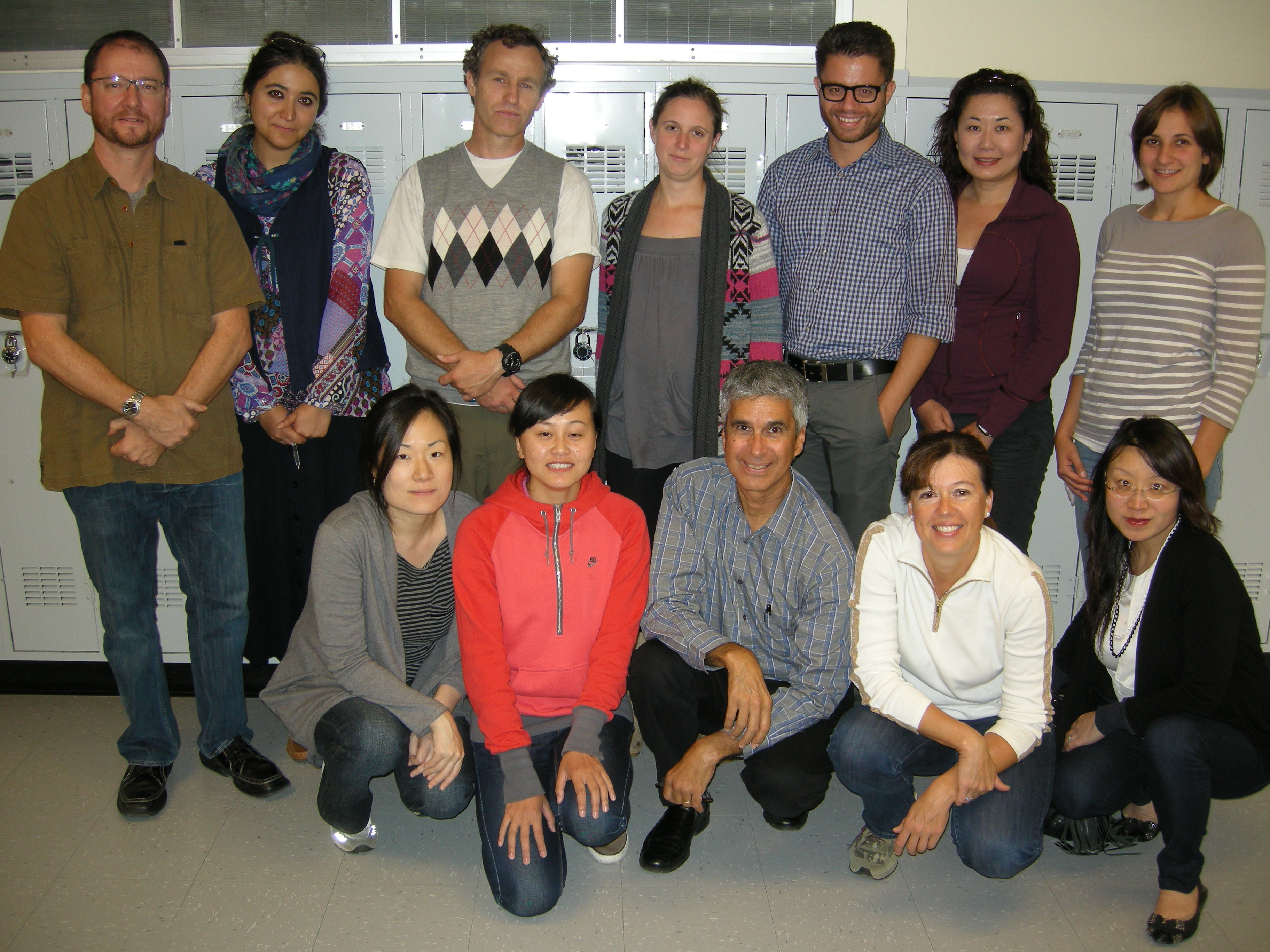
Please take a moment to welcome the new EDCP PhD cohort. If you see any of these people in the hallways of Scarfe say hi!
Effective or Wise? Teaching and Assessing Professional Dispositions in Education Under Contract with Peter Lang Publishing. Inc.
Editors:
Dr. Julie A. Gorlewski
State University of New York at New Paltz
Secondary Education
New Paltz, NY
USA
gorlewsj@newpaltz.edu
Dr. Bradley Porfilio
Educational Leadership
School of Education
Lewis University
Chicago, IL
USA
porfilio16@aol.com
Dr. David A. Gorlewski
D’Youville College
School of Education
Buffalo, New York
USA
gorlewsd@dyc.edu
Jed Hopkins
Edgewood College
629 Emerson Street
Madison, WI 53715
USA
jhopkins@edgewood.edu
Julie Gorlewski is Assistant Professor of Secondary Education at the
State University of New York College at New Paltz. Dr. Gorlewski
earned her Ph.D. in the Social Foundations of Education at the
University at Buffalo, The State University of New York in 2008. She
has New York State Certification in Secondary English and Elementary
Education, as well as over 15 years experience teaching English at the
Secondary level. She has published three books and numerous
peer-reviewed articles, book chapters, and conference papers on topics
including literacy and identity, neoliberalism and schooling,
multiculturalism, and transformative education.
Brad J. Porfilio is Assistant Professor of Education at Lewis
University in Romeoville, IL. Dr. Porfilio received his Ph.D. in
Sociology of Education in 2005 at the University at Buffalo. During
his doctoral studies, he served as an Assistant Professor of Education
at Medaille College and D’Youville College, where he taught courses
across the teacher education spectrum and supervised pre-service and
in-service teachers from Canada and the US. He has published numerous
books, peer-reviewed articles, book chapters, edited volumes, and
conference papers on the topics of urban education, youth culture,
neoliberalism and schooling, transformative education, teacher
education, gender and technology, and cultural studies
David A. Gorlewski is Assistant Professor of Education at D’Youville
College in Buffalo, NY, where he teaches courses in curriculum
planning and English methods. Dr. Gorlewski earned his EdD in
Educational Administration at the University at Buffalo, The State
University of New York in 2000. He is a former high school English
teacher and assistant superintendent for curriculum and instruction
with extensive experience in mentoring preservice and practicing
teachers. He has published two books and several articles involving
educational reform (specifically, how reforms change schools and how
schools change reforms), and the interrelations between and among
classroom and program assessment.
Jed Hopkins is Associate Professor of Education at Edgewood College,
Madison, WI. Dr. Hopkins received his Ph.D in the Department of
Curriculum and Instruction at the University of Minnesota in 2009. Dr.
Hopkins began his teaching career in London as an Elementary teacher
almost thirty years ago. Since then he has taught at numerous levels
from elementary through middle as well as college pre-service and
in-service teachers at the undergraduate and graduate levels. His
teaching and research interests straddle literacy, teacher education,
and philosophy of Education. In particular, Hopkins is interested in
appropriating neo-Heideggerian phenomenology for his work developing
new approaches to teacher education. Currently he is working on
phenomenological approaches to drama-in-education and investigating
ways of using video to create more authentic collegial communities.
Premise for the book
Teaching, rightfully, carries the title professional; and although
this sentiment may resonate well with those of us in the field, its
foundational core has been rendered problematic by federal and state
policies and practices that frame teaching as “less than” a profession
– and teachers as “less than” professional.
A key set of these policies and practices are marked by
standardization – of testing, curriculum, and instruction. In
addition, Federal Race to the Top legislation measures the level of
teacher competence based on student performance on standardized tests.
Programmed instruction and a focus on “strategies,” as exemplified by
short-term programs like Teach for America, increasingly view teachers
as trainers rather than educators.
To counter this, we suggest that teacher educators, working in
collaboration with their partners in Pre K-12 schools, ought to focus
on professionalism and how professional dispositions matter as a means
to position teachers to produce what we call wisely effective learning
environments for their students.
There are two broad contexts in which Schools of Education operate:
the first deals with the entire certification and licensure process.
But the second is related to the liberal arts tradition. This means
that Schools of Education are involved, albeit in different ways and
to different degrees, with the work of the humanities, the social
sciences, and the hard sciences. These two contexts are in tension –
perhaps never more in tension than they are now. How and to what
extent can we balance the pragmatic and civic responsibility of the
first context with the critical, pluralistically intellectual, and
creative commitments that are inherent in the second? The resolution
is difficult because both contexts operate with different assumptions,
different discourses, and different stances toward the phenomenon of
education.
How can teacher education programs instill professional dispositions
in their candidates? How can we measure or assess those dispositions?
How can we balance the obsession with the mechanisms of accountability
with the need for authentic education? How can we position the liberal
arts and the humanities more centrally in teacher education programs?
What might be the parallel issues in education today that work against
the professionalism of teachers?
Audience
This volume will be a valuable resource for instructors who teach in
the fields of teacher education; assessment; educational leadership;
social, and cultural and philosophical foundations of education; and
sociology – as well as for their students. It may also be of interest
to researchers, scholars, and the broader education public as well as
mainstream and media sources. In addition, this text would be useful
for school district administrators and teacher mentors to use with
early career and practicing teachers. The text will offer an excellent
vantage point for initiating professional discussion around complex,
challenging issues regarding accountability that face educators today.
Time-frame
1) Proposals due by October 15, 2012;
2) Confirmation of selected chapters by December 15, 2012;
3) Contributors will have their first drafts completed by February 15, 2013.
4) The editors will review these first drafts, and provide detailed
comments and suggestions by April 15, 2013.
5) The contributors will make all of the necessary edits, and send the
final chapters to the editors by June 1, 2013.
6) The editors will draft a comprehensive introductory chapter and
have the foreword written by a well-known scholar in the field, which
will be ready along with the index and other editorial issues by July
1, 2013.
7) Once the publisher’s Editor has approved the text, the finalized,
formatted volume will be submitted to the publisher by August 1, 2013
which should allow for copy-editing and other related matters to be
completed for a publishing date sometime late in 2013.
Process for Chapter proposals
Submit the following:
**Proposed title of chapter
**Authors, with complete addresses and 150-word biography for each author
**300-word outline of proposed chapter, including, where applicable,
theoretical, methodological and conceptual considerations.
To Julie Gorlewski at gorlewsj@newpaltz.edu by October 15, 2012.
For questions or queries, contact Julie Gorlewski at
gorlewsj@newpaltz.edu, Brad Porfilio at porfilio16@aol.com, David
Gorlewski at gorlewsd@dyc.edu, or Jed Hopkins at
jhopkins@edgewood.edu.
The EDCP deadline for this competition is: NOON on Tuesday, October 16, 2012
The Faculty of Graduate Studies is pleased to announce the competition for the highly prestigious Trudeau Scholars Programme. These awards are for outstanding doctoral students whose work addresses one of the following four themes:
– Human Rights and Dignity
– Responsible Citizenship
– Canada in the World
– People and their Natural Environment
Each scholarship consists of an annual stipend of $40,000 and an annual travel allowance of $20,000, for up to four years. The Foundation will award up to 15 new scholarships per year across Canada.
Students submit their application packages to their UBC graduate program. Students are advised to verify their graduate program’s deadline well in advance. Of the applications received, each UBC graduate program may submit up to two nominations to the Faculty of Graduate Studies. Application packages (original and three copies) must be received from graduate programs by the Faculty of Graduate Studies by 4:00pm on Friday, October 26, 2012.
For further details, please see our website:
http://www.grad.ubc.ca/awards/trudeau-foundation-doctoral-scholarship
Interested in Science and Engineering? Enjoy working with kids and youths? Want to give back to your community?
Let’s Talk Science is a national volunteer-driven program that strives to improve science literacy through outreach. We motivate and empower youth to use science, technology, math and engineering to develop critical skills, knowledge, and attitudes needed to thrive in our world. We aim to make science FUN and interactive for kids in attempts to spark their interest in all areas of science.
There are numerous volunteer opportunities at Let’s Talk Science that suit a variety of personalities and schedules. At our core is the Teacher Partnership Program- a program which pairs a grad student volunteer with a teacher in the community and the volunteer goes into the classroom to perform hands-on experiments with the kids. We also take part in a number of community events such as science fairs, programs for underprivileged children from the Downtown Eastside, visits to rural BC communities, mentorships, Community Learning Initiative events and Reading Week projects.
Commitment is flexible! No experience is necessary (we provide training).
We’re holding two info/training sessions in the next week where you can learn more about our program:
On campus
When: Wednesday, September 26th from 6:00pm to 8:00pm
Where: Hennings Building, Room 202 (6224 Agricultural Rd.)
Off campus
When: Monday, October 1st from 6:00pm to 8:00pm
Where: BC Cancer Research Centre, Gordon and Leslie Diamond Family Theatre (675 W10th Ave.; NOT the Gordon and Leslie Diamond Health Care Centre on Laurel St.)
Pizza and drinks will be served! Please RSVP your attendance to volunteer@ubclts.com so we can be sure to have enough food for you! Feel free to contact us with any questions or comments, or check out our website for further information: www.ubclts.com
I look forward to hearing you!
—
Natasha Holmes
Volunteer Coordinator
UBC Let’s Talk Science
The UBC Academic English Support 2012/13 program has now opened for applications. Please inform any English as a second/additional language student who might benefit. If you have any questions about this program please find contact info at: http://cstudies.ubc.ca/academic-english-support-program/contact.html.
-----Original Message-----
From: On Behalf Of Cheung, Junnie
Sent: August-30-12 8:53 AM
Subject: Documents about Expectations Regarding the Graduate Student-Supervisor Relationship

August 29, 2012

Dear Graduate Advisors and Staff,

I am writing this letter to let you know about a useful new resource the Faculty of Graduate Studies has created for faculty members and their research graduate students. We are all aware that graduate education represents a significant investment for students and the university. The relationship a research graduate student has with his/her supervisor is one of the most important factors in the success of their program, and the most positive outcomes for supervisors depend on mutually open, committed, and respectful relationships with their students.

The resource we have created, with input from the Graduate Student Society and UBC Counsel Office is a document outlining the expectations of the student-supervisor relationship. Although not all points in the document may be applicable in all circumstances, and additional elements may be important, we view these generally as hallmarks of a positive, productive, and respectful relationship between a research student and his/her supervisor. We strongly encourage students and their supervisors to have a conversation at the start of the student's program about their relationship, and the document is meant to facilitate that process.  If used as such, it may be modified according to circumstances. We encourage signing by both parties to indicate a high level of mutual commitment to the principles laid out.  We have also created a template letter that may be used by the supervisor to expand on the conditions of supervision or to place the expectations in context.

UBC Policy 85 on Scholarly Integrity stipulates that "research conditions for all involved in a research team should be outlined in a letter from the Principal Investigator before team members become engaged".  The document may also assist faculty members in meeting this important university requirement.

Several UBC graduate programs are already using similar documents as required practice.  It is my hope that, if you are not already doing so, you will consider instituting such a system, or at the least, encouraging it in your own programs.

We are attaching an electronic version of the documents to this email. The documents will also be available on our website, under information for supervisors (further resources), http://www.grad.ubc.ca/faculty-staff/information-supervisors/further-resources. We are aware that it may not be a priority for many faculty members to visit this site, and even if you do not require the use of these documents, your assistance with increasing their visibility would be much appreciated. With thanks for the important role you play in supporting our faculty and students.

Kind regards,

Wendy Hall, Associate Dean, Faculty and Program Development, Faculty of Graduate Studies

Faculty of Graduate Studies Template Letter August 2012
Faculty of Graduate Studies Expectations Document August 29 2012
Did you know that ALL UBC graduate students traveling abroad for university activities must register with the Student Safety Abroad Program? This is in keeping with UBC’s Student Travel Abroad Policy 69.
Please share this information widely with faculty and graduate students. Faculty advisors are required to advise their students of this policy and the tasks that they need to complete in advance of travel.
Graduate students must register all travel abroad undertaken as part of their academic research or course-based program whether or not it is directly organized by UBC. It is very important to note that this includes travel to a country they consider to be “safe”. For your information this policy also applies to undergraduate students.
Details of registration requirements will vary depending on the travel destination. For registration and more information on the policy visit
http://www.students.ubc.ca/global/safety-abroad/
Contact: safety.abroad@ubc.ca
Hi PhD students,
Please take a look at the current version of the world cafe report that I will present to the GAC on Thursday. I will leave it posted on the blog until the end of this week (March 31) and then I will remove it. Comments welcome any time! Email julia_ostertag@yahoo.ca if you want a copy and to email me with your feedback.
Calling all UBC graduate students!
The Graduate Student Society (GSS) of UBC-Vancouver is now seeking nominations for the next GSS President, Vice-Presidents, and Senator. This is your opportunity to serve your fellow graduate students in a leadership capacity and offer yourself as their voice in student affairs.
Polling will begin at noon, February 6th and extend until noon, February 14th. The nominations period will extend from noon, January 16th until noon on January 30th.
For more information on executive positions, the elections timeline, elections policy, nominations forms and other pertinent information please refer to the GSS website http://gss.ubc.ca or email elections@gss.ubc.ca.
Help make our Graduate Student Society a representative and effective voice for UBC graduate students in 2012!
The GSS Elections Committee
Volume Four of “The Interpreter”, our graduate student newsletter prepared by the peer advising team, is ready for your reading (and viewing – the artwork and layout are amazing) pleasure.

This issue includes:
The newsletter can be downloaded on our blog at: https://blogs.ubc.ca/edcp/the-interpreter/edcp_interpreter_vol4/, for back issues, see https://blogs.ubc.ca/edcp/the-interpreter
Government identifies teachers’ rights and working conditions as “impediments to progress”
At the provincial bargaining table in June, BCPSEA chief negotiator Jacquie Griffiths demanded key concessions from teachers: eliminate post and fill, transfer, evaluation, dismissal, professional development, and hours-of-work provisions.
Following that, on November 7, government representative Claire Avison made a presentation at the provincial bargaining table titled “BC’s Education Plan in the Collective Bargaining Context.”
The presentation was intended to “demonstrate current collective agreement articles which are an impediment to implementing government’s Education Plan,” justify the concessions trustees and government are demanding during this round of bargaining, and restate government’s implied threat to legislate any proposed concessions that teachers won’t agree to in bargaining.
Here’s what was said, and what was meant.
“Post and Fill—qualified and suitable teachers need to be placed in the right positions.”
A teacher’s right to a position on the basis of qualifications and seniority will be replaced by administrative officers’ authority to assign or transfer any teacher to any position at any time for any reason.
“Evaluation/Feedback—teachers need to understand what’s expected in terms of performance and what is required to improve their teaching skills.”
Current thorough, and fair evaluation procedures will be replaced by quick and subjective performance review checklists completed by administrative officers. Administrative officers will be able to terminate a teacher’s employment based on a single performance review.
“Professional Growth and Development—professional development needs to be aligned with teacher performance evaluations and school district policy requirements. Teachers need to remain current, principals need to play a key role in promoting and participating in teacher learning and development, and investments need to be strategic.”
Administrative officers will determine and dictate teacher professional development and use of non-instructional days, and will require compulsory professional development related to the teacher’s annual performance review.
“Calendar and hours of work—personalized learning and learning empowered by technology, all require calendar and hours of work that are sufficiently flexible.”
Teachers’ work hours will accommodate students’ personalized learning plans, without limits. Once the government’s plan is in place, you won’t recognize public education as anything like what we have now.
BCTF members can find the government document on the MyBCTF website at https://www.bctf.ca/mybctf/e64-proposal.aspx. Please note, you must first login to the member portal at http://members.bctf.ca/login.aspx in order to access the document link.
Susan Lambert
President
Please forward the below information to your students. All sessions are free of charge and take place at the Graduate Student Centre, 6371 Crescent Rd and registration opens the week prior to the event.
Space is still available for this week’s sessions:
IBM Centennial Lecture: How does a business or individual continue evolving with technology to achieve success?
Wednesday, November 2nd, 11:00 AM – 12:00 PM
Register at: https://www.surveyfeedback.ca/surveys/wsb.dll/s/1g1393 (although this session is geared to graduate students, post-doctoral fellows, staff and faculty are welcome)
Setting and Maintaining Boundaries (help manage the stress of multiple demands)
Thursday, November 3rd, 1:00 PM – 4:00PM
Register at: https://www.surveyfeedback.ca/surveys/wsb.dll/s/1g11de
Saturday, November 5th: Graduate Game Plan –Strategy Session 2, Do you have a plan for completing graduate school? Have you set goals for yourself to ensure success? If you answered no, you may wish to attend the Graduate Game Plan Workshops which are designed to assist students with strategic planning for a successful graduate journey.
Register at: https://www.surveyfeedback.ca/surveys/wsb.dll/s/1g12b4
Registration is now open for:
Tuesday, November 8th, Graduate Student Resume Clinic, 12:30 PM – 1:30 PM
Register at: www.surveyfeedback.ca/surveys/wsb.dll/s/1g13f7
Wednesday, November 9th, Mentoring, 10:00 AM to 12:00 PM
Register at: www.surveyfeedback.ca/surveys/wsb.dll/s/1g13f8
Thursday, November 10th, Breaking Patterns of Procrastination, 1:00 PM to 4:00 PM
Register at: www.surveyfeedback.ca/surveys/wsb.dll/s/1g135b
For full details, please see attached posters. Information on all upcoming fall sessions may be found at:
http://www.grad.ubc.ca/current-students/gps-graduate-pathways-success/gps-workshops-events
Please let me know if you have questions.
Jacqui.
Jacqui Brinkman, MSc
Manager, Graduate Pathways to Success Program
Faculty of Graduate Studies
University of British Columbia
6371 Crescent Road
Vancouver, BC Canada V6T 1Z2
(t): 604-827-4578
(f): 604-822-5802
James & I were discussing the issues surrounding BC’s teachers working only “essential services” since October 7th, and realized how little we understood the topic. In case you’re interested, James found 2 helpful articles on The Tyee that help provide some historical perspective. We thought others might appreciate following some current issues, after being steeped in theoretical papers for so much of the day!

I was very pleased to receive this announcement regarding breastfeeding spaces & change tables in Scarfe. As many graduate students have children, I feel that this is a small step in recognizing the reality that women can and are both mothers & students. Thank you!
___
A recent initiative has created Breastfeeding friendly spaces at UBC (http://www.hr.ubc.ca/health/healthy-ubc-initiatives/breastfeeding-friendly-spaces/)
In the Scarfe building, two rooms, Scarfe 1009 and 5A, have been made available for this initiative, both in CMS space.
In addition, a change table has been installed in the washroom in Scarfe 1013.
If you get anyone looking for such space, please refer them to CMS staff.
Thanks,
Michael
————————————————————–
Michael Shepard
IT Support, Manager Audio-Visual
Faculty of Education Computing & Media Services University of British Columbia